There are moments when your reflection looks different from before.
It’s not just one more wrinkle — your cheeks or under-eye area may look hollow, and your whole face can feel like it’s lost its firmness.
At times like this, many people start looking into ways to replenish collagen directly in the skin, such as Atelofill collagen injection.
This article covers why skin elasticity declines, the ingredients and characteristics of Atelofill collagen injection, how atelocollagen differs from regular collagen, and a checklist to review before treatment.
Rather than deciding based on a product name alone, it’s important to look at both the ingredients and the areas it’s applied to.

Why Does Skin Elasticity Decline?
Loss of skin elasticity occurs when declining collagen levels overlap with various external factors.
Collagen is the key protein that makes up skin tissue and supports its structure.
As we age, the internal environment of the skin keeps changing.
When factors like UV exposure, dry conditions, or lifestyle habits are added on top of that, a loss of elasticity can become noticeable sooner.
This change isn’t limited to wrinkles alone — it can also show up in skin thickness and volume.
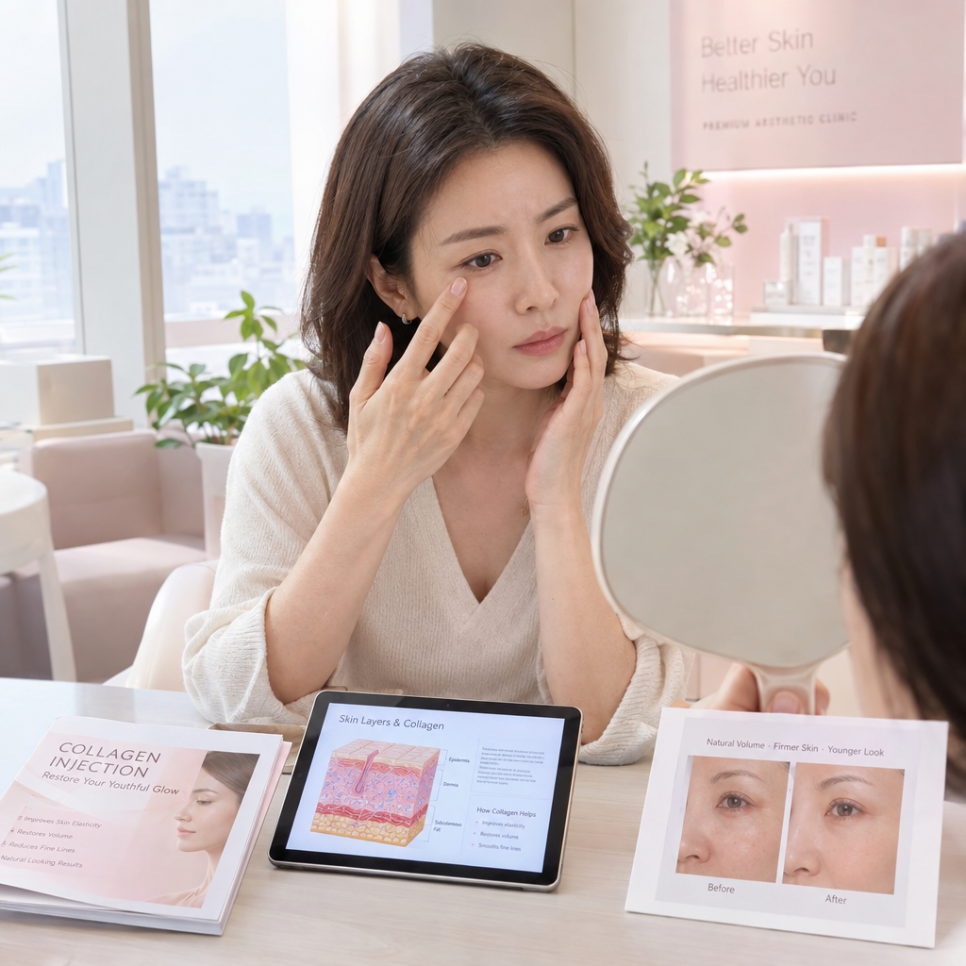
· Collagen is the protein that supports the skin’s structure.
· Elasticity loss progresses as age, UV exposure, and lifestyle habits overlap.
· These changes can appear not only as wrinkles but also as volume loss.

✅ My skin feels thinner and less firm than before
✅ Fine lines have started to become noticeable
✅ Hollowing under the eyes or in the cheeks bothers me
✅ My skin looks loose rather than firm
✅ Makeup doesn’t fully hide a tired-looking appearance

If several of these apply to you, surface-level skin care alone may feel limited.
This is why more people are becoming interested in ways to replenish collagen within the skin’s structure itself.
What Is Atelofill Collagen Injection?
Atelofill is a product used to replenish the collagen that skin tissue needs.
Atelofill is known as a tissue repair material that uses collagen, based on Type I atelocollagen.
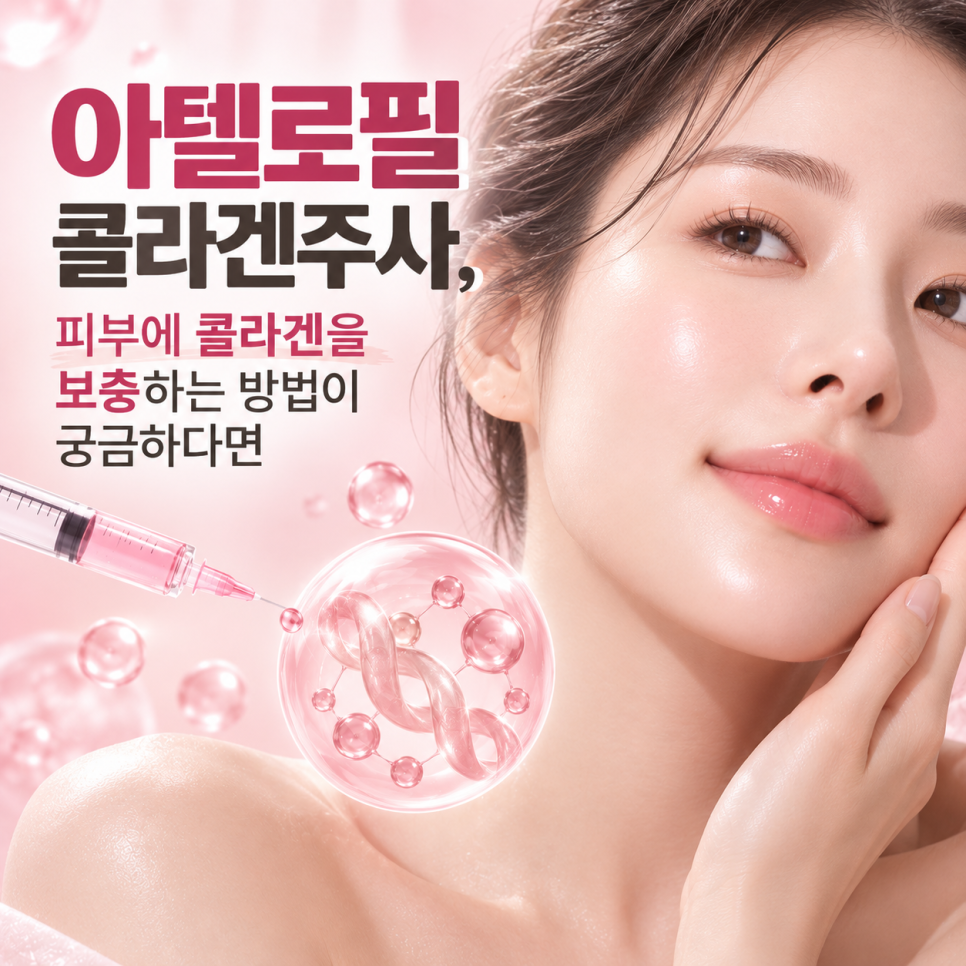
What’s important here is that this approach differs from ingredients applied topically, like cosmetics.
While cosmetics focus on the surface of the skin, Atelofill is used by having a medical professional assess the skin’s condition and the areas that need attention, then inject it into the appropriate location.
So even with the same product, where, how much, and how it’s applied all matter.
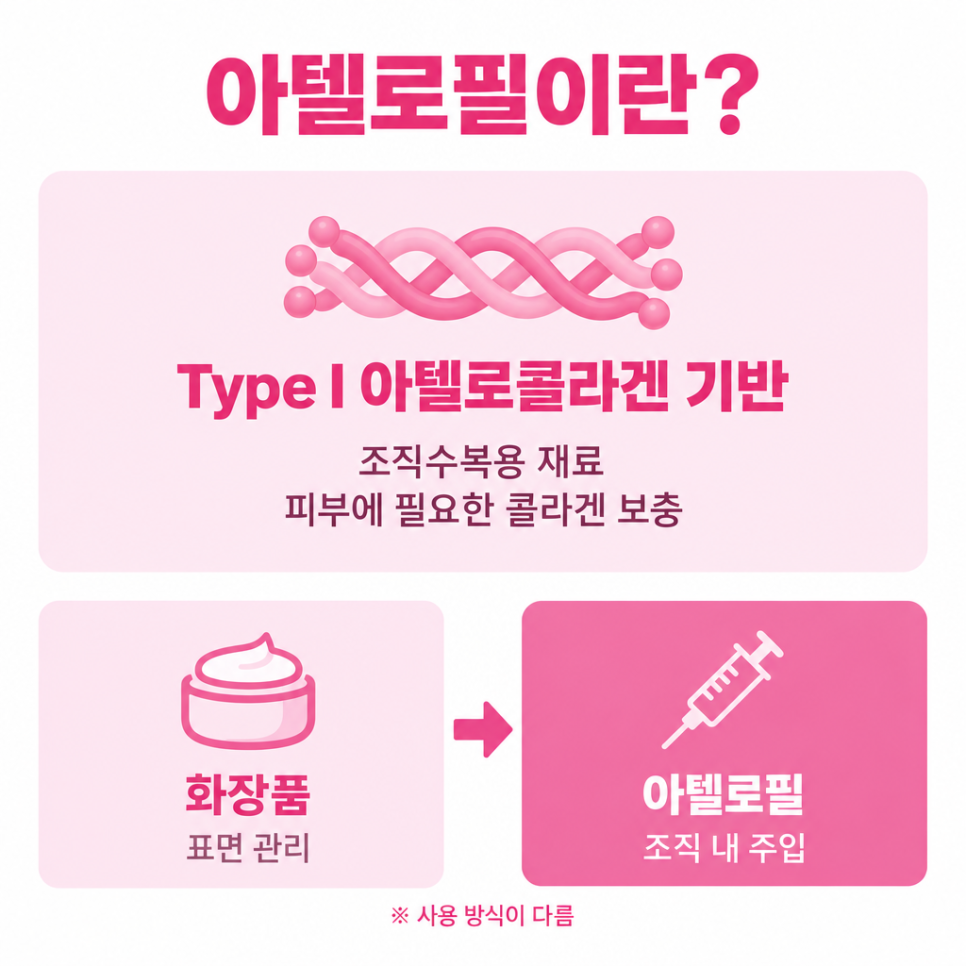
· Atelofill collagen injection is known as a tissue repair material based on Type I atelocollagen.
· It replenishes collagen within the tissue itself, not just on the skin’s surface.
· The treatment area, amount, and method are determined through consultation with a medical professional.
How Is Atelocollagen Different From Regular Collagen?
Atelocollagen differs from regular collagen in that it is processed to reduce immune response.
Atelocollagen refers to collagen that has had the telopeptides at both ends of the collagen molecule removed.
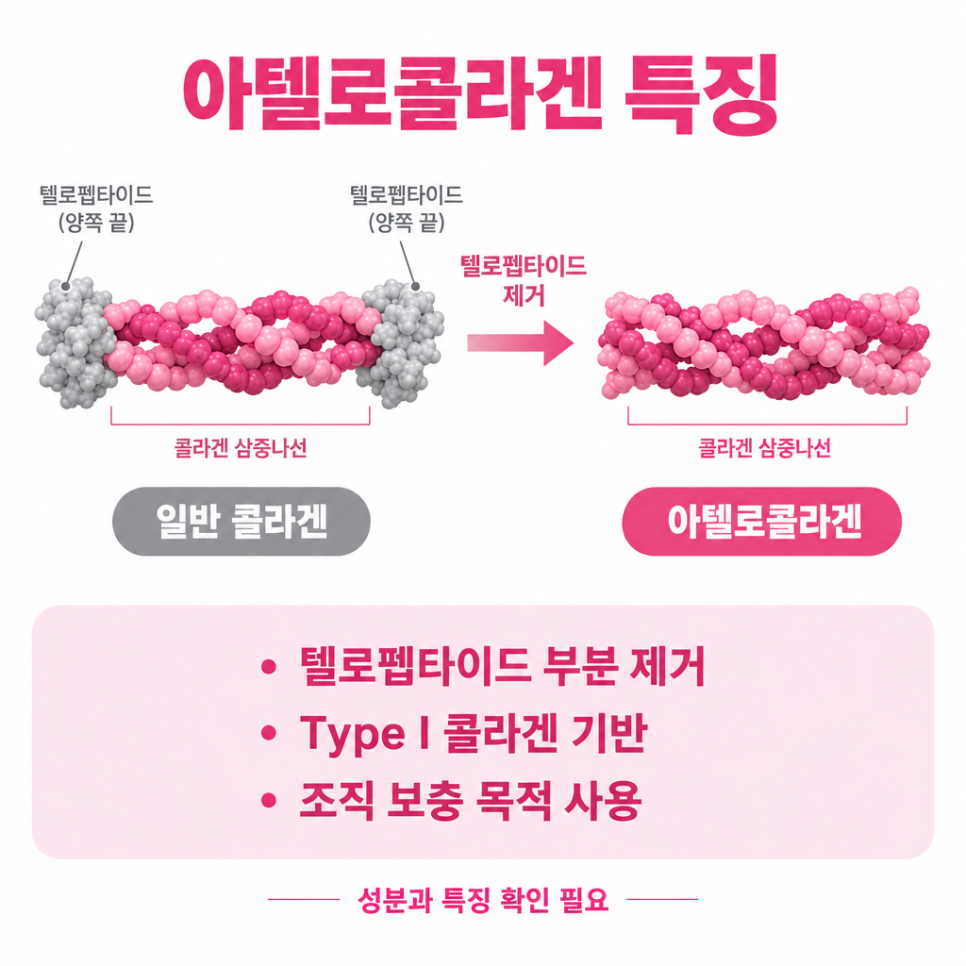
Type I collagen molecules have a segment called the telopeptide at each end, and this segment is known to be the main cause of immune reactions.
Atelofill is characterized by being based on this type of atelocollagen.
| Category | Regular Collagen | Atelocollagen |
|---|---|---|
| Telopeptide | Present at both ends | Removed |
| Main Characteristic | May trigger immune response | Used as a biocompatible material |
| Main Use | Food, cosmetic ingredients, etc. | Tissue repair materials, artificial skin, etc. |
So when researching Atelofill collagen injection, it’s a good idea to check what type of collagen is used, what purpose the product is approved for, and whether the approach fits your specific skin concerns.
What Should You Check Before an Atelofill Treatment?
Atelofill can be considered through consultation when you have concerns related to structural skin changes, such as loss of elasticity or volume.
Skin Concerns Where This May Be Considered

- When hollowing under the eyes creates a tired-looking appearance that bothers you
- When volume loss in the cheek area is noticeable
- When declining skin elasticity is accompanied by concerns about fine lines
- When the skin in a specific area of the face feels thin and lacking in firmness
That said, even similar-looking hollowing doesn’t always have the same cause.
Factors such as skin thickness, fat distribution, bone structure, degree of aging, and facial expression habits can all play a role.
So rather than expecting the same result as before-and-after photos seen online, it’s necessary to first have your current skin condition assessed.
Pre-Treatment Checklist

✅ Have you confirmed the exact product name and ingredients?
✅ Have you identified whether your main concern is elasticity, fine lines, or volume loss?
✅ Have you discussed which areas will be treated and how much will be used?
✅ Have you been informed about possible reactions after treatment, such as redness, swelling, or bruising?
✅ Have you told your medical provider about any medications you’re taking or allergies you have?
✅ Have you reviewed not only the expected changes but also the limitations and precautions?
The degree of change and how long it lasts after treatment can vary from person to person.
Redness, swelling, or bruising may occur temporarily, so it’s important to follow your medical provider’s guidance on recovery.
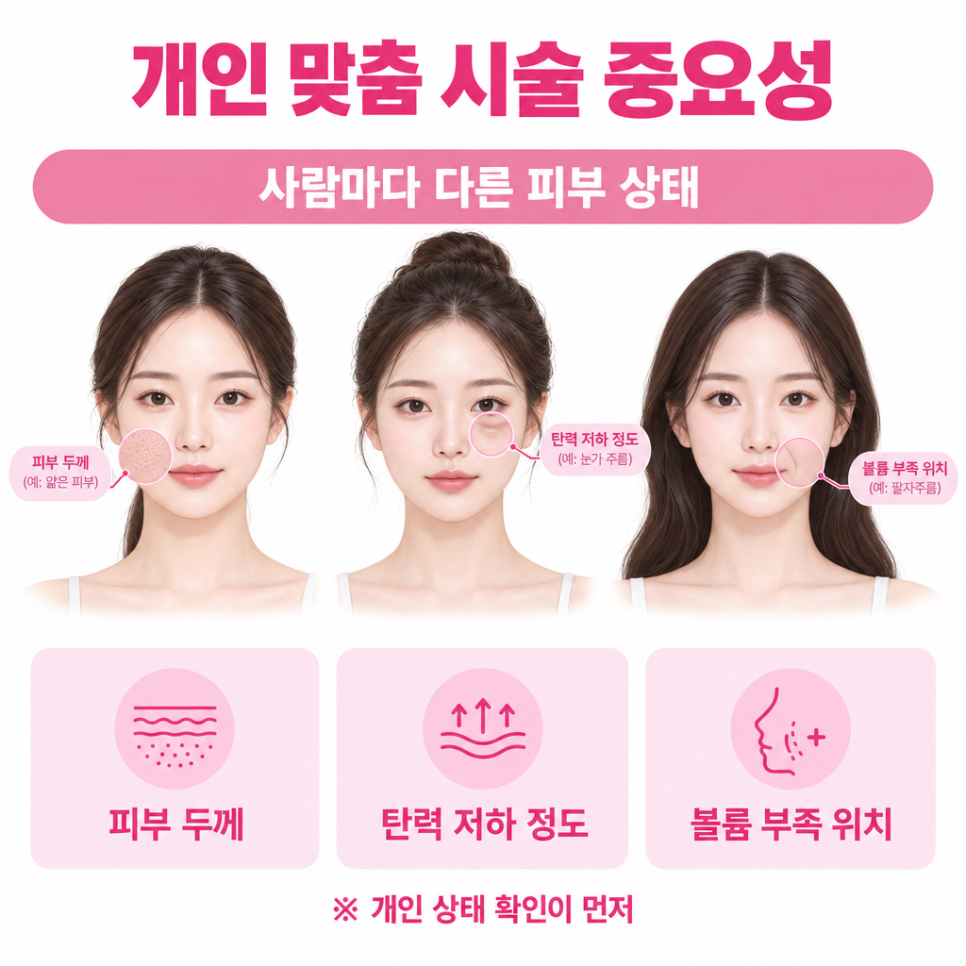
If you’re concerned about skin elasticity and volume loss, it’s best to first understand what your skin actually needs, rather than simply following a popular treatment trend.
If you’re considering Atelofill collagen injection, we recommend having a thorough consultation with a medical professional to confirm whether the treatment plan is right for you.
More information is also available at the Atelofill Collagen Skin Research Institute homepage.
Frequently Asked Questions
1. Is Atelofill the same as a filler?
Atelofill is known as a tissue repair material based on Type I atelocollagen. Rather than treating all injectable treatments as the same, it’s helpful to look at each product’s ingredients and intended use separately.
2. Does one treatment produce immediate results?
Right after the injection, swelling from the procedure itself can occur. Rather than judging by how you look immediately afterward, it’s important to follow the recovery timeline your medical provider outlines — and the degree of change and how long it lasts can vary from person to person.
3. Is the same treatment applied across the whole face?
No, it isn’t. Since skin thickness, the degree of elasticity loss, and areas lacking volume differ from person to person, the treatment area and amount also vary. Assessing your individual condition first is necessary.
4. Are there precautions to keep in mind after treatment?
Depending on the treatment area, temporary redness, swelling, or bruising may occur. It’s a good idea to inform your medical provider in advance about any medications you’re taking or allergy history.
References
· Jeon Young-sun, Kang Sang-mo, “The Effect of Collagen Intake on Facial Skin Wrinkles,” Journal of the Korean Society of Aesthetics and Cosmetology, Vol. 7, No. 2, 2009. View
· Ministry of Food and Drug Safety (Korea), “Key Supplementary Case Studies – Collagen-Based Tissue Repair Materials,” Ministry of Food and Drug Safety. View
This article is intended for general health information purposes only and is not a substitute for individual diagnosis or treatment. If you have symptoms, please consult a medical professional.
Leave a Reply