Tag: AteloFill

  • Under-Eye Collagen Injections: 4 Causes of Under-Eye Hollowing

    Under-Eye Collagen Injections: 4 Causes of Under-Eye Hollowing

    SummaryUnder-eye collagen injections are one option people look into when dealing with under-eye hollowing and fine lines. Hollowing can stem from more than just collagen loss — fat and volume changes play a role too. This guide covers the features of Atelofill collagen (Type I atelocollagen), what to check before and after treatment, and possible side effects.

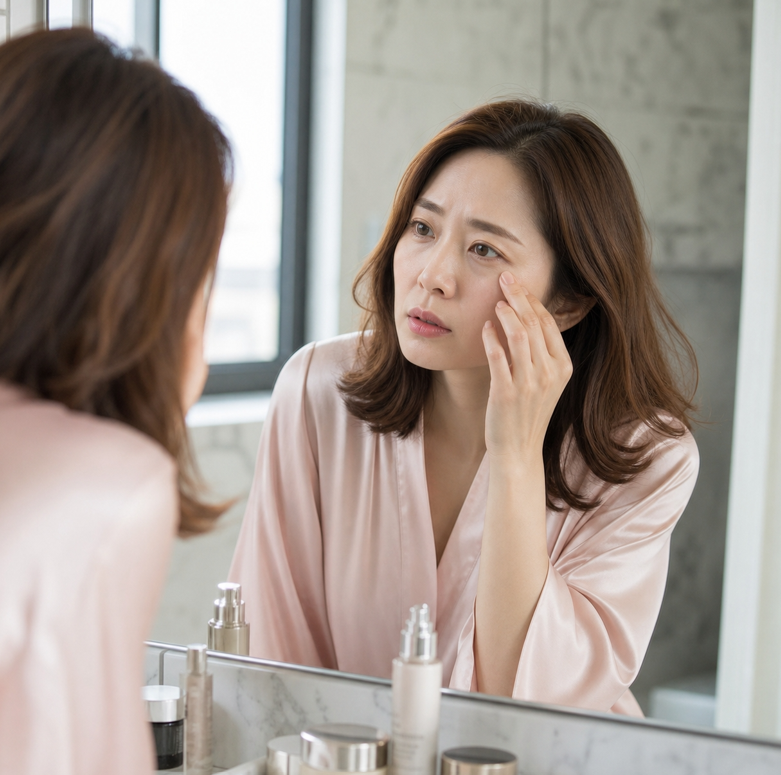
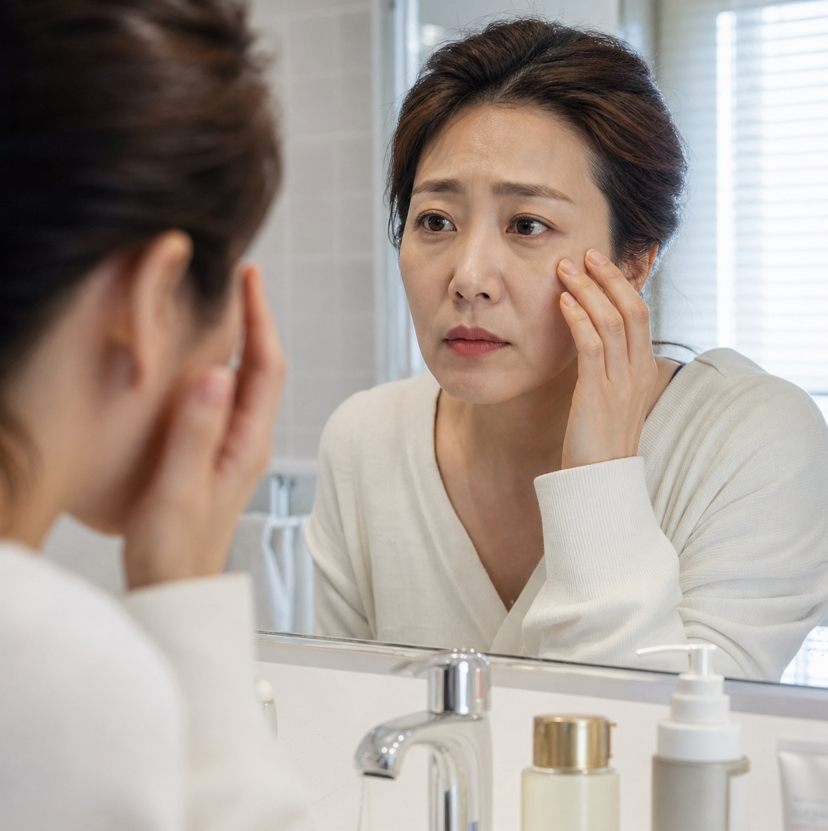
    Sometimes your under-eyes look sunken even after a full night’s sleep.

    Concealer doesn’t quite hide the shadow, and fine lines seem to stand out every time you smile.

    More people are looking into under-eye collagen injections because of these changes, but the causes of under-eye hollowing are more varied than you might expect.

    Key Takeaways
    Under-eye hollowing isn’t caused by collagen loss alone — it results from a combination of factors, including fat and volume changes and skin thickness.
    Under-eye collagen injections work by replenishing collagen in the tissue, and whether they’re suitable depends on the product’s approved use and your skin condition.
    Atelofill is a tissue filler that uses Type I atelocollagen with the telopeptides removed, and there are specific things to check before and after the procedure.
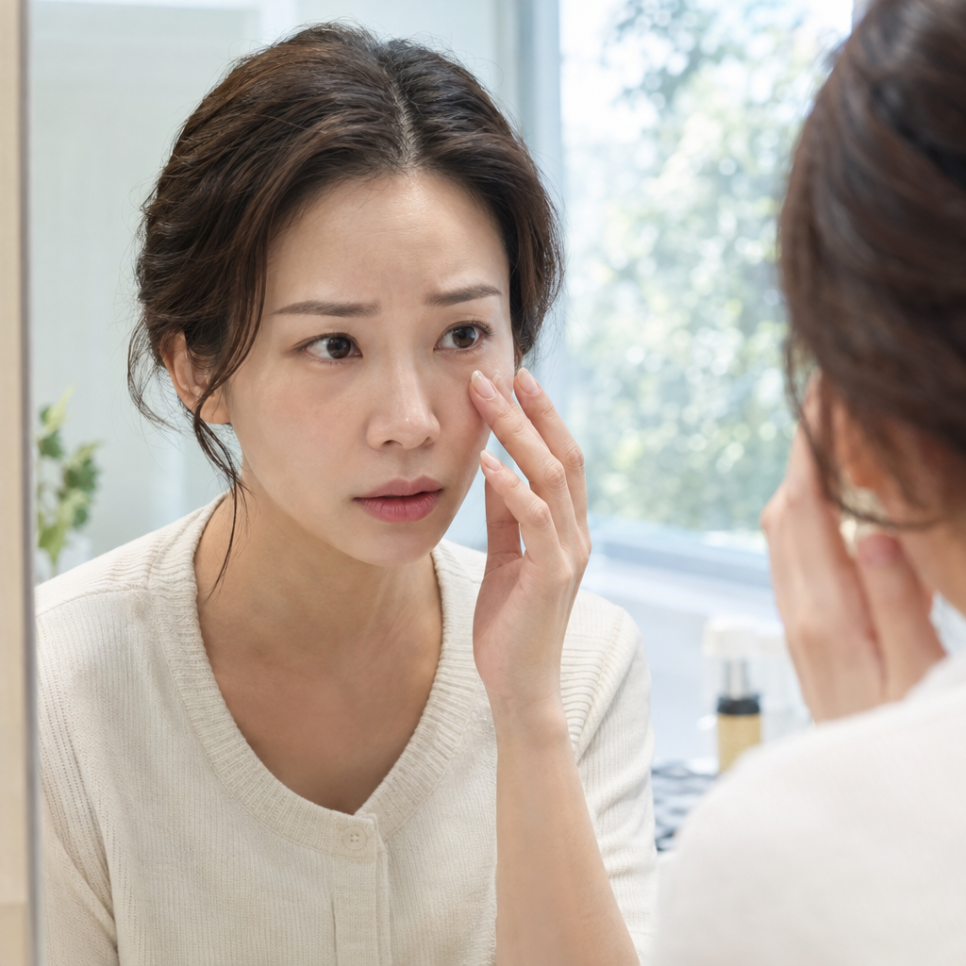
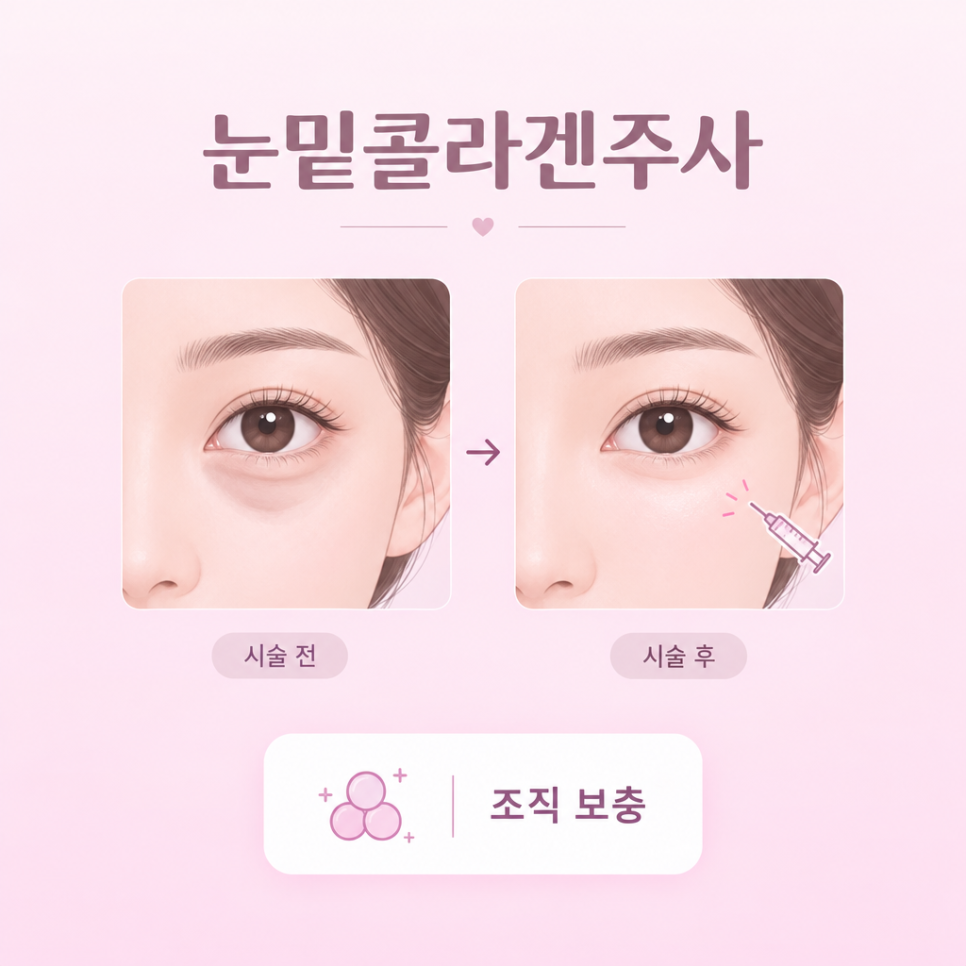
    under-eye collagen injection

    What Causes Under-Eye Hollowing?

    To get straight to the point, under-eye hollowing can’t be explained by collagen loss alone.

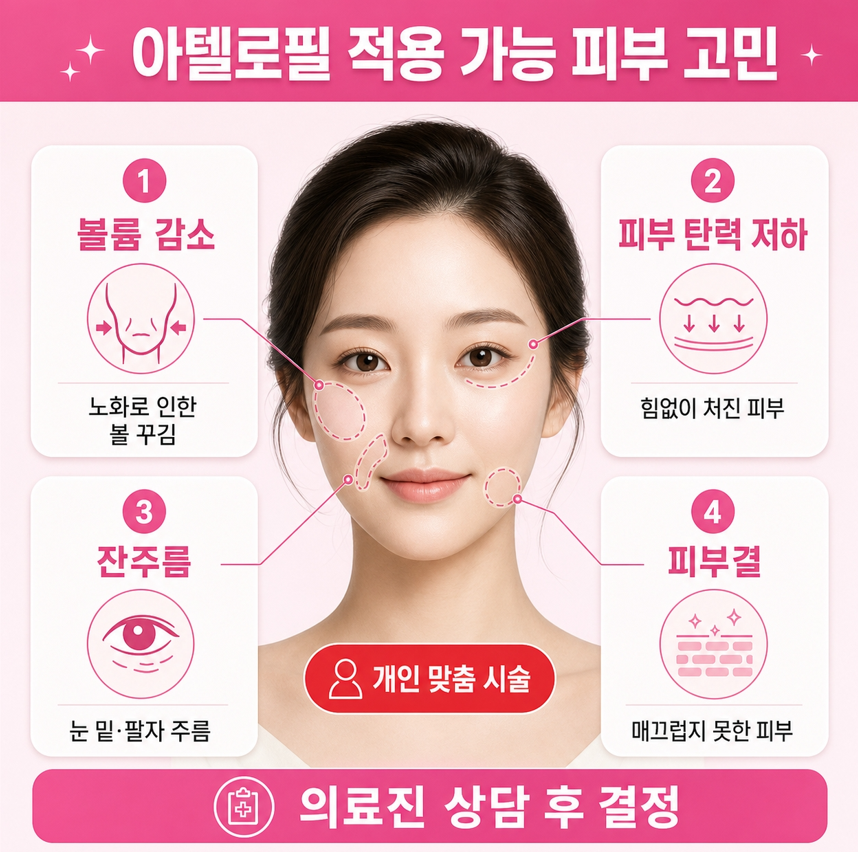
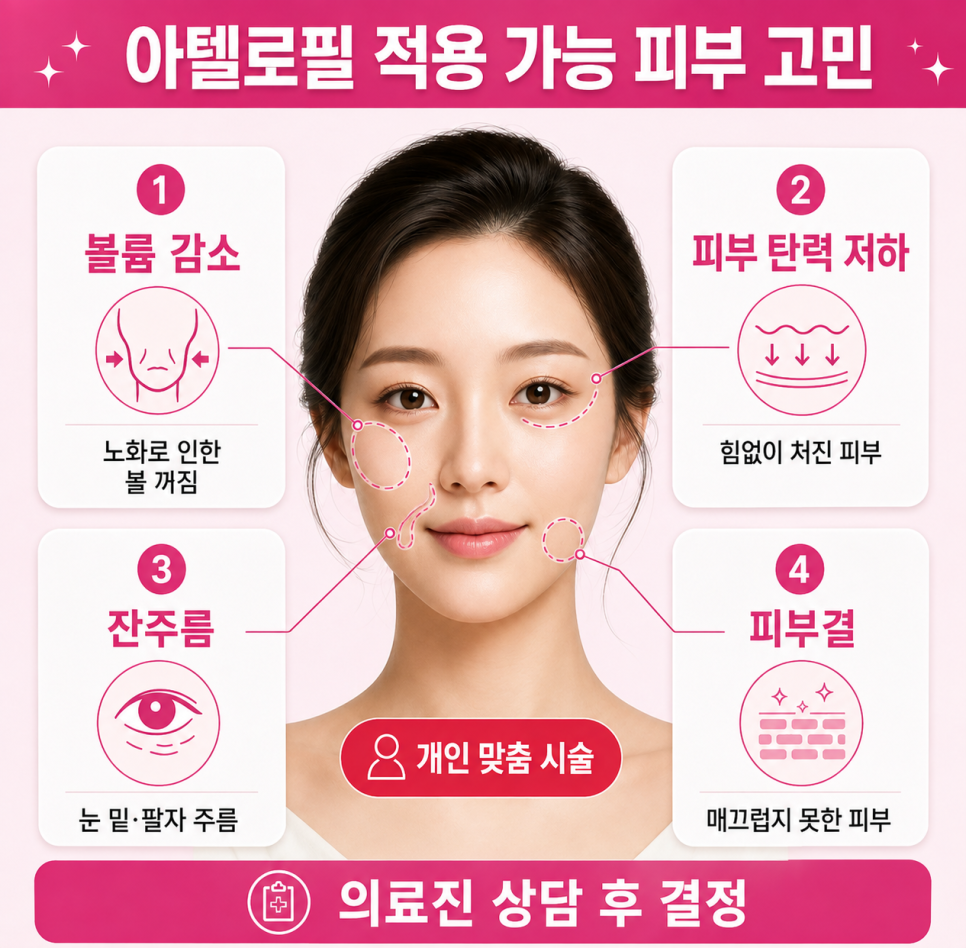
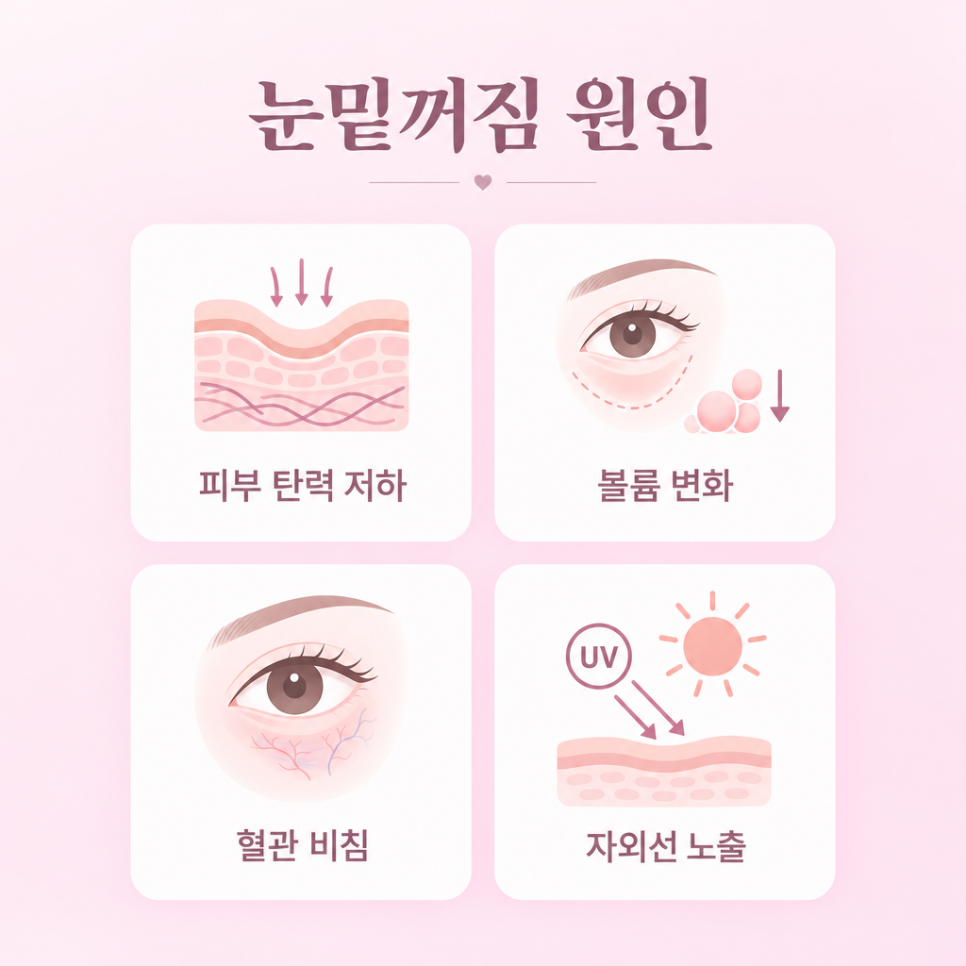
    Under-eye hollowing refers to a visible shadow or defined border that appears when changes overlap across the skin, fat, muscle, and ligaments around the eye.

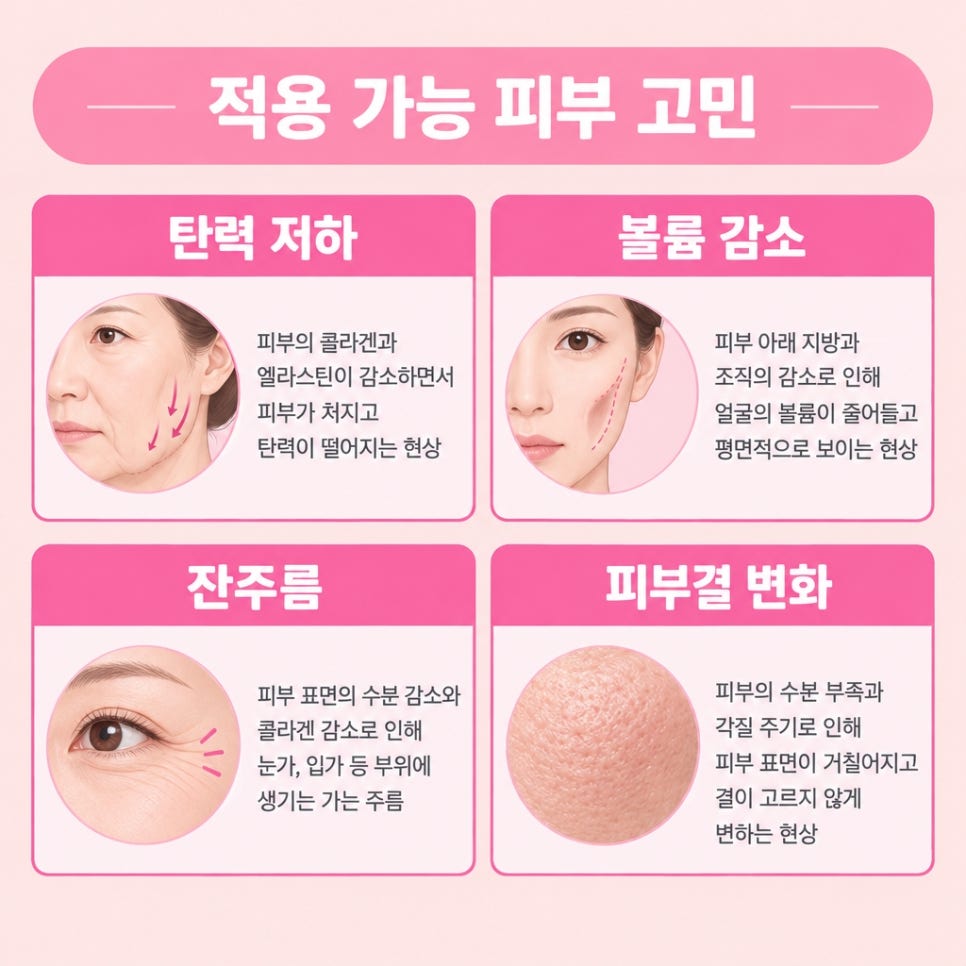
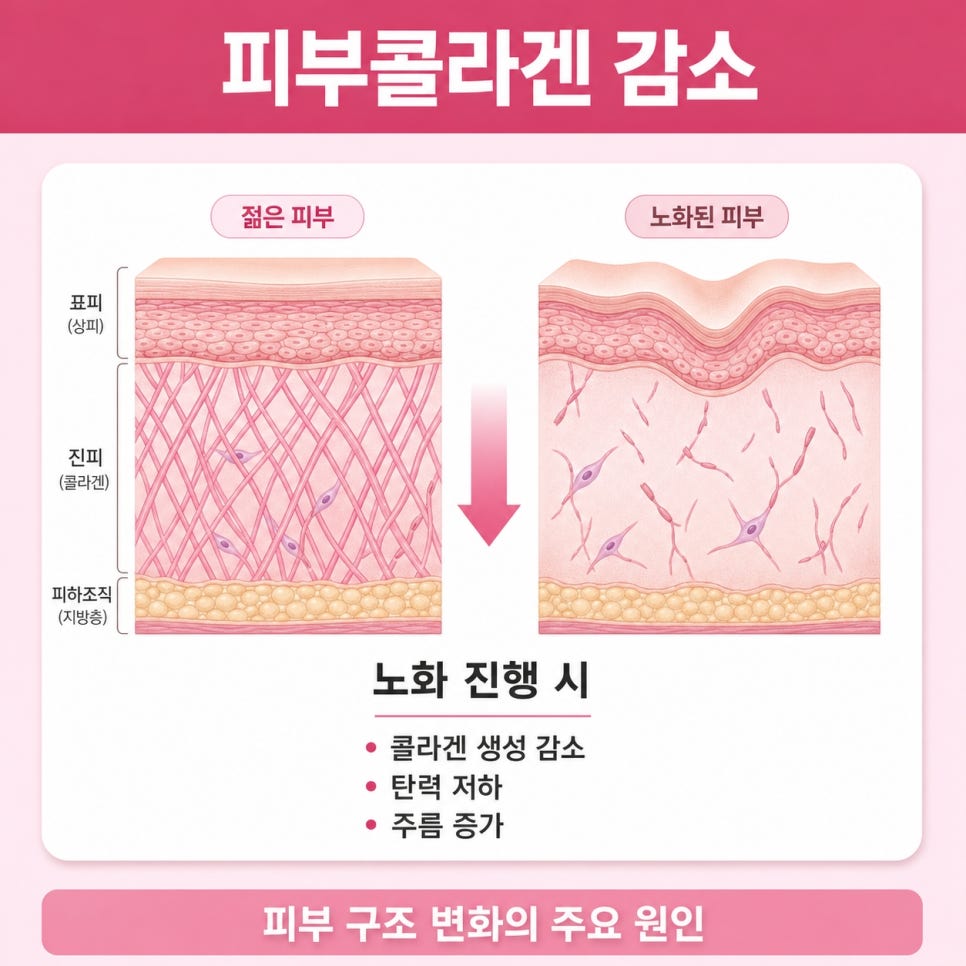
    When skin elasticity declines, fine lines become more noticeable, and changes in the volume of fat and surrounding tissue can create a sunken appearance.

    Thinning skin can also let blood vessels show through, making the area look darker, and lifestyle factors like UV exposure and smoking can contribute as well.

    under-eye collagen injection illustration 2

    • Reduced Skin Elasticity: Changes in collagen and elastic fibers can make fine lines more noticeable.
    • Fat and Volume Changes: Shifts in the position of under-eye fat or the volume of surrounding tissue can cause hollowing.
    • Skin Thickness and Blood Vessels: Blood vessels showing through thin skin can make the area appear darker.
    • UV Exposure and Lifestyle: Repeated UV exposure and smoking, among other factors, can contribute to skin aging.

    under-eye collagen injection illustration 3

    Key Points
    ✅ Skin collagen is reported to decline by about 1% per year after age 25.
    ✅ It’s important to first identify whether under-eye hollowing is due to pigmentation, structural sunkenness, or loss of elasticity.
    under-eye collagen injection illustration 4

    So dark circles under the eyes can’t automatically be attributed to a lack of collagen.

    The first step is determining whether the issue is pigmentation, structural hollowing, or reduced skin elasticity.


    How Do Under-Eye Collagen Injections Work?

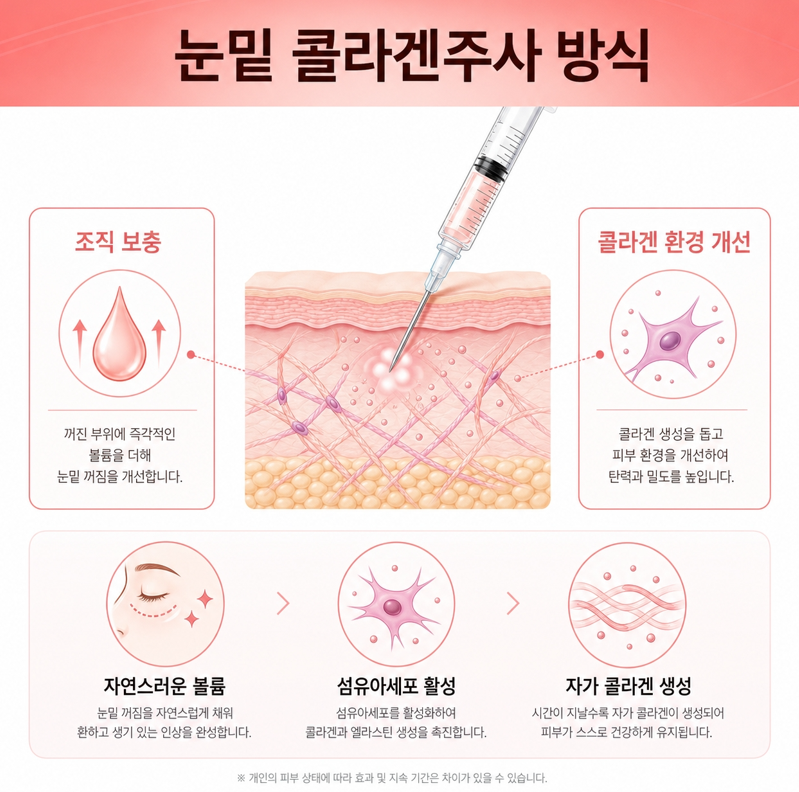
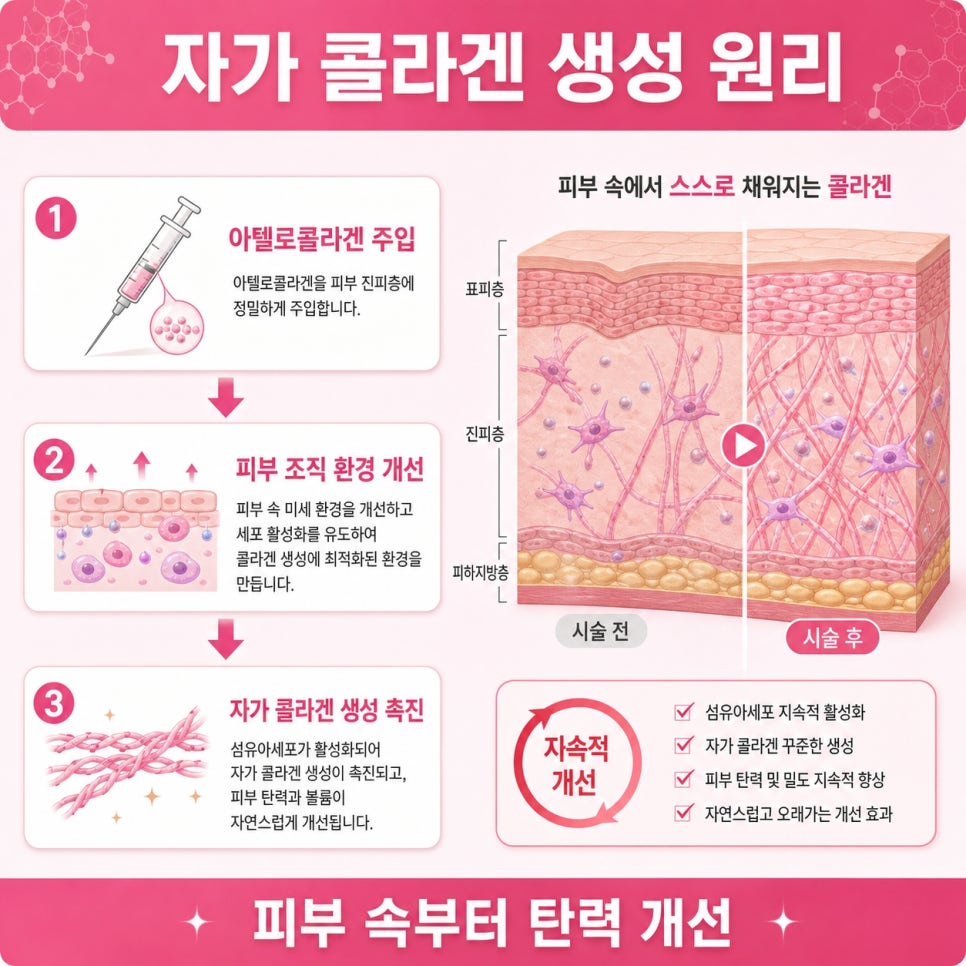
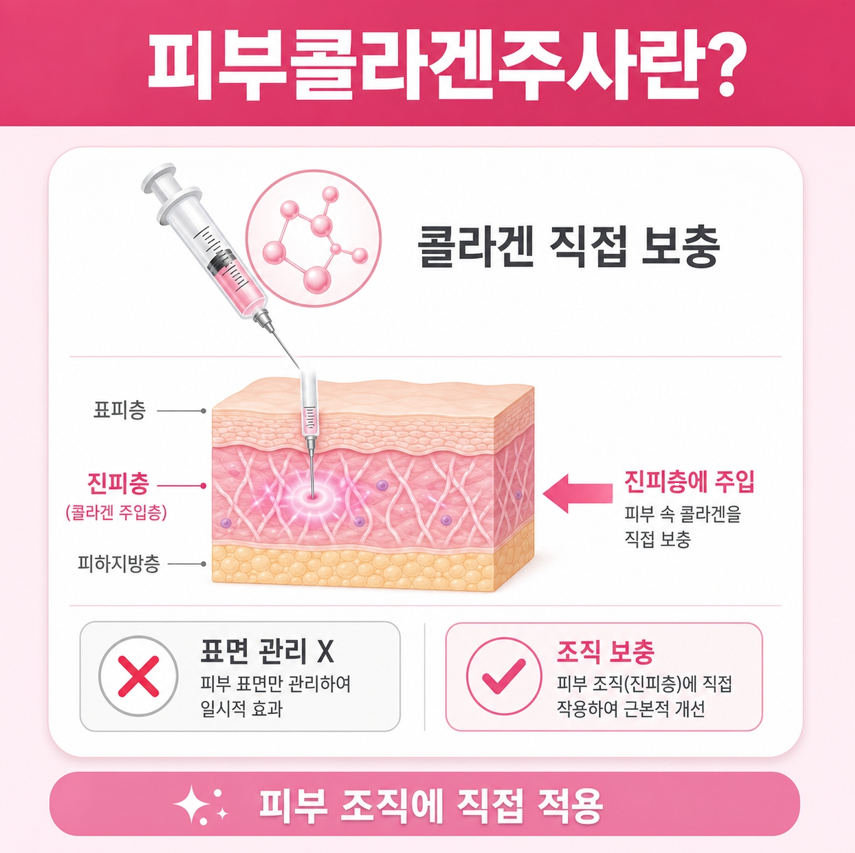
    In short, under-eye collagen injections work by physically replenishing tissue with collagen.

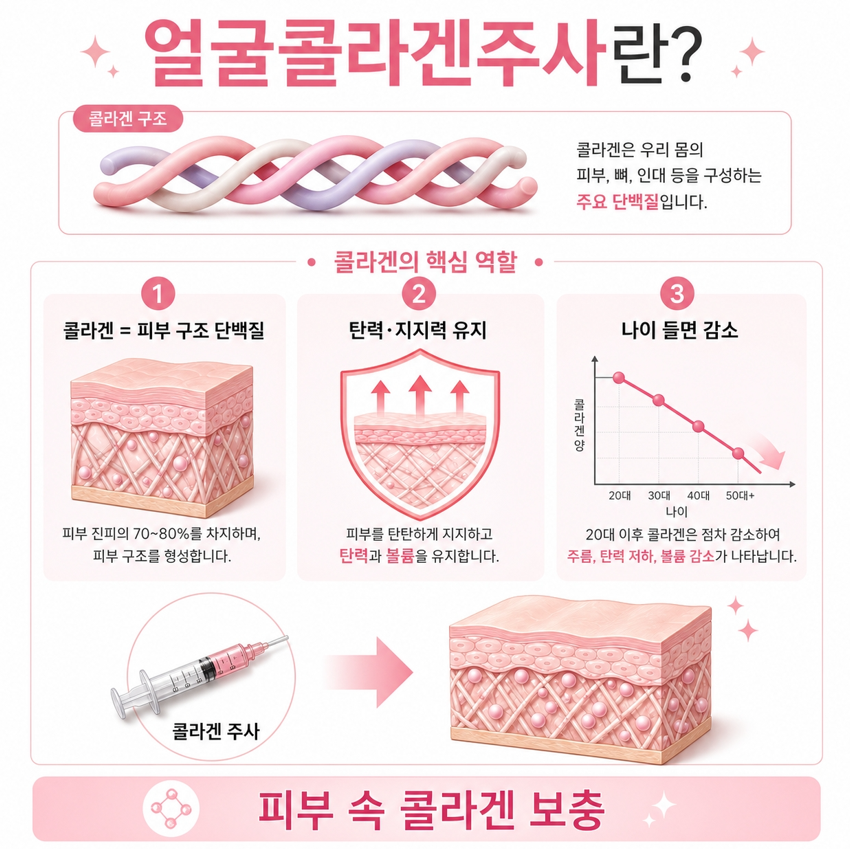
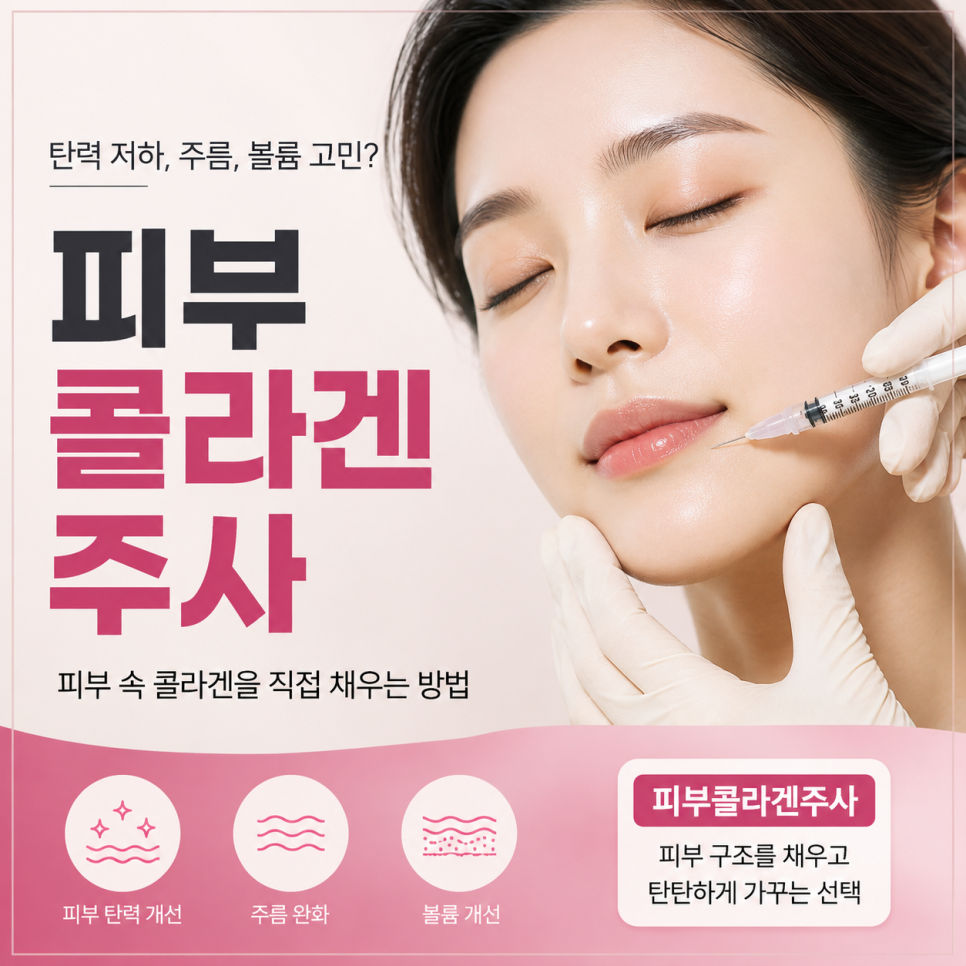
    An under-eye collagen injection is a procedure that injects a collagen-based tissue filler into the skin and soft tissue to reinforce its structure.

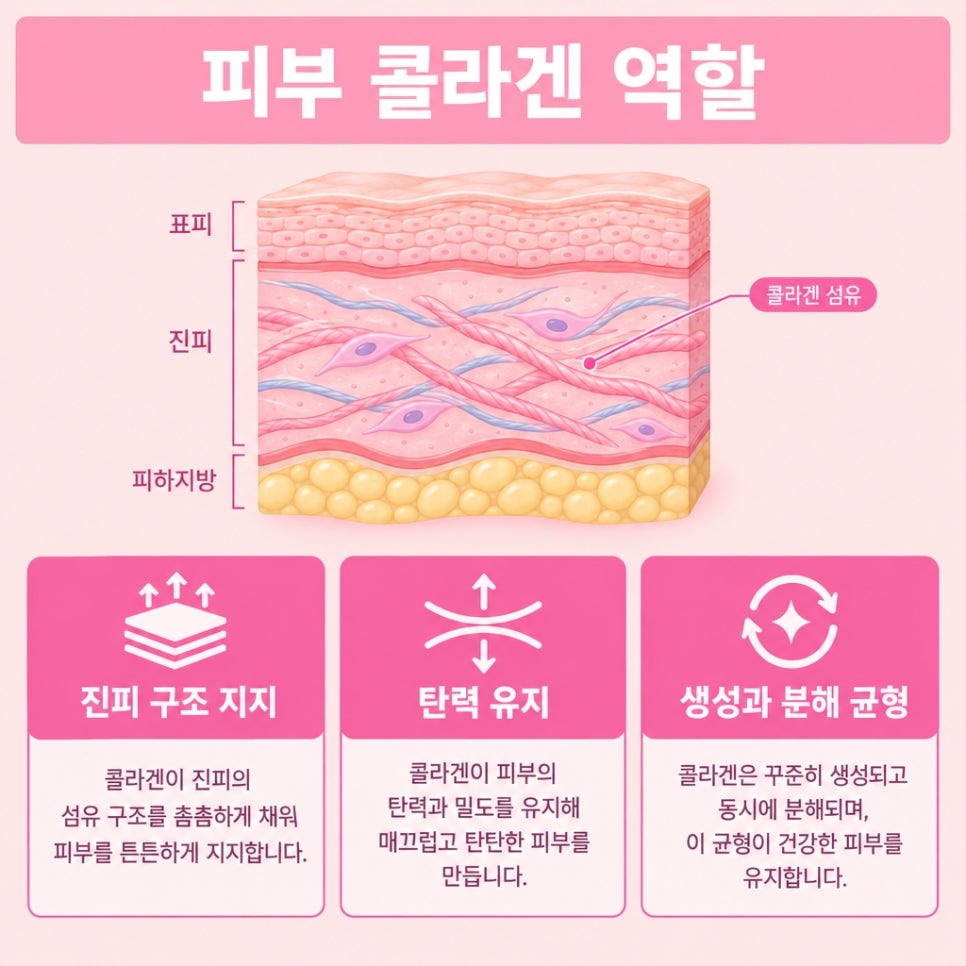
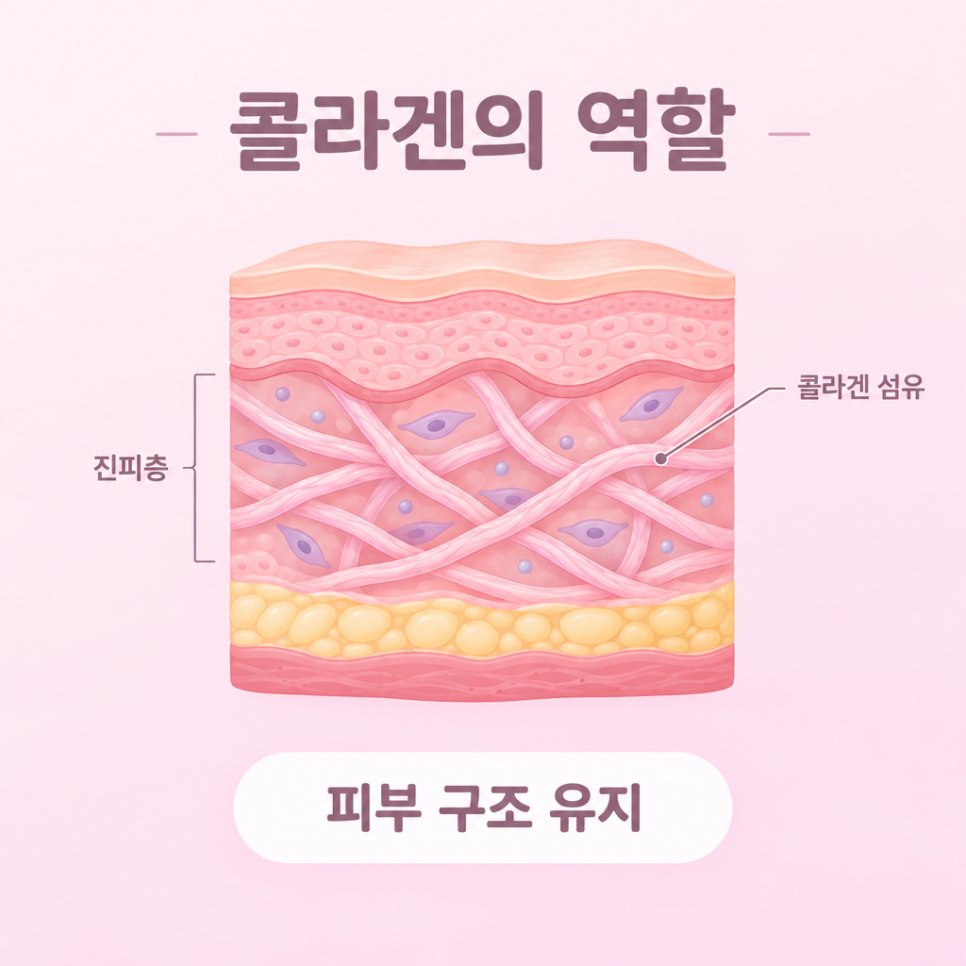
    Collagen is a key protein that makes up the skin’s dermis.

    As we age, shifts in the balance between collagen production and breakdown can thin the skin and reduce its elasticity.
    under-eye collagen injection illustration 5

    That said, the under-eye area has thin skin and a dense network of blood vessels, so this treatment isn’t suitable for every case of hollowing.

    Results and the risk of side effects can vary depending on injection depth and volume, and if the cause is a deep tear trough or protruding fat, a different approach may be needed.

    Category Collagen-Based Tissue Filler Hyaluronic Acid Filler
    Main Ingredient Atelocollagen (Type I) Hyaluronic acid
    Mechanism Reinforces tissue with collagen protein Creates volume by binding water
    Suitability Requires checking the product’s approved use and skin condition Requires checking the product’s approved use and skin condition

    under-eye collagen injection illustration 6


    What Makes Atelofill Collagen Different From Regular Collagen?

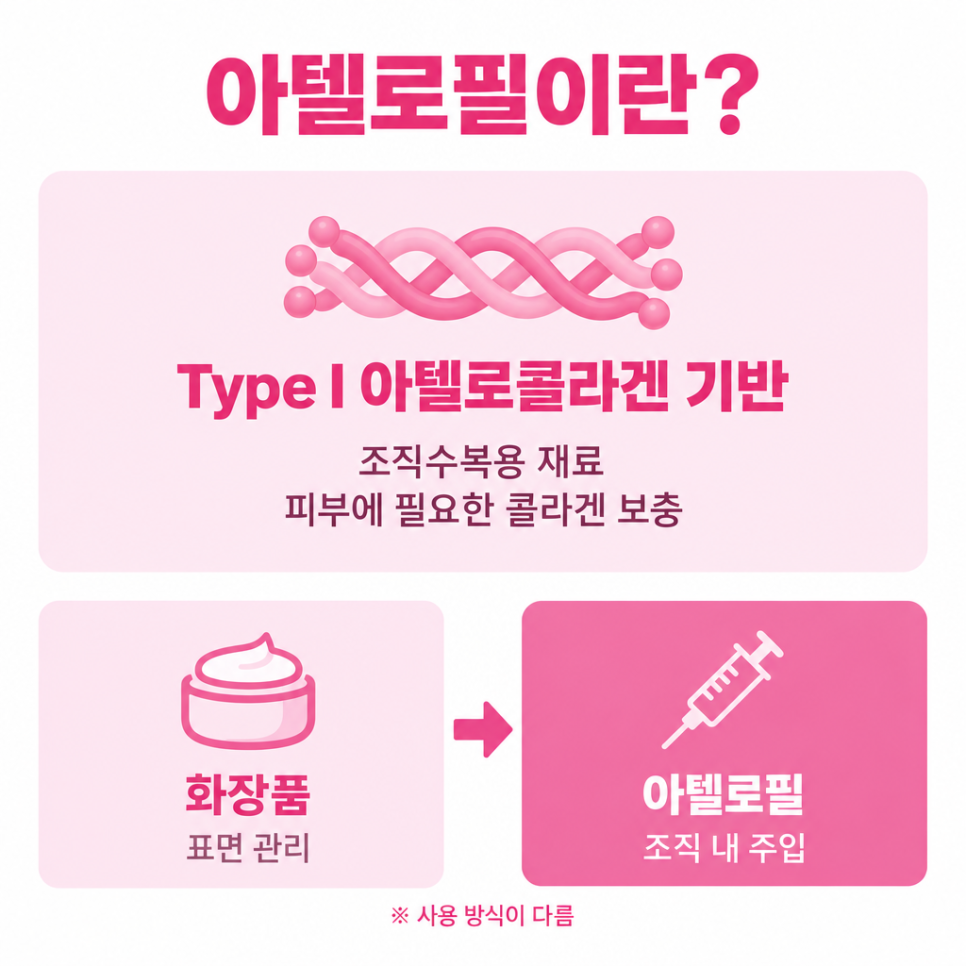
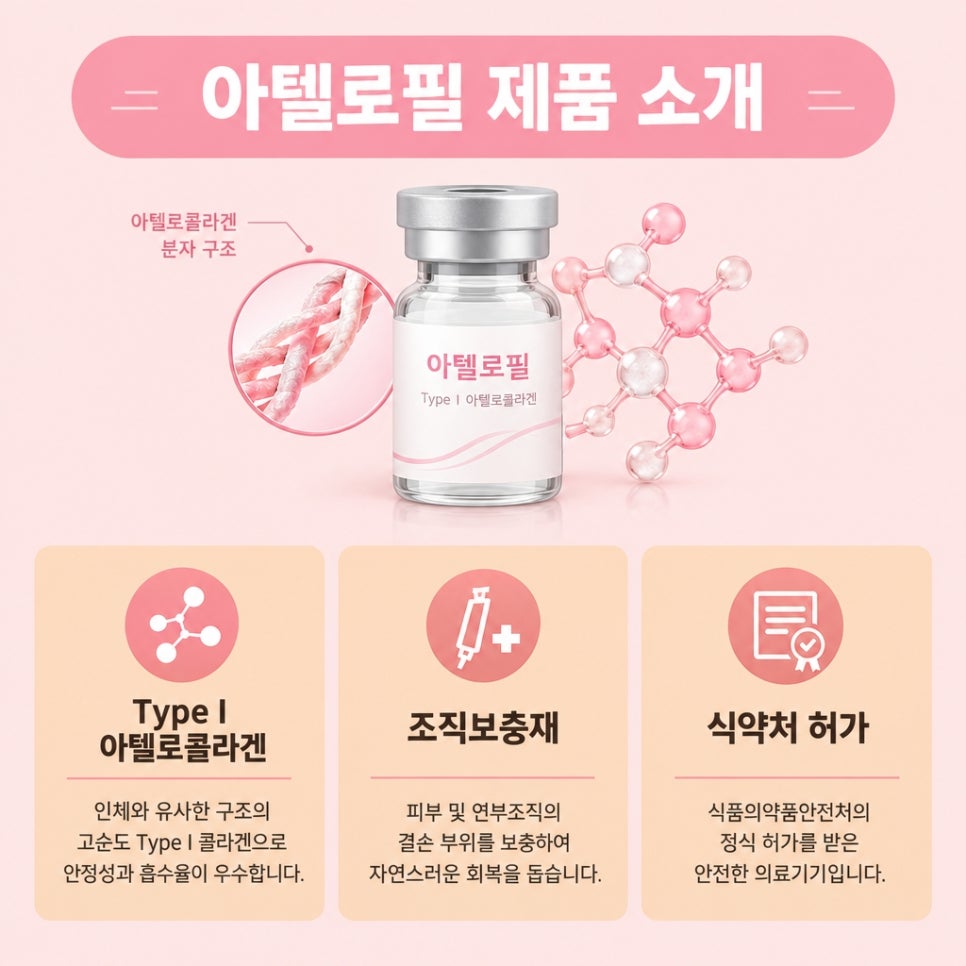
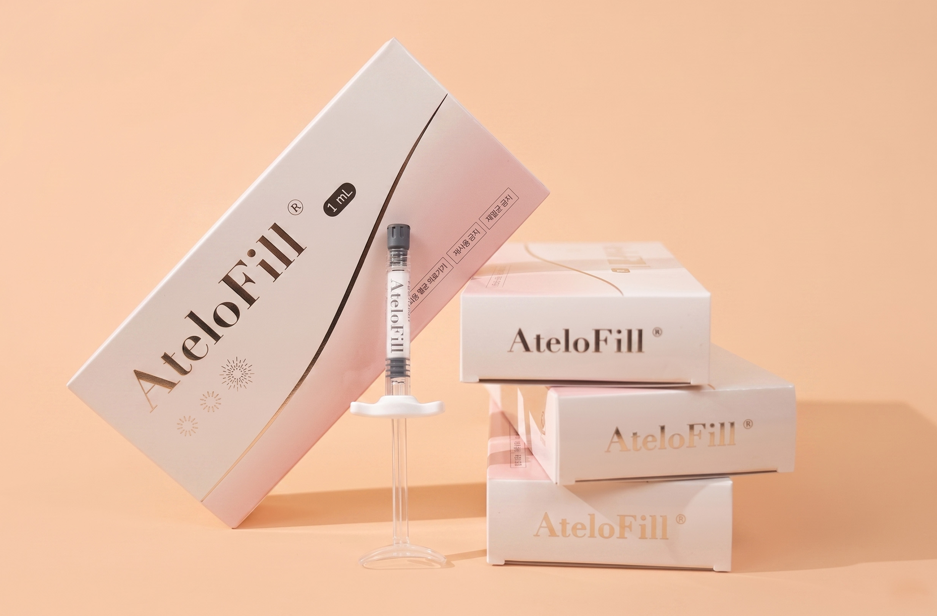
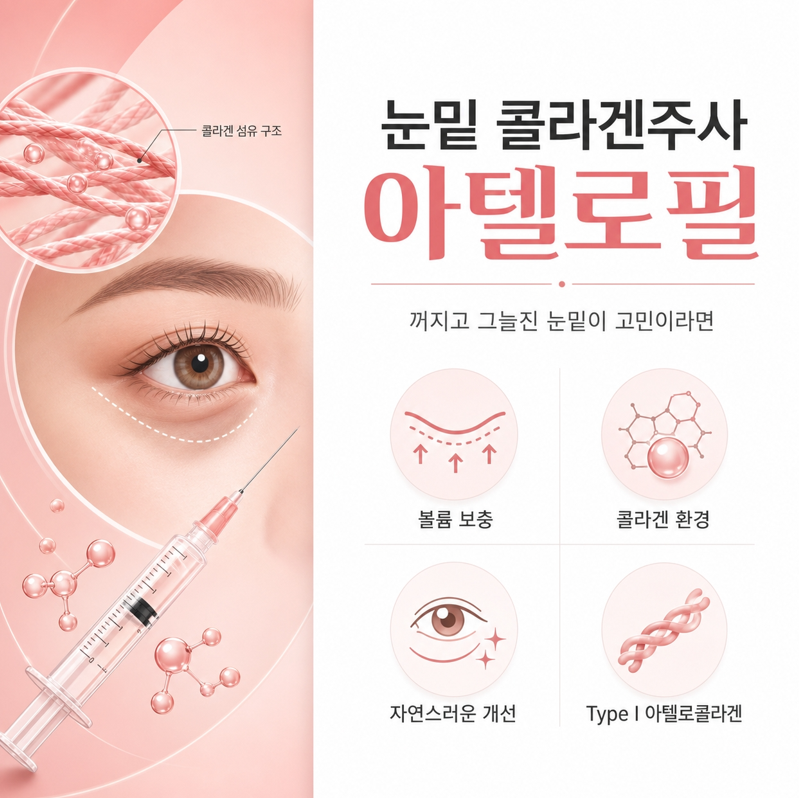
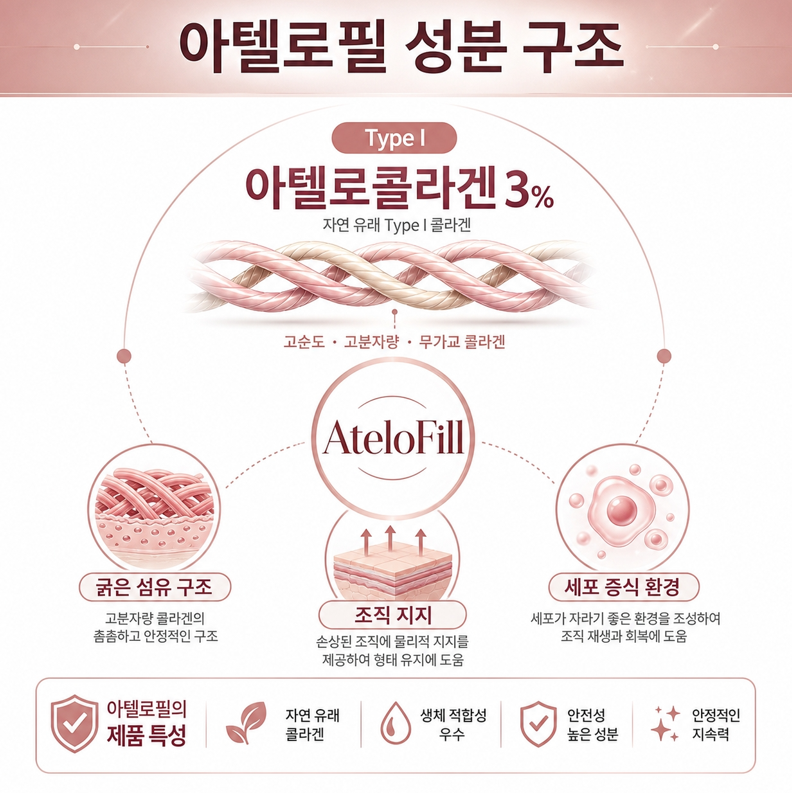
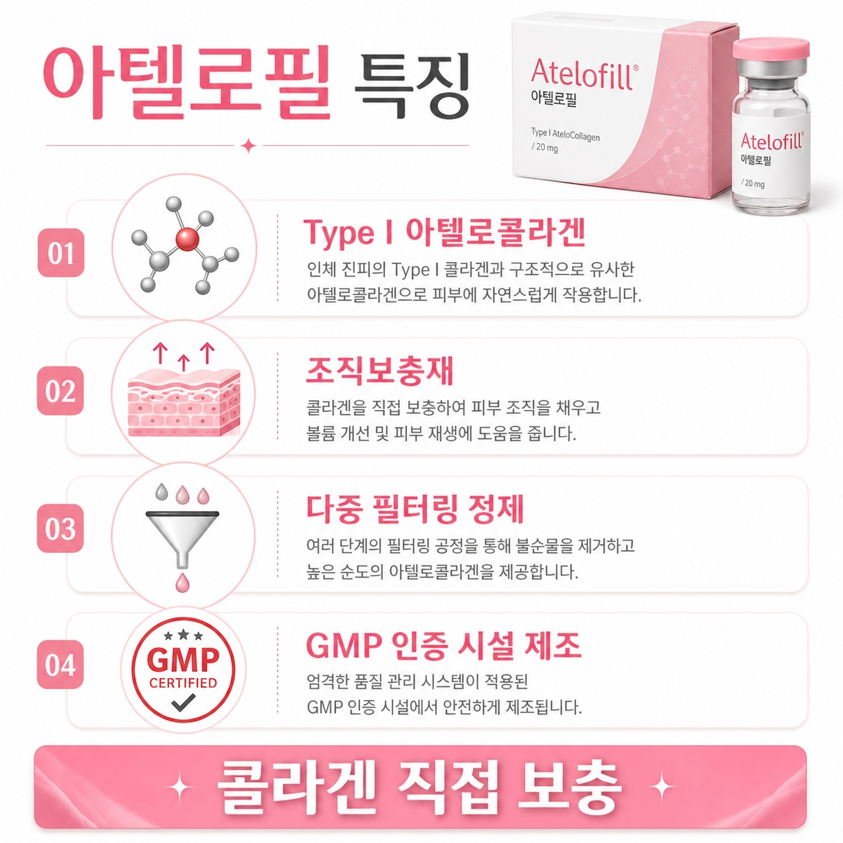
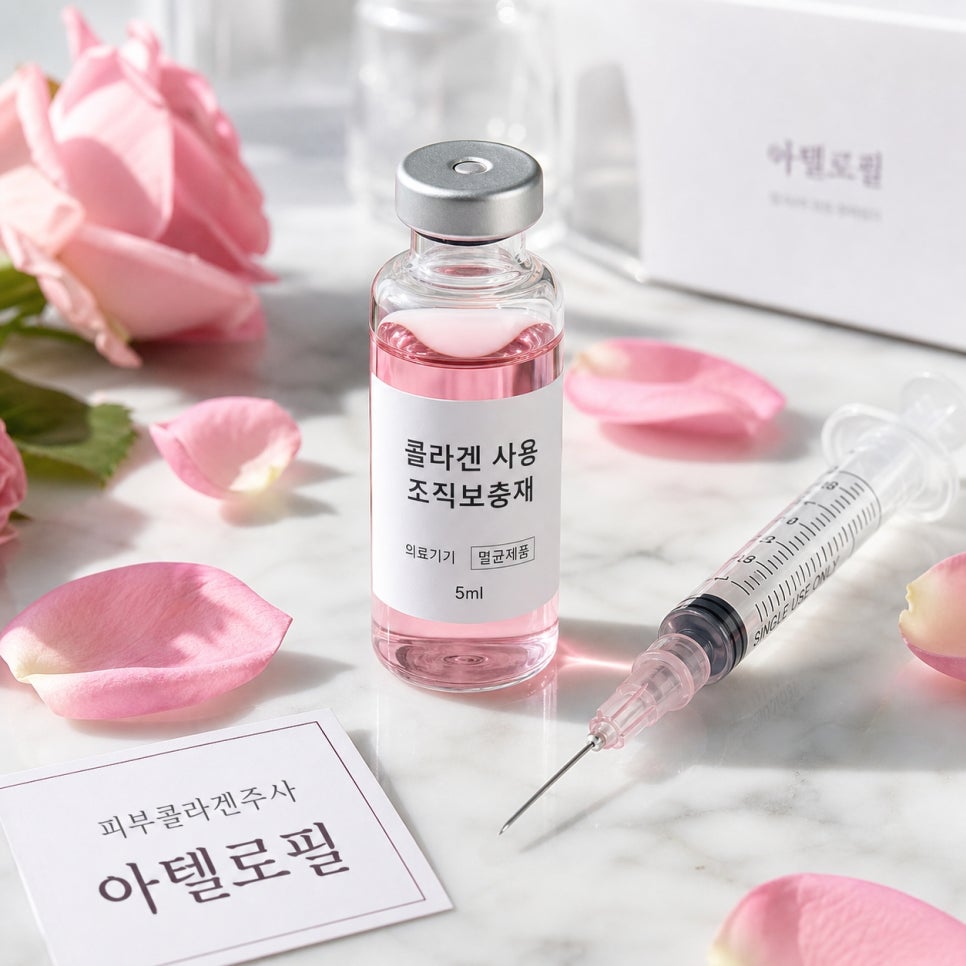
    Atelofill is a collagen-based tissue filler built on Type I atelocollagen.

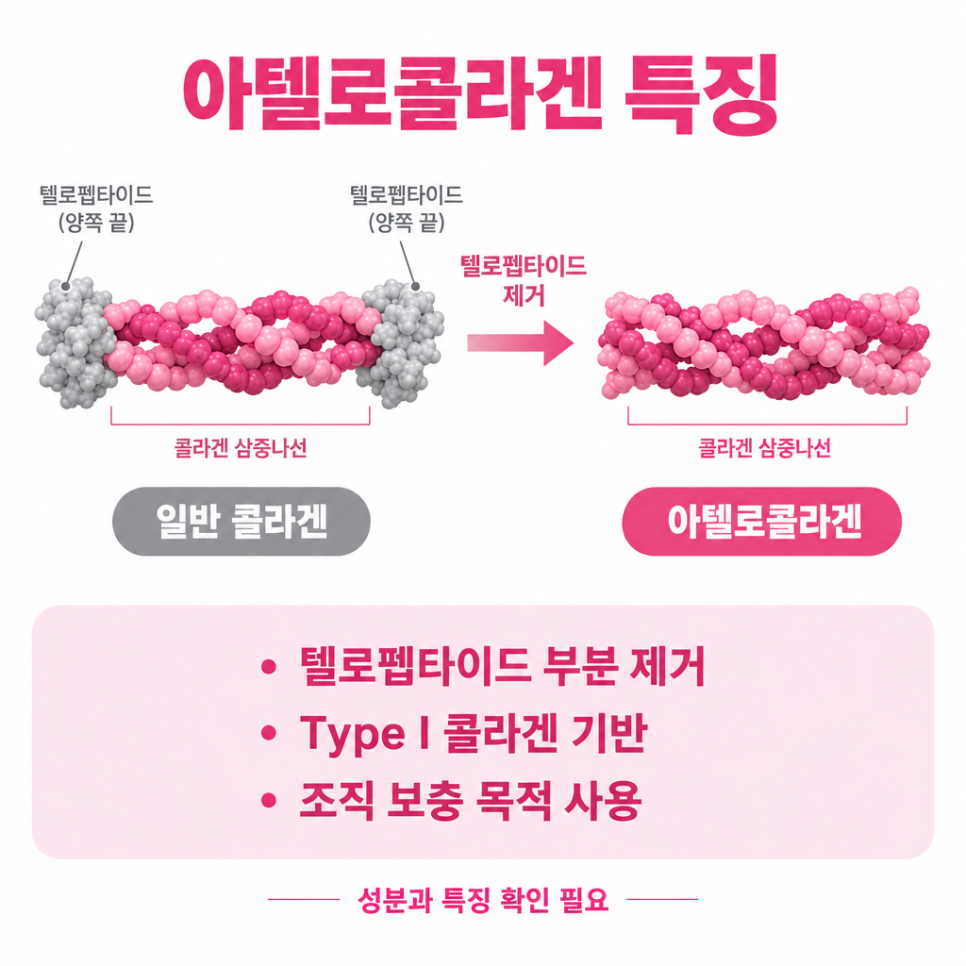
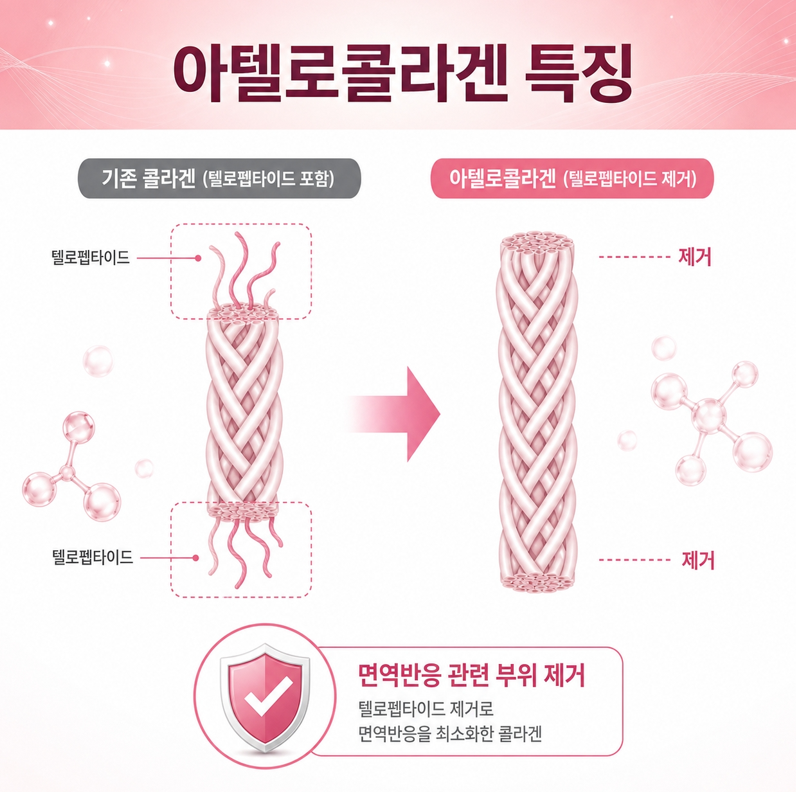
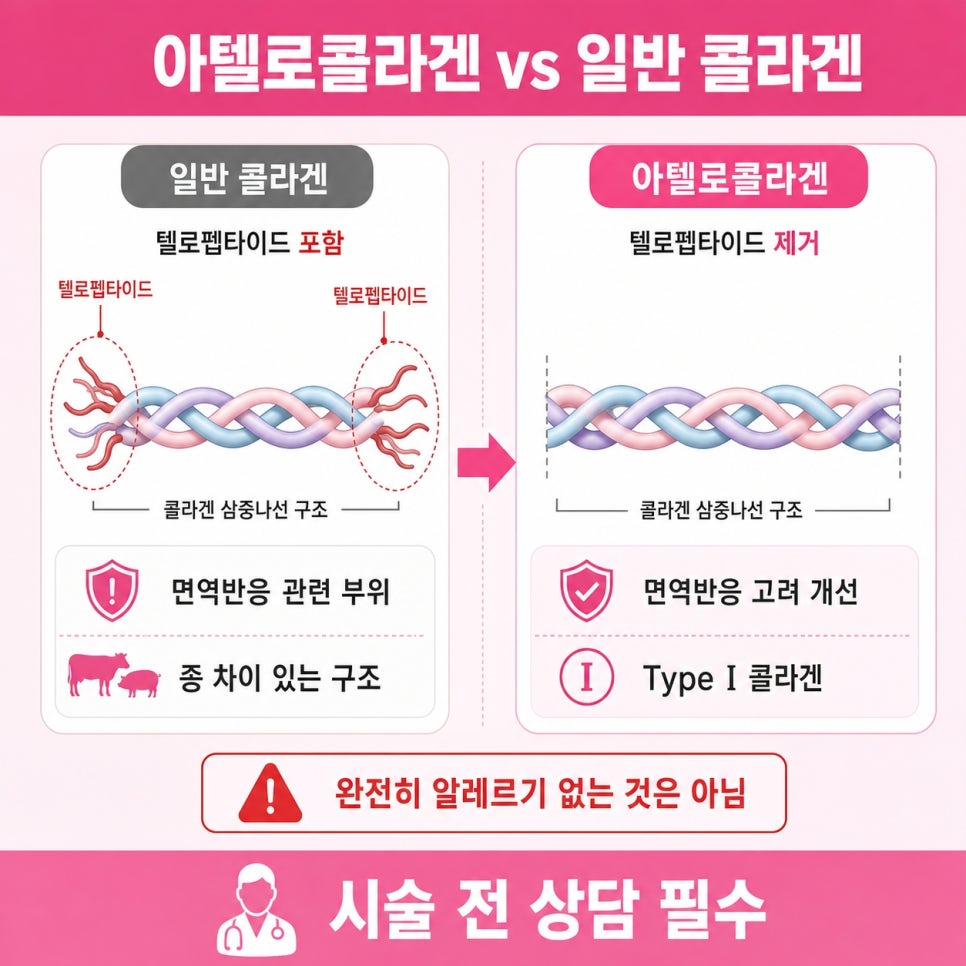
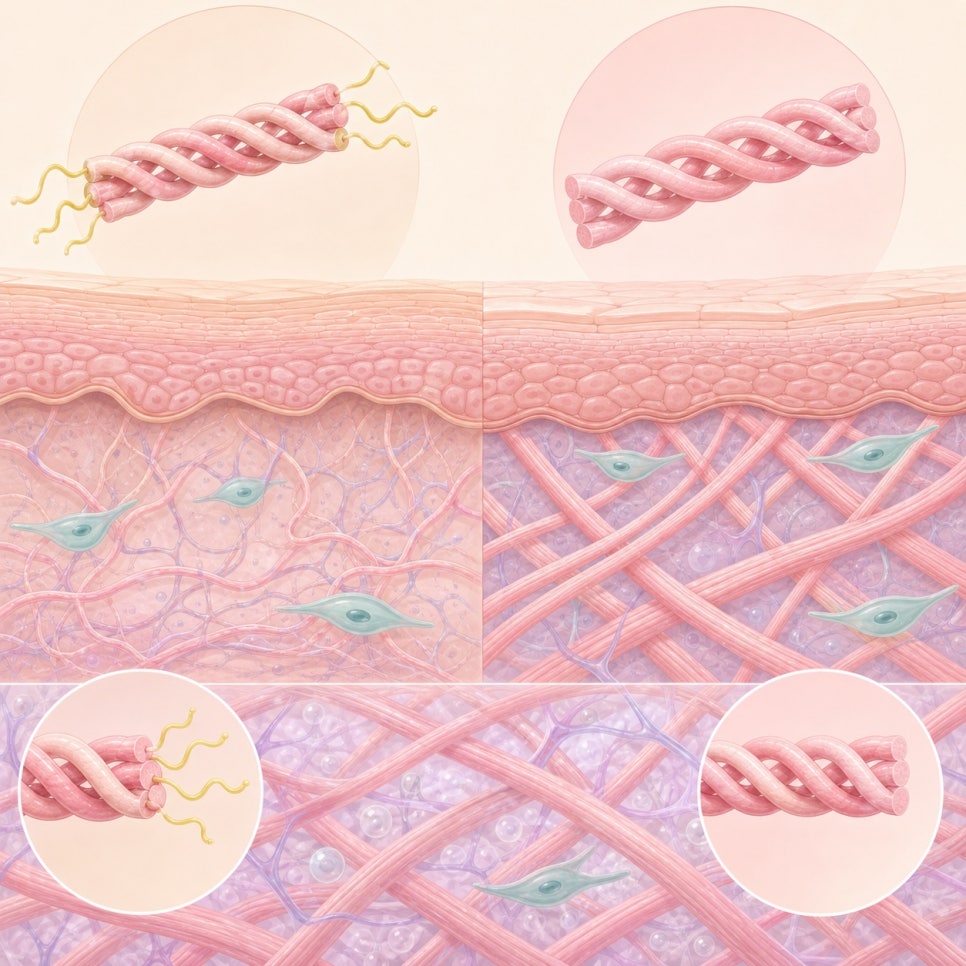
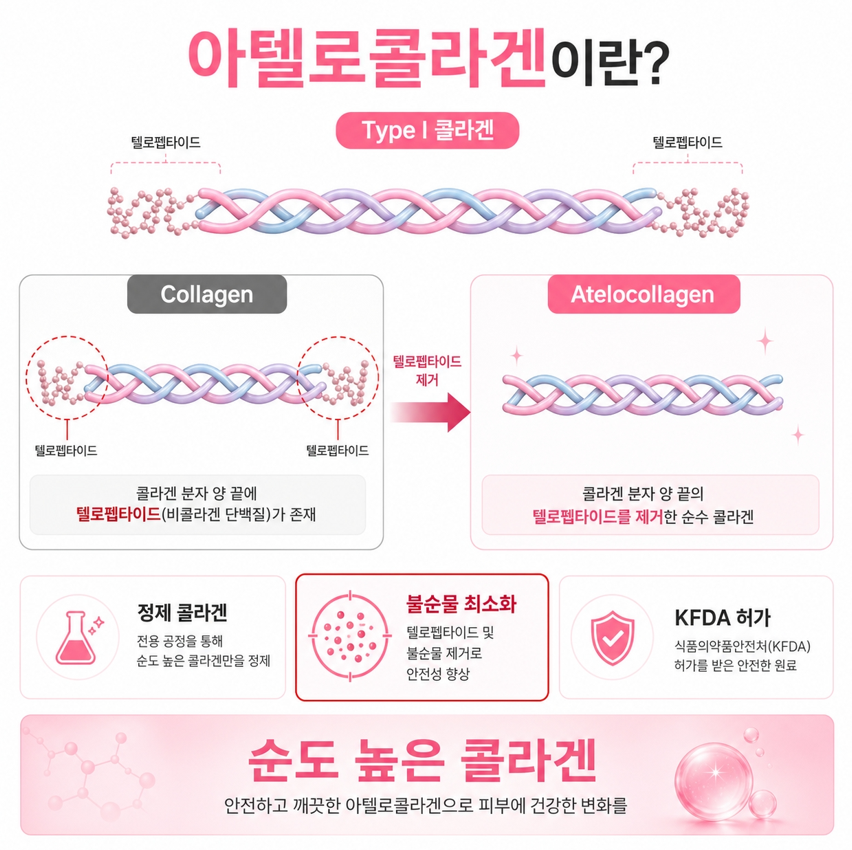
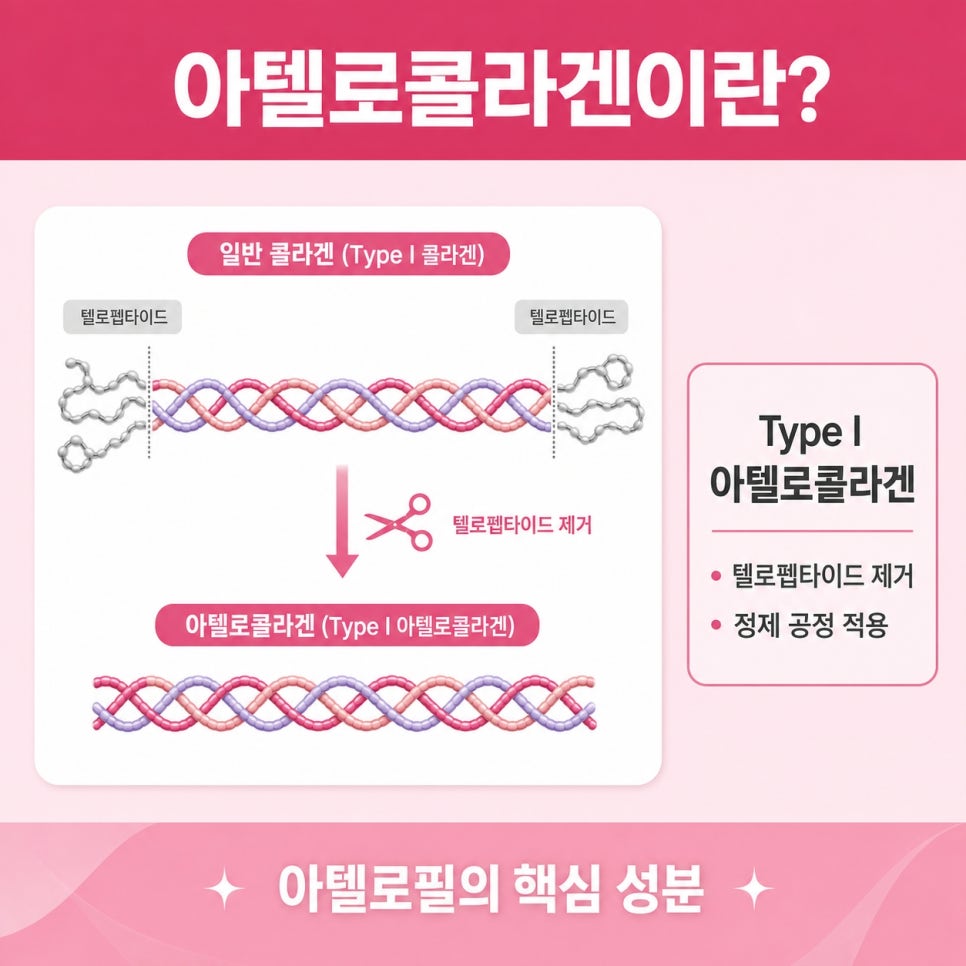
    Atelocollagen is collagen with the telopeptides removed from both ends of the collagen molecule.

    Telopeptides are one of the regions linked to immune response, and the process of removing them is used to lower collagen’s antigenicity.

    under-eye collagen injection illustration 7

    “Collagen’s triple-helix structure shows low immunogenicity across species, but the telopeptide regions at both ends of the molecule show higher immunogenicity.”

    That’s how an atelocollagen overview on the international academic database ScienceDirect describes it.

    However, removing telopeptides doesn’t completely eliminate the possibility of allergic or immune reactions.

    In fact, an international study (PubMed) on older bovine-derived collagen injectables reported hypersensitivity reactions at the treatment site in roughly 1.1% to 5.0% of cases. However, this figure comes from research on a different product rather than Atelofill itself, so reaction rates can vary by product.

    Findings vary across products and studies, but this data illustrates that removing telopeptides doesn’t bring the risk of immune response down to zero.

    In addition, the degree of post-injection collagen synthesis or skin-texture improvement can vary from person to person, and no specific result can be expected to occur the same way for everyone.

    under-eye collagen injection illustration 8

    Key Points
    ✅ Atelofill is a Type I atelocollagen-based tissue filler used in under-eye collagen injections.
    ✅ Removing telopeptides lowers antigenicity, but it doesn’t completely remove the possibility of an immune response.

    What Should You Check Before and After an Under-Eye Collagen Injection?

    The under-eye area requires more careful evaluation than other parts of the face.

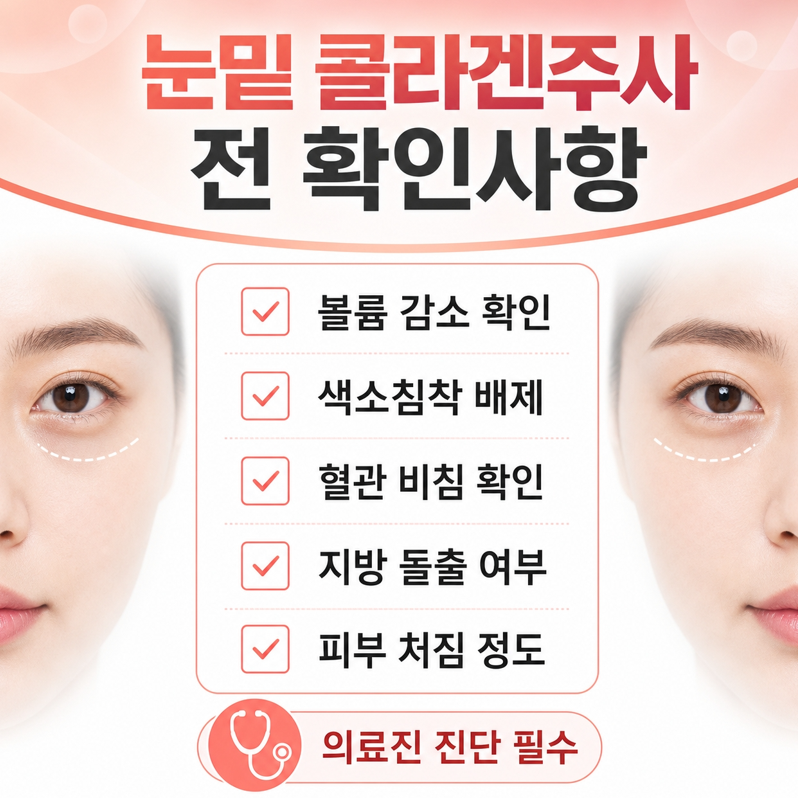
    Before treatment, it’s essential to identify the cause of the hollowing, assess skin thickness, and check the product’s approved indications.

    Checklist
    ✅ Have you identified the exact cause of under-eye hollowing (reduced elasticity, fat changes, or pigmentation)?
    ✅ Have you checked the skin thickness and injection site around the eyes?
    ✅ Have you checked the product’s approved use and intended purpose per regulatory authorities?
    ✅ Have you discussed the realistic range of expected changes with your provider?

    under-eye collagen injection illustration 9

    After treatment, temporary swelling, redness, bruising, and tenderness can occur.

    To minimize unnecessary irritation during recovery, keep the following in mind.

    under-eye collagen injection illustration 10

    • Avoid pressing or massaging the treated area firmly
    • Avoid saunas and intense exercise for a while
    • Keep the injection site clean
    • Follow your provider’s guidance on when to resume makeup and face washing
    • See a doctor if you experience severe pain or persistent swelling

    under-eye collagen injection illustration 11

    Recovery Timeline
    ✅ Swelling and bruising are generally reported to subside within 7 to 14 days. Many cases are reported to resolve within this period without pain, and this pattern can be part of a typical recovery process.
    Precautions
    ⚠ In rare cases, infection, allergic reactions, nodules, or vascular complications can occur.
    ⚠ If sudden severe pain, skin color changes, or vision problems occur after treatment, seek emergency care immediately.

    If you’d like to learn more about under-eye collagen injections and Atelofill’s ingredients, you can check the product information on the Atelofill Collagen Skin Research Lab homepage.


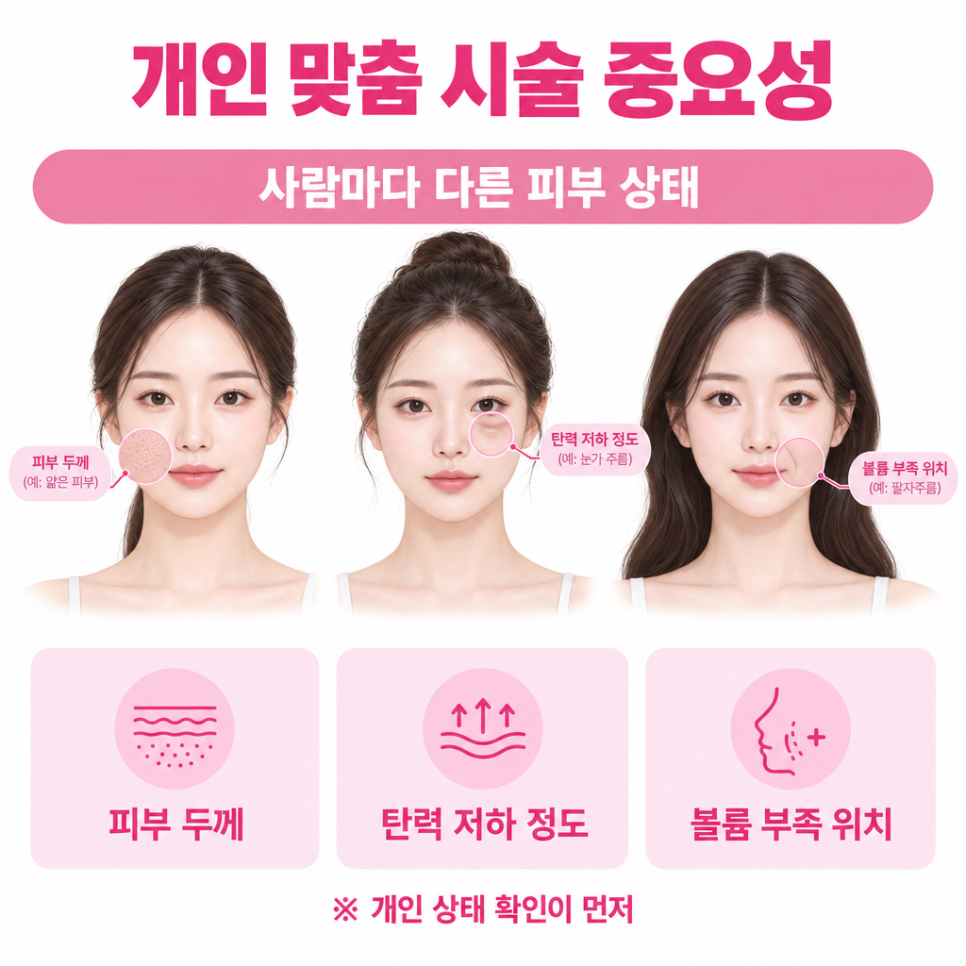
    The under-eye area is one where you need to consider not just skin elasticity but also fat and the surrounding tissue structure.

    Rather than simply filling in the hollow, the first step is understanding what caused the change.

    If you’re considering an under-eye collagen injection or Atelofill, make sure you fully understand the ingredients, characteristics, expected changes, and potential side effects, and consult your provider to determine whether it’s right for you.

    under-eye collagen injection illustration 12

    Frequently Asked Questions

    under-eye collagen injection illustration 13

    1. Are under-eye collagen injections the same as filler treatments?
    No, they differ in ingredients and physical properties. Hyaluronic acid fillers are mainly used for physical volume replacement, while collagen-based tissue fillers rely on collagen. The specific intended use should be confirmed through each product’s approved indications.

    2. Can it help with dark circles?
    Dark circles have various causes, including pigmentation, visible blood vessels, and structural shadowing. If the cause is a shadow from under-eye hollowing, a volume change may affect appearance, but it’s difficult to expect results for every type of dark circle.

    3. How long do the results last?
    Duration varies depending on the product’s properties, the injected volume, and individual tissue condition. For Atelofill’s specific duration, it’s best to check the approved product information and consult your provider.

    4. Can you return to daily activities right after treatment?
    Most people can resume daily activities the same day, but it’s safer to avoid saunas, intense exercise, and excessive massaging for a while. If swelling or bruising persists for more than one to two weeks, it’s a good idea to see a doctor.


    References

    · Korea Daily, “The Secret to a Youthful Face Is Collagen… It Declines About 1% a Year After Age 25.” Read more
    · Hidoc Expert Column, “Aftercare for Fillers: Bruising and Swelling Are Common, but ‘Vascular Occlusion’ Is the Biggest Risk.” Read more
    · Hidoc Expert Column, “The Cause of Dark Circles Isn’t Just Fatigue — It’s ‘Under-Eye Fat’ and ‘Structure.’” Read more
    · PubMed, “Human Antibody Response Following Multiple Injections of Bovine Collagen.” Read more
    · Korea Ministry of Food and Drug Safety (MFDS), Medical Device Safety Information (Fillers and Tissue Repair Biomaterials). Read more

    This article is intended for general health information purposes only and is not a substitute for individual diagnosis or treatment. If you have symptoms, please consult a medical professional.

  • Atelofill Collagen Injection: 3 Things to Check for Skin Collagen

    Atelofill Collagen Injection: 3 Things to Check for Skin Collagen

    SummaryAtelofill collagen injection is a tissue repair material based on Type I atelocollagen, used to directly replenish the collagen skin needs. This guide covers the product’s ingredients and characteristics, the skin concerns it may address, and a checklist to review before treatment.

    There are moments when your reflection looks different from before.

    It’s not just one more wrinkle — your cheeks or under-eye area may look hollow, and your whole face can feel like it’s lost its firmness.

    At times like this, many people start looking into ways to replenish collagen directly in the skin, such as Atelofill collagen injection.

    This article covers why skin elasticity declines, the ingredients and characteristics of Atelofill collagen injection, how atelocollagen differs from regular collagen, and a checklist to review before treatment.

    Rather than deciding based on a product name alone, it’s important to look at both the ingredients and the areas it’s applied to.

    Atelofill collagen injection

    Why Does Skin Elasticity Decline?

    Loss of skin elasticity occurs when declining collagen levels overlap with various external factors.

    Collagen is the key protein that makes up skin tissue and supports its structure.

    As we age, the internal environment of the skin keeps changing.

    When factors like UV exposure, dry conditions, or lifestyle habits are added on top of that, a loss of elasticity can become noticeable sooner.

    This change isn’t limited to wrinkles alone — it can also show up in skin thickness and volume.

    Atelofill collagen injection related image 2

    Key Points
    · Collagen is the protein that supports the skin’s structure.
    · Elasticity loss progresses as age, UV exposure, and lifestyle habits overlap.
    · These changes can appear not only as wrinkles but also as volume loss.

    Atelofill collagen injection related image 4

    Skin Change Self-Check Checklist
    ✅ My skin feels thinner and less firm than before
    ✅ Fine lines have started to become noticeable
    ✅ Hollowing under the eyes or in the cheeks bothers me
    ✅ My skin looks loose rather than firm
    ✅ Makeup doesn’t fully hide a tired-looking appearance

    Atelofill collagen injection related image 5

    If several of these apply to you, surface-level skin care alone may feel limited.

    This is why more people are becoming interested in ways to replenish collagen within the skin’s structure itself.


    What Is Atelofill Collagen Injection?

    Atelofill is a product used to replenish the collagen that skin tissue needs.

    Atelofill is known as a tissue repair material that uses collagen, based on Type I atelocollagen.

    Atelofill collagen injection related image 3

    What’s important here is that this approach differs from ingredients applied topically, like cosmetics.

    While cosmetics focus on the surface of the skin, Atelofill is used by having a medical professional assess the skin’s condition and the areas that need attention, then inject it into the appropriate location.

    So even with the same product, where, how much, and how it’s applied all matter.

    Atelofill collagen injection related image 6

    Key Points
    · Atelofill collagen injection is known as a tissue repair material based on Type I atelocollagen.
    · It replenishes collagen within the tissue itself, not just on the skin’s surface.
    · The treatment area, amount, and method are determined through consultation with a medical professional.

    How Is Atelocollagen Different From Regular Collagen?

    Atelocollagen differs from regular collagen in that it is processed to reduce immune response.

    Atelocollagen refers to collagen that has had the telopeptides at both ends of the collagen molecule removed.

    Atelofill collagen injection related image 7

    Type I collagen molecules have a segment called the telopeptide at each end, and this segment is known to be the main cause of immune reactions.

    Atelofill is characterized by being based on this type of atelocollagen.

    Category Regular Collagen Atelocollagen
    Telopeptide Present at both ends Removed
    Main Characteristic May trigger immune response Used as a biocompatible material
    Main Use Food, cosmetic ingredients, etc. Tissue repair materials, artificial skin, etc.

    So when researching Atelofill collagen injection, it’s a good idea to check what type of collagen is used, what purpose the product is approved for, and whether the approach fits your specific skin concerns.


    What Should You Check Before an Atelofill Treatment?

    Atelofill can be considered through consultation when you have concerns related to structural skin changes, such as loss of elasticity or volume.

    Skin Concerns Where This May Be Considered

    Atelofill collagen injection related image 8

    1. When hollowing under the eyes creates a tired-looking appearance that bothers you
    2. When volume loss in the cheek area is noticeable
    3. When declining skin elasticity is accompanied by concerns about fine lines
    4. When the skin in a specific area of the face feels thin and lacking in firmness

    That said, even similar-looking hollowing doesn’t always have the same cause.

    Factors such as skin thickness, fat distribution, bone structure, degree of aging, and facial expression habits can all play a role.

    So rather than expecting the same result as before-and-after photos seen online, it’s necessary to first have your current skin condition assessed.

    Pre-Treatment Checklist

    Atelofill collagen injection related image 9

    Checklist
    ✅ Have you confirmed the exact product name and ingredients?
    ✅ Have you identified whether your main concern is elasticity, fine lines, or volume loss?
    ✅ Have you discussed which areas will be treated and how much will be used?
    ✅ Have you been informed about possible reactions after treatment, such as redness, swelling, or bruising?
    ✅ Have you told your medical provider about any medications you’re taking or allergies you have?
    ✅ Have you reviewed not only the expected changes but also the limitations and precautions?
    Precautions
    The degree of change and how long it lasts after treatment can vary from person to person.
    Redness, swelling, or bruising may occur temporarily, so it’s important to follow your medical provider’s guidance on recovery.

    Atelofill collagen injection related image 10

    If you’re concerned about skin elasticity and volume loss, it’s best to first understand what your skin actually needs, rather than simply following a popular treatment trend.

    If you’re considering Atelofill collagen injection, we recommend having a thorough consultation with a medical professional to confirm whether the treatment plan is right for you.

    More information is also available at the Atelofill Collagen Skin Research Institute homepage.


    Frequently Asked Questions

    1. Is Atelofill the same as a filler?
    Atelofill is known as a tissue repair material based on Type I atelocollagen. Rather than treating all injectable treatments as the same, it’s helpful to look at each product’s ingredients and intended use separately.

    2. Does one treatment produce immediate results?
    Right after the injection, swelling from the procedure itself can occur. Rather than judging by how you look immediately afterward, it’s important to follow the recovery timeline your medical provider outlines — and the degree of change and how long it lasts can vary from person to person.

    3. Is the same treatment applied across the whole face?
    No, it isn’t. Since skin thickness, the degree of elasticity loss, and areas lacking volume differ from person to person, the treatment area and amount also vary. Assessing your individual condition first is necessary.

    4. Are there precautions to keep in mind after treatment?
    Depending on the treatment area, temporary redness, swelling, or bruising may occur. It’s a good idea to inform your medical provider in advance about any medications you’re taking or allergy history.


    References

    · Jeon Young-sun, Kang Sang-mo, “The Effect of Collagen Intake on Facial Skin Wrinkles,” Journal of the Korean Society of Aesthetics and Cosmetology, Vol. 7, No. 2, 2009. View
    · Ministry of Food and Drug Safety (Korea), “Key Supplementary Case Studies – Collagen-Based Tissue Repair Materials,” Ministry of Food and Drug Safety. View


    This article is intended for general health information purposes only and is not a substitute for individual diagnosis or treatment. If you have symptoms, please consult a medical professional.

  • Collagen Skin Booster: 3 Key Features of Atelofill’s Atelocollagen

    Collagen Skin Booster: 3 Key Features of Atelofill’s Atelocollagen

    SummaryHere’s what to know before talking to a provider about collagen skin boosters and Atelofill: the ingredient profile of Type I atelocollagen, which skin concerns it may address, and what to confirm before treatment.

    Have you ever looked in the mirror and felt your face just doesn’t look the way it used to?
    No matter how much skincare you apply, your cheeks and under-eye area keep looking hollow, and firmness doesn’t bounce back easily.

    If concerns like these led you to search for collagen skin booster, you may have wondered whether the real cause lies deeper than the skin’s surface — in the collagen within the dermis itself.

    This article covers everything from what a collagen skin booster is to the ingredient characteristics of Atelofill, a Type I atelocollagen-based tissue filler. We’ll also look at which skin concerns it may be considered for and what to check before treatment.

    Key Points
    · Collagen is a major structural protein that makes up the skin’s dermis.
    · A collagen skin booster covers a range of products with different ingredients, used depending on skin condition and goals.
    · Atelofill is a collagen-based tissue filler built on Type I atelocollagen.
    · A defining feature of atelocollagen is that the telopeptide is removed during purification.

    collagen skin booster

    collagen skin booster related image 2

    collagen skin booster related image 3

    What Is a Collagen Skin Booster, and Why Is It Getting Attention?

    To put it simply, “collagen skin booster” doesn’t refer to a single ingredient.

    A collagen skin booster is an umbrella term for treatments and products that use collagen-based ingredients to support the structure of the skin’s dermis and help improve overall skin condition.

    Skin is made up of several layers, including the epidermis and dermis, and the dermis contains structural components such as collagen and elastin.
    As aging progresses and external stressors like UV exposure add up over time, the balance between collagen production and breakdown can gradually shift.

    As a result, skin firmness may start to feel different than before, sometimes alongside fine lines, changes in skin texture, and volume loss.
    That’s why interest has recently grown in approaches that go beyond surface-level care and focus on the skin’s tissue and collagen itself.

    collagen skin booster related image 4

    collagen skin booster related image 5

    collagen skin booster related image 6

    Why Isn’t Collagen Just Produced Once and Done?

    Collagen is a key structural protein found not only in skin but also in bone, cartilage, tendons, and other tissues.
    It isn’t produced once and left unchanged — the body continuously repeats cycles of production and breakdown.

    It’s worth remembering that this balance can shift depending on factors such as aging, UV exposure, and lifestyle environment.


    What Ingredients Make Up Atelofill?

    Atelofill is a collagen-based tissue filler developed by Dalim Tissen, built on Type I atelocollagen.

    Atelocollagen refers to collagen that has had the telopeptide regions at both ends of the collagen molecule removed during purification.
    Telopeptides are known as regions that may be associated with immune response.

    Purification technology has advanced toward removing these regions, and atelocollagen is introduced as a form of collagen focused on lowering immunogenicity.

    collagen skin booster related image 7

    collagen skin booster related image 8

    Key Points
    · Standard collagen: telopeptides remain at both ends of the molecule
    · Atelocollagen: telopeptides are removed during purification
    · Atelofill: based on Type I atelocollagen, a medical device approved by Korea’s Ministry of Food and Drug Safety (MFDS)
    · Different application method and purpose from oral collagen supplements and cosmetics

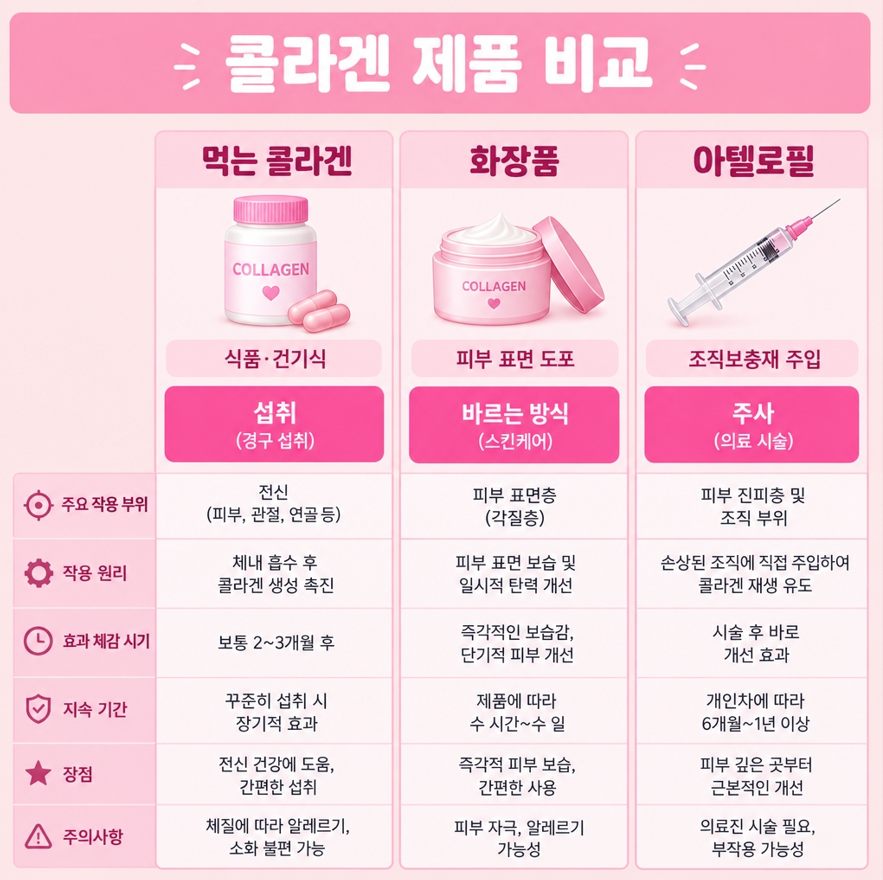
    The name may sound similar to oral collagen supplements or collagen cosmetics, but the application method and purpose differ.
    Oral collagen is consumed as a food or health functional food, while cosmetics are applied to the skin’s surface.

    Atelofill, on the other hand, takes a fundamentally different approach, as it’s classified as a medical device in the collagen-based tissue filler category. It also differs in characteristics from other substances such as hyaluronic acid, so rather than ranking one as superior, it’s more important to find the approach that fits your current skin concerns.

    collagen skin booster related image 9


    What Skin Concerns Might Atelofill Address?

    People researching collagen skin boosters are often dealing with more than one change at the same time.
    See if any of the items below sound familiar.

    Checklist
    ✅ My skin feels less firm than it used to
    ✅ My cheeks or parts of my face look hollow
    ✅ I’m bothered by fine lines and skin texture changes together
    ✅ I’m concerned about an overall change in my facial condition

    collagen skin booster related image 10

    If any of these apply to you, you can consult a provider to check whether Atelofill may be a suitable option.

    That said, skin thickness, firmness, and facial volume distribution vary from person to person, even within the same age group.
    That’s why determining the right treatment area and dosage matters more than simply adding more product because collagen is lacking.


    What Should You Check Before an Atelofill Treatment?

    In short, it’s not enough to check the product name alone — you need to review the actual treatment plan as well.

    The first step is to fully describe your current skin condition and areas of concern to your provider and get their input on whether Atelofill is appropriate.
    Injection sites, dosage, number of sessions, and intervals between treatments can vary depending on individual skin condition and goals.

    collagen skin booster related image 11

    Precautions
    · As with any injection procedure, temporary redness, swelling, bruising, or pain may occur.
    · Recovery can vary from person to person.
    · Be sure to inform your provider in advance about any medications you’re taking, allergy history, and past treatment history.

    collagen skin booster related image 12

    Summary
    · Oral collagen: food/health functional food, taken by ingestion
    · Collagen cosmetics: applied to the skin’s surface
    · Atelofill: Type I atelocollagen-based tissue filler, MFDS-approved medical device

    Skin aging isn’t a change that starts suddenly overnight.
    Over time, the environment that supports the skin gradually shifts, and that shift is what shows up as reduced firmness, fine lines, and volume changes.

    collagen skin booster related image 13

    Rather than choosing a treatment simply because it’s trending, it’s important to fully review your current skin condition, facial structure, and desired outcome, and consult with a provider.
    If you’d like to learn more about approaches that also take dermal collagen into account, you can find more information at the Atelofill Collagen Skin Research Institute homepage.

    collagen skin booster related image 14


    Frequently Asked Questions

    1. Is Atelofill the same as a hyaluronic acid filler?
    They can’t be considered the same product. The main ingredients and product characteristics differ, so a provider’s judgment is needed based on your desired outcome and treatment area.

    2. Is one treatment session enough?
    It’s difficult to set a single number of sessions or interval that applies to everyone. This can vary depending on skin condition, treatment area, injected volume, and individual response, so it’s best to build a plan through consultation.

    3. Can it be applied the same way across the whole face?
    It isn’t applied the same way to every area. Your provider needs to determine the appropriate area and method based on skin thickness, tissue condition, and areas of concern.

    4. Can I resume normal activities right after treatment?
    This varies by individual, but redness, swelling, or bruising may appear at the injection site. If you have an important event coming up, it’s best to plan your treatment date with the recovery period in mind.

    5. What’s the difference between a collagen skin booster and a regular filler?
    The main ingredients used and how they act within the tissue differ. An approach that replenishes collagen itself and an approach that uses other substances differ in purpose and characteristics, so it’s best to consult a provider to find what suits you.


    References

    · Hidoc, “Atelocollagen for Restoring Muscle and Cartilage… ‘Emerging as a Key Material in Regenerative Medicine,’” Hidoc, 2026. View source
    · Raportian, “Dalim Tissen Enters the Aesthetic Market with ‘Atelofill,’ Built on Its Collagen Research Technology,” Raportian, 2026. View source

    This article is intended for general health information purposes only and is not a substitute for individual diagnosis or treatment. If you have symptoms, please consult a qualified healthcare provider.

  • Under Eye Collagen Injection: 3 Causes of Hollow Under-Eyes and Atelofill

    Under Eye Collagen Injection: 3 Causes of Hollow Under-Eyes and Atelofill

    SummaryBefore looking into an under eye collagen injection, it’s worth understanding what actually causes hollow under-eyes. This article covers Atelofill’s atelocollagen ingredient, the principle behind telopeptide removal, and a pre-treatment checklist. Be sure to take a look.

    Most of us have caught a glimpse in the mirror and noticed our under-eyes looking shadowed.
    If you’re being told you look tired even after a full night’s sleep, lack of sleep may not be the actual cause.

    As the skin around the eyes thins and loses elasticity with age, the under-eye area can start to look hollow at the same time.

    That’s why more people today are looking past concealer to consider what’s happening beneath the skin, including options like an under eye collagen injection.

    This article walks through the causes of hollow under-eyes, how an under eye collagen injection works, atelocollagen — the key ingredient in Atelofill — and what to check before treatment.
    Understanding both under-eye volume loss and changes in skin elasticity can help you choose an approach suited to the actual cause, rather than simply adding volume.

    under eye collagen injection

    under eye collagen injection illustration 2

    Why Do Under-Eyes Look More Hollow With Age?

    Hollow under-eyes develop as collagen in the skin decreases and the tissue that supports volume becomes thinner.
    Hollow under-eyes refer to a condition in which reduced collagen density in the dermis and decreased subcutaneous volume combine to make the under-eye area appear sunken.

    Collagen is one of the primary structural proteins supporting the skin’s dermal layer.
    It’s also found widely throughout the body, in bone, muscle, cartilage, and other tissues.

    The issue is that as we age, the function of fibroblasts — the cells that produce collagen — gradually declines.
    Aging fibroblasts are known to progressively slow down collagen production and secretion.

    Add in UV exposure, repeated facial expressions, and dehydrated skin, and the skin can thin further while elasticity drops, making under-eye contours more noticeable.
    Because the skin around the eyes is naturally thin to begin with, even small volume changes tend to show up more easily there.

    under eye collagen injection illustration 3

    Cause Key Characteristics
    Volume loss Collagen and subcutaneous fat thin out, producing a hollow look
    Pigmentation Reduced circulation or melanin buildup can make the area look darker
    Fat protrusion Under-eye fat pushes forward and casts a shadow
    Skin sagging Reduced elasticity causes the skin itself to loosen

    under eye collagen injection illustration 4

    Key Points
    ✔ Hollow under-eyes result from a combination of volume loss and reduced skin elasticity.
    ✔ The right approach depends on whether the cause is volume loss, fat protrusion, or pigmentation.

    How Is an Under Eye Collagen Injection Different From a General Volume Treatment?

    An under eye collagen injection differs from a typical volume treatment in that it adds volume while also factoring in the collagen environment of the skin tissue.
    An under eye collagen injection is a procedure that supplements tissue with collagen to help restore volume in hollow areas.

    under eye collagen injection illustration 5

    Atelofill is a collagen-based tissue filler containing 3% Type I atelocollagen.
    The injected collagen supplements the tissue and provides an environment where cells can attach and proliferate, which may support fibroblast activity and the body’s own collagen production process.

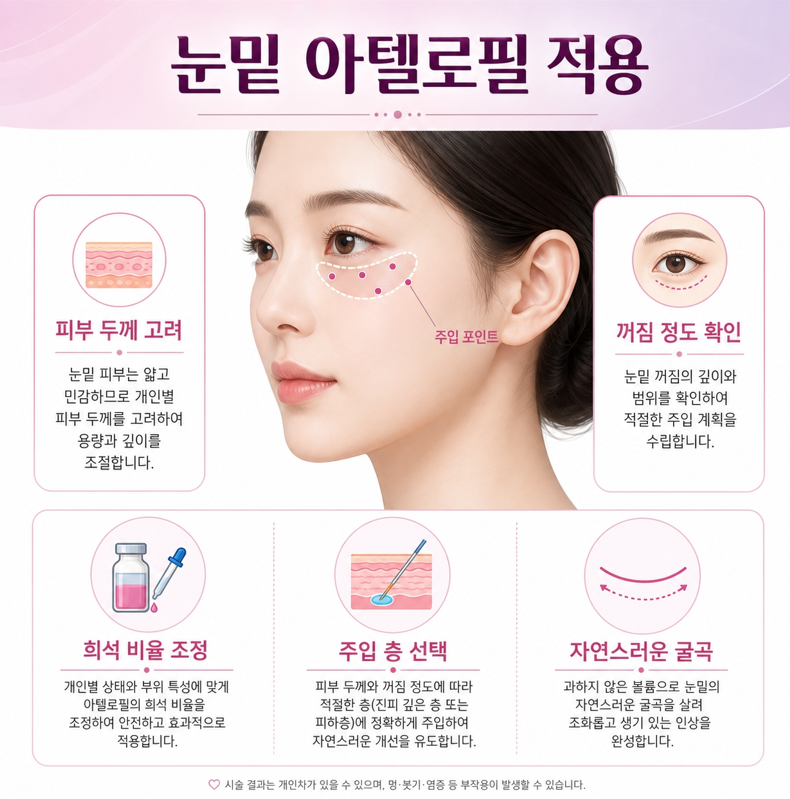
    That said, when considering an under eye collagen injection, what matters more than “how much volume is added” is creating a natural-looking contour that accounts for the thin under-eye skin and existing volume.

    under eye collagen injection illustration 6

    What You May Expect
    ✔ Injected collagen supplements the tissue, which may support a natural-looking sense of volume.
    ✔ By providing an environment for cell attachment, it has been reported to potentially support the body’s own collagen production process.

    What Is Atelocollagen in Atelofill?

    Atelocollagen is collagen that has had the telopeptide region — the part associated with immune response — removed to improve biocompatibility.
    Atelocollagen refers to collagen with the telopeptides removed from both ends of the molecule.

    under eye collagen injection illustration 7

    There’s a structure called the telopeptide at both ends of the collagen molecule.
    Because this region’s sequence varies between species, it’s known as a primary site that can trigger immune responses in cross-species (xenogeneic) collagen.
    Some sources indicate that enzymatically removing the telopeptides can produce collagen that retains the same properties as Type I collagen while lowering immunogenicity.

    Atelofill uses atelocollagen with the telopeptides removed and is manufactured using Dalim Tissen’s isolation and processing technology.

    So when researching Atelofill, it’s worth checking not just whether a product contains collagen, but what form of collagen it actually uses.

    Key Points
    ✔ Telopeptides are known to be the region associated with collagen’s immune response.
    ✔ Atelocollagen is a form of collagen with this region removed to improve biocompatibility.

    What Should You Check Before an Under Eye Collagen Injection?

    Identifying the cause of your hollow under-eyes and your individual skin condition first is what allows you to determine whether this treatment is right for you.
    A pre-treatment check is the process of reviewing the cause of your hollow under-eyes and your health status together with a medical provider.

    under eye collagen injection illustration 8

    Dark-looking under-eyes can result from several factors beyond actual volume loss, including pigmentation, visible blood vessels, under-eye fat protrusion, and skin sagging.
    So it’s important to first identify the main cause of the hollow appearance.

    For Atelofill treatment as well, the amount used, dilution ratio, and injection depth can vary depending on skin condition and treatment area, and temporary local reactions such as swelling or a bumpy texture (embossing) may occur after treatment.
    If you have an autoimmune condition, are being treated for another condition, or are taking any medications, be sure to inform your medical provider beforehand.

    under eye collagen injection illustration 9

    under eye collagen injection illustration 10

    Checklist
    ✅ Have you identified whether the cause of your hollow under-eyes is volume loss, pigmentation, fat protrusion, or skin sagging?
    ✅ Have you informed your medical provider in advance of any autoimmune conditions or medications you’re taking?
    ✅ Have you discussed the dilution ratio and injection depth appropriate for your treatment area and goals?
    ✅ Have you had a thorough consultation with an experienced medical provider?
    Precautions
    ⚠ Temporary local reactions such as swelling or a bumpy texture (embossing) may occur after treatment.
    ⚠ Results and recovery time can vary depending on individual skin condition.

    Frequently Asked Questions

    under eye collagen injection illustration 11

    1. What kind of product is Atelofill?
    It’s a collagen-based tissue filler built on Type I atelocollagen. Its key feature is the use of atelocollagen with the telopeptides removed.

    2. Can it be used for hollow under-eyes?
    Depending on a medical provider’s diagnosis and judgment, it may be used in areas lacking volume, such as under the eyes. However, if the cause is fat protrusion or skin sagging rather than volume loss, a different approach may be more suitable.

    3. How long does an under eye collagen injection take?
    This varies depending on the treatment area, anesthesia, and preparation involved, but according to product training materials, the treatment itself typically takes about 20 to 30 minutes.

    4. Can I wear makeup right after treatment?
    Product training materials advise waiting until the day after treatment to cleanse the face or apply makeup. That said, actual aftercare should follow the specific guidance given by the clinic where you received treatment.


    Hollow Under-Eyes: Look at Balance Before You Look at Volume

    under eye collagen injection illustration 12

    Hollow under-eyes rarely appear overnight. In most cases, they become noticeable gradually as skin elasticity and tissue volume shift over time.

    So if you’re researching an under eye collagen injection, it’s important to consider whether the treatment can offer a natural-looking improvement based on your current under-eye skin condition and overall facial balance, rather than focusing on adding as much volume as possible.

    under eye collagen injection illustration 13

    If you’re concerned about looking tired because of hollow under-eyes, or you’re noticing reduced elasticity, fine lines, and volume loss together, consider consulting a medical provider first to check the underlying cause and whether Atelofill may be suitable, rather than choosing an under eye collagen injection right away.
    For more detailed product information, you can also visit the Atelofill Collagen Skin Research Institute website.

    under eye collagen injection illustration 14


    References

    · DailyVet, “[Understanding Collagen ①] What Exactly Is Atelocollagen?,” DailyVet, 2024. View source
    · Health Kyunghyang, “To Fight Skin Aging, Target Fibroblasts,” Health Kyunghyang, 2021. View source
    · Rapportian, “Dalim Tissen Enters the Aesthetics Market With Atelofill, Built on Its Collagen Research Technology,” Rapportian, 2026. View source


    This article is intended for general health information purposes only and is not a substitute for individual diagnosis or treatment.
    If you have symptoms, please consult a licensed medical professional.

  • Atelocollagen Filler: 3 Facts to Know Before Treatment

    Atelocollagen Filler: 3 Facts to Know Before Treatment

    SummaryIf you’re considering a facial firming treatment, it’s worth reviewing the features of Atelofill—a Type I atelocollagen filler—how it differs from regular collagen, the changes you might expect, treatment time and intervals, and possible side effects, then making your decision after a thorough consultation with a licensed medical professional.

    Even when you follow the same cleansing and makeup routine,
    there are days your face looks unusually tired in the mirror.

    Your cheeks may look slightly hollow, and fine lines around the eyes and nasolabial folds can seem more noticeable than before.

    Is it simply fatigue? In many cases, these changes may actually be linked to
    shifts in your skin’s collagen.

    facial firming treatment

    This article covers what’s useful to know about collagen’s role before considering a facial firming treatment,
    along with the features of Atelofill, a tissue filler based on Type I atelocollagen.
    We’ll walk through the differences between regular collagen and atelocollagen, treatment time and intervals, and side effects and precautions, in order.

    Key Points
    ✔ A decline in facial elasticity may result from a combination of factors, including collagen changes, aging, UV exposure, and dryness.
    ✔ Atelofill is a collagen-based tissue filler made from Type I atelocollagen and is a medical device authorized by Korea’s Ministry of Food and Drug Safety (MFDS) for use in Korea; this authorization is not FDA clearance or approval in the United States.
    ✔ A defining feature of atelocollagen is that telopeptides, which may be involved in immune response, have been removed.

    facial firming treatment illustration 2

    Why Does Facial Elasticity Decline With Age?

    A decline in facial elasticity isn’t simply the result of sagging skin.
    Facial elasticity is influenced by a combination of factors, including support structures like collagen and elastin, changes in subcutaneous fat and soft tissue, repeated facial expressions, and UV exposure.

    Collagen in particular is a key protein that helps maintain skin structure,
    so when this environment changes, skin may feel thinner and less firm than before,
    fine lines can become more noticeable, and certain areas may appear to lack volume.

    According to various sources, skin collagen is known to gradually decrease each year starting in the mid-20s,
    and this decline can speed up further with UV exposure, dry conditions, and certain lifestyle habits.

    That’s why, when researching a facial firming treatment, it’s important to look beyond visible wrinkles alone
    and take a comprehensive look at your skin’s current elasticity, volume, and texture.

    facial firming treatment illustration 4


    What Is Atelofill, the Atelocollagen Filler Gaining Attention?

    Atelofill is a collagen-based tissue filler made from Type I atelocollagen, and it is a medical device authorized by Korea’s Ministry of Food and Drug Safety (MFDS) for use in Korea; this authorization is not FDA clearance or approval in the United States.
    It works by injecting the product into skin tissue to directly replenish collagen, which may help improve volume and skin elasticity.

    facial firming treatment illustration 5

    One notable point is that it may also play a role in stimulating your own collagen production.
    Because replenishing atelocollagen in skin tissue can affect the skin’s internal environment and may support your body’s own collagen production,
    it can be considered—under a medical professional’s judgment—for concerns such as volume loss, reduced elasticity, fine lines, and uneven skin texture.

    facial firming treatment illustration 6

    Key Points
    ✔ Atelofill works by directly replenishing collagen in skin tissue.
    ✔ The atelocollagen introduced may also play a role in stimulating your own collagen production.
    ✔ Results can vary depending on individual skin condition, degree of aging, and the injection site and volume.
    Changes You May Expect
    ✅ Improvement in areas with volume loss
    ✅ Improved skin elasticity in areas that appear less firm than before
    ✅ Care for noticeable fine lines
    ✅ Improvement in uneven skin texture

    That said, results are not the same for everyone.
    The degree of improvement and how long it lasts can vary depending on skin condition, treatment area, and injected volume.


    How Is Atelocollagen Different From Regular Collagen?

    Atelocollagen is collagen with the telopeptides removed from both ends of the collagen molecule.
    Telopeptides are non-helical regions where amino acid sequences vary between species, making them a part of the molecule that can be associated with immune response.

    facial firming treatment illustration 7

    Category Regular Collagen Atelocollagen
    Telopeptides Present Removed
    Potential for Immune Response Relatively higher Relatively lower
    Main Use Limited Medical materials such as tissue fillers

    That said, removing telopeptides does not completely eliminate the possibility of allergies or immune reactions.
    If you’ve previously experienced a hypersensitivity reaction to collagen or related ingredients, be sure to inform your medical provider before treatment.

    facial firming treatment illustration 8


    What Are the Treatment Time, Intervals, and Side Effects?

    Atelofill treatment time varies by area but typically takes about 20 to 40 minutes.
    Afterward, redness, swelling, or bruising may appear at the injection site, and some discomfort may last for about 1 to 3 days.

    facial firming treatment illustration 9

    The number of sessions also isn’t the same for everyone.
    Depending on skin condition and goals, 2 to 3 sessions spaced 2 to 4 weeks apart may be considered,
    after which follow-up touch-up treatments may be considered if needed, based on how well results are maintained.

    facial firming treatment illustration 10

    In terms of side effects, redness, swelling, bruising, and pain may occur at the injection site,
    and you may temporarily notice small nodules or an uneven surface.

    In rare cases, infection, inflammation, or hypersensitivity reactions may occur,
    so if any abnormal reaction persists or worsens, you should contact the clinic where you received treatment.

    facial firming treatment illustration 11

    Precautions
    ⚠ Redness, swelling, bruising, and pain may temporarily occur at the treatment site.
    ⚠ In rare cases, infection, inflammation, or hypersensitivity reactions may occur.
    ⚠ If any abnormal reaction persists, contact the clinic where you were treated immediately.
    When You Should Always Consult a Medical Professional Before Treatment
    ✅ If you have a history of hypersensitivity to collagen or injected ingredients
    ✅ If you are pregnant or breastfeeding
    ✅ If you have active infection, inflammation, or a skin condition at the treatment site
    ✅ If you have a history of abnormal scarring, such as keloids
    ✅ If you have an autoimmune condition or another issue requiring separate medical judgment

    facial firming treatment illustration 12

    Rather than assuming ‘a fixed number of sessions will finish the job’ or that results ‘will definitely last a certain number of months,’
    it’s better to build a plan around your actual post-treatment changes and skin condition.


    When skin starts to feel different than before, many people first turn to new skincare products or home care routines.
    But if changes in elasticity and volume are already a concern,
    looking beyond the skin’s surface to your skin’s internal collagen environment can be another approach worth considering.

    facial firming treatment illustration 15

    What matters isn’t whether a treatment is popular, but whether it’s right for your skin right now.
    If you’re considering a facial firming treatment, we recommend reviewing not only Atelofill’s features and possible changes,
    but also its side effects and precautions, and making your decision after consulting a medical professional.

    For more information about Atelofill, you can also visit the Atelofill Collagen Skin Research Institute website.


    Frequently Asked Questions

    1. Is Atelofill the same as a regular filler?
    Atelofill is a collagen-based tissue filler made from Type I atelocollagen. Because ingredients and approved uses vary by product, it’s best to check the specific ingredients and characteristics of the product being used rather than assuming it’s the same as other treatments.

    2. Do I only need one facial firming treatment session?
    The number of sessions needed depends on your individual skin condition and treatment goals. Atelofill is generally considered in 2 to 3 sessions spaced 2 to 4 weeks apart, but your actual treatment plan will be determined by your medical provider’s assessment.

    3. Can I resume normal activities right after treatment?
    This varies by individual, but redness, swelling, bruising, and pain may occur at the injection site, causing discomfort for about 1 to 3 days. If you have an important event coming up, it’s a good idea to schedule your treatment with this in mind.

    4. How long do results last?
    How long results last can vary depending on skin condition, injection site and volume, and individual lifestyle habits, so it’s difficult to state a fixed duration. It’s best to monitor your results after treatment and decide on any additional sessions accordingly.

    5. Is atelocollagen safer than regular collagen?
    Removing telopeptides is designed to lower the potential for immune response, but this does not completely eliminate the possibility of allergies or hypersensitivity reactions. If you’ve had a hypersensitivity reaction to collagen ingredients in the past, be sure to inform your medical provider before treatment.


    References

    · Raportian, “Dalim Tissen Enters the Aesthetics Market With ‘Atelofill,’ Built on Concentrated Collagen Research,” Raportian, 2026. Read more
    · DailyVet, “[Understanding Collagen ①] What Exactly Is Atelocollagen?,” DailyVet, 2024. Read more
    · Vogue Korea, “Collagen Declines With Age — Is There a Way to Restore Elasticity?,” Vogue Korea, 2025. Read more


    This article is intended for general health information purposes only and is not a substitute for individual diagnosis or treatment. If you have symptoms, please consult a medical professional.

  • Facial Collagen Injection: 3 Ways to Manage Under-Eye Hollows and Nasolabial Folds in Your 40s

    Facial Collagen Injection: 3 Ways to Manage Under-Eye Hollows and Nasolabial Folds in Your 40s

    SummaryFacial collagen injection is one option people consider for under-eye hollows, nasolabial folds, and reduced cheek volume that often appear in your 40s. This article covers what atelocollagen is, the features of AteloFill, and what to check before a procedure. Use it as a reference before your consultation.

    If your under-eye area looks hollow even after a full night’s sleep,
    it may not simply be from fatigue.

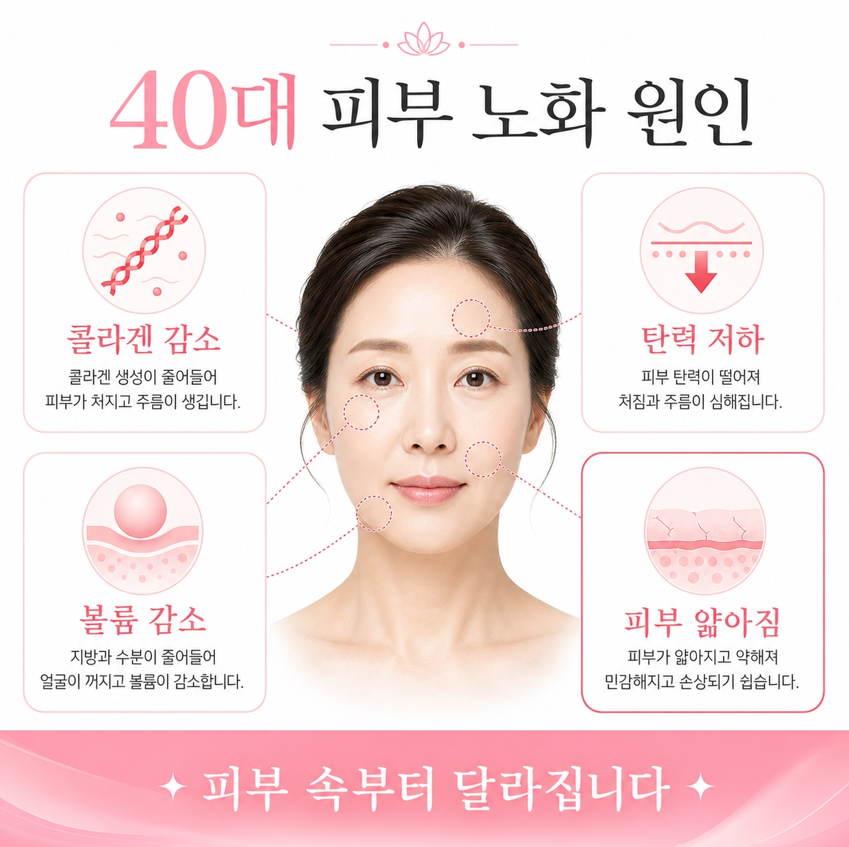
    In your 40s, collagen in the skin decreases and elasticity declines,
    and it’s common for under-eye hollows, nasolabial folds, and reduced cheek volume to appear together.

    That’s why one option that’s been mentioned recently to help address these changes
    is facial collagen injection.

    facial collagen injection

    This article explains why under-eye hollows and nasolabial folds become more noticeable in 40s skin,
    what a facial collagen injection is and how atelocollagen works,
    and what to check before a procedure.

    Based on verified sources,
    it focuses on practical, reference-worthy information rather than promotional claims.

    Why do under-eye hollows and nasolabial folds get more noticeable in your 40s?

    In short, it’s because collagen loss and reduced skin elasticity progress together.
    Skin aging refers to the process in which collagen and elastin in the dermis decrease,
    causing structural support and elasticity to decline together.

    The dermis contains components such as collagen and elastin
    that support the skin’s structure and elasticity.

    As we age, the activity of fibroblasts, which produce collagen, naturally declines,
    leading to gradual changes in the skin’s structural support and elasticity.

    When factors like UV exposure, dry environments, and lifestyle habits are added,
    signs of skin aging can become more noticeable.

    facial collagen injection related image 3

    facial collagen injection related image 4

    In your 40s especially, it’s common to see the changes below
    appear together, rather than just a single fine line.

    Checklist · Changes that often appear together in 40s skin
    ✅ Shadowing caused by hollowing under the eyes
    ✅ Nasolabial folds running from beside the nose to the corners of the mouth
    ✅ Reduced volume in the cheek area
    ✅ Overall decline in skin elasticity
    ✅ Skin that looks thin and dull
    Key Points
    ✔ In your 40s, under-eye hollows, nasolabial folds, and reduced cheek volume often appear together.
    ✔ Rather than focusing on visible wrinkles alone, it helps to consider elasticity and volume together.

    What exactly is a facial collagen injection?

    Facial collagen injection is a general term for procedures that replenish collagen within the skin
    to help address hollowed areas and reduced elasticity.

    Collagen is one of the main proteins that support the skin’s structure.
    As collagen levels decrease with age, skin can become thinner,
    and wrinkles and hollowing may become more noticeable.

    These changes are part of why collagen-based skincare
    has drawn growing interest.

    That said, not every product marketed as a “collagen injection”
    shares the same ingredients or mechanism of action.

    That’s why it matters to check what raw material was used, whether the product is a medical device approved by Korea’s Ministry of Food and Drug Safety (MFDS),
    and what its approved intended use actually is.

    facial collagen injection related image 5


    How is atelocollagen different from regular collagen?

    Atelocollagen is purified collagen with the telopeptides removed from the ends of the collagen molecule,
    lowering its potential to trigger an immune response
    .

    Type I collagen has a region called the telopeptide at each end,
    which is known to be a major factor behind immune responses in the body.

    When these telopeptides are removed using enzymes,
    the collagen keeps its original structure while its immunogenicity is lowered —
    this is what’s known as atelocollagen.

    So when looking at a collagen product applied to the skin,
    it’s worth checking what form of collagen it uses and how it was purified.

    facial collagen injection related image 6


    What are the features of AteloFill?

    AteloFill is a collagen-based tissue filler
    formulated with Type I atelocollagen
    .

    It was developed using Dalim Tissen’s patented multi-stage filtration and purification process,
    with a focus on minimizing impurities and telopeptides.

    It is a medical device approved by Korea’s Ministry of Food and Drug Safety (MFDS),
    and it is manufactured under the quality control standards of a GMP-certified facility.

    In other words, rather than looking at the name “collagen” alone,
    it’s important to check what type of collagen was used and how it was purified and managed.

    More details on AteloFill are available at the
    AteloFill Collagen Skin Research Institute website.

    facial collagen injection related image 7

    facial collagen injection related image 8

    Key Points
    ✔ AteloFill is a medical device approved by Korea’s MFDS, formulated with Type I atelocollagen.
    ✔ It’s important to check the purification method and approval status, not just the ingredient name.

    What changes might a facial collagen injection help with?

    Depending on an individual’s skin condition and the area treated,
    it may be used to help add volume to hollowed tissue.

    However, results and degree of change can vary from person to person,
    so no single outcome can be assumed for everyone.

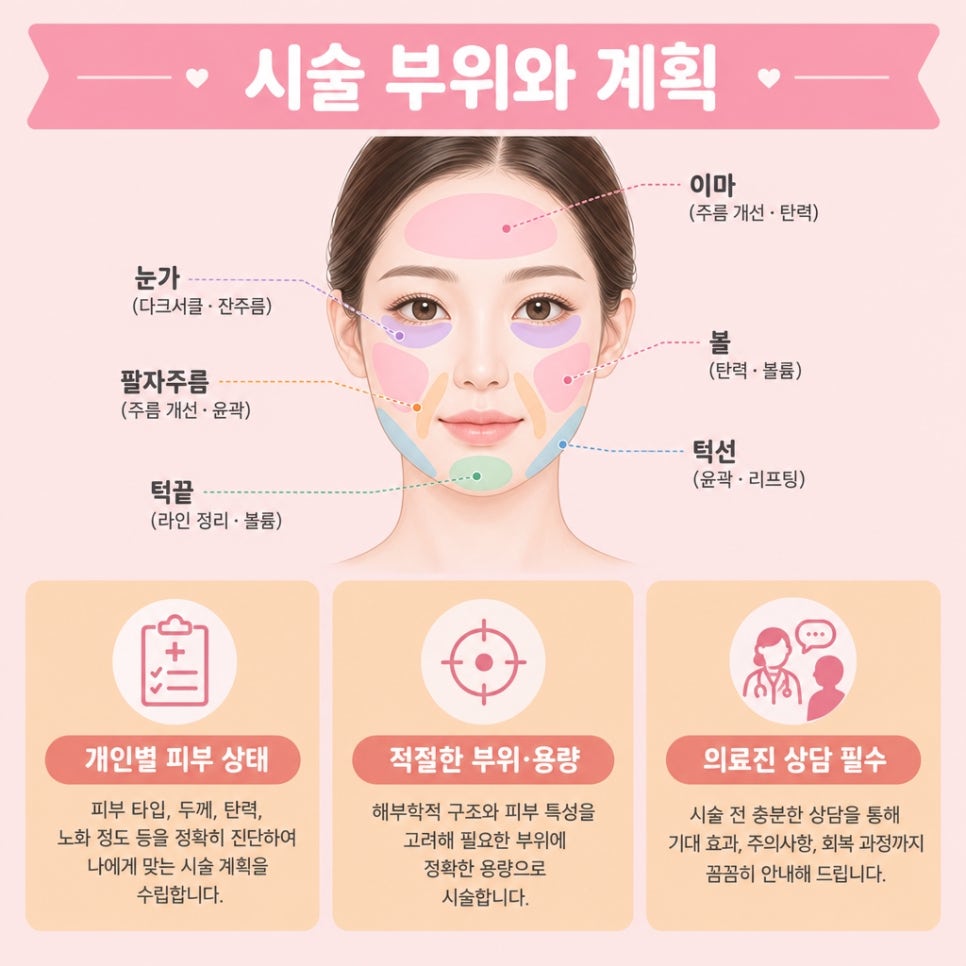
    Under-eye hollows and nasolabial folds may look similar on the surface,
    but the underlying tissue changes behind them differ somewhat.
    The table below summarizes these differences.

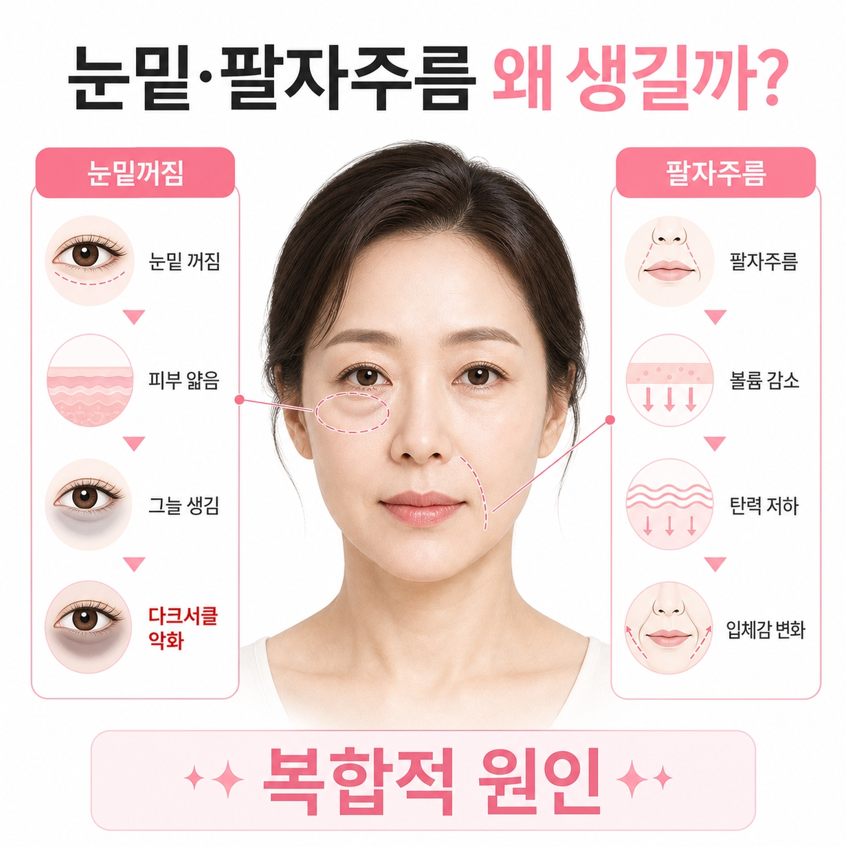
    Area Main Cause Visible Change
    Under-Eye Hollows Reduced skin elasticity, changes in surrounding tissue Shadowing, an appearance similar to dark circles
    Nasolabial Folds Reduced elasticity, changes in midface volume and fat position Deeper folds, a sagging appearance

    So when considering a facial collagen injection,
    it helps to look at the balance of volume across the whole face
    rather than focusing on just the under-eye area or the nasolabial folds alone.

    facial collagen injection related image 9

    facial collagen injection related image 10


    What should you check before the procedure?

    Even among people in their 40s, the degree of skin aging and facial structure vary from person to person.
    That’s why a thorough consultation should come first.

    Checklist · Before your consultation
    ✅ Have you discussed the cause of your concern (reduced elasticity, volume loss, etc.) with a medical professional?
    ✅ Have you confirmed the product’s ingredients and whether it’s an MFDS-approved medical device?
    ✅ Does the treatment area and intended use match your specific concern?
    ✅ Have you told your provider about past procedures and any allergy history?
    ✅ Have you been given a full explanation of possible post-procedure reactions such as swelling, bruising, or pain?

    facial collagen injection related image 12

    Precautions
    Reactions such as swelling, bruising, or pain after the procedure, as well as recovery time, can vary from person to person.
    Be sure to consult thoroughly with a medical professional before deciding.

    Frequently Asked Questions

    1. Do I need collagen care once I’m in my 40s?
    Age alone can’t determine whether a specific procedure is needed. That said, collagen levels and elasticity can change as skin ages, so if under-eye hollows, nasolabial folds, or reduced elasticity are a concern, it can help to discuss a management approach suited to your current condition.

    2. Is AteloFill the same as a typical skin booster?
    AteloFill is a collagen-based tissue filler formulated with Type I atelocollagen. Since products differ in main ingredients, approved purpose, and application method, it’s best to check each product’s individual characteristics rather than assuming they all fall into the same category.

    3. Can it be applied the same way to both the under-eye area and nasolabial folds?
    Because skin thickness and tissue structure differ across areas of the face, the same approach can’t be applied uniformly. Thinner-skinned areas like under the eyes in particular require a medical professional to fully assess the individual’s skin and anatomy before deciding whether to proceed.

    4. How long do the effects of a facial collagen injection last?
    How long results last can vary depending on the product used, individual skin condition, and treatment area. For an accurate estimate, it’s best to check directly with a medical professional during a consultation.

    facial collagen injection related image 13


    References

    · Rapportian, “Dalim Tissen Enters the Aesthetics Market with ‘AteloFill,’ Built on Its Collagen Research,” Rapportian. View source
    · HiDoc, “‘Atelocollagen,’ Which Restores Muscle and Cartilage… Drawing Attention as a Key Material in Regenerative Medicine,” HiDoc. View source
    · Vogue Korea, “Collagen Declines With Age — Is There a Way to Restore Elasticity?” Vogue Korea, 2025. View source

    facial collagen injection related image 14


    This article is intended for general health information purposes only and is not a substitute for individual diagnosis or treatment. If you have symptoms, please consult a medical professional.

  • Skin Collagen Injection: 3 Key Checks for Atelocollagen

    Skin Collagen Injection: 3 Key Checks for Atelocollagen

    SummaryUnlike cosmetics or health supplements, a skin collagen injection is generally used to help replenish collagen in depleted skin tissue. This article covers the causes of collagen loss and the features of AteloFill, a Type I atelocollagen-based product.
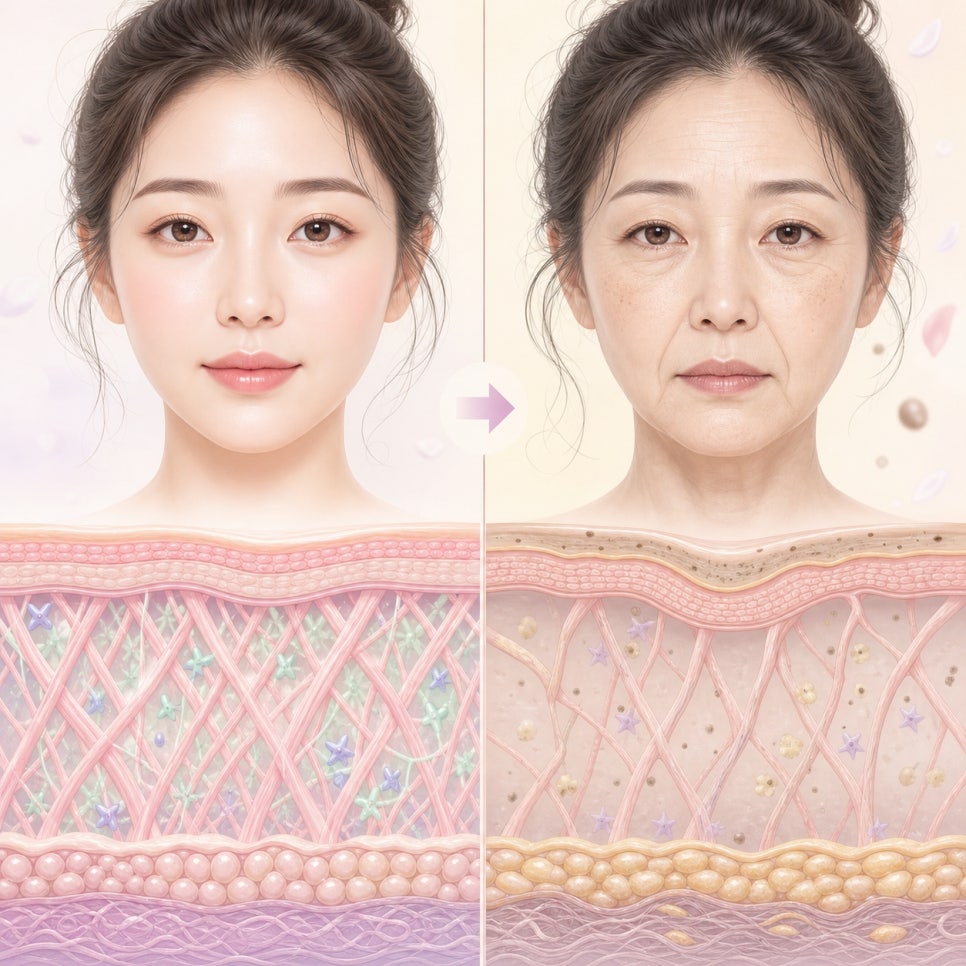
    There was a time when even a light layer of foundation made your face look firm and plump.
    If no amount of makeup can hide hollowness under your eyes or in your cheeks these days, it may not just be an optical illusion.

    It’s more likely a structural change caused by declining collagen — the protein that supports skin from within, not just on the surface.

    This article explains why skin collagen decreases and introduces the concept of a skin collagen injection, a method that directly replenishes depleted collagen in the tissue.

    We’ll also look at the features of AteloFill, based on Type I atelocollagen, and what to check before undergoing the procedure.

    skin collagen injection

    Why Does Skin Increasingly Look Hollow and Wrinkled With Age?

    Thinning skin and reduced elasticity are closely linked to declining collagen.
    Collagen is a protein that makes up the dermis and helps maintain skin density and shape.

    As we age, the activity of fibroblasts — the cells that produce collagen — naturally slows down,

    and combined with UV exposure, repeated facial expressions, dry environments, and lack of sleep,
    changes in skin structure can become noticeably visible.

    skin collagen injection – image 2

    Key Points
    ✔ Collagen is a key protein that maintains the elasticity and density of the dermis.
    ✔ As aging progresses, fibroblasts’ ability to produce collagen naturally declines.

    skin collagen injection – image 3

    As a result, the following changes may appear together in the skin.

    • Reduced elasticity compared to before
    • Fine lines and deeper wrinkles
    • Hollowing under the eyes or in the cheeks
    • Deeper-looking nasolabial folds
    • Skin that overall appears thin and lacks firmness

    skin collagen injection – image 4

    Facial aging isn’t driven by a single cause.

    Because changes in multiple structures — skin, fat, muscle, and bone — act together,
    it helps to first identify which areas actually need attention.

    skin collagen injection – image 5


    What Exactly Is a Skin Collagen Injection?

    A skin collagen injection applies a collagen-containing medical device directly into skin tissue, and is generally intended to help replenish areas that have become depleted.
    This approach is fundamentally different from cosmetics or health supplements, which only address the skin’s surface.

    skin collagen injection – image 6

    Category Collagen Cosmetics/Supplements Skin Collagen Injection (Medical Device)
    Method of Application Applied to the skin surface or ingested Applied directly to the affected skin tissue
    Area of Action Mainly epidermis to stratum corneum Dermal tissue where collagen is depleted
    Product Classification Cosmetic/health supplement Medical device approved by Korea’s MFDS

    That said, the degree of hollowing or wrinkling, skin thickness and elasticity, and overall facial volume vary from person to person.

    So the same amount and method isn’t applied to everyone —
    a thorough consultation is needed to assess your current condition before deciding on the treatment area and method.

    skin collagen injection – image 7


    How Is AteloFill’s Atelocollagen Different From Regular Collagen?

    AteloFill is a collagen-based tissue filler developed using Type I atelocollagen.
    The key lies in the form of collagen it uses — ‘atelocollagen.’

    skin collagen injection – image 8

    A typical collagen molecule has a segment called telopeptide at each end.

    Atelocollagen refers to collagen that has had this segment removed during purification.
    AteloFill is manufactured through a patented, multi-stage filtration purification process focused on minimizing impurities.

    Key Points
    ✔ Atelocollagen is Type I collagen purified by removing the telopeptide.
    ✔ AteloFill is a medical device approved by Korea’s MFDS and is manufactured in a GMP-certified facility.

    Ultimately, when researching a skin collagen injection, it’s not enough to know that a product ‘contains collagen.’

    It’s important to also check what form of collagen is used and how it’s purified and manufactured.

    skin collagen injection – image 9


    What Should You Check Before Getting a Skin Collagen Injection?

    Rather than focusing on how well-known a product is, it’s more important to first assess your own skin condition and the nature of the procedure.
    Even similar nasolabial folds or under-eye hollowing can have different underlying causes from person to person.

    skin collagen injection – image 10

    Checklist
    ✅ Have you identified whether it’s reduced elasticity, volume loss, sagging, or a combination?
    ✅ Have you been informed of the product’s approval status, treatment area, and required amount?
    ✅ Has your provider fully explained the expected changes and precautions?
    ✅ Have you also confirmed the aftercare instructions in advance?

    The procedure generally follows this sequence:

    1. Assessment of skin condition and facial structure
    2. Consultation on product characteristics and treatment area
    3. Application of the collagen tissue filler to the needed area
    4. Post-procedure monitoring and aftercare

    skin collagen injection – image 11

    Precautions
    ⚠ Temporary swelling, bruising, redness, or pain may occur after the procedure.
    ⚠ Rather than a ‘more is better’ approach, a plan tailored to your facial structure matters more.
    ⚠ Any prior medical history or allergies must be disclosed to your provider beforehand.

    Why You Should Start Paying Attention to Collagen in Your Skin Now

    Skin aging doesn’t start suddenly overnight.

    If makeup tends to settle into your wrinkles, or your nasolabial folds look pronounced even when you’re not smiling,
    it’s worth looking beyond the surface at the structural changes supporting your skin from within.

    skin collagen injection – image 12

    AteloFill is a collagen-based tissue filler made with Type I atelocollagen,

    and its defining feature is that a skin collagen injection may help replenish collagen directly into skin tissue.
    Rather than choosing a trending procedure first, the better approach is to first check what changes are actually occurring in your skin.

    In Summary
    ▶ A skin collagen injection can be considered as a way to directly replenish collagen in depleted tissue.
    ▶ It’s important to decide only after thoroughly discussing the product’s ingredients, purification method, and approval status with your provider.

    If you’re concerned that your skin’s elasticity and volume aren’t what they used to be, an AteloFill skin collagen injection is one option worth exploring.
    For a detailed consultation, visit the AteloFill Collagen Skin Institute homepage.

    skin collagen injection – image 13


    Frequently Asked Questions

    skin collagen injection – image 14

    1. How is a skin collagen injection different from regular skincare?
    Because it applies a collagen-containing medical device directly into skin tissue, the approach is fundamentally different from home care with topical cosmetics.

    2. What type of collagen is used in AteloFill?
    It’s a collagen-based tissue filler made from Type I atelocollagen that has been purified by removing the telopeptide.

    3. Can anyone get a skin collagen injection?
    Suitability can vary depending on skin condition, facial structure, and medical history, so an evaluation and consultation with a provider is required beforehand.

    4. Can I return to daily activities right after the procedure?
    Recovery can vary depending on individual skin condition and treatment area, so it’s best to ask your provider about the expected course beforehand.

    5. How long do results last?
    How long a collagen tissue filler lasts can vary depending on individual skin condition and lifestyle, so accurate guidance should be confirmed through a consultation.


    References

    · Rapportian, “Darim T·Sen Enters the Aesthetics Market With ‘AteloFill,’ a Product Built on Collagen Research Technology,” Rapportian, 2026. View source
    · Hwang Seung-guk (Standing Advisor, Korean Academy of Obesity & Aesthetic Body Shape), “To Fight Skin Aging, Target the ‘Fibroblasts,’” Health Kyunghyang, 2021. View source


    This article is intended for general health information purposes only and is not a substitute for individual diagnosis or treatment. If you have symptoms, please consult a qualified medical professional.