Will eating pork skin or beef bone broth really make your skin firmer?
As interest in skin elasticity and aging grows, plenty of people have searched for collagen-rich foods.
But eating foods high in collagen doesn’t automatically mean the collagen in your skin increases.
A closer look at the research shows that the nutrients you pair with these foods may actually matter more.
This article covers the different types of collagen-rich foods, whether fish or meat is more beneficial, and nutrients like vitamin C that support collagen synthesis.
We’ll also look at what actually happens to the collagen you eat once it goes through digestion.

What Is Collagen, and How Is It Related to Skin Elasticity?
Collagen is one of the main proteins that supports the structure of the skin’s dermis.
Collagen is a fibrous protein that makes up various tissues in the body, including skin, bones, cartilage, and tendons.
As we age, the balance between collagen production and breakdown in the skin can gradually shift.
On top of that,
factors like UV exposure, smoking, and an unbalanced diet can reduce skin elasticity, making fine lines and sagging more noticeable.
That’s why anyone interested in skincare naturally starts looking into collagen-rich foods and nutrients that support collagen synthesis.
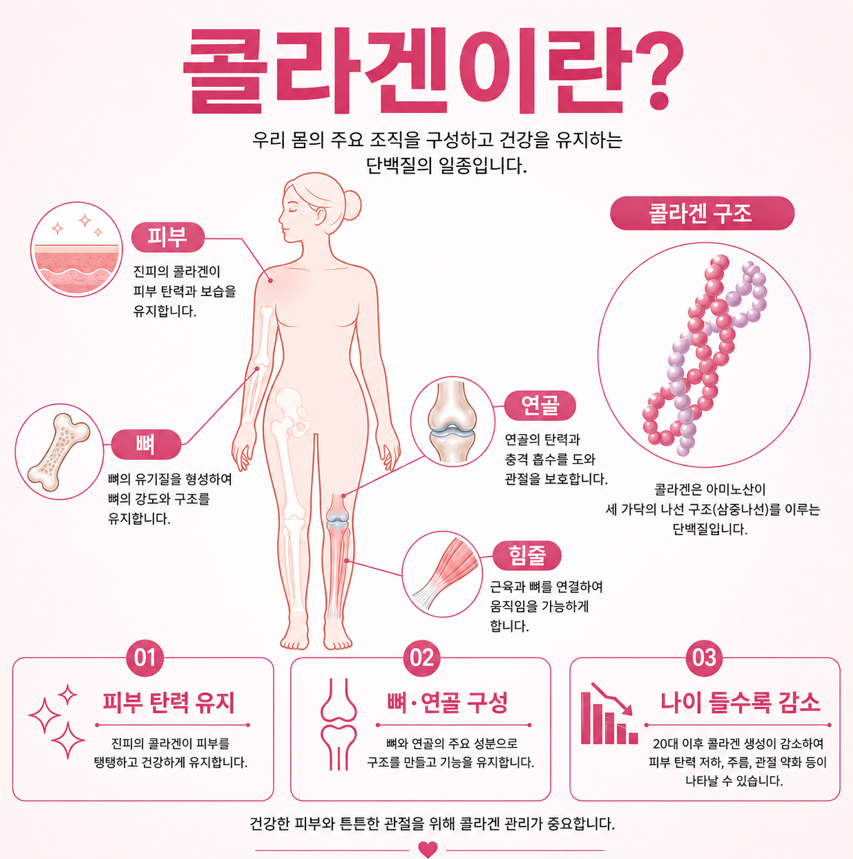
✔ Collagen is a protein found not just in skin, but also in bones, cartilage, and tendons.
✔ The balance between collagen production and breakdown can shift as you age.
What Are Common Collagen-Rich Foods?
These foods are mostly concentrated in animal connective tissue — skin, bone, and cartilage.
Collagen-rich foods refer to items containing animal connective tissue, such as fish skin, chicken skin, beef bone broth or knee cartilage soup, and pork skin.

Fish Skin
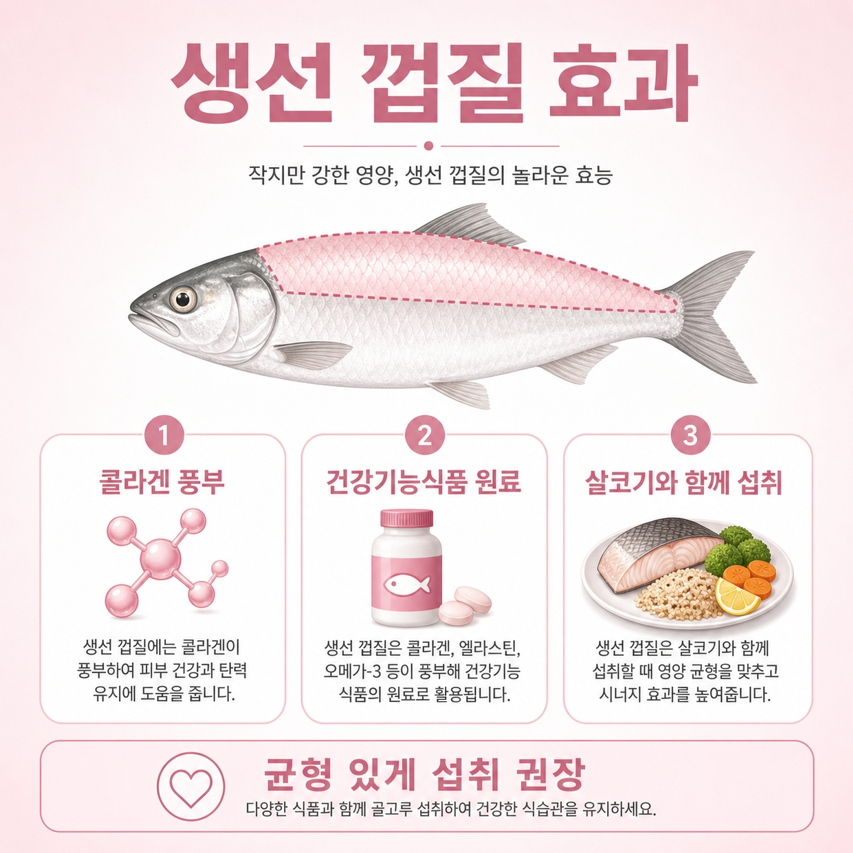
Fish skin and scales contain collagen.
Fish-derived collagen is also widely used as an ingredient in dietary supplements and cosmetics.
That said, it’s better to eat a balanced combination of lean fish meat and vegetables rather than overloading on one specific part.
Chicken and Chicken Skin
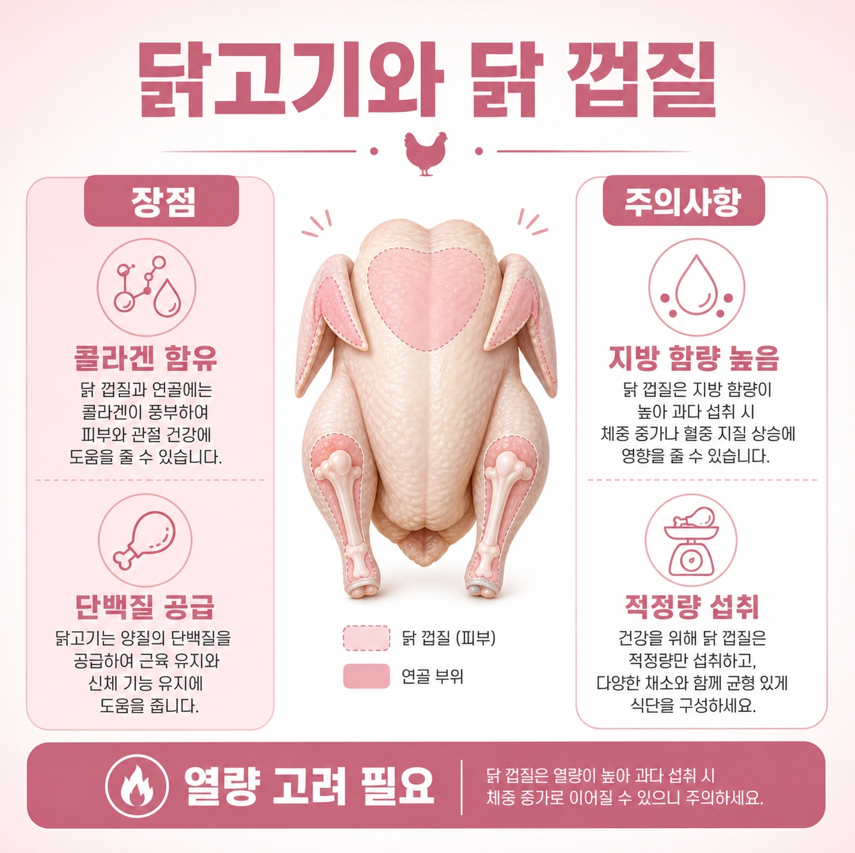
Collagen is also found in chicken skin, cartilage, and connective tissue.
However, chicken skin also tends to be high in fat, so eating large amounts just because it’s “collagen-rich” isn’t recommended.
It’s important to keep your overall fat and calorie intake in mind and eat it in moderation.
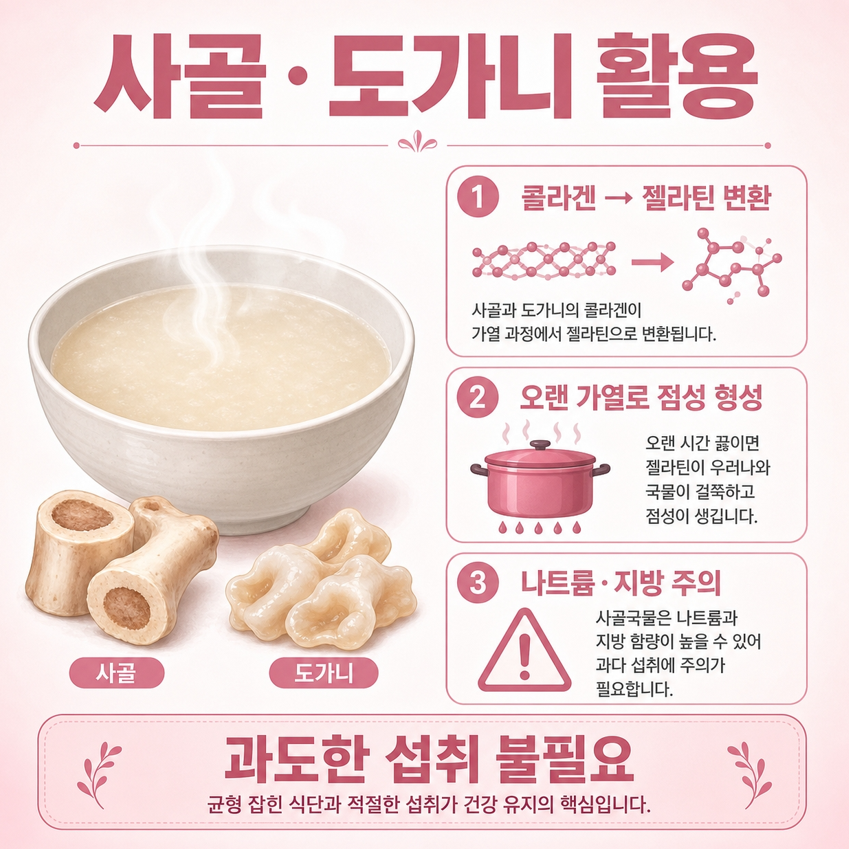
Beef Bone Broth, Knee Cartilage Soup, and Other Connective Tissue Foods
Collagen is also present in beef bones, cartilage, and tendons.
When simmered for a long time, some of that collagen breaks down into gelatin, which is what gives these broths their characteristic thickness.
That said, depending on how it’s prepared, beef bone broth or knee cartilage soup can also be high in fat and sodium, so there’s no need to overconsume it just for the collagen.
Pork Skin
Pork skin is another well-known animal food that contains collagen.
However, you also need to factor in its fat and calorie content, along with the sodium in any seasonings used to prepare it.
Rather than eating one food heavily for the sake of your skin, it’s better to get a variety of protein sources.
| Food | Where the Collagen Is | What to Keep in Mind |
|---|---|---|
| Fish skin | Skin and scales | Balance with lean meat and vegetables |
| Chicken and chicken skin | Skin, cartilage, connective tissue | Consider fat content |
| Bone broth / knee cartilage soup | Bones, cartilage, tendons | Watch sodium and fat |
| Pork skin | Skin connective tissue | Watch fat and sodium (seasoning) |
⚠ Chicken skin, bone broth, and pork skin can be high in fat and sodium,
so eating large amounts purely for the collagen isn’t recommended.
Should You Prioritize Fish or Meat?
There’s no need to crown a single food as the “best” option.
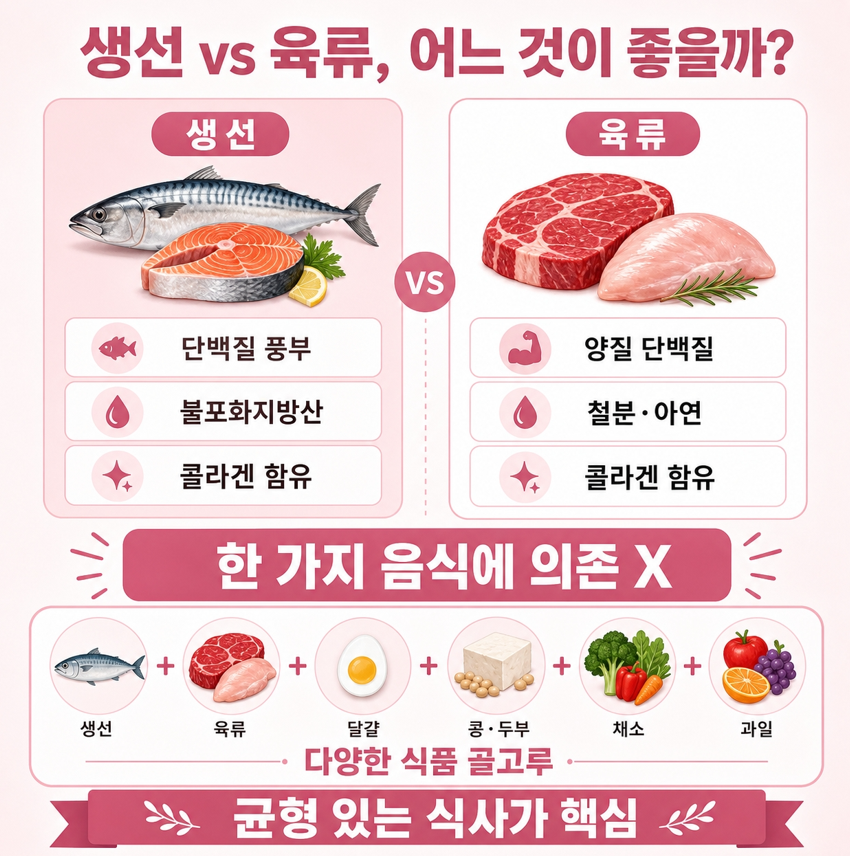
Fish can provide protein along with unsaturated fats depending on the type, while meat offers high-quality protein plus nutrients like iron and zinc.
What matters most is not relying on just one food.
- Fish
- Lean meat
- Eggs
- Beans and tofu
- Vegetables
- Fruit
Eating a varied mix of these foods helps you take in the amino acids and micronutrients your body needs to make collagen.
What Nutrients Support Collagen Synthesis?
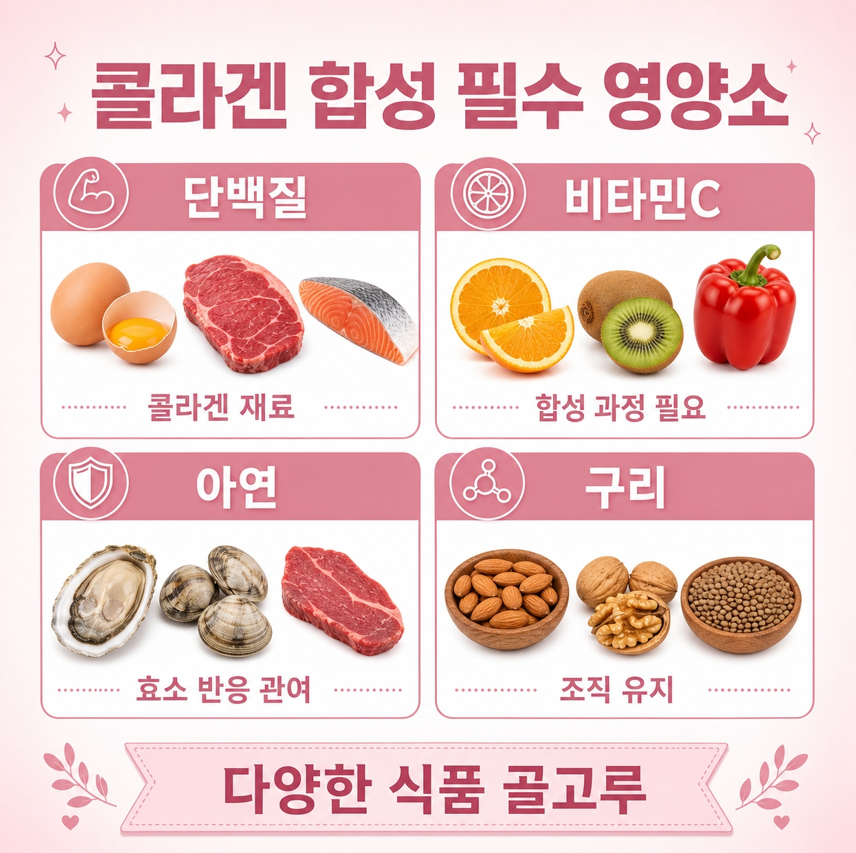
Collagen synthesis requires more than just protein — nutrients like vitamin C, zinc, and copper play a role too.
Collagen synthesis is the process by which amino acids and various supporting nutrients work together in the body to build collagen protein.
Protein
Protein from food is broken down into amino acids and small peptides during digestion.
Since collagen is itself a protein, getting enough protein overall is the foundation.
You can get protein from a variety of foods, including fish, meat, eggs, milk and dairy, beans, and tofu.
Vitamin C
Vitamin C is a nutrient involved in the body’s collagen synthesis process.
According to reports, studies have found that treating skin fibroblasts with vitamin C increased collagen synthesis.
You can get vitamin C from a variety of fruits and vegetables, such as tangerines, oranges, kiwi, strawberries, bell peppers, and broccoli.
Zinc and Copper
Zinc and copper are also trace nutrients involved in various enzyme reactions and tissue maintenance in the body.
Eating a variety of meat, seafood, nuts, and legumes can help you take in these nutrients as well.
✔ Vitamin C is a supporting nutrient involved in the body’s collagen synthesis process.
✔ Zinc and copper are also trace nutrients involved in tissue maintenance.
Does the Collagen You Eat Go Straight to Your Skin?
The collagen you eat doesn’t travel directly into your skin as collagen.
Collagen taken by mouth is broken down into amino acids or peptides during digestion, then used wherever the body needs it.
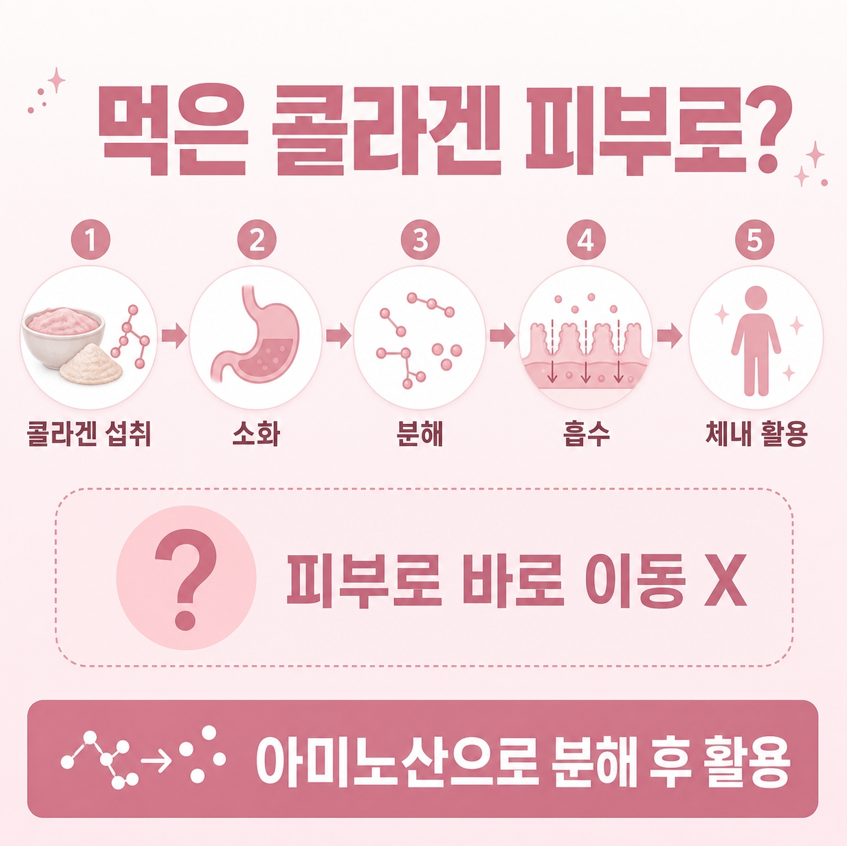
- Collagen intake
- Digestion and breakdown (into amino acids/peptides)
- Absorption
- Used wherever the body needs it
Some studies report that low-molecular-weight collagen peptides can be absorbed in certain forms, but it’s difficult to say this directly translates into fewer skin wrinkles.
So it wouldn’t be accurate to assume that “eating pork skin instantly replenishes skin collagen” or that “eating a lot of bone broth will erase wrinkles.”
This is why managing your overall nutritional balance matters more than simply loading up on collagen-rich foods.
What Lifestyle Habits Help Slow Collagen Loss?
Sun protection and consistent daily habits can help reduce collagen damage.
Photoaging refers to the process in which cumulative UV exposure increases collagen-degrading enzymes in the skin while reducing its ability to synthesize collagen.

UV exposure is one of the leading external factors affecting skin aging.
Repeated, long-term exposure can increase the activity of enzymes that break down collagen, while reducing your skin’s ability to produce new collagen fibers.
That’s why it’s a good idea to use sunscreen appropriately whenever you go outside, regardless of the season.
✅ Use sunscreen year-round
✅ Get enough protein each day
✅ Add vitamin C-rich vegetables and fruit
✅ Get enough sleep and stay hydrated
✅ Avoid smoking

Managing protein intake, nutrients like vitamin C, sun protection, and daily habits together
is a more realistic approach to skin elasticity than relying on any single food.
If you’d like more information on managing skin elasticity, you can find it on the Atelofill Collagen Skin Research Institute homepage.

Frequently Asked Questions

1. Do I need to eat collagen-rich foods every day for my skin to benefit?
Rather than eating one specific collagen food every day, it’s more important to eat a balanced mix of protein foods like fish, meat, eggs, and legumes along with vegetables and fruit.
2. Will eating a lot of pork skin or bone broth reduce wrinkles?
Pork skin and bone broth do contain collagen, but the collagen you eat doesn’t travel directly to your skin and erase wrinkles. You also need to consider your fat and sodium intake.
3. Why should I pair vitamin C with collagen-rich foods?
Because vitamin C is a nutrient involved in the body’s collagen synthesis process. It’s best to combine protein foods with vegetables and fruit.
4. Do vegetables and fruit contain collagen?
Collagen is a protein found in animal tissue, so vegetables and fruit don’t contain it themselves. However, they’re rich in nutrients like vitamin C that support collagen synthesis, so eating them alongside collagen foods is helpful.
5. Will taking a collagen supplement definitely improve my skin?
The effects of collagen supplements vary from person to person, and research in this area is still ongoing. Rather than assuming any particular product will work, it’s best to build your routine around a balanced diet and healthy lifestyle habits.
References
· RealFood (Herald Economy), “This Is the Nutrient You Need to Improve Skin Aging With Collagen,” RealFood, 2021. View source
· The Skin Cancer Foundation, “Photoaging: What You Need to Know About the Other Kind of Aging,” Skin Cancer Foundation. View source
· Science Times, “The Correlation Between Collagen Intake and Skin Improvement,” Science Times. View source
This article is intended for general health information purposes only and is not a substitute for individual diagnosis or treatment. If you have symptoms, please consult a medical professional.
Leave a Reply