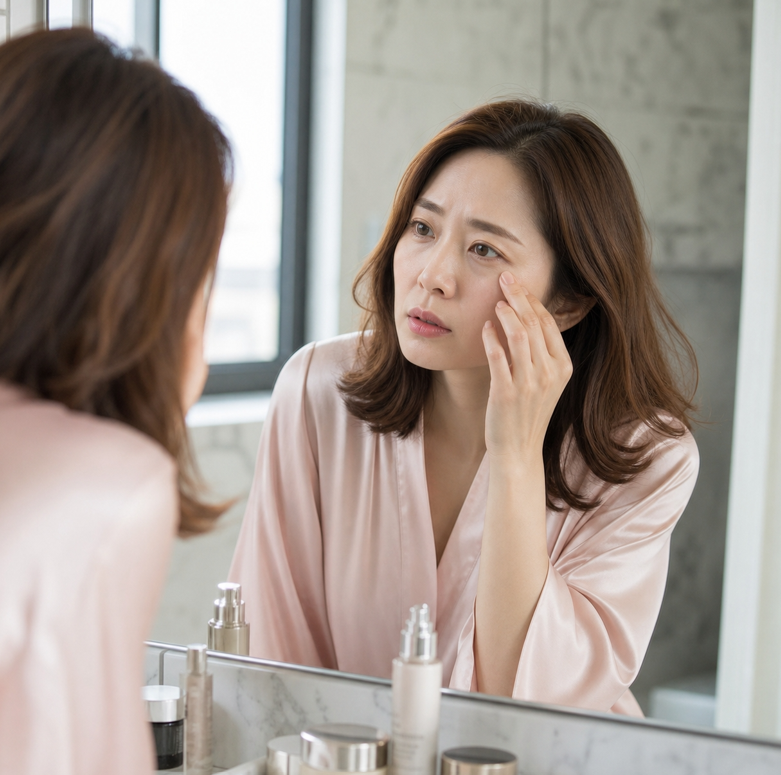
Most of us have caught a glimpse in the mirror and noticed our under-eyes looking shadowed.
If you’re being told you look tired even after a full night’s sleep, lack of sleep may not be the actual cause.
As the skin around the eyes thins and loses elasticity with age, the under-eye area can start to look hollow at the same time.
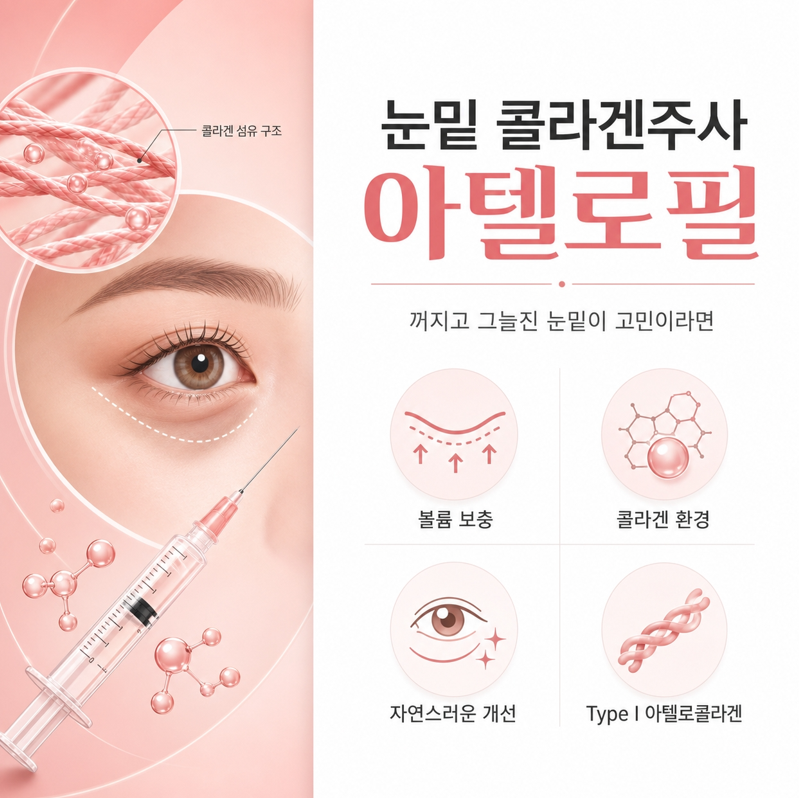
That’s why more people today are looking past concealer to consider what’s happening beneath the skin, including options like an under eye collagen injection.
This article walks through the causes of hollow under-eyes, how an under eye collagen injection works, atelocollagen — the key ingredient in Atelofill — and what to check before treatment.
Understanding both under-eye volume loss and changes in skin elasticity can help you choose an approach suited to the actual cause, rather than simply adding volume.
Why Do Under-Eyes Look More Hollow With Age?
Hollow under-eyes develop as collagen in the skin decreases and the tissue that supports volume becomes thinner.
Hollow under-eyes refer to a condition in which reduced collagen density in the dermis and decreased subcutaneous volume combine to make the under-eye area appear sunken.
Collagen is one of the primary structural proteins supporting the skin’s dermal layer.
It’s also found widely throughout the body, in bone, muscle, cartilage, and other tissues.
The issue is that as we age, the function of fibroblasts — the cells that produce collagen — gradually declines.
Aging fibroblasts are known to progressively slow down collagen production and secretion.
Add in UV exposure, repeated facial expressions, and dehydrated skin, and the skin can thin further while elasticity drops, making under-eye contours more noticeable.
Because the skin around the eyes is naturally thin to begin with, even small volume changes tend to show up more easily there.

| Cause | Key Characteristics |
|---|---|
| Volume loss | Collagen and subcutaneous fat thin out, producing a hollow look |
| Pigmentation | Reduced circulation or melanin buildup can make the area look darker |
| Fat protrusion | Under-eye fat pushes forward and casts a shadow |
| Skin sagging | Reduced elasticity causes the skin itself to loosen |

✔ Hollow under-eyes result from a combination of volume loss and reduced skin elasticity.
✔ The right approach depends on whether the cause is volume loss, fat protrusion, or pigmentation.
How Is an Under Eye Collagen Injection Different From a General Volume Treatment?
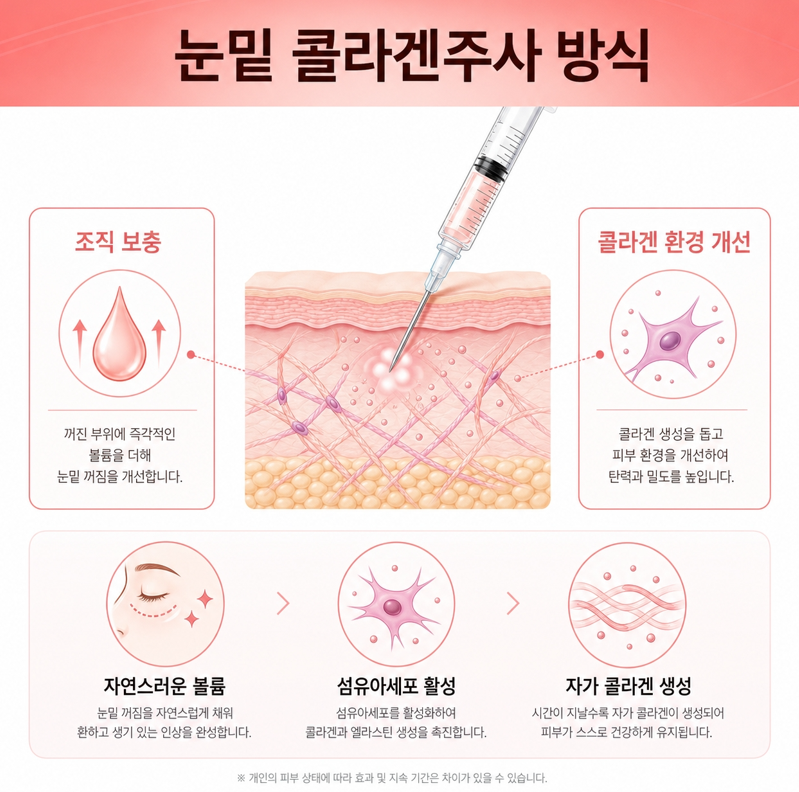
An under eye collagen injection differs from a typical volume treatment in that it adds volume while also factoring in the collagen environment of the skin tissue.
An under eye collagen injection is a procedure that supplements tissue with collagen to help restore volume in hollow areas.
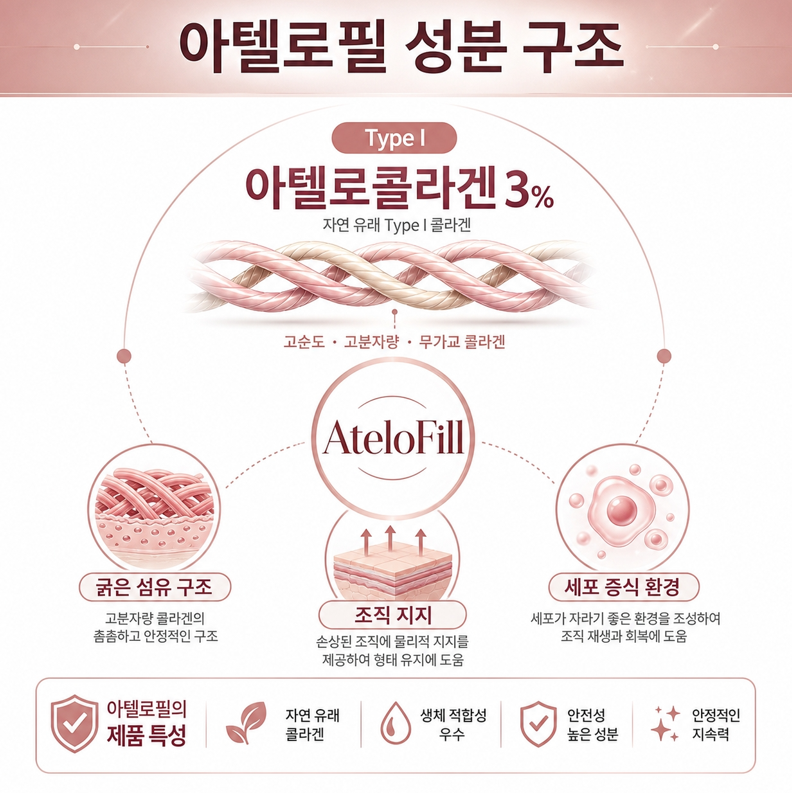
Atelofill is a collagen-based tissue filler containing 3% Type I atelocollagen.
The injected collagen supplements the tissue and provides an environment where cells can attach and proliferate, which may support fibroblast activity and the body’s own collagen production process.
That said, when considering an under eye collagen injection, what matters more than “how much volume is added” is creating a natural-looking contour that accounts for the thin under-eye skin and existing volume.
✔ Injected collagen supplements the tissue, which may support a natural-looking sense of volume.
✔ By providing an environment for cell attachment, it has been reported to potentially support the body’s own collagen production process.
What Is Atelocollagen in Atelofill?
Atelocollagen is collagen that has had the telopeptide region — the part associated with immune response — removed to improve biocompatibility.
Atelocollagen refers to collagen with the telopeptides removed from both ends of the molecule.
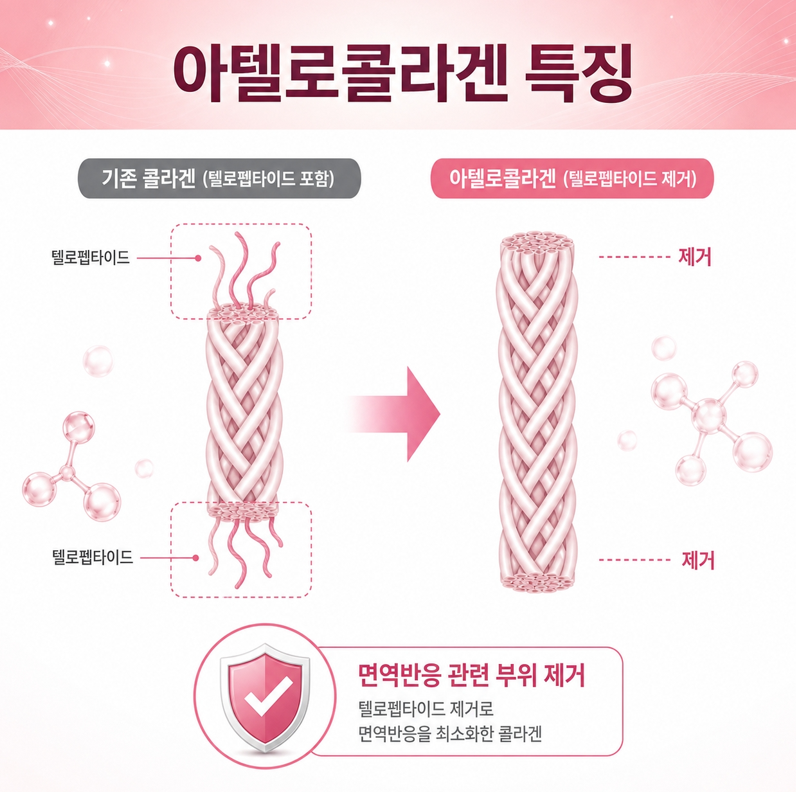
There’s a structure called the telopeptide at both ends of the collagen molecule.
Because this region’s sequence varies between species, it’s known as a primary site that can trigger immune responses in cross-species (xenogeneic) collagen.
Some sources indicate that enzymatically removing the telopeptides can produce collagen that retains the same properties as Type I collagen while lowering immunogenicity.
Atelofill uses atelocollagen with the telopeptides removed and is manufactured using Dalim Tissen’s isolation and processing technology.
So when researching Atelofill, it’s worth checking not just whether a product contains collagen, but what form of collagen it actually uses.
✔ Telopeptides are known to be the region associated with collagen’s immune response.
✔ Atelocollagen is a form of collagen with this region removed to improve biocompatibility.
What Should You Check Before an Under Eye Collagen Injection?
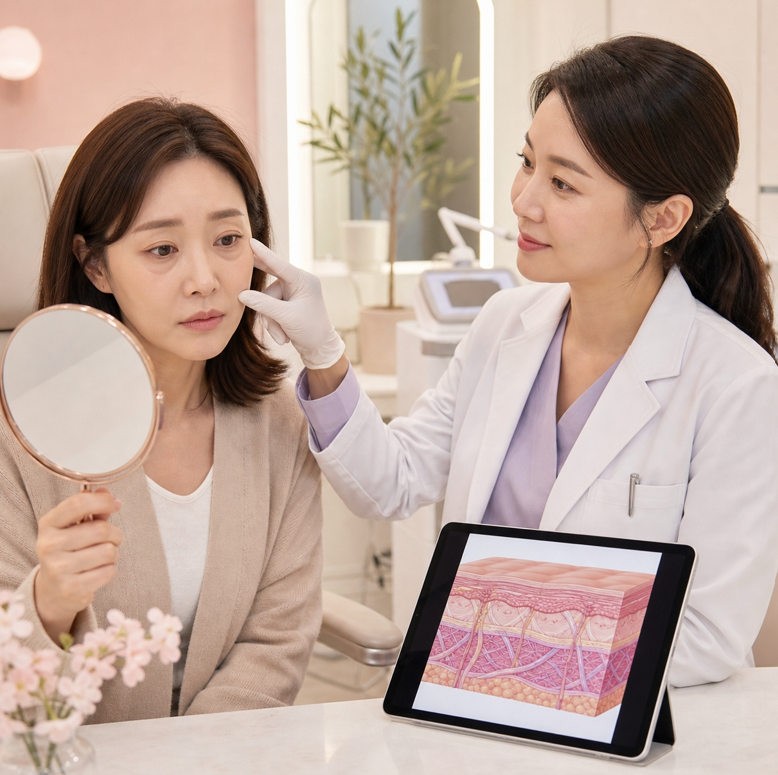
Identifying the cause of your hollow under-eyes and your individual skin condition first is what allows you to determine whether this treatment is right for you.
A pre-treatment check is the process of reviewing the cause of your hollow under-eyes and your health status together with a medical provider.
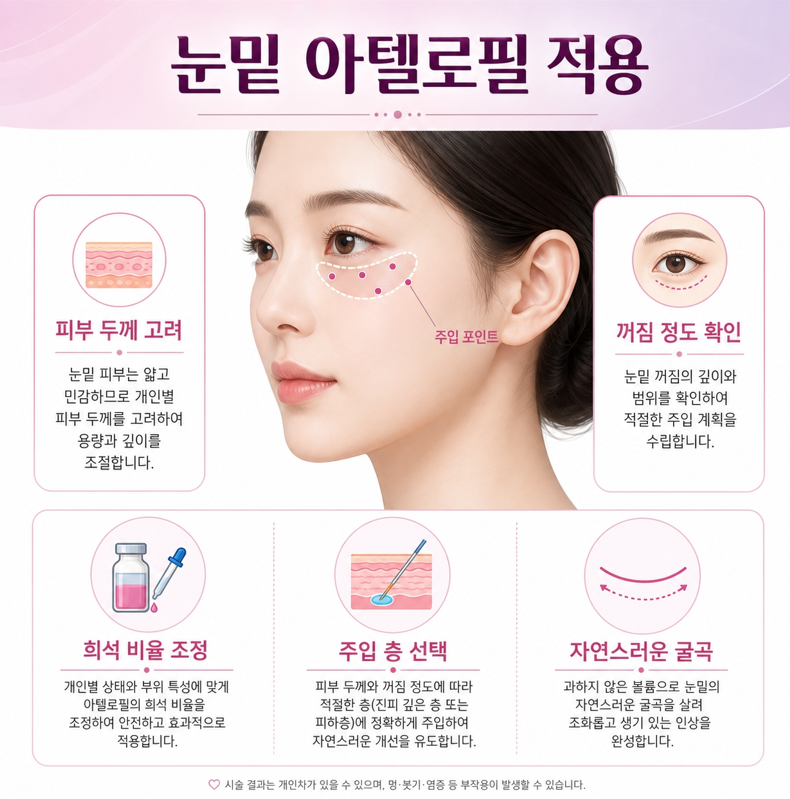
Dark-looking under-eyes can result from several factors beyond actual volume loss, including pigmentation, visible blood vessels, under-eye fat protrusion, and skin sagging.
So it’s important to first identify the main cause of the hollow appearance.
For Atelofill treatment as well, the amount used, dilution ratio, and injection depth can vary depending on skin condition and treatment area, and temporary local reactions such as swelling or a bumpy texture (embossing) may occur after treatment.
If you have an autoimmune condition, are being treated for another condition, or are taking any medications, be sure to inform your medical provider beforehand.
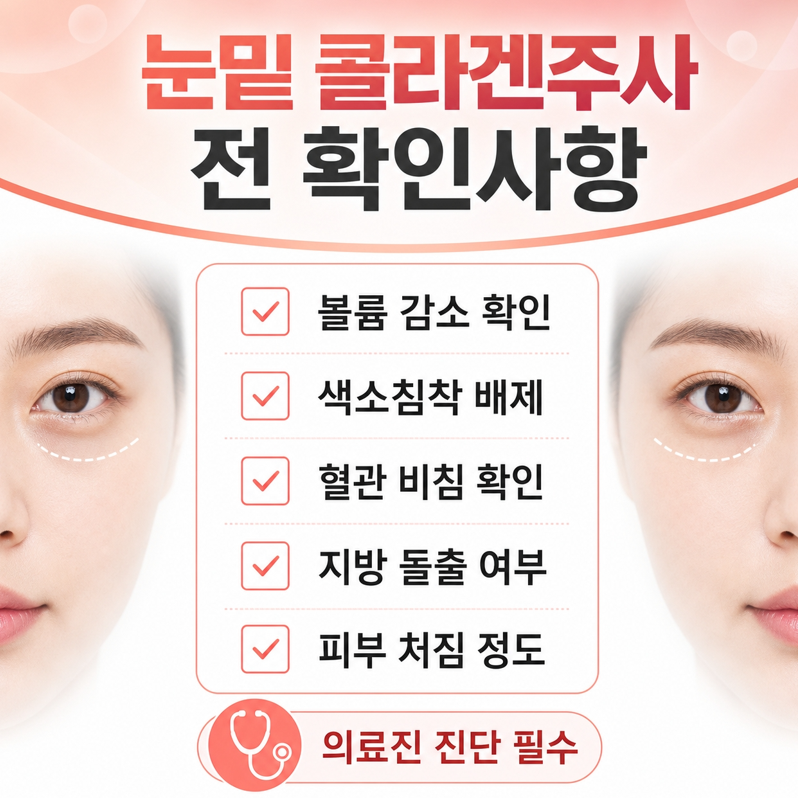

✅ Have you identified whether the cause of your hollow under-eyes is volume loss, pigmentation, fat protrusion, or skin sagging?
✅ Have you informed your medical provider in advance of any autoimmune conditions or medications you’re taking?
✅ Have you discussed the dilution ratio and injection depth appropriate for your treatment area and goals?
✅ Have you had a thorough consultation with an experienced medical provider?
⚠ Temporary local reactions such as swelling or a bumpy texture (embossing) may occur after treatment.
⚠ Results and recovery time can vary depending on individual skin condition.
Frequently Asked Questions

1. What kind of product is Atelofill?
It’s a collagen-based tissue filler built on Type I atelocollagen. Its key feature is the use of atelocollagen with the telopeptides removed.
2. Can it be used for hollow under-eyes?
Depending on a medical provider’s diagnosis and judgment, it may be used in areas lacking volume, such as under the eyes. However, if the cause is fat protrusion or skin sagging rather than volume loss, a different approach may be more suitable.
3. How long does an under eye collagen injection take?
This varies depending on the treatment area, anesthesia, and preparation involved, but according to product training materials, the treatment itself typically takes about 20 to 30 minutes.
4. Can I wear makeup right after treatment?
Product training materials advise waiting until the day after treatment to cleanse the face or apply makeup. That said, actual aftercare should follow the specific guidance given by the clinic where you received treatment.
Hollow Under-Eyes: Look at Balance Before You Look at Volume

Hollow under-eyes rarely appear overnight. In most cases, they become noticeable gradually as skin elasticity and tissue volume shift over time.
So if you’re researching an under eye collagen injection, it’s important to consider whether the treatment can offer a natural-looking improvement based on your current under-eye skin condition and overall facial balance, rather than focusing on adding as much volume as possible.
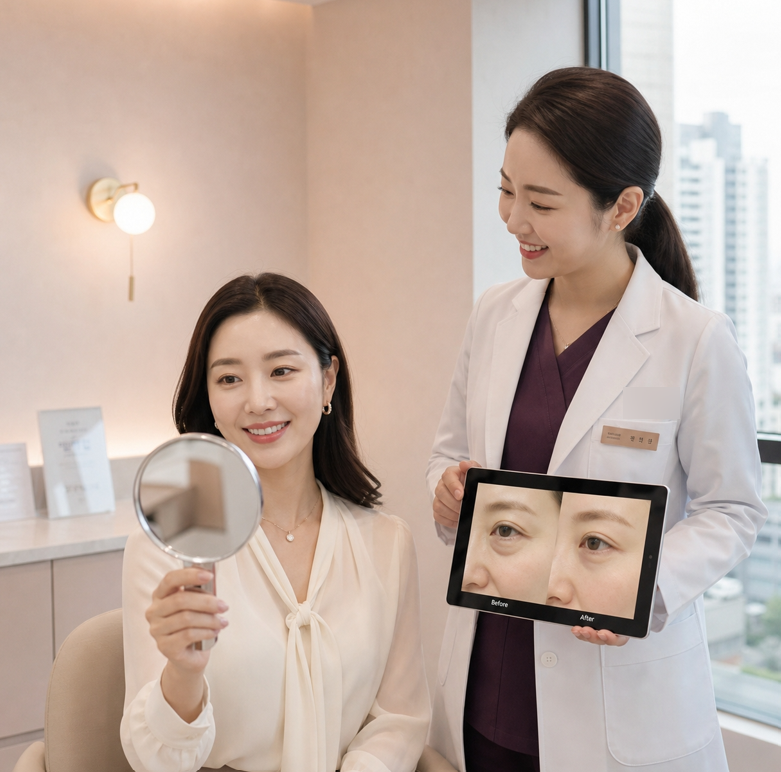
If you’re concerned about looking tired because of hollow under-eyes, or you’re noticing reduced elasticity, fine lines, and volume loss together, consider consulting a medical provider first to check the underlying cause and whether Atelofill may be suitable, rather than choosing an under eye collagen injection right away.
For more detailed product information, you can also visit the Atelofill Collagen Skin Research Institute website.
References
· DailyVet, “[Understanding Collagen ①] What Exactly Is Atelocollagen?,” DailyVet, 2024. View source
· Health Kyunghyang, “To Fight Skin Aging, Target Fibroblasts,” Health Kyunghyang, 2021. View source
· Rapportian, “Dalim Tissen Enters the Aesthetics Market With Atelofill, Built on Its Collagen Research Technology,” Rapportian, 2026. View source
This article is intended for general health information purposes only and is not a substitute for individual diagnosis or treatment.
If you have symptoms, please consult a licensed medical professional.
Leave a Reply