Most of us have had the experience of skin that looked perfectly fine yesterday suddenly turning red and stinging overnight.
This kind of sudden skin flare-up tends to become more common during seasonal transitions, when daily temperature swings are larger.
It can be especially frustrating when small, bumpy breakouts and itching show up even though you’re using the same products as always.
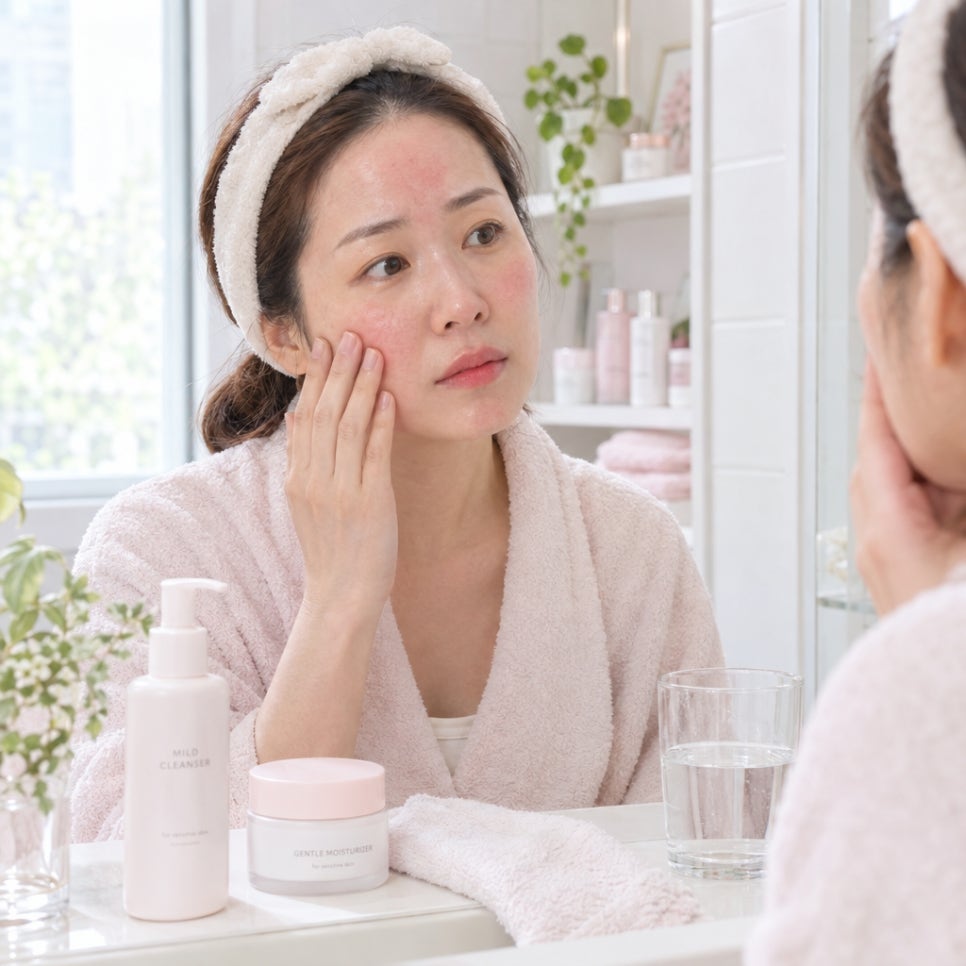
This article outlines why seasonal skin flare-ups happen, what to check when small bumps suddenly appear, and soothing steps you can try at home right away. Learn how to check for underlying causes before squeezing blemishes or exfoliating aggressively, along with signs that call for a dermatology visit.
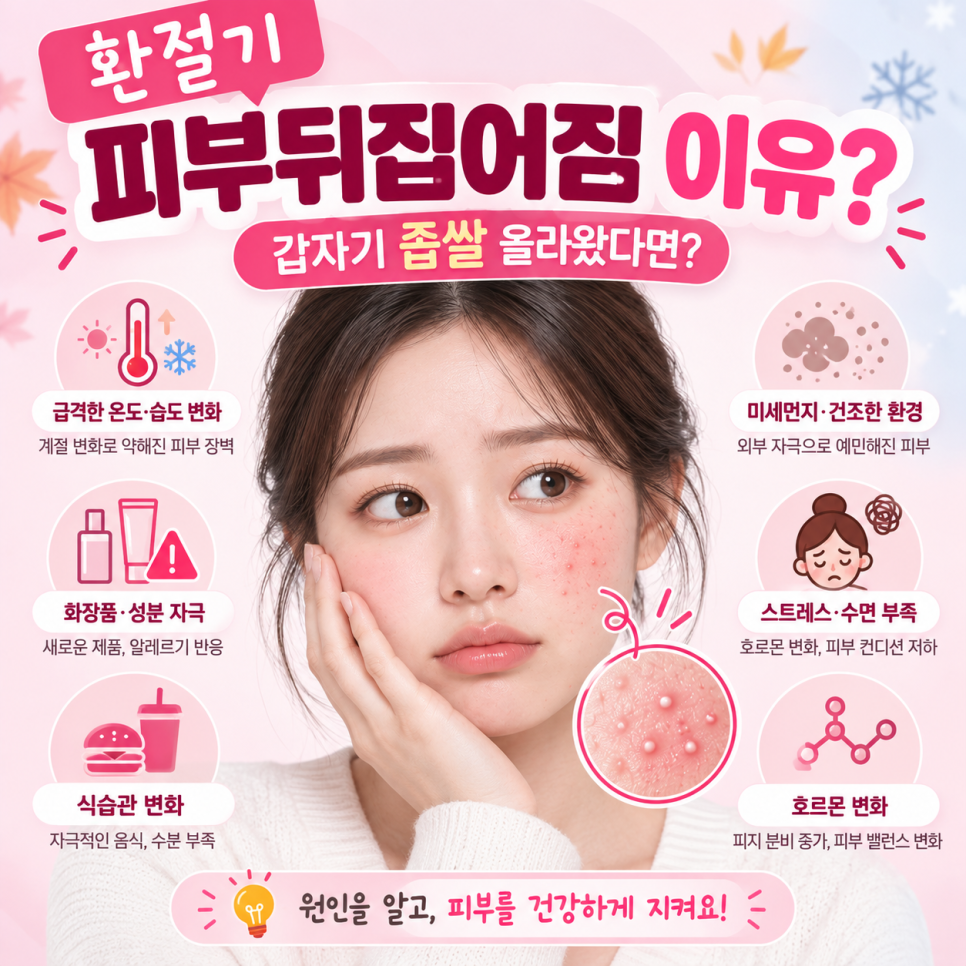
Seasonal Skin Flare-Ups: Why Do They Suddenly Happen?
Seasonal skin flare-ups usually occur when dry air, sudden shifts in temperature and humidity, and cosmetic irritation overlap.
A seasonal skin flare-up refers to skin becoming temporarily more reactive as fluctuating temperatures and humidity weaken the skin barrier’s function.
Dry environments and temperature changes can leave skin dehydrated and more reactive, and if you already have sensitive skin or a skin condition, these shifts can make symptoms more noticeable.
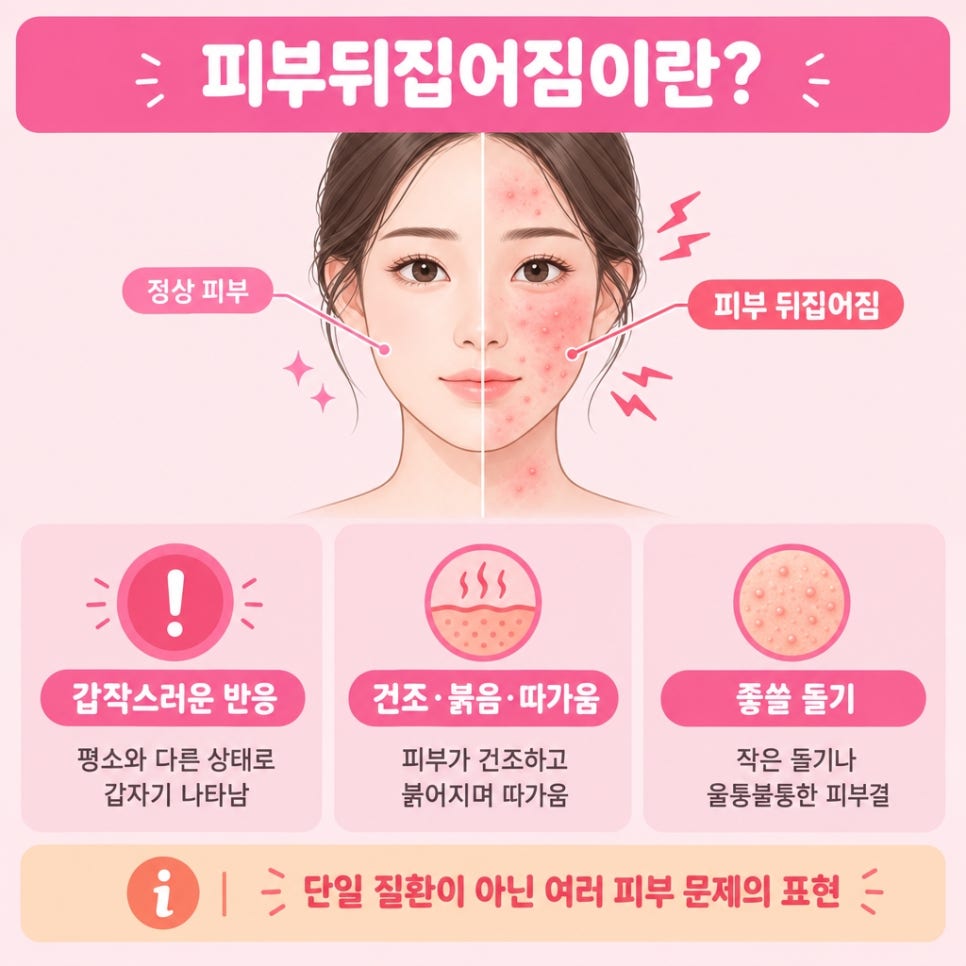
Several other factors can also overlap at the same time.
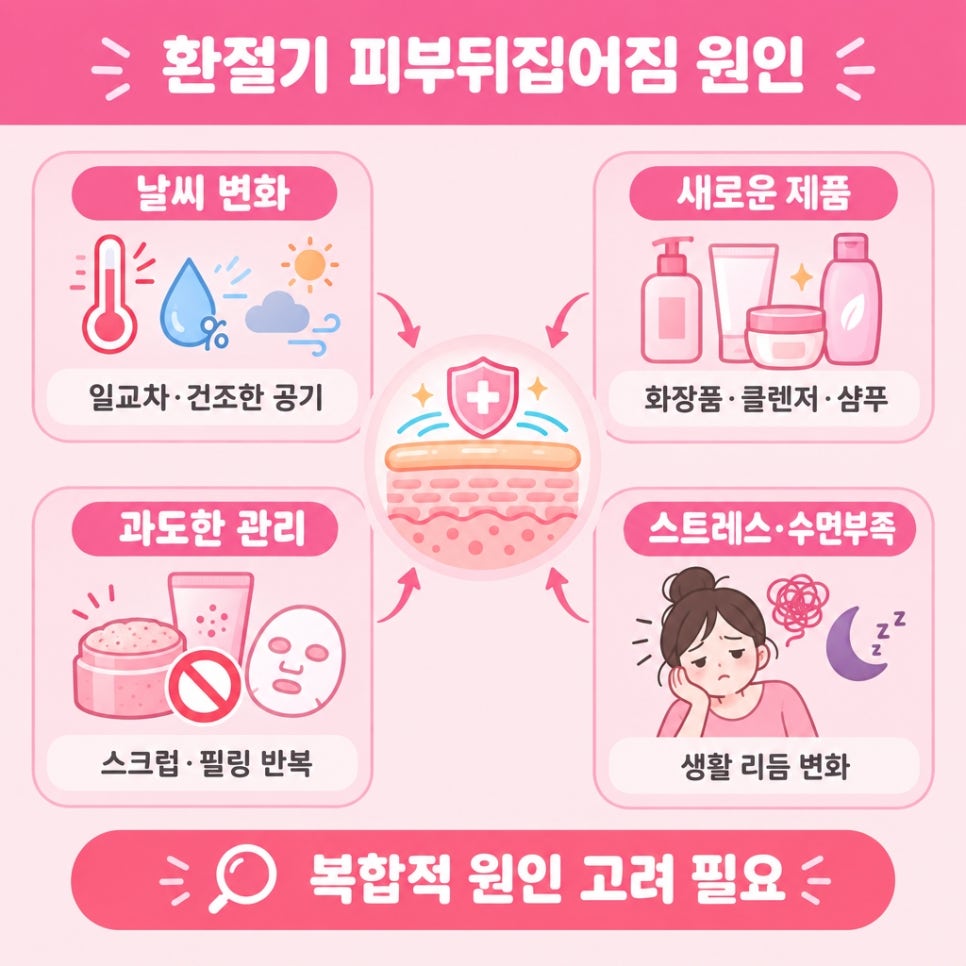
① Sudden weather changes — Dry air, wind, and large daily temperature swings can leave skin dry and sensitive.
② New cosmetics or household products — Cleansers, sunscreen, hair products, and laundry detergent can also cause irritation or allergic contact dermatitis.
③ Over-exfoliating or over-treating — Repeated scrubs or peels, or layering multiple high-potency products at once, can add to skin irritation.
④ Stress and disrupted routines — Stress and lack of sleep are known to worsen symptoms of certain skin conditions.
Allergic contact dermatitis doesn’t always appear right after using a product — it can show up hours or even days later. It’s worth reviewing any new products you’ve used over the past several days.
Sudden Bumps: Are They Different from Acne?
When your face suddenly turns bumpy, it’s natural to assume it’s whiteheads or small acne — but not every tiny bump has the same underlying cause.
Bumps that look like whiteheads may be comedonal acne, but small papules or blisters caused by skin irritation or contact dermatitis can look similar.
That’s why it’s important to look at accompanying symptoms rather than automatically squeezing bumps or reaching for acne products.

| Accompanying Symptoms | Possible Cause |
|---|---|
| Small, recurring bumps that look sebum-filled | Possible acne-related lesion |
| Multiple bumps appear suddenly with itching and stinging | Possible skin irritation or contact dermatitis |
| Redness, burning, and flaking worsen together | Calming irritation takes priority over exfoliating |
Squeezing or scratching sudden bumps can cause additional skin damage, so it’s best to leave them alone until you know the underlying cause.
What Should You Do When Skin Flares Up?
Once a flare-up starts, the priority is reducing irritating factors rather than adding new products.
Managing a skin flare-up generally comes down to four steps: stopping the suspected product, simplifying your skincare routine, cleansing gently, and calming the skin.
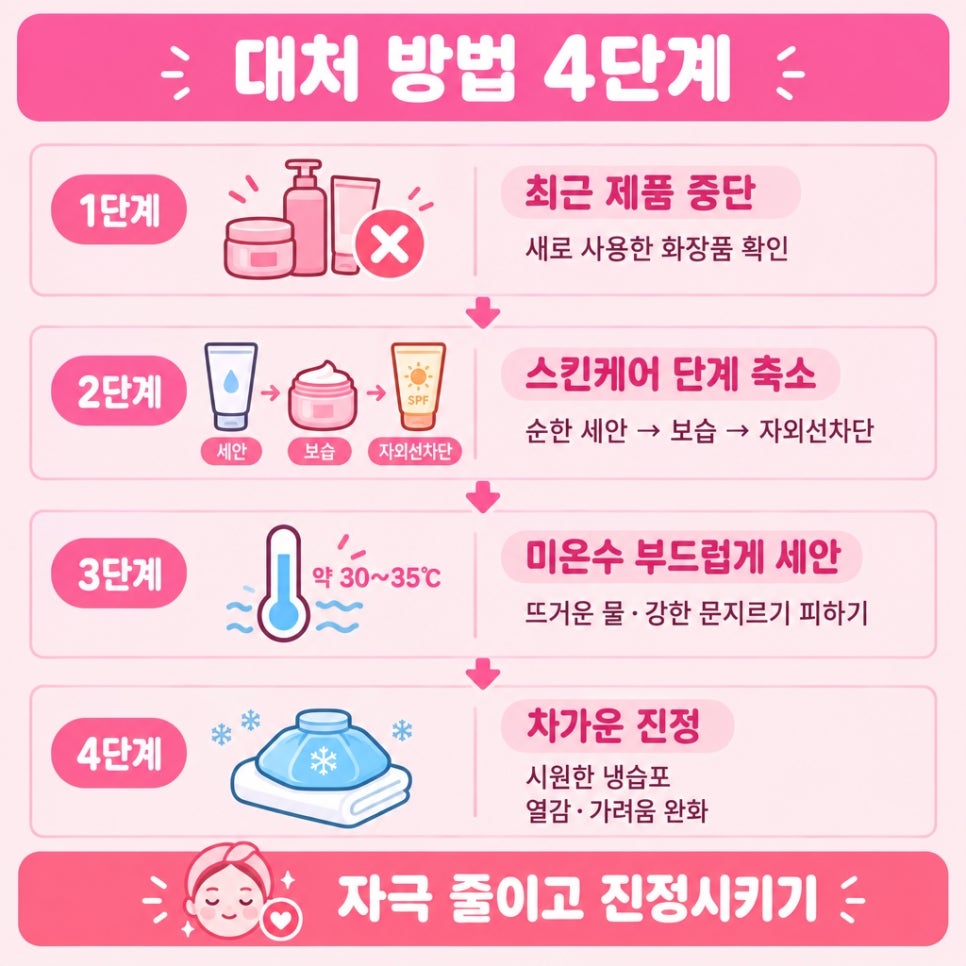
- STEP 1. Pause any recently added products
If you’ve recently started using a new cosmetic or cleanser, compare that timing with when symptoms began. Adding several products at once makes it harder to pinpoint the cause. - STEP 2. Simplify your skincare routine
Rather than layering on more products, focus on the basics: gentle cleansing → moisturizing → sunscreen during the day. Fragranced products can sometimes be an irritant, so choosing low-fragrance options may help if your skin is sensitive. - STEP 3. Cleanse gently with lukewarm water
Avoid washing for a long time with hot water or scrubbing hard. Apply a moisturizer that has worked well for you before your skin fully dries after cleansing, to help minimize water loss. - STEP 4. Cool the skin if it feels hot or itchy
A cool compress made with a clean towel may help temporarily ease discomfort. However, avoid holding ice directly against the skin for extended periods.
What Habits Should You Avoid?
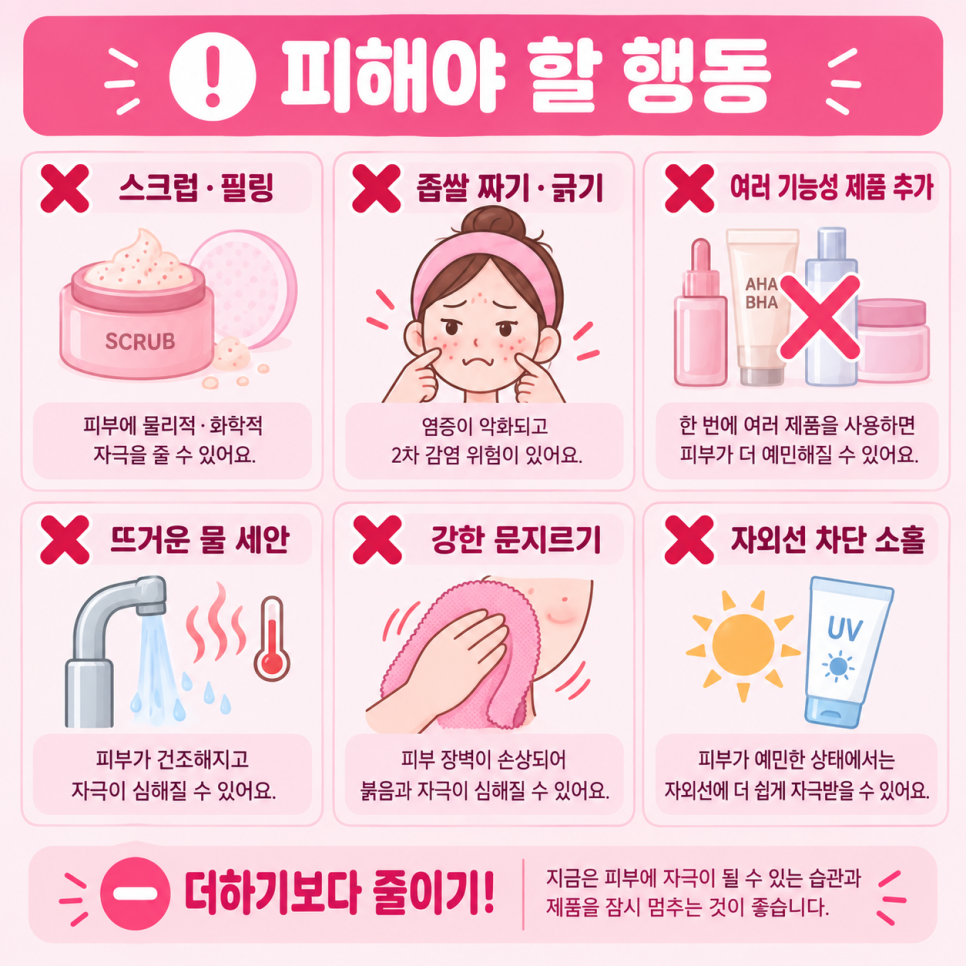
When your skin flares up, it’s tempting to do more than usual in hopes of speeding up recovery.
But at this stage, it’s more important to think about what to cut back on rather than what to add.
· Pause physically or chemically abrasive treatments like scrubs and peels for now.
· Avoid introducing several new high-concentration active products at the same time.
· Don’t repeatedly squeeze or scratch bumpy areas. Continued scratching can damage the skin and increase the risk of secondary infection.
When Should You See a Dermatologist?
Simple dryness or temporary irritation may improve once you avoid the suspected trigger.
On the other hand, if a flare-up keeps worsening or is accompanied by severe itching, pain, swelling, blisters, or oozing, it’s advisable to see a dermatologist to identify the exact cause.
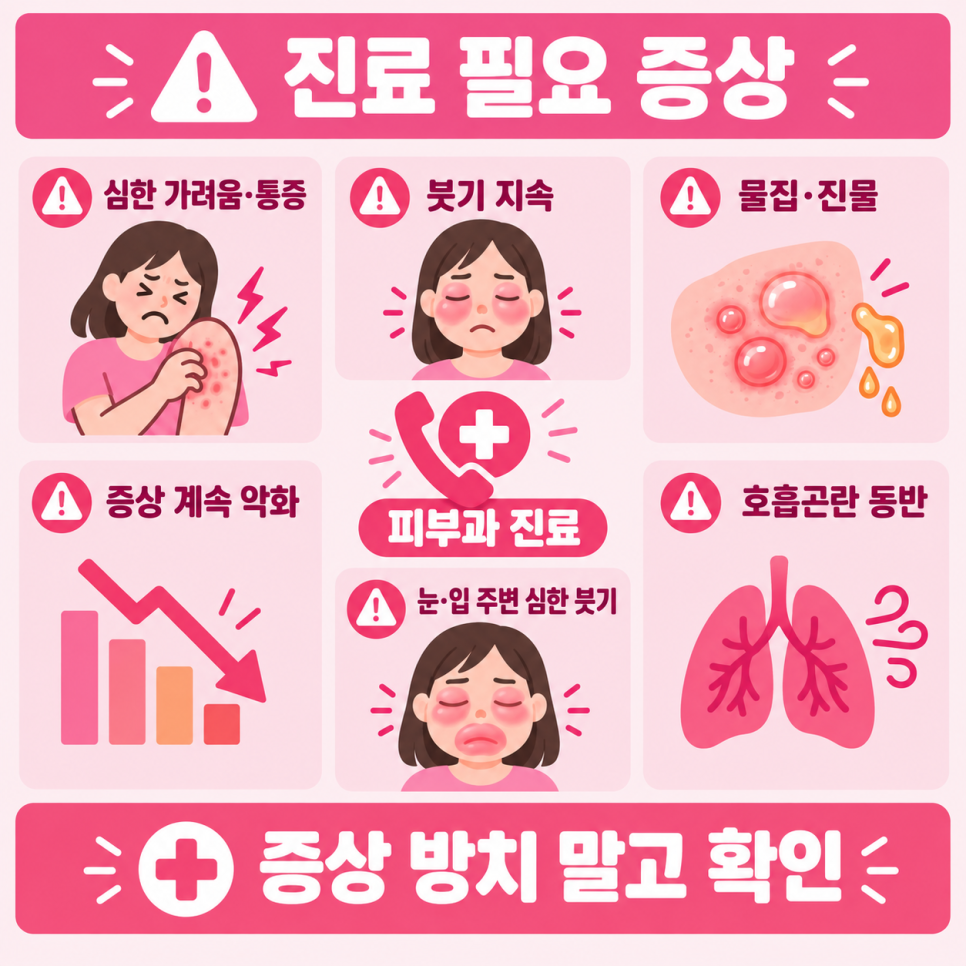
✅ Symptoms keep worsening over several days
✅ Severe itching, pain, swelling, blisters, or oozing occur
✅ Severe swelling around the eyes or mouth, or difficulty breathing, is present (seek immediate medical care)
If flare-ups keep recurring, rather than simply assuming your skin is just sensitive, keeping a record of when symptoms appeared and which products you’d used can help identify the cause.
3-Day Skin Flare-Up Checklist

✅ Have you used a new cosmetic product in the past 1–2 weeks?
✅ Did you switch your cleanser, sunscreen, shampoo, or laundry detergent?
✅ Have you been using peels or scrubs frequently?
✅ Have you been touching your face or squeezing bumps?
✅ Have you had significant sleep deprivation or stress lately?
✅ Are itching, heat, oozing, or blisters present?
✅ Are symptoms continuing to worsen despite care?
If several of these apply to you, it’s best to start by removing potential irritants one at a time rather than adding more new products.
If Your Skin Flares Up, Prioritize Soothing First
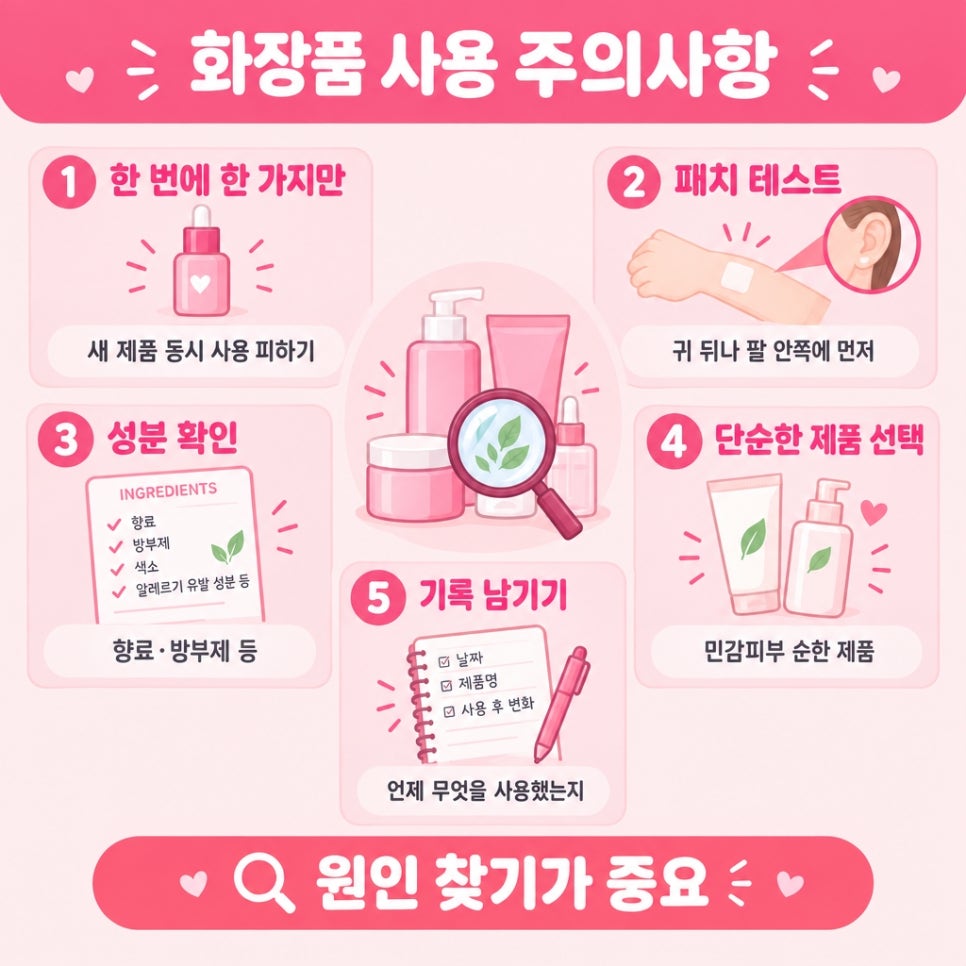
Seasonal skin flare-ups can be influenced by a combination of factors — dry weather, temperature shifts, cosmetics, lifestyle, and stress — so it’s difficult to pin the cause down to just one thing.
If sudden, bumpy changes appear, the priority is identifying what’s recently changed, simplifying your cleansing and moisturizing routine, and observing how your skin responds, rather than squeezing bumps or reaching for harsh products.
If you’re generally interested in skin barrier and elasticity care, you can find related information on the Atelofill Collagen Skin Research Center homepage.
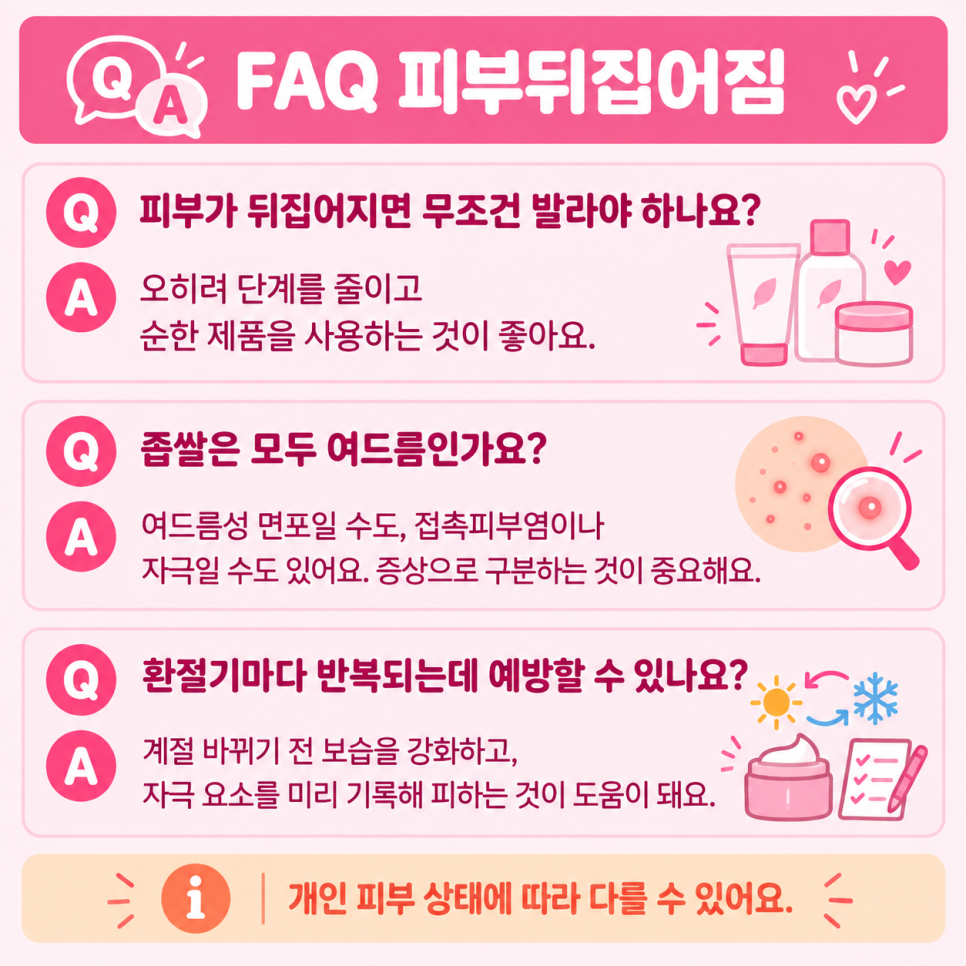
Frequently Asked Questions
1. If my skin flares up, is it okay to exfoliate right away?
No. Exfoliating or squeezing bumps before you know the cause can add irritation and slow recovery. It’s best to focus on gentle cleansing and moisturizing first while monitoring how your skin responds.
2. My skin flares up every seasonal change — how can I find the cause?
Start by checking whether you began using any new cosmetics, cleansers, or laundry detergents around the time symptoms started. Keeping a record of when symptoms appeared and what you used beforehand can help narrow down the cause.
3. Is it okay to squeeze bumps once they appear?
It’s not recommended. Squeezing or scratching bumps before knowing the cause can lead to further skin damage and a higher risk of secondary infection.
4. How severe do symptoms need to be before seeing a dermatologist?
If severe itching, pain, swelling, blisters, or oozing occur, or symptoms keep getting worse, it’s best to see a doctor. Severe swelling around the eyes or mouth, or difficulty breathing, requires immediate medical evaluation.
5. Are there ways to help prevent seasonal skin flare-ups?
Introducing new products one at a time instead of several at once, cutting back on irritating treatments like scrubs and peels, and maintaining a regular sleep schedule may all help.
References
· Asan Medical Center, “Contact Dermatitis,” Disease & Health Information. View source
· Korea Disease Control and Prevention Agency, “Irritant Contact Dermatitis,” National Health Information Portal. View source
· NCBI PMC, “Association of Perceived Stress with Atopic Dermatitis in Adults: A Population-Based Study in Korea,” National Library of Medicine. View source
This article is provided for general health information purposes only and is not a substitute for individual diagnosis or treatment. If you have symptoms, please consult a medical professional.