Tag: Seasonal Skin Care

  • Psoriasis Symptoms: 3 Causes and Treatment Options for Seasonal Flare-Ups

    Psoriasis Symptoms: 3 Causes and Treatment Options for Seasonal Flare-Ups

    SummarySkin psoriasis symptoms often flare up with every seasonal change. This guide walks through everything from causes to treatment options in one place, including reported statistics such as a 9–17% psoriatic arthritis rate among psoriasis patients in South Korea, a self-check list, a treatment comparison table, seasonal skin care tips, and guidance on when to see a dermatologist.

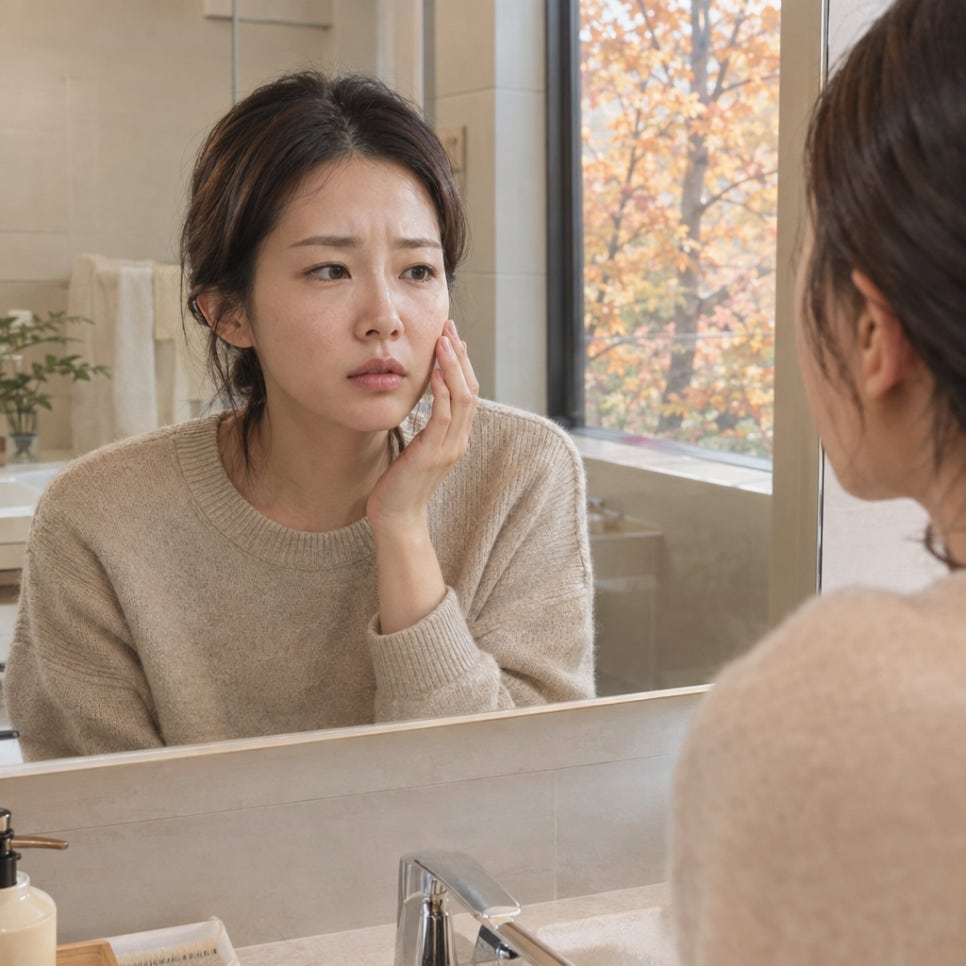
    When the weather starts turning cool, some people notice unusually white, flaky patches showing up on their elbows or knees.

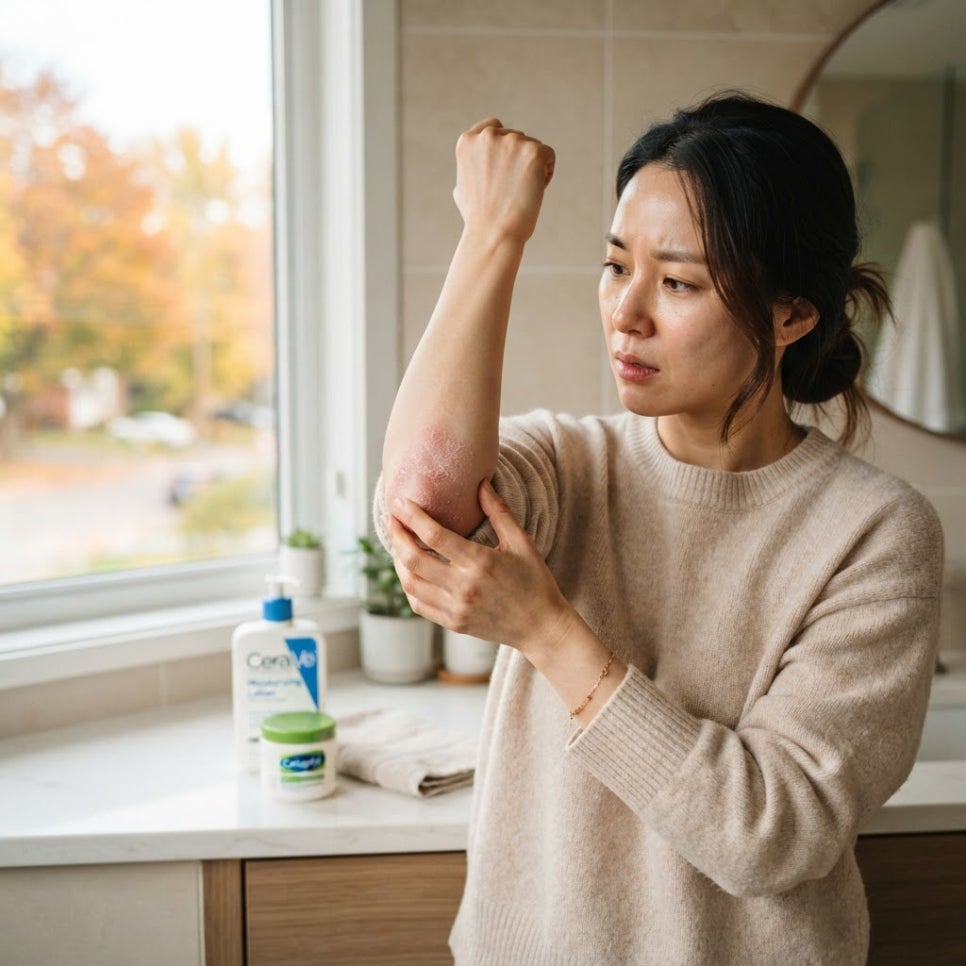
    If red patches and scaling keep coming back no matter how much moisturizer you apply, it may not simply be dry skin.

    Many people chalk these changes up to the season and end up overlooking skin psoriasis symptoms.

    Key Takeaways
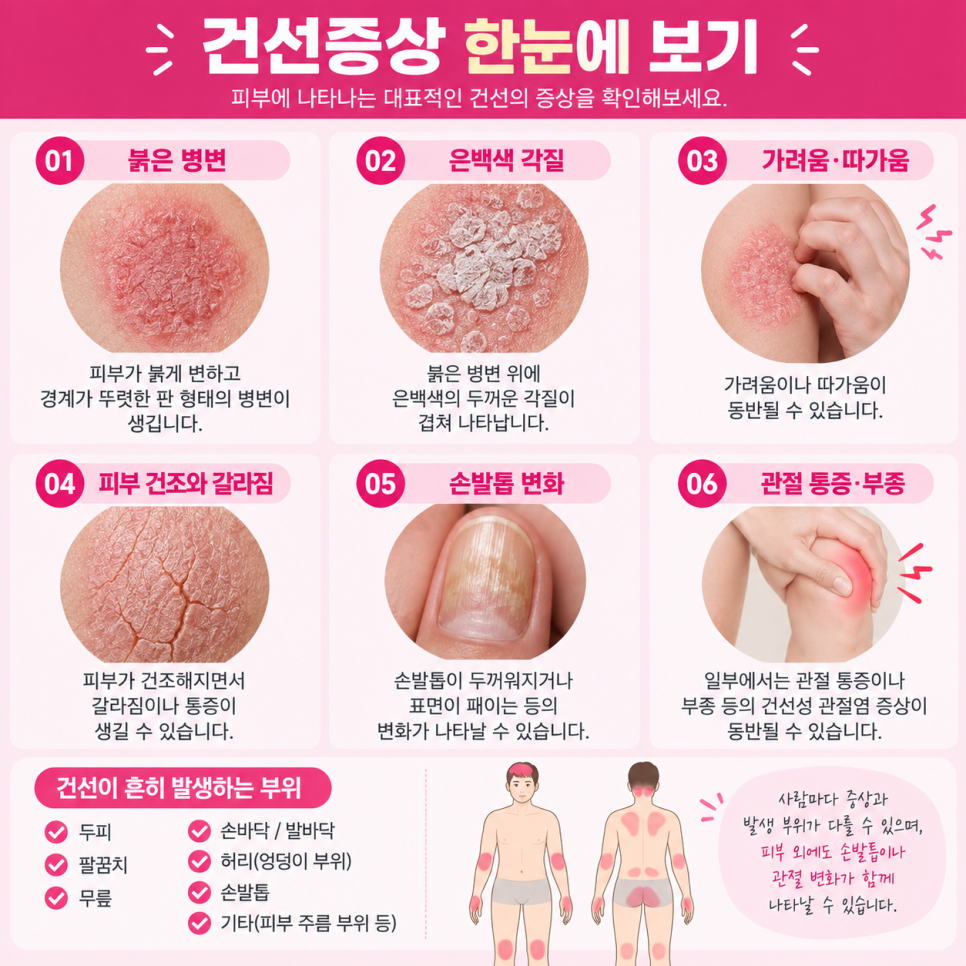
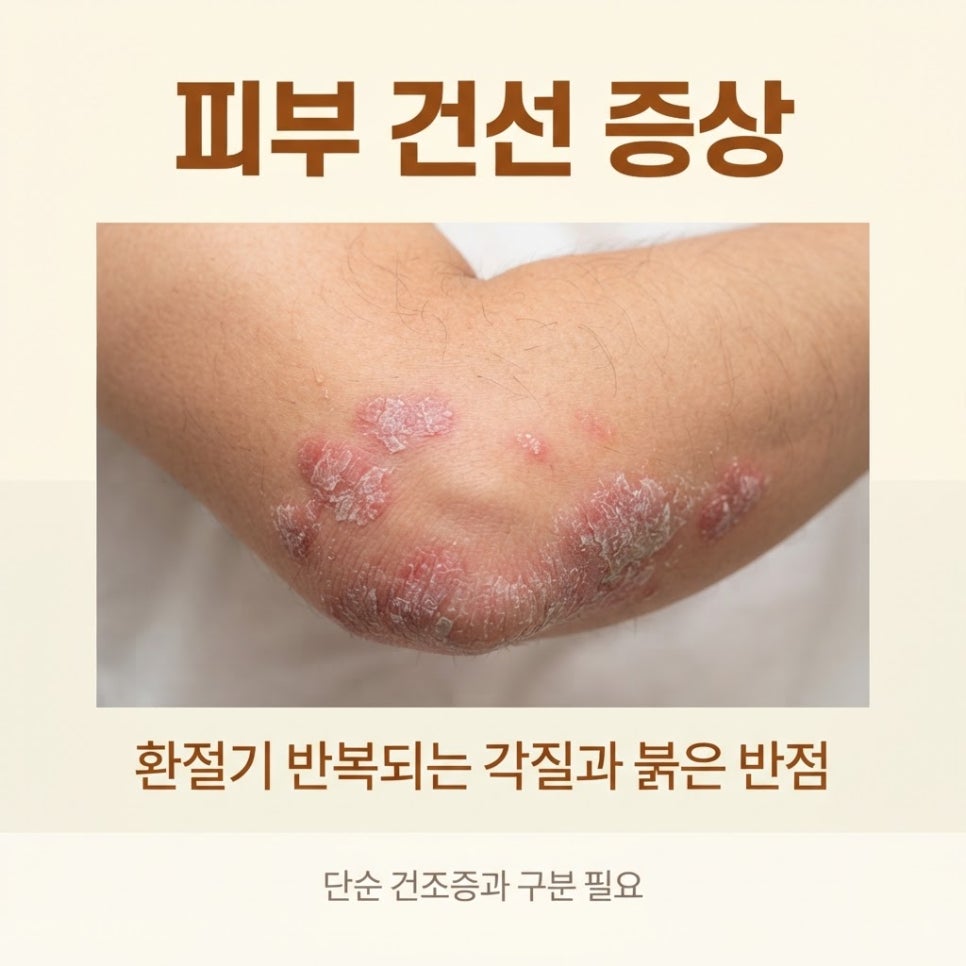
    Skin psoriasis symptoms are characterized by red patches covered in silvery-white scales that recur on the elbows, knees, scalp, and other areas.
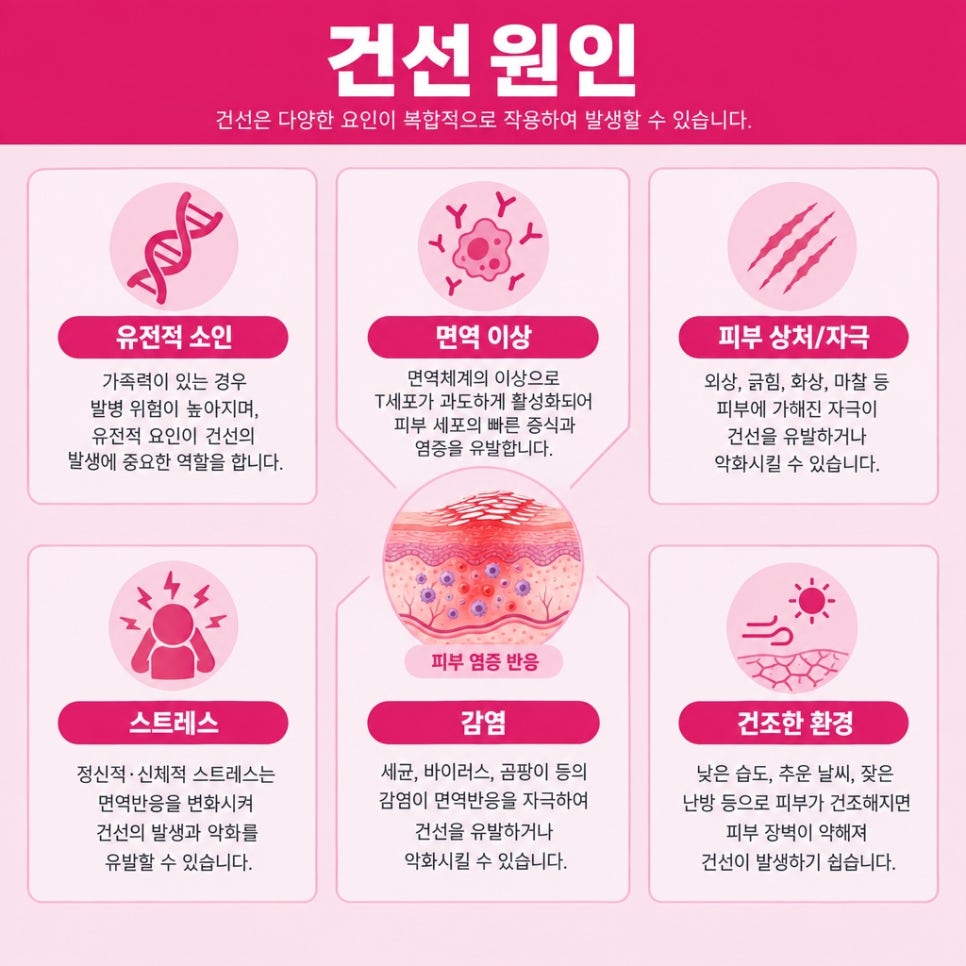
    The causes involve a combination of factors, including genetic predisposition, immune system dysfunction, stress, and infection.
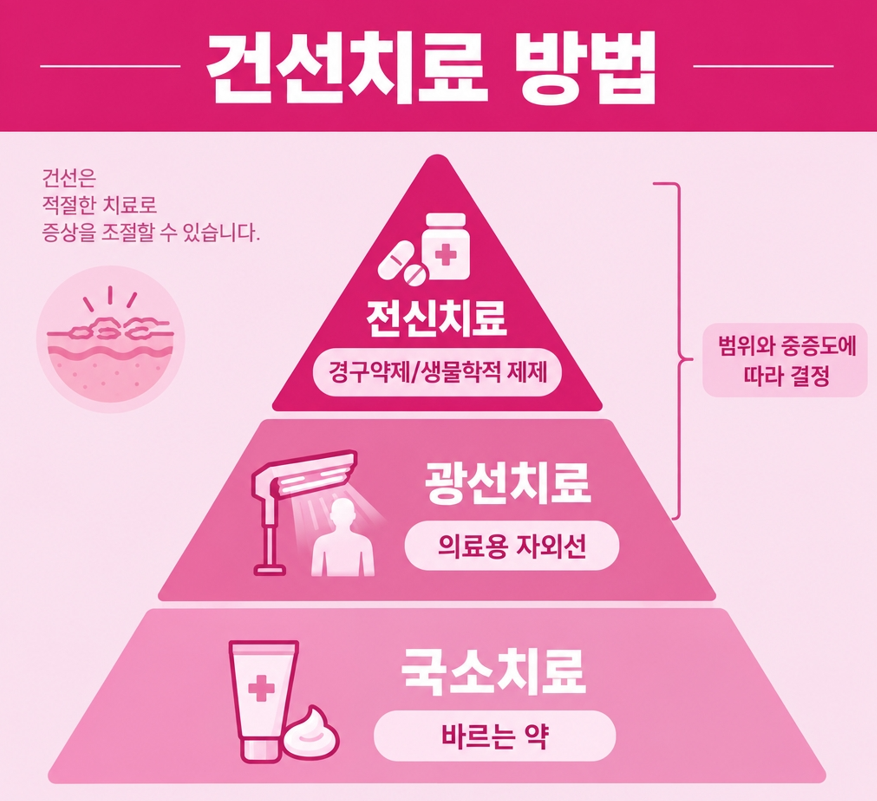
    Treatment is approached in stages based on symptoms and severity, ranging from topical treatment to phototherapy, systemic treatment, and biologic agents.
    skin psoriasis symptoms

    skin psoriasis symptoms related image 2

    Why Do Skin Psoriasis Symptoms Get Worse During Seasonal Changes?

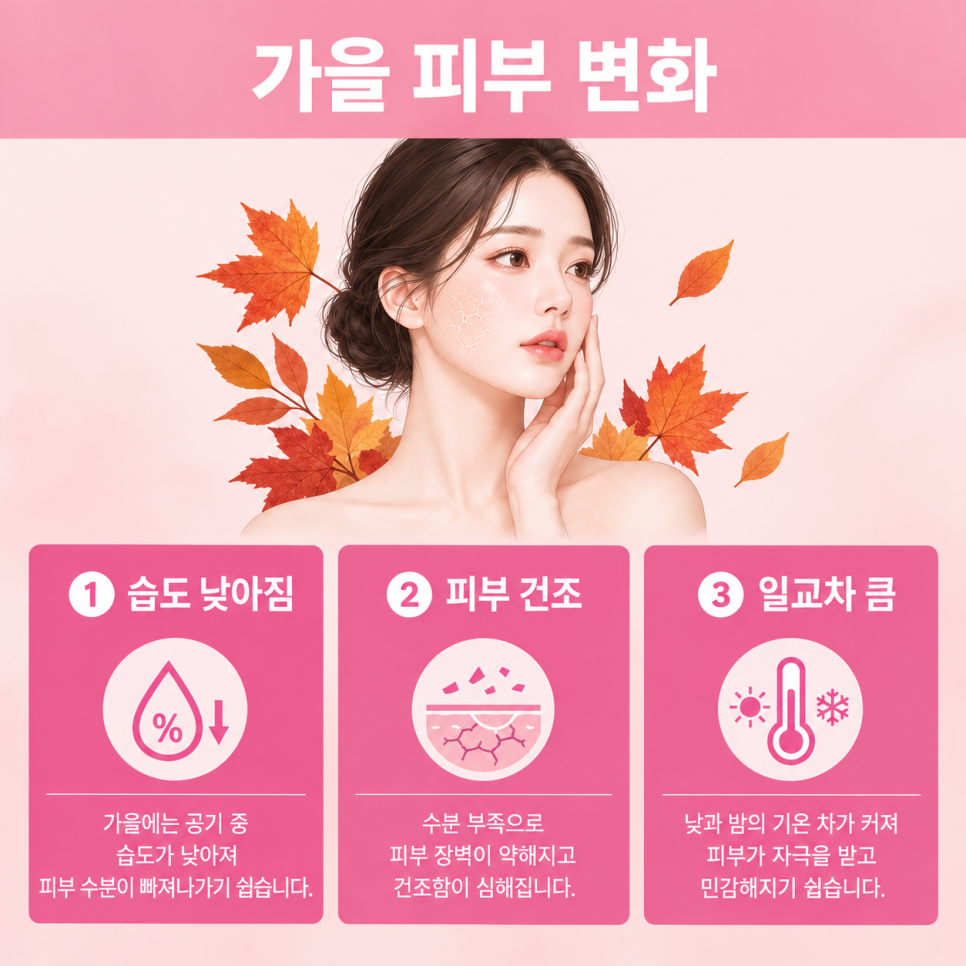
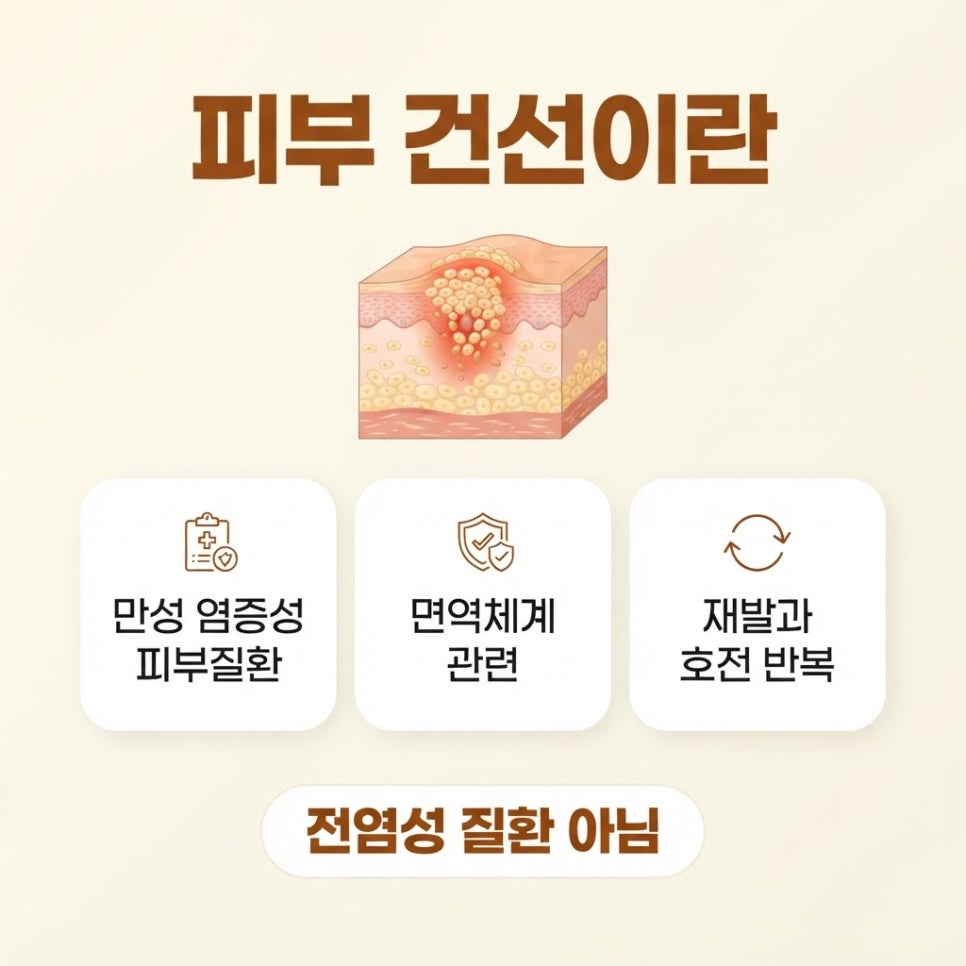
    Psoriasis is a chronic inflammatory skin condition that tends to worsen during seasonal transitions, when temperatures drop and the air becomes dry.
    This is because falling temperatures increase moisture loss from the skin, weakening the skin barrier.

    When dryness from indoor heating, reduced sunlight exposure, and infections like the common cold are added to the mix, symptoms tend to become more pronounced.

    In fact, psoriasis is reported to worsen more in fall and winter than in spring and summer, with reduced UV exposure and shorter daylight hours cited as key contributing factors.

    That said, not every patient worsens in the same way, and the specific triggers can vary from person to person.

    skin psoriasis symptoms related image 3

    skin psoriasis symptoms related image 4


    Where and How Do Skin Psoriasis Symptoms Appear?

    The hallmark of skin psoriasis symptoms is silvery-white scaling that builds up on top of sharply defined red lesions.
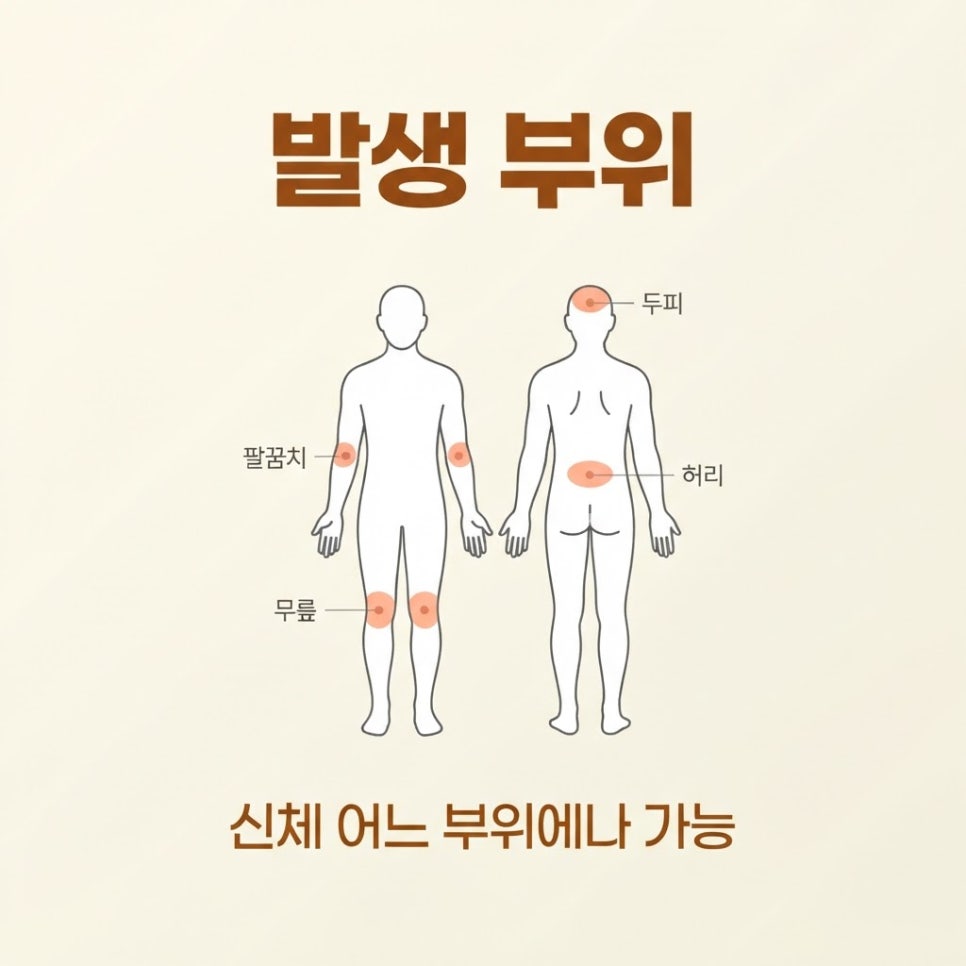
    These typically appear around the elbows, knees, scalp, and lower back, but they can occur on any part of the body.

    Self-Check List
    ✅ White scales repeatedly build up on top of red patches
    ✅ Skin in certain areas becomes thick and rough
    ✅ Itching or stinging accompanies the patches
    ✅ Thick scales repeatedly form on the scalp
    ✅ Small pits or changes appear in the nails

    Psoriasis doesn’t always stay confined to the skin — in some patients, it progresses to psoriatic arthritis, which involves joint pain and swelling.

    According to Hanyang University Hospital, 9–17% of psoriasis patients in South Korea also have psoriatic arthritis, and the same source notes that joint symptoms often appear an average of 10 years after skin symptoms first develop.
    However, the same source also notes that in about 15% of cases, joint symptoms appear first.

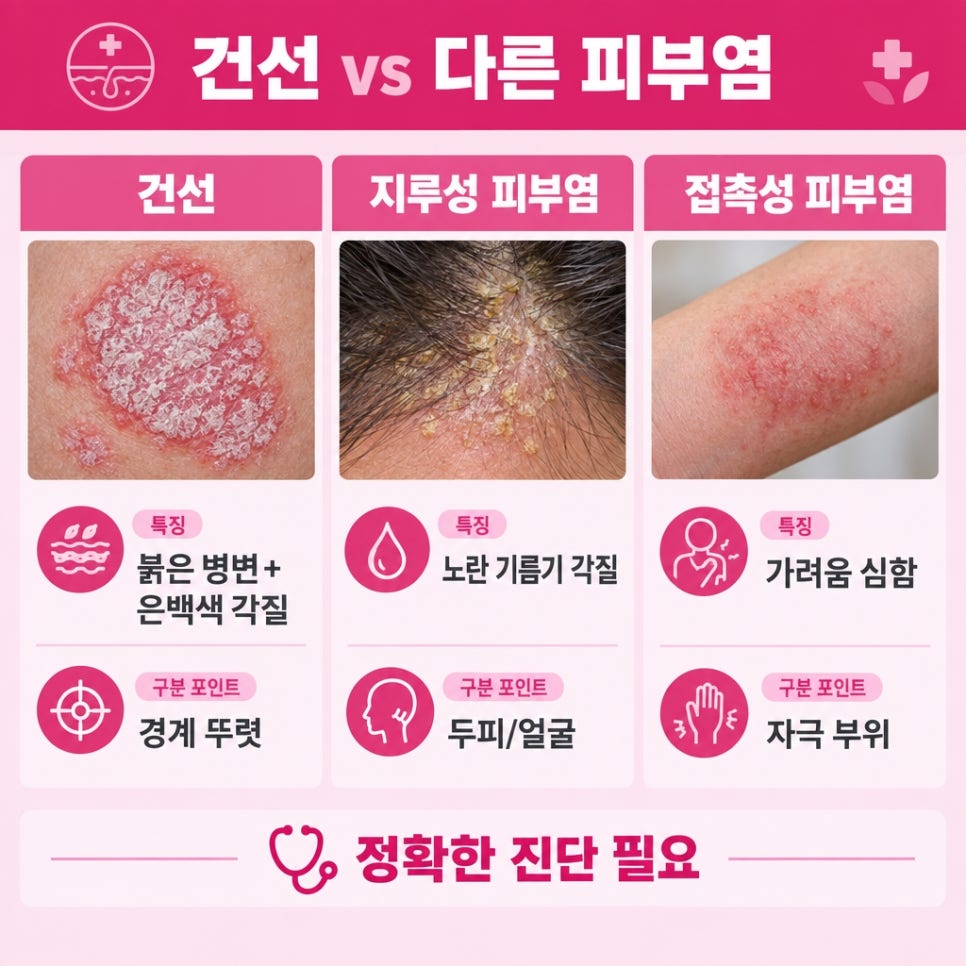
    Similar patterns can also appear with eczema or seborrheic dermatitis, so appearance alone isn’t enough to make a diagnosis.

    skin psoriasis symptoms related image 5


    What Causes Skin Psoriasis?

    There’s no single explanation for what causes psoriasis — an abnormal inflammatory response in the immune system is the central factor.
    This response speeds up the growth and turnover of skin cells, resulting in scaling and inflammatory lesions.

    Psoriasis is a chronic inflammatory skin disease in which sharply defined red papules or plaques covered in silvery-white scales repeatedly appear on the skin throughout the body.

    This is how Seoul Asan Hospital’s medical encyclopedia describes psoriasis.

    1. Genetic predisposition — Having a family history can increase the likelihood of developing psoriasis, but it can also occur without one.
    2. Immune system dysfunction — An ongoing inflammatory response involving immune cells promotes excess skin cell growth.
    3. Stress and infection — Mental stress or infections such as a throat infection can trigger or worsen symptoms.
    4. Skin irritation and lifestyle factors — Injuries, repeated friction, dry environments, smoking, and excessive alcohol use can also play a role.
    Important Note
    Psoriasis is not contagious.
    It cannot be passed to others through skin contact or everyday activities.

    skin psoriasis symptoms related image 6


    How Does Psoriasis Treatment Vary by Symptom?

    Psoriasis treatment methods are determined by considering the extent and thickness of the lesions, where they appear, and how much they affect daily life.
    A mild, localized lesion naturally calls for a different approach than widespread, severe involvement.

    Treatment Method Key Features
    Topical treatment Use of topical medications such as corticosteroids and vitamin D analogues
    Phototherapy Controls skin inflammation using medical-grade UV light
    Systemic treatment Oral medications or injectables considered for moderate-to-severe psoriasis
    Biologic agents Treatment that targets specific inflammatory pathways

    skin psoriasis symptoms related image 7

    Because psoriasis can chronically recur, ongoing maintenance tailored to your condition remains important even after symptoms improve.

    Caution
    Areas with thinner skin, such as the face or skin folds, require more careful selection of medication.
    Avoid applying strong ointments on your own for extended periods without medical guidance.
    skin psoriasis symptoms related image 8


    How Can You Manage Psoriasis During Seasonal Changes?

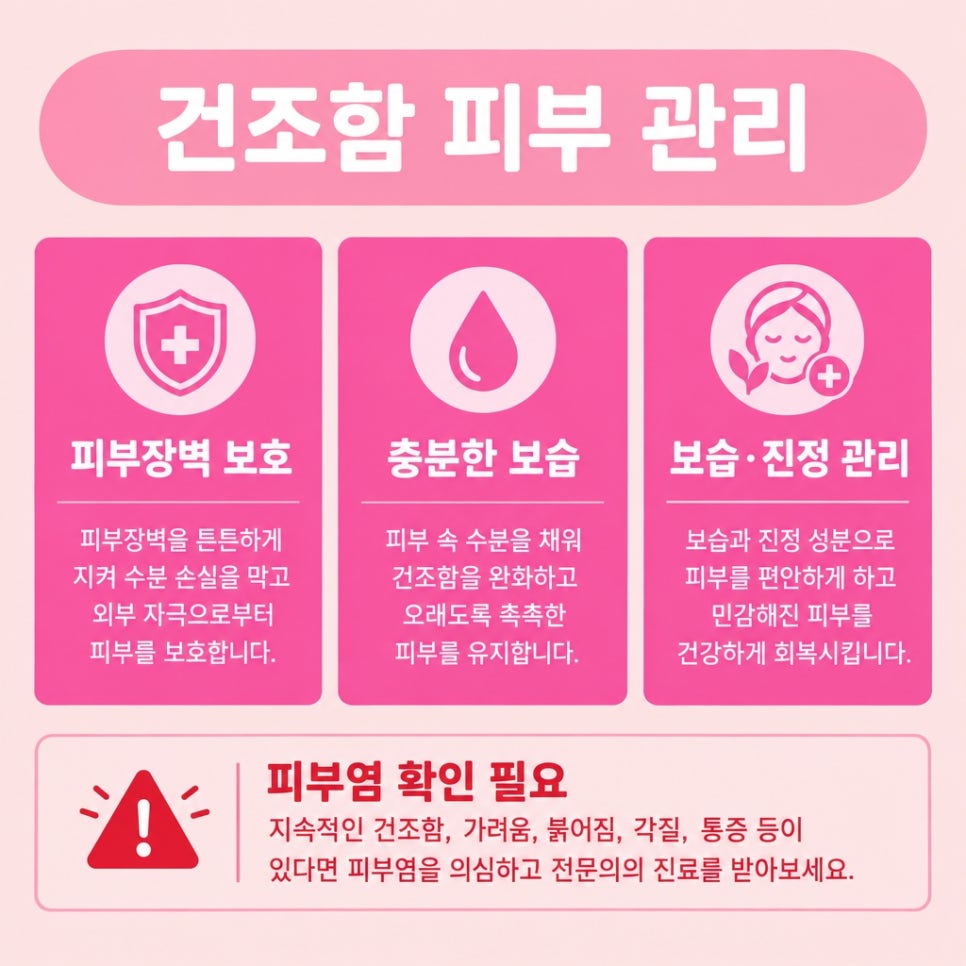
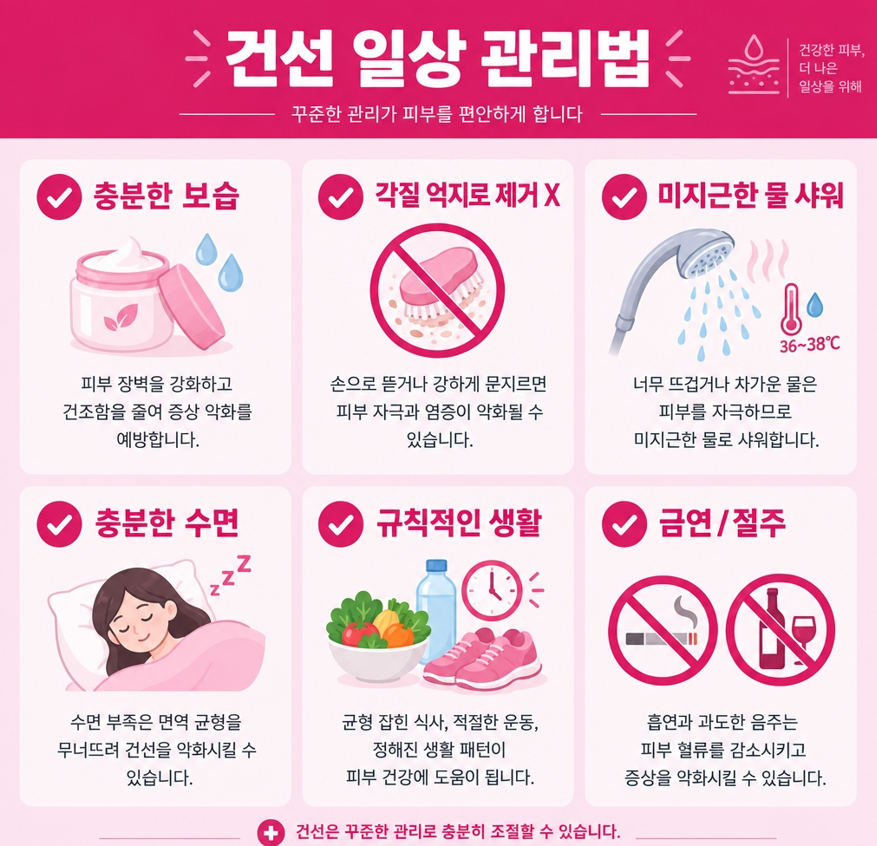
    Alongside treatment, daily habits that reduce skin irritation also matter.

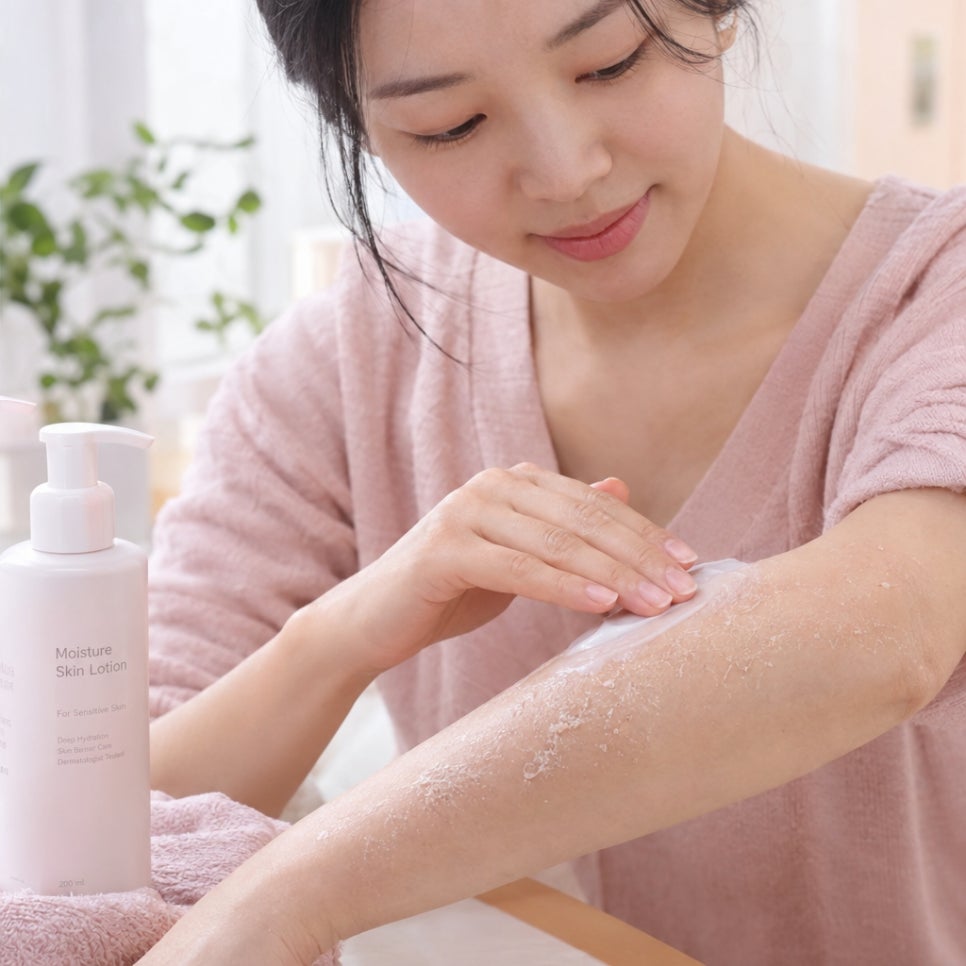
    1. Apply moisturizer generously — Keep showers short and lukewarm, and apply moisturizer before the skin fully dries, as this is generally recommended to help retain moisture.
    2. Don’t pick at scales — Scrubbing hard or peeling them off can trigger new lesions.
    3. Manage indoor humidity — Keep heating from drying out the air excessively.
    4. Track symptom changes — Logging flare-up timing alongside stress, infections, and lifestyle habits can help identify your personal triggers.

    For general information on moisturizing and skin barrier care, you can also visit the Atelofill Collagen Skin Research Institute homepage.

    It’s easy to dismiss recurring scaling and red patches during seasonal changes as simple dryness, but if symptoms persist in specific areas or thick scales keep building up, it’s worth checking whether psoriasis could be the cause.

    If symptoms keep recurring, it’s advisable to have a dermatologist evaluate your condition.

    skin psoriasis symptoms related image 9

    skin psoriasis symptoms related image 10


    Frequently Asked Questions

    1. Can skin psoriasis be cured completely?
    Psoriasis is a chronic condition that can cycle between flare-ups and improvement. Current treatments aim to control inflammation and symptoms in order to maintain a stable condition over the long term, rather than to cure it outright.

    2. How is skin psoriasis different from simple dry skin?
    Dry skin typically causes an overall rough, tight feeling across the skin, while psoriasis is characterized by sharply defined red lesions with thick scaling. An accurate distinction requires a clinical evaluation.

    3. Can moisturizer alone improve psoriasis?
    Moisturizing can help reduce dryness and discomfort, but it may not be enough to adequately control the underlying inflammation. If symptoms persist, appropriate medical treatment should be used alongside it.

    4. Is psoriasis contagious?
    No, it is not contagious. It isn’t transmitted through skin contact or daily activities — it develops from a combination of immune system, genetic, and environmental factors.


    References

    · Korea Disease Control and Prevention Agency, “Psoriasis,” National Health Information Portal, 2024. View source
    · Seoul Asan Hospital, “Psoriasis,” Seoul Asan Hospital Disease Encyclopedia, 2024. View source
    · Nongmin Shinmun, “1% of the Population Has ‘Psoriasis’… Severity Confirmed by ‘Blood Levels,’ Not Experience,” Nongmin Shinmun, 2024. View source
    · Hanyang University Hospital, “What Is Psoriatic Arthritis?,” Hanyang University Hospital Health Resource Center, 2024. View source


    This article is intended to provide general health information and is not a substitute for individual diagnosis or treatment. If you have symptoms, please consult a medical professional.
  • 5 Causes of Skin Flare-Ups: Seasonal Breakout Guide

    5 Causes of Skin Flare-Ups: Seasonal Breakout Guide

    SummarySeasonal skin flare-ups can result from several overlapping factors, including dry weather, cosmetic irritation, and stress. Here’s what to try instead of squeezing sudden bumps, which habits to avoid, and the warning signs that call for a dermatologist visit.

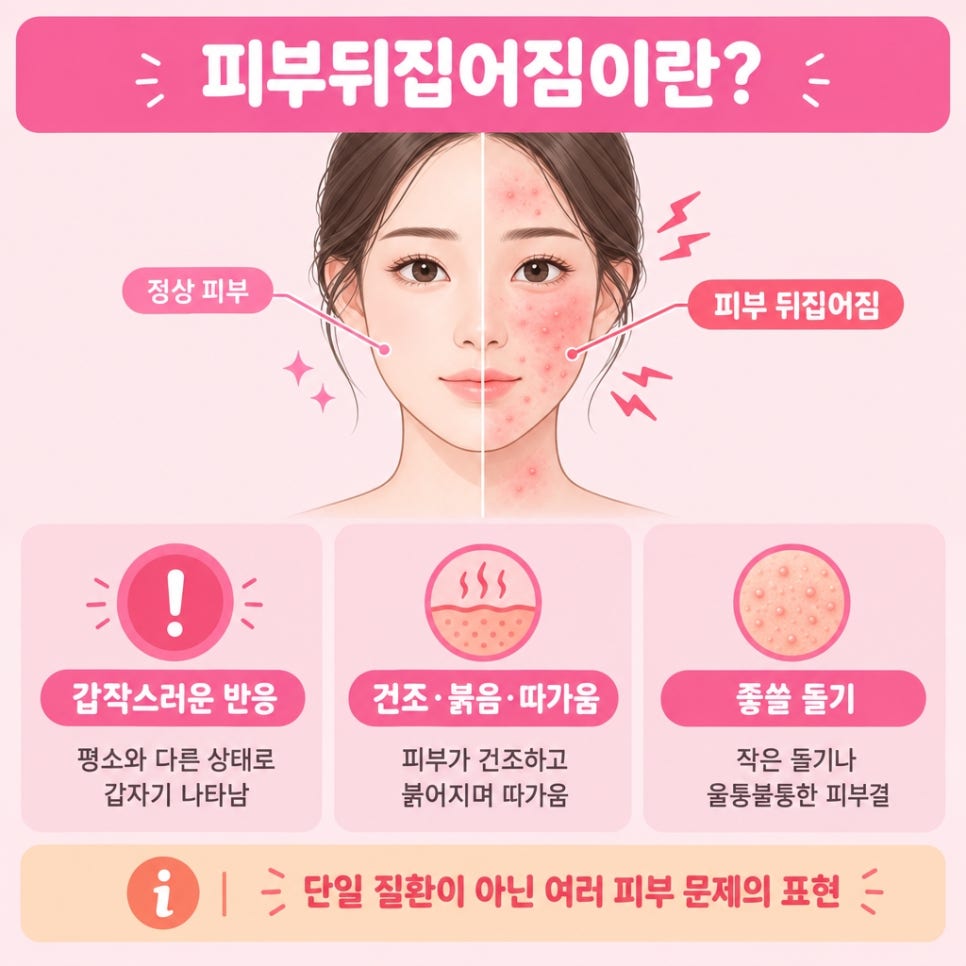
    Most of us have had the experience of skin that looked perfectly fine yesterday suddenly turning red and stinging overnight.

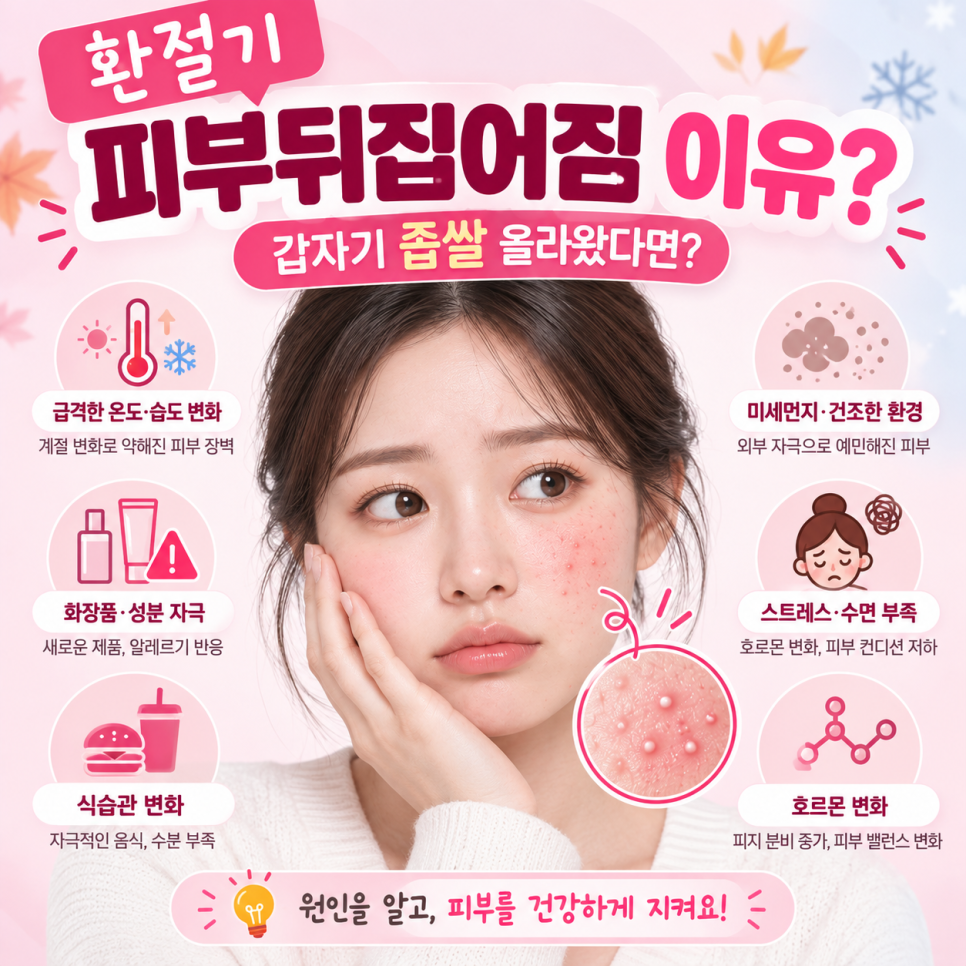
    This kind of sudden skin flare-up tends to become more common during seasonal transitions, when daily temperature swings are larger.

    It can be especially frustrating when small, bumpy breakouts and itching show up even though you’re using the same products as always.

    skin flare-up

    This article outlines why seasonal skin flare-ups happen, what to check when small bumps suddenly appear, and soothing steps you can try at home right away. Learn how to check for underlying causes before squeezing blemishes or exfoliating aggressively, along with signs that call for a dermatology visit.

    Skin flare-up related image 2

    Seasonal Skin Flare-Ups: Why Do They Suddenly Happen?

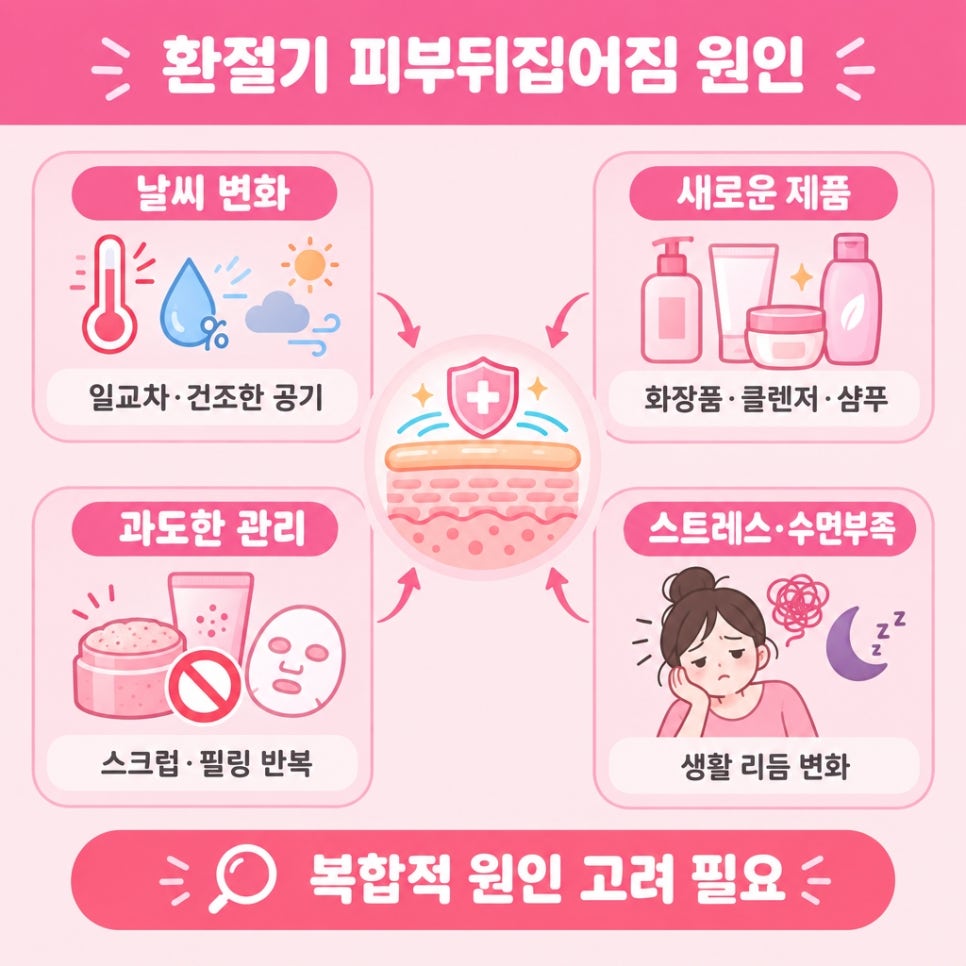
    Seasonal skin flare-ups usually occur when dry air, sudden shifts in temperature and humidity, and cosmetic irritation overlap.

    A seasonal skin flare-up refers to skin becoming temporarily more reactive as fluctuating temperatures and humidity weaken the skin barrier’s function.

    Dry environments and temperature changes can leave skin dehydrated and more reactive, and if you already have sensitive skin or a skin condition, these shifts can make symptoms more noticeable.

    Skin flare-up related image 3

    Several other factors can also overlap at the same time.

    Skin flare-up related image 4

    Key points
    ① Sudden weather changes — Dry air, wind, and large daily temperature swings can leave skin dry and sensitive.
    ② New cosmetics or household products — Cleansers, sunscreen, hair products, and laundry detergent can also cause irritation or allergic contact dermatitis.
    ③ Over-exfoliating or over-treating — Repeated scrubs or peels, or layering multiple high-potency products at once, can add to skin irritation.
    ④ Stress and disrupted routines — Stress and lack of sleep are known to worsen symptoms of certain skin conditions.
    Note
    Allergic contact dermatitis doesn’t always appear right after using a product — it can show up hours or even days later. It’s worth reviewing any new products you’ve used over the past several days.

    Sudden Bumps: Are They Different from Acne?

    When your face suddenly turns bumpy, it’s natural to assume it’s whiteheads or small acne — but not every tiny bump has the same underlying cause.

    Bumps that look like whiteheads may be comedonal acne, but small papules or blisters caused by skin irritation or contact dermatitis can look similar.

    That’s why it’s important to look at accompanying symptoms rather than automatically squeezing bumps or reaching for acne products.

    Skin flare-up related image 5

    Accompanying Symptoms Possible Cause
    Small, recurring bumps that look sebum-filled Possible acne-related lesion
    Multiple bumps appear suddenly with itching and stinging Possible skin irritation or contact dermatitis
    Redness, burning, and flaking worsen together Calming irritation takes priority over exfoliating

    Squeezing or scratching sudden bumps can cause additional skin damage, so it’s best to leave them alone until you know the underlying cause.


    What Should You Do When Skin Flares Up?

    Once a flare-up starts, the priority is reducing irritating factors rather than adding new products.

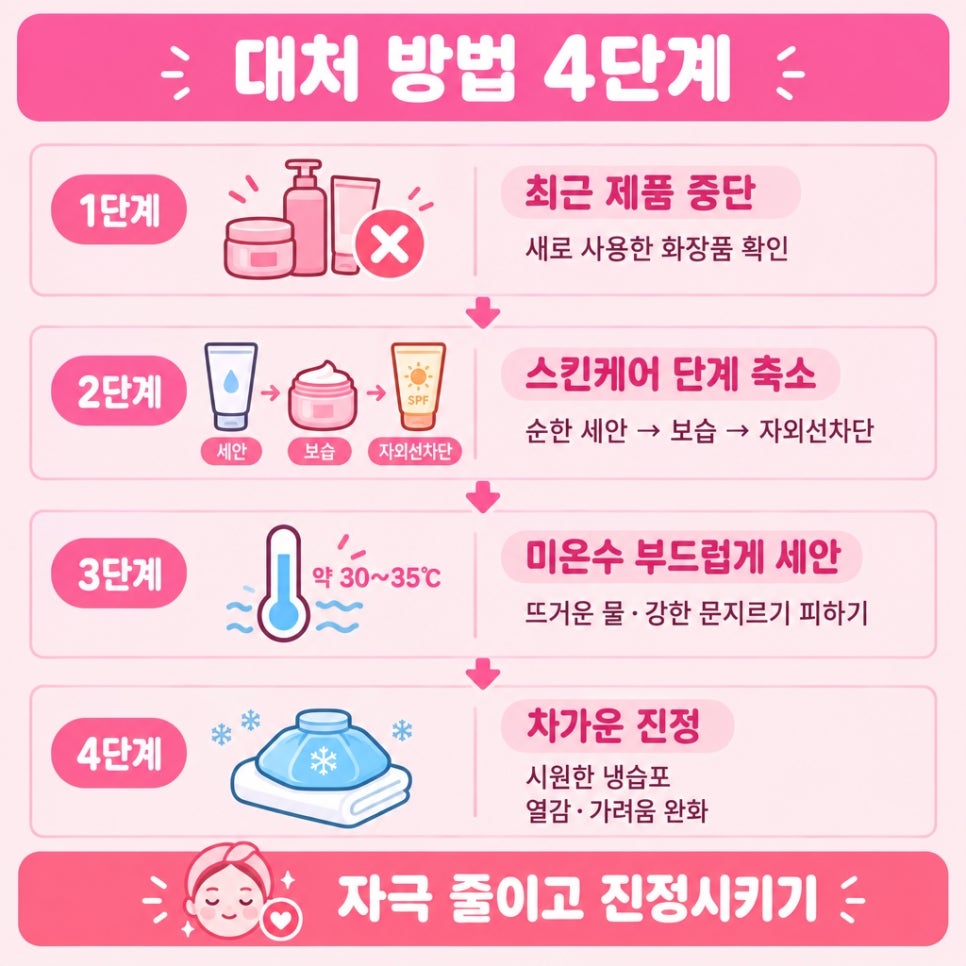
    Managing a skin flare-up generally comes down to four steps: stopping the suspected product, simplifying your skincare routine, cleansing gently, and calming the skin.

    Skin flare-up related image 6

    1. STEP 1. Pause any recently added products
      If you’ve recently started using a new cosmetic or cleanser, compare that timing with when symptoms began. Adding several products at once makes it harder to pinpoint the cause.
    2. STEP 2. Simplify your skincare routine
      Rather than layering on more products, focus on the basics: gentle cleansing → moisturizing → sunscreen during the day. Fragranced products can sometimes be an irritant, so choosing low-fragrance options may help if your skin is sensitive.
    3. STEP 3. Cleanse gently with lukewarm water
      Avoid washing for a long time with hot water or scrubbing hard. Apply a moisturizer that has worked well for you before your skin fully dries after cleansing, to help minimize water loss.
    4. STEP 4. Cool the skin if it feels hot or itchy
      A cool compress made with a clean towel may help temporarily ease discomfort. However, avoid holding ice directly against the skin for extended periods.

    What Habits Should You Avoid?

    Skin flare-up related image 7

    When your skin flares up, it’s tempting to do more than usual in hopes of speeding up recovery.

    But at this stage, it’s more important to think about what to cut back on rather than what to add.

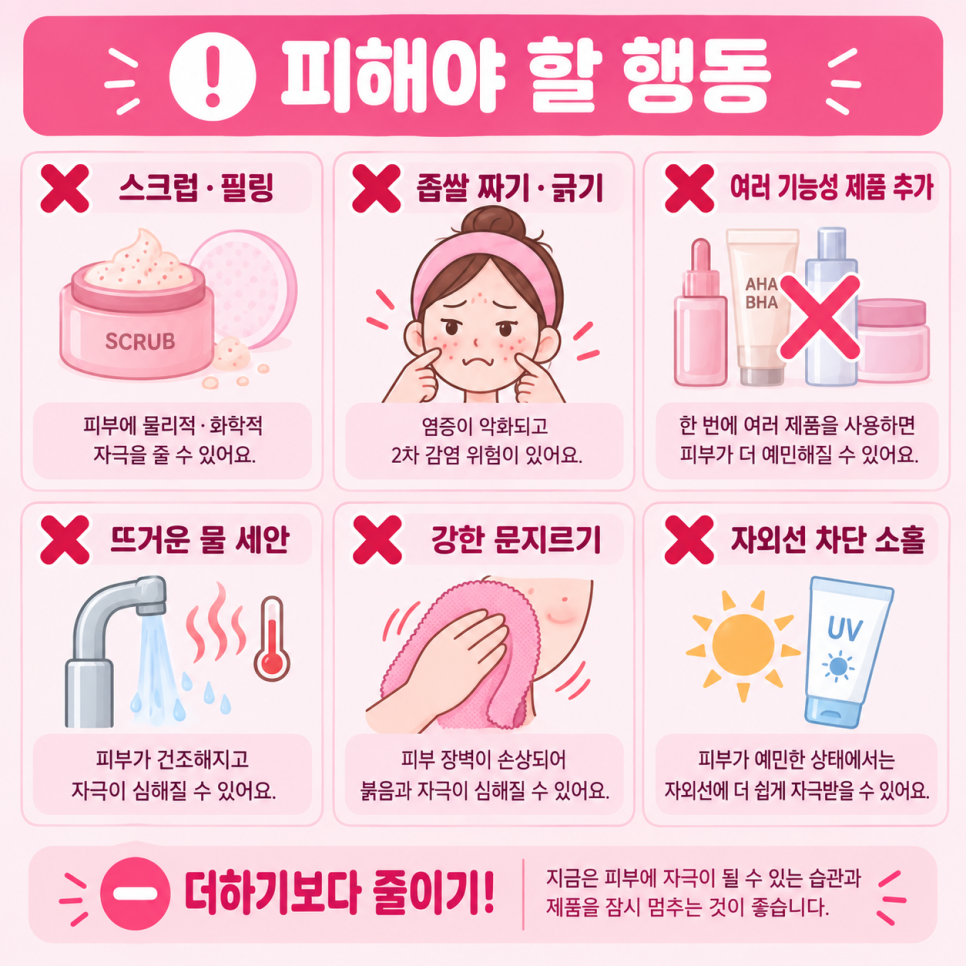
    Caution
    · Pause physically or chemically abrasive treatments like scrubs and peels for now.
    · Avoid introducing several new high-concentration active products at the same time.
    · Don’t repeatedly squeeze or scratch bumpy areas. Continued scratching can damage the skin and increase the risk of secondary infection.

    When Should You See a Dermatologist?

    Simple dryness or temporary irritation may improve once you avoid the suspected trigger.

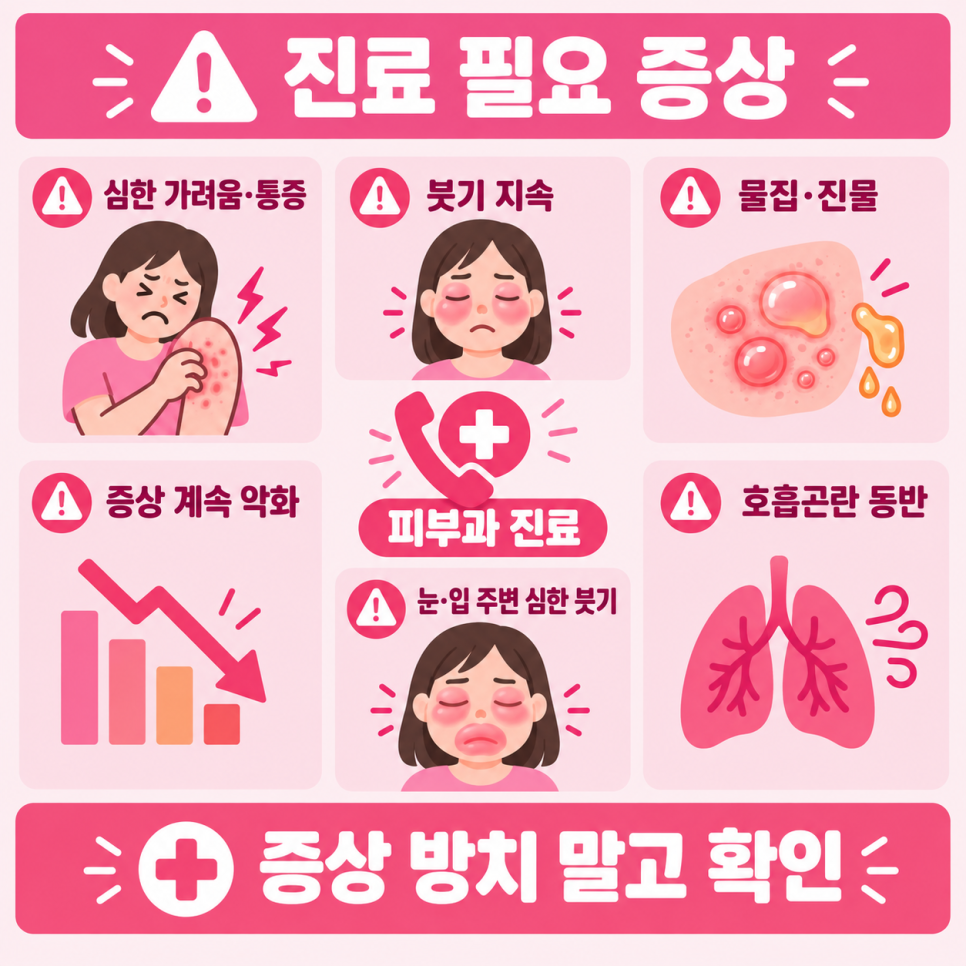
    On the other hand, if a flare-up keeps worsening or is accompanied by severe itching, pain, swelling, blisters, or oozing, it’s advisable to see a dermatologist to identify the exact cause.

    Skin flare-up related image 8

    Consider seeing a doctor if…
    ✅ Symptoms keep worsening over several days
    ✅ Severe itching, pain, swelling, blisters, or oozing occur
    ✅ Severe swelling around the eyes or mouth, or difficulty breathing, is present (seek immediate medical care)

    If flare-ups keep recurring, rather than simply assuming your skin is just sensitive, keeping a record of when symptoms appeared and which products you’d used can help identify the cause.

    3-Day Skin Flare-Up Checklist

    Skin flare-up related image 9

    Checklist
    ✅ Have you used a new cosmetic product in the past 1–2 weeks?
    ✅ Did you switch your cleanser, sunscreen, shampoo, or laundry detergent?
    ✅ Have you been using peels or scrubs frequently?
    ✅ Have you been touching your face or squeezing bumps?
    ✅ Have you had significant sleep deprivation or stress lately?
    ✅ Are itching, heat, oozing, or blisters present?
    ✅ Are symptoms continuing to worsen despite care?

    If several of these apply to you, it’s best to start by removing potential irritants one at a time rather than adding more new products.


    If Your Skin Flares Up, Prioritize Soothing First

    Skin flare-up related image 10

    Seasonal skin flare-ups can be influenced by a combination of factors — dry weather, temperature shifts, cosmetics, lifestyle, and stress — so it’s difficult to pin the cause down to just one thing.

    If sudden, bumpy changes appear, the priority is identifying what’s recently changed, simplifying your cleansing and moisturizing routine, and observing how your skin responds, rather than squeezing bumps or reaching for harsh products.

    If you’re generally interested in skin barrier and elasticity care, you can find related information on the Atelofill Collagen Skin Research Center homepage.

    Skin flare-up related image 11


    Frequently Asked Questions

    1. If my skin flares up, is it okay to exfoliate right away?
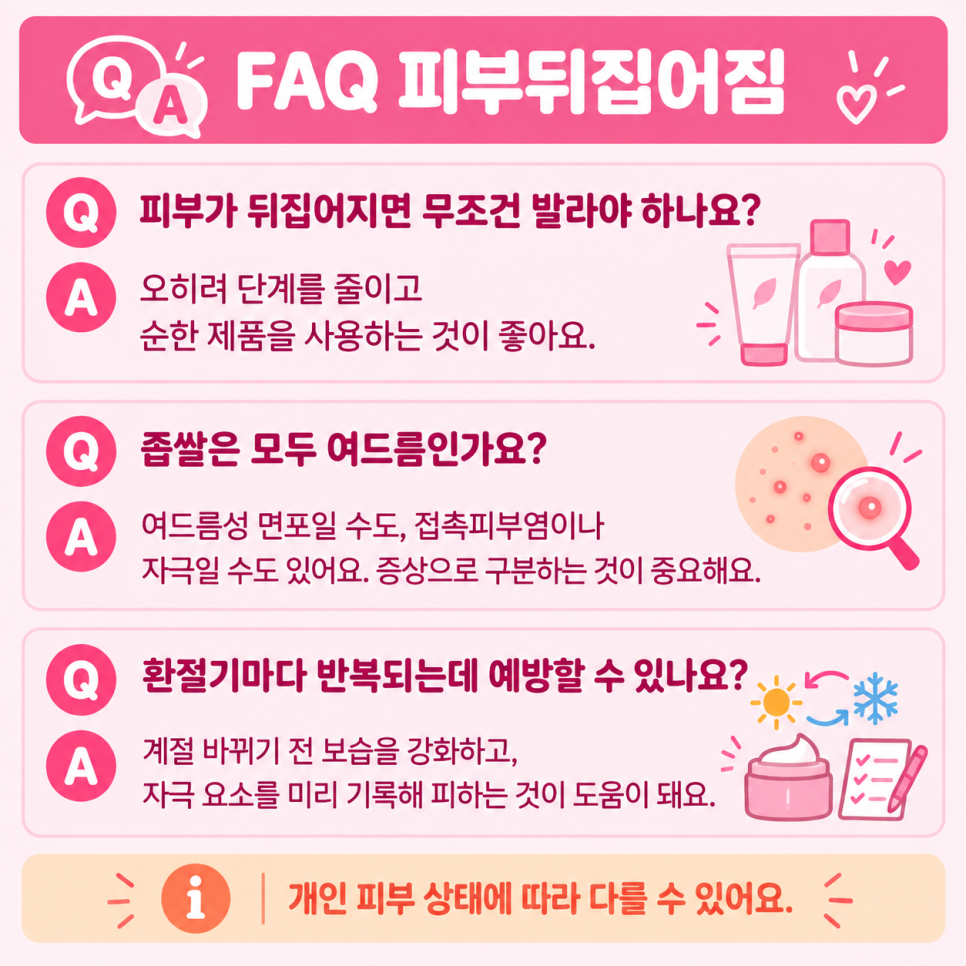
    No. Exfoliating or squeezing bumps before you know the cause can add irritation and slow recovery. It’s best to focus on gentle cleansing and moisturizing first while monitoring how your skin responds.

    2. My skin flares up every seasonal change — how can I find the cause?
    Start by checking whether you began using any new cosmetics, cleansers, or laundry detergents around the time symptoms started. Keeping a record of when symptoms appeared and what you used beforehand can help narrow down the cause.

    3. Is it okay to squeeze bumps once they appear?
    It’s not recommended. Squeezing or scratching bumps before knowing the cause can lead to further skin damage and a higher risk of secondary infection.

    4. How severe do symptoms need to be before seeing a dermatologist?
    If severe itching, pain, swelling, blisters, or oozing occur, or symptoms keep getting worse, it’s best to see a doctor. Severe swelling around the eyes or mouth, or difficulty breathing, requires immediate medical evaluation.

    5. Are there ways to help prevent seasonal skin flare-ups?
    Introducing new products one at a time instead of several at once, cutting back on irritating treatments like scrubs and peels, and maintaining a regular sleep schedule may all help.


    References

    · Asan Medical Center, “Contact Dermatitis,” Disease & Health Information. View source
    · Korea Disease Control and Prevention Agency, “Irritant Contact Dermatitis,” National Health Information Portal. View source
    · NCBI PMC, “Association of Perceived Stress with Atopic Dermatitis in Adults: A Population-Based Study in Korea,” National Library of Medicine. View source


    This article is provided for general health information purposes only and is not a substitute for individual diagnosis or treatment. If you have symptoms, please consult a medical professional.
  • Fall Dermatology Treatments: 5 Options for Every Skin Concern

    Fall Dermatology Treatments: 5 Options for Every Skin Concern

    SummaryIf you’re considering a fall dermatology treatment, there’s something worth checking before the season itself. This guide covers how to choose a treatment based on your specific skin concern — dryness, pigmentation, texture and pores, or elasticity — along with seasonal skin care tips and post-treatment precautions, plus what to review before any procedure.

    The cooler breeze is welcome, but fall is also the season when skin can look unusually dry and dull in the mirror.

    If skin that was fine all summer suddenly feels tight and your makeup starts separating, that can be a sign worth more than just blaming the season.

    This is often when people naturally start looking into fall dermatology treatments, but there are standards worth checking before the season itself.

    This article outlines what to check for each skin concern — dryness, pigmentation, texture and pores, and elasticity — when considering fall dermatology treatments.

    We’ll look at how to choose a treatment direction based on your current skin condition rather than the season, along with precautions for skin that has become sensitive during the seasonal transition.

    fall dermatology treatments

    fall dermatology treatments image 2

    fall dermatology treatments image 3

    Key Points
    ✔ In fall, lower humidity and wider day-night temperature swings make skin prone to dryness and sensitivity
    ✔ Which treatment fits you depends on your main concern — dryness, texture, pigmentation, or elasticity
    ✔ If your skin has become significantly sensitive, checking its condition comes before any treatment

    Why Does Skin Get Dry and Dull in Fall?

    To put it simply, it’s because lower humidity, wider day-night temperature swings, and UV exposure accumulated over summer act together.

    Fall skin dryness refers to the way skin’s moisture-retention environment itself changes as temperature and humidity drop.

    As the gap between morning and daytime temperatures widens and indoor heating begins, skin dries out more easily.

    On top of that, the effects of summer UV exposure are hard to ignore.

    UV rays stimulate melanocytes to trigger pigmentation and are a major aging factor that also damages collagen and elastin structures.

    fall dermatology treatments image 4

    So fall skin concerns are hard to address as simply a matter of replenishing moisture.

    It’s best to look at both summer’s accumulated damage and your skin’s current condition together.


    Fall Dermatology Treatments: What’s Different for Each Skin Concern?

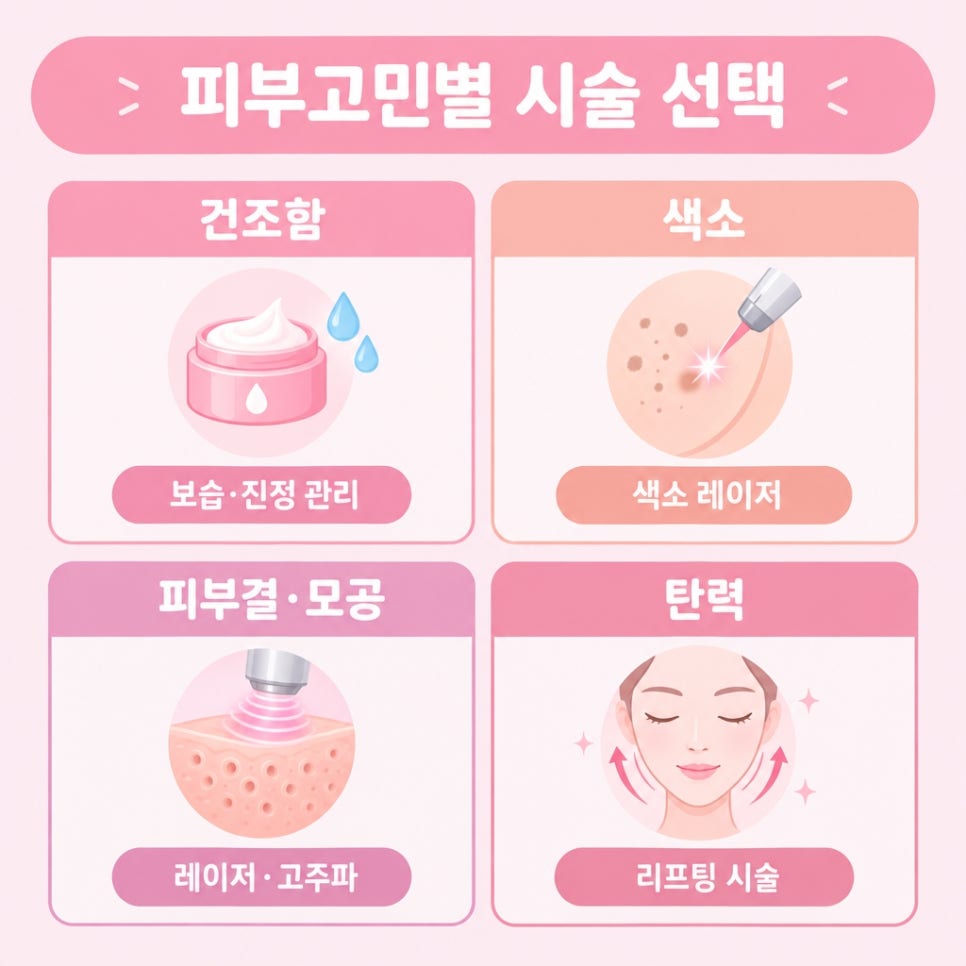
    In short, the right fall dermatology treatment depends not on the season but on which concern is greatest for you — dryness, pigmentation, texture and pores, or elasticity.

    Fall dermatology treatments refer broadly to the dermatology procedures considered to address skin concerns that become more noticeable during the seasonal transition.

    If Dryness and Makeup Separation Are Your Concern

    fall dermatology treatments image 5

    If dryness is your main concern, the basics are gentle cleansing that doesn’t irritate the skin barrier and adequate moisturizing.

    Depending on skin condition, moisturizing and soothing care, or certain skin-booster-type treatments, may also be considered.

    However, dryness alone doesn’t necessarily mean you need an injectable treatment.

    If applying skincare products causes stinging, redness, or itching, it may not be simple dehydration — dermatitis or barrier damage should also be considered.

    Caution
    Repeating peels or other high-irritation treatments while skin is red and itchy can make discomfort worse. Check your current skin condition first.

    If Dark Spots and Dull Tone Are Your Concern

    fall dermatology treatments image 6

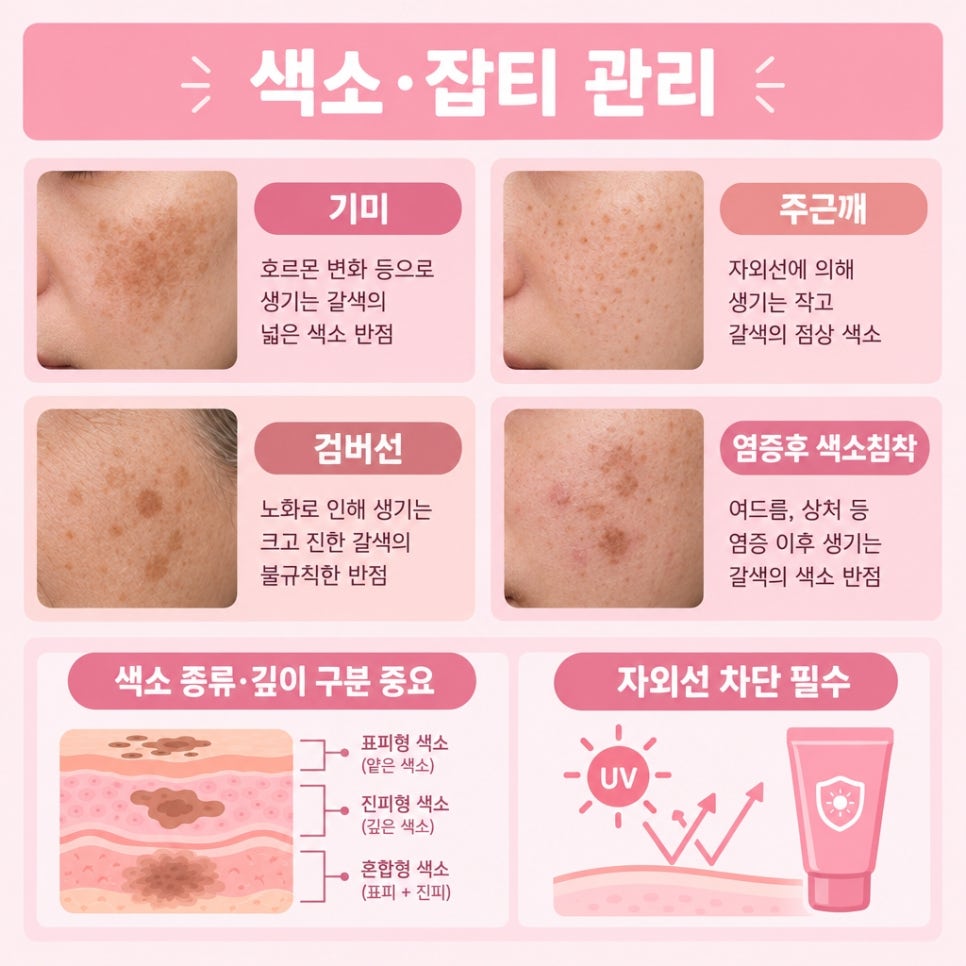
    If pigmentation is your main concern, it’s important to first identify its type and depth, and laser treatment may be considered depending on your condition.

    Repeated UV exposure over summer can make existing melasma or freckles more noticeable.

    Even though brown spots may look similar on the surface, melasma, freckles, age spots, and post-inflammatory hyperpigmentation each have distinct characteristics.

    So rather than a one-size-fits-all approach, the method should be chosen after checking the specific characteristics of the pigmentation.

    Sun protection remains important even after treatment.

    If Rough Texture and Enlarged Pores Are Your Concern

    fall dermatology treatments image 7

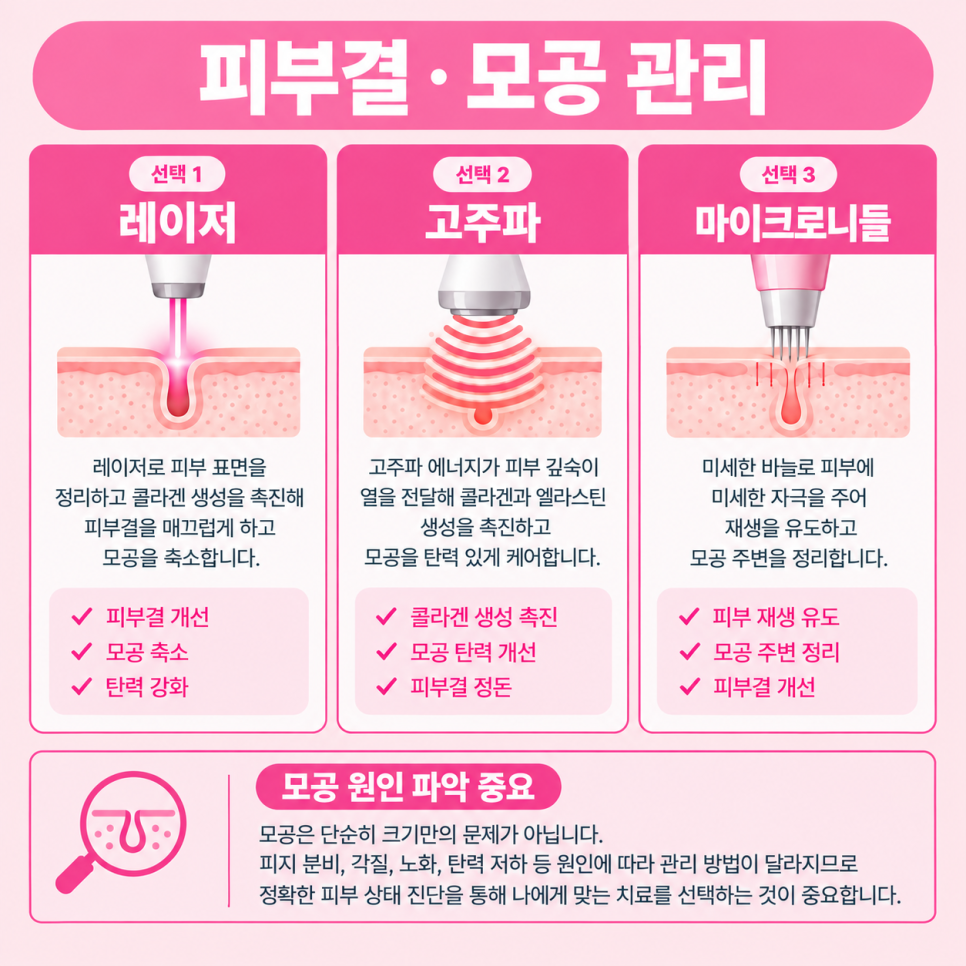
    If skin texture or pores are your concern, treatments using lasers, radiofrequency, or microneedling may be considered depending on the cause.

    Pore size isn’t determined by sebum production alone — elasticity changes, scarring, and overall skin surface condition all play a role.

    Since skin can be drier or more sensitive than usual during the seasonal transition, it’s better to set treatment intensity and intervals according to your skin’s condition rather than combining strong exfoliation with multiple treatments at once.

    If You’re Concerned About Sagging and Loss of Elasticity

    fall dermatology treatments image 8

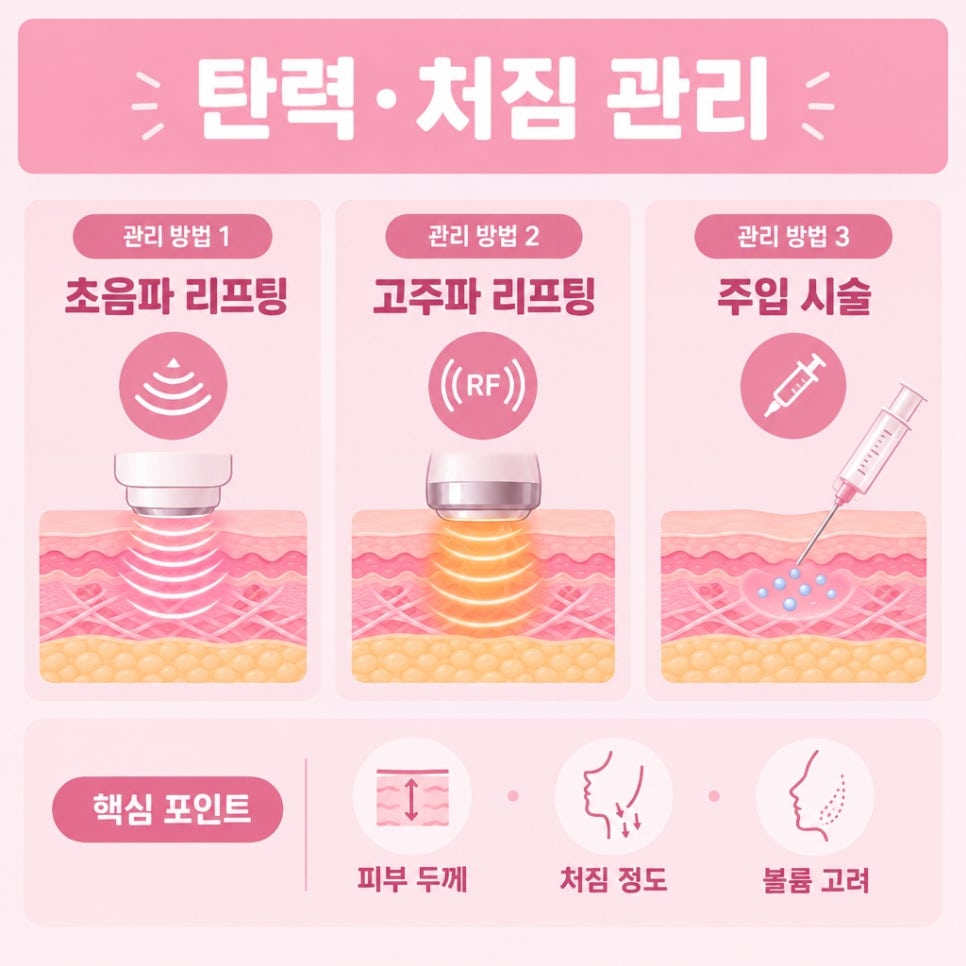
    If reduced elasticity is your main concern, lifting-type treatments or injectables may be considered by weighing skin thickness, degree of sagging, and volume together.

    Research has reported that skin collagen declines by about 1% per year starting in the mid-20s, which is why loss of elasticity becomes more noticeable with age.

    Skin that simply looks dull needs to be distinguished from actual tissue sagging or volume loss.

    If sagging is the concern, lifting treatments using ultrasound or radiofrequency energy may be considered; if volume or collagen is the concern, injectable treatments may be considered depending on the goal.

    If you’re curious about ways to replenish collagen, you can find related information on the Atelofill Collagen Skin Research Institute homepage.

    fall dermatology treatments image 9

    fall dermatology treatments image 10

    Current Concern What to Check First Possible Care Direction
    Dryness / Tightness Skin barrier, sensitivity Moisturizing- and soothing-focused care
    Dark spots / Dull tone Pigmentation type and skin condition Pigment laser, etc.
    Rough texture / Pores Pore cause, presence of scarring Laser, radiofrequency, microneedling, etc.
    Elasticity / Sagging Skin thickness, degree of sagging Ultrasound/radiofrequency lifting, etc.
    Volume changes Location and degree of volume loss Injectable treatments depending on condition, etc.

    The actual type, number of sessions, and intensity of treatment can vary depending on individual skin condition and the equipment or products used.

    Key Points
    ✔ Before focusing on a treatment name, first clarify \”what you want to improve\”
    ✔ It’s better to set priorities than to combine multiple treatments at once

    Can You Get Treatment If Your Skin Is Sensitive From the Season Change?

    fall dermatology treatments image 11

    In short, if your skin is only slightly drier than usual, care suited to that condition is possible, but if there’s dermatitis, wounds, or severe redness and itching, it’s best to check your skin’s condition first.

    If you have an important event coming up, you should also factor in the recovery period, since redness, swelling, bruising, or flaking can appear after treatment.

    Rather than getting several treatments at once, it’s better to prioritize your concerns and plan according to your skin’s condition.

    Pre-Treatment Checklist
    ✅ Whether your skin currently has any wounds, inflammation, or severe redness
    ✅ Whether your schedule allows for a recovery period
    ✅ Whether you’re combining multiple treatments at once
    ✅ What your highest-priority concern is

    How Should You Care for Your Skin After a Dermatology Treatment?

    fall dermatology treatments image 12

    To put it simply, the basics are minimizing additional irritation and focusing on moisturizing and sun protection.

    If your skin is temporarily sensitive, it’s best to avoid scrubs, strong peels, or excessive massage.

    Cleanse without rubbing the skin hard, and moisturize thoroughly.

    Tips for Good Aftercare
    ✔ Moisturizing-focused care instead of harsh exfoliation
    ✔ Use sunscreen when going outside, even in fall
    ✔ Check with your provider first, since when you can cleanse, wear makeup, or exercise varies by treatment

    Since the timing for cleansing, makeup, and exercise differs by treatment, it’s important to follow the precautions your provider gives you after treatment.

    fall dermatology treatments image 13

    A search for fall dermatology treatments turns up many options, but no single treatment resolves every skin concern.

    It’s important to first identify which concern matters most to you — dryness, pigmentation, texture and pores, or elasticity and volume — and then choose a direction that fits.


    fall dermatology treatments image 14

    Frequently Asked Questions

    1. Is fall the best season to get dermatology treatments?
    Simply because it’s fall doesn’t mean it’s the most suitable time for every treatment. That said, many people start care after summer when concerns like pigmentation or dryness become more noticeable. Rather than the season, it’s better to prioritize your skin condition and your ability to manage aftercare.

    2. Is it okay to get several dermatology treatments together?
    Depending on the combination, some treatments can be done together, but not all treatments can be performed at the same time. Appropriate intervals may be needed depending on the energy or injected substance, treatment area, and skin condition, so it’s best to check the plan with your provider.

    3. If my skin is very dry, should I start with exfoliation?
    Repeating aggressive exfoliation on dry skin can actually burden the skin barrier. Focus on moisturizing and minimizing irritation first, and if flaking or redness persists, have your skin condition checked.

    4. If I get a treatment, do I still need home care?
    No, that’s not the case. Regardless of treatment, everyday care like sun protection, moisturizing, and proper cleansing is still necessary. Moisturizing care is especially important during the seasonal transition.


    References

    · National Health Insurance Service, \”Why Does Skin Dryness Occur,\” National Health Insurance Service Magazine (n.d.). Read more
    · Skin Cancer Foundation, \”Photoaging: What You Need to Know About Different Types of Aging,\” Skin Cancer Foundation (n.d.). Read more
    · Vogue Korea, \”Collagen Declines With Age — Is There a Way to Restore Elasticity?\”, Vogue Korea, 2025. Read more


    This article is intended for general health information purposes only and cannot replace individual diagnosis or treatment. If you have symptoms, please consult a medical professional.
  • Facial Psoriasis: 3 Key Symptoms, Causes, and Treatment Options

    Facial Psoriasis: 3 Key Symptoms, Causes, and Treatment Options

    SummaryFacial psoriasis is a chronic inflammatory skin condition that causes recurring red patches and scaling along the hairline, eyebrows, and around the ears — and it needs to be distinguished from simple dry skin. This guide covers facial psoriasis symptoms, causes, why it flares up seasonally, and treatment options.

    Many people notice their face turning red with white, flaky patches whenever the seasons change.

    Most of the time, this is just temporary dryness — but if scaling keeps building up on top of red patches in the same spot again and again, that’s a different story.

    It may not be simple dry skin at all, but a chronic inflammatory skin condition that includes facial psoriasis, and that possibility is worth looking into.

    This article explains how facial psoriasis shows up along the forehead, eyebrows, and hairline, along with the most common symptoms and causes.

    We’ll also look at why symptoms tend to worsen during seasonal transitions, the treatment options — topical, phototherapy, and systemic — and everyday management tips.

    What Is Psoriasis?

    facial psoriasis

    facial psoriasis illustration 3

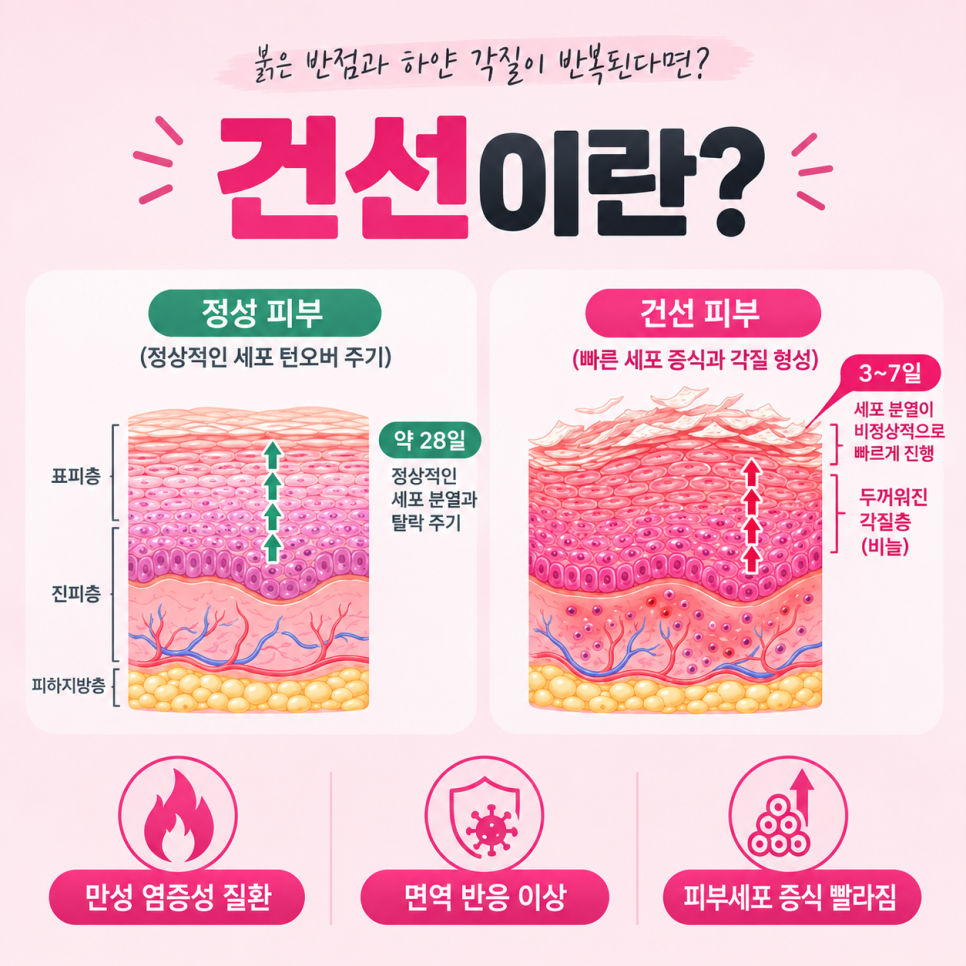
    To put it simply, psoriasis is a chronic condition in which an overactive immune response causes skin cells to multiply abnormally fast, leading to recurring inflammation and scaling.

    In normal skin, cells are generated and shed on a steady cycle, but in psoriasis-affected skin, this process speeds up, causing thick scales to build up on the surface.

    It commonly appears on the elbows, knees, and scalp, but it can show up on many areas of the body, and the extent and pattern of the lesions vary from person to person.

    Key Points
    ✔ Psoriasis is a chronic inflammatory skin condition caused by immune system dysfunction.
    ✔ It is not contagious and cannot be spread through contact.

    Most importantly, remember that psoriasis is not contagious.

    Even though the lesions may be visible, they cannot be passed to others through contact.


    Is Dry Skin the Cause of Psoriasis?

    facial psoriasis illustration 4

    Many people assume dryness is the direct cause of psoriasis, but dryness alone isn’t the actual trigger.

    The causes of psoriasis are understood to involve a combination of genetic predisposition, immune factors, and environmental triggers.

    According to Seoul Asan Hospital’s disease encyclopedia, people with a family history of psoriasis have a higher likelihood of developing it, pointing to a genetic component.

    The following factors can influence the onset or worsening of symptoms:

    • Repeated friction or injury to the skin
    • Certain infections
    • Excessive stress
    • Alcohol consumption and smoking
    • Lack of sleep and irregular routines
    • Cold, dry environments
    • Certain medications (varies by individual)
    Caution
    In people with psoriasis, new lesions can sometimes form at sites where the skin has been scratched or injured.
    Avoid forcibly picking at scales or rubbing the skin too hard.

    How Do Facial Psoriasis Symptoms Differ From Other Skin Conditions?

    facial psoriasis illustration 5

    facial psoriasis illustration 6

    In short, facial psoriasis tends to appear as recurring red patches and scaling along the forehead’s hairline border, around the eyebrows, and near the ears.

    Facial psoriasis refers to well-defined red patches topped with silvery-white scales that appear along the hairline border or around the eyebrows and ears.

    However, not all facial scaling means facial psoriasis.

    Dry-skin dermatitis, seborrheic dermatitis, and contact dermatitis can all present with similar symptoms.

    Feature Facial Psoriasis Seborrheic Dermatitis
    Lesion border Fairly well-defined Tends to be blurred
    Scale color Silvery-white to white Yellowish, greasy
    Main areas Hairline border, eyebrows, and ears Sides of the nose, eyebrows, and scalp overall

    Why Symptoms Feel Worse During Seasonal Transitions

    facial psoriasis illustration 7

    During seasons like fall, when temperature and humidity shift quickly, skin tends to lose more moisture, which can intensify dryness and itching.

    But scratching itchy skin repeatedly creates additional irritation that can make symptoms worse.

    During periods with large daily temperature swings, changes in sleep patterns and overall condition are also known to affect symptoms.


    How Should You Approach Psoriasis Treatment and Seasonal Skin Care?

    facial psoriasis illustration 8

    Psoriasis treatment varies depending on the location, extent, and severity of the lesions, and no single approach applies to every patient.

    Psoriasis treatment means selecting the approach that fits the patient’s condition among topical treatment, phototherapy, and systemic treatment.

    When the affected area is limited, topical medications are typically used, sometimes combined with medical-grade UV phototherapy as needed.

    For more extensive or severe cases, systemic treatment — including oral medications or biologic agents — may be considered.

    Various treatment options are available today, so it’s important not to leave symptoms unmanaged — instead, find the approach that fits your condition and stick with it consistently.

    Daily Care Checklist

    facial psoriasis illustration 9

    Checklist
    ✅ Apply moisturizer generously right after showering, before skin dries completely
    ✅ Don’t forcibly pick at scales
    ✅ Keep showers short and use lukewarm water
    ✅ Get enough sleep and maintain a regular routine
    ✅ Only get UV exposure under medical supervision

    Not all increased flaking during seasonal transitions means psoriasis, but if red patches and scaling keep recurring in the same spot, it’s best not to assume it’s simple dryness.

    Psoriasis is a chronic condition that cycles between improvement and flare-ups, so it’s important to accurately assess your current state and manage it consistently.

    facial psoriasis illustration 10

    Above all, if you suspect facial psoriasis, it’s best not to self-diagnose — get an accurate diagnosis from a medical professional and discuss a psoriasis treatment approach suited to your symptoms and their extent.

    If you’d like to keep building consistent moisturizing and irritation-minimizing habits, you can also check out the Atelofill Collagen Skin Research Lab homepage for helpful information on skin barrier care.

    facial psoriasis illustration 11


    Frequently Asked Questions

    1. Does red, scaly skin on the face always mean facial psoriasis?
    Not necessarily. Seborrheic dermatitis, contact dermatitis, and eczema can also cause redness and scaling on the face, so if symptoms recur or don’t improve, an accurate diagnosis is needed.

    2. Is psoriasis contagious?
    No. Psoriasis is not an infectious disease caused by bacteria or viruses, so it cannot be spread through contact.

    3. Should I remove psoriasis scales?
    It’s best to avoid forcibly peeling off or rubbing visible scales, as this can cause irritation. Moisturize thoroughly and consult a medical professional about any treatment you may need.

    4. When should I see a doctor?
    You should seek medical care if lesions spread quickly, if itching or pain interferes with daily life, or if joint swelling and stiffness accompany your symptoms.


    References

    · Seoul Asan Hospital, “Psoriasis,” Disease Encyclopedia, Seoul Asan Hospital. View source
    · Korea Disease Control and Prevention Agency, “Psoriasis,” National Health Information Portal, KDCA. View source
    · Seoul National University Bundang Hospital, “Psoriasis Symptoms and Treatment,” Medical Information, Seoul National University Bundang Hospital. View source

    This article is intended for general health information purposes only and is not a substitute for individual diagnosis or treatment. If you have symptoms, please consult a medical professional.

  • Facial Psoriasis: 3 Symptoms, Causes & Treatment Tips

    Facial Psoriasis: 3 Symptoms, Causes & Treatment Tips

    SummaryFacial psoriasis is a chronic inflammatory skin condition that causes recurring red patches and scaling along the hairline, eyebrows, and around the ears — and it needs to be distinguished from simple dry skin. This guide covers facial psoriasis symptoms, common causes, why flare-ups worsen with seasonal changes, and treatment options.

    Many people notice their face turning red and flaking with white scales whenever the seasons change.

    Most of the time, this is simply temporary dryness. But if scaling keeps building up over red patches in the same spot again and again, that’s a different story.

    Rather than plain dry skin, it may be worth considering a chronic inflammatory skin condition — including facial psoriasis.

    This article explains how facial psoriasis shows up around the forehead, eyebrows, and hairline, along with the most common psoriasis symptoms and causes.

    We’ll also look at why symptoms tend to worsen with seasonal changes, the treatment options — topical treatment, phototherapy, and systemic treatment — and everyday management tips.

    What Is Psoriasis?

    facial psoriasis

    facial psoriasis related image 3

    To put it simply, psoriasis is a chronic condition in which an overactive immune response causes skin cells to multiply abnormally fast, leading to recurring inflammation and scaling.

    In normal skin, cells are generated and shed on a steady cycle, but in psoriasis this process speeds up, causing thick scales to build up on the surface.

    It commonly appears on the elbows, knees, and scalp, but can show up on many areas of the body, and the extent and pattern of the patches vary from person to person.

    Key Points
    ✔ Psoriasis is a chronic inflammatory skin condition caused by immune system dysfunction.
    ✔ It is not contagious and cannot be spread through contact.

    Above all, it’s important to remember that psoriasis is not contagious.

    Even though the patches may be visible, they cannot be passed to others through contact.


    Is Dry Skin the Cause of Psoriasis?

    facial psoriasis related image 4

    Many people assume dryness alone causes psoriasis, but dryness itself is not a direct cause.

    The causes of psoriasis are understood to involve a combination of genetic predisposition, immune system factors, and environmental triggers.

    According to Seoul Asan Hospital’s disease encyclopedia, having a family history of psoriasis is linked to a higher likelihood of developing it, pointing to a genetic component.

    The following factors may influence the onset or worsening of symptoms:

    • Repeated friction or injury to the skin
    • Certain infections
    • Excessive stress
    • Alcohol consumption and smoking
    • Lack of sleep and irregular routines
    • Cold, dry environments
    • Certain medications (effects vary by individual)
    Caution
    In people with psoriasis, new patches can sometimes form at sites where the skin has been scratched or injured.
    It’s best to avoid forcibly picking at scales or rubbing the skin too hard.

    How Are Facial Psoriasis Symptoms Different From Other Skin Conditions?

    facial psoriasis related image 5

    facial psoriasis related image 6

    In short, facial psoriasis symptoms typically appear as recurring red patches and scaling along the hairline, around the eyebrows, and near the ears.

    Facial psoriasis refers to well-defined red patches topped with silvery-white scales that appear where the scalp meets the face, or around the eyebrows and ears.

    That said, not all facial scaling is facial psoriasis.

    Dry skin dermatitis, seborrheic dermatitis, and contact dermatitis can all cause similar-looking symptoms.

    Category Facial Psoriasis Seborrheic Dermatitis
    Border of patches Relatively well-defined Tends to be less defined
    Scale color Silvery-white to white Yellowish, greasy
    Main areas Hairline, around eyebrows and ears Sides of the nose, eyebrows, scalp overall

    Why Symptoms Feel Worse During Seasonal Changes

    facial psoriasis related image 7

    During periods of rapid temperature and humidity shifts, like fall, increased moisture loss from the skin can make dryness and itching worse.

    Repeatedly scratching itchy skin adds further irritation, which can aggravate symptoms.

    When day-to-night temperature swings are large, changes in sleep patterns and overall condition are also thought to influence symptoms.


    How Should You Approach Psoriasis Treatment and Seasonal Skin Care?

    facial psoriasis related image 8

    Psoriasis treatment varies depending on the location, extent, and severity of the patches, and no single approach applies to every patient the same way.

    Psoriasis treatment generally means choosing from topical treatment, phototherapy, or systemic treatment based on the individual’s condition.

    When the affected area is limited, topical medication is typically used, sometimes alongside medical-grade UV phototherapy.

    When the condition is more extensive or severe, systemic treatment — including oral medications or biologics — may be considered.

    As treatment options continue to expand, it’s important to find an approach suited to your condition and manage it consistently rather than leaving it untreated.

    Daily Management Checklist

    facial psoriasis related image 9

    Checklist
    ✅ Apply moisturizer generously right after showering, before skin fully dries
    ✅ Avoid forcibly picking at scales
    ✅ Keep showers short and use lukewarm water
    ✅ Get enough sleep and maintain a regular routine
    ✅ Limit UV exposure to what’s supervised by a medical professional

    Increased scaling during seasonal changes doesn’t automatically mean psoriasis, but if red patches and scaling keep recurring in the same spot, it’s worth considering more than simple dryness.

    Because psoriasis is a chronic condition that cycles between improvement and flare-ups, understanding your current condition and managing it consistently matters.

    facial psoriasis related image 10

    If you suspect facial psoriasis, it’s best not to self-diagnose — get an accurate diagnosis from a medical professional and discuss a treatment approach suited to your specific symptoms and extent.

    If you’d like ongoing guidance on skin moisturizing and minimizing irritation, you can also check out the Atelofill Collagen Skin Lab homepage for information that supports skin barrier care.

    facial psoriasis related image 11


    Frequently Asked Questions

    1. If I get red, scaly patches on my face, does that always mean facial psoriasis?
    No. Seborrheic dermatitis, contact dermatitis, and eczema can also cause redness and scaling on the face, so if symptoms keep recurring or don’t improve, an accurate diagnosis is needed.

    2. Is psoriasis contagious?
    Psoriasis is not an infectious disease caused by bacteria or viruses, so it cannot be spread through contact.

    3. Should I remove psoriasis scales?
    Forcibly picking at or rubbing visible scales can cause irritation, so it’s best avoided. Moisturize adequately and talk to a medical professional about any treatment you may need.

    4. When should I see a doctor?
    If patches spread quickly, if itching or pain interferes with daily life, or if joint swelling and stiffness occur alongside the skin symptoms, it’s a good idea to get checked out.


    References

    · Seoul Asan Hospital, “Psoriasis,” Disease Encyclopedia, Seoul Asan Hospital. View source
    · Korea Disease Control and Prevention Agency, “Psoriasis,” National Health Information Portal, KDCA. View source
    · Seoul National University Bundang Hospital, “Psoriasis Symptoms and Treatment,” Medical Information, Seoul National University Bundang Hospital. View source

    This article is intended for general health information purposes only and is not a substitute for individual diagnosis or treatment. If you have symptoms, please consult a healthcare professional.