Ever squint at an ingredient list and wonder what half the names even mean?
After retinol and vitamin C, “peptide” is a word appearing more often lately.
It’s used in a number of elasticity and wrinkle-care products.
But without understanding peptide benefits clearly,
it’s easy to assume that applying them will simply “refill” collagen in the skin.
This article covers what peptide benefits actually mean, how peptides relate to collagen, how different peptide types compare, and how to combine them with retinol and vitamin C.
We’ll also look at what to check for on an ingredient label.
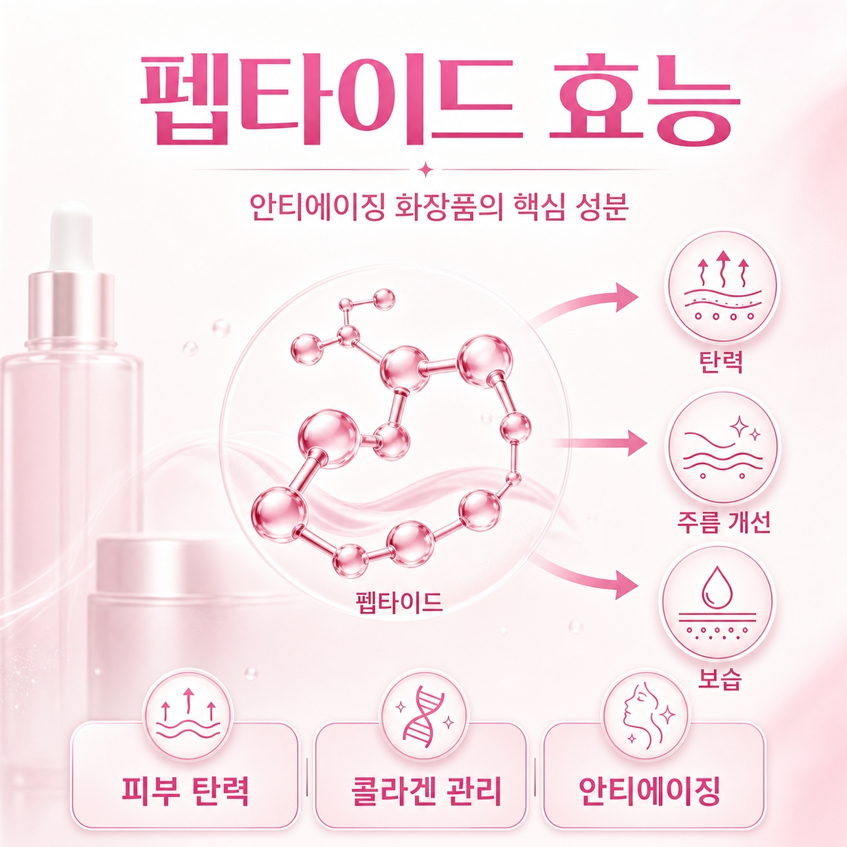
What Is a Peptide, and Do Benefits Vary by Type?
The short answer: peptides come in many types, and each plays a different role in skincare formulas.
A peptide is a chain of amino acids linked together.
If amino acids are the smallest building blocks of protein, peptides sit in between — smaller molecules made of amino acids, but not yet full proteins.
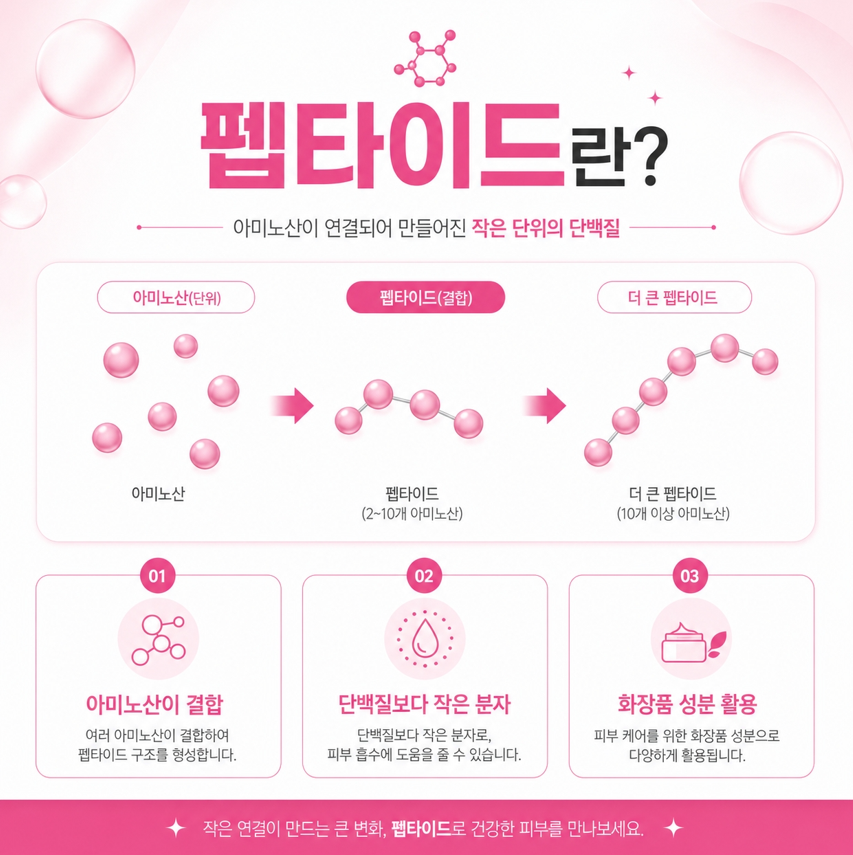
Collagen and elastin, the two proteins that make up much of the skin’s structure, are also built from amino acids.
That’s why ingredient lists rarely just say “peptide” — instead, you’ll often see specific names like palmitoyl pentapeptide, acetyl hexapeptide, or copper tripeptide.
In fact, if you compare labels, products marketed as “peptide-containing” often list completely different peptide names.
· Signal peptides: involved in signaling related to skin conditioning
· Carrier peptides: help deliver specific ingredients, such as copper, into the skin
· Enzyme-inhibitor-related peptides: studied in relation to certain enzyme activity
· Neurotransmitter-related peptides: studied in relation to expression-related muscle movement
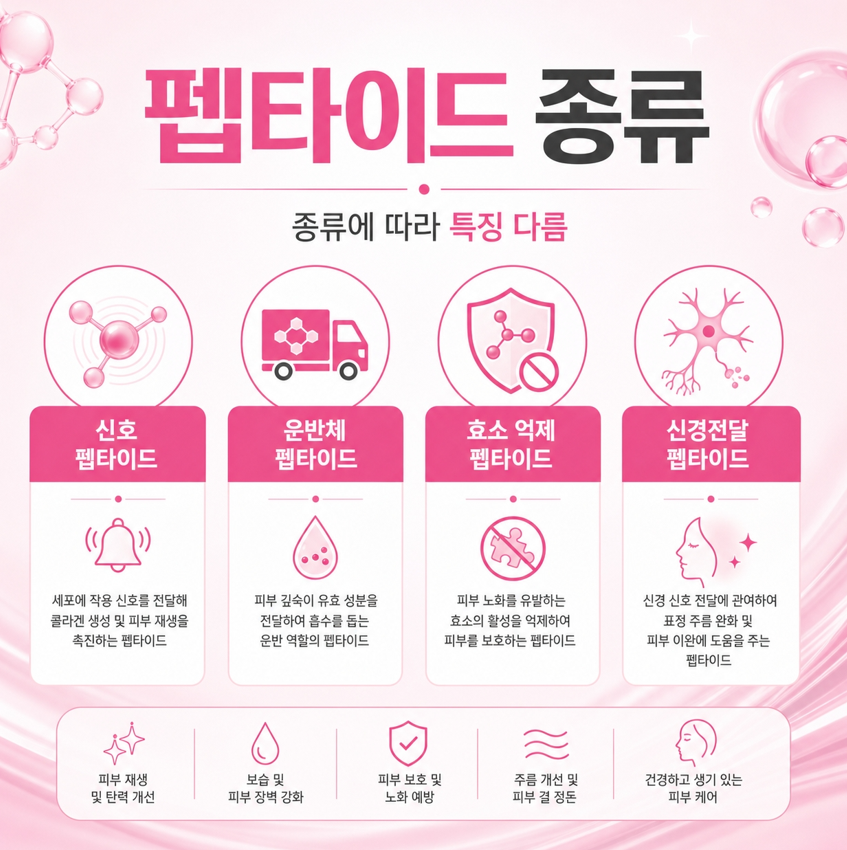
So when choosing a product, it matters less that it simply says “contains peptides” — what matters more is which peptide types are included and at what concentration.
Why Are Peptide Benefits for Skin Gaining Attention in Anti-Aging Skincare?
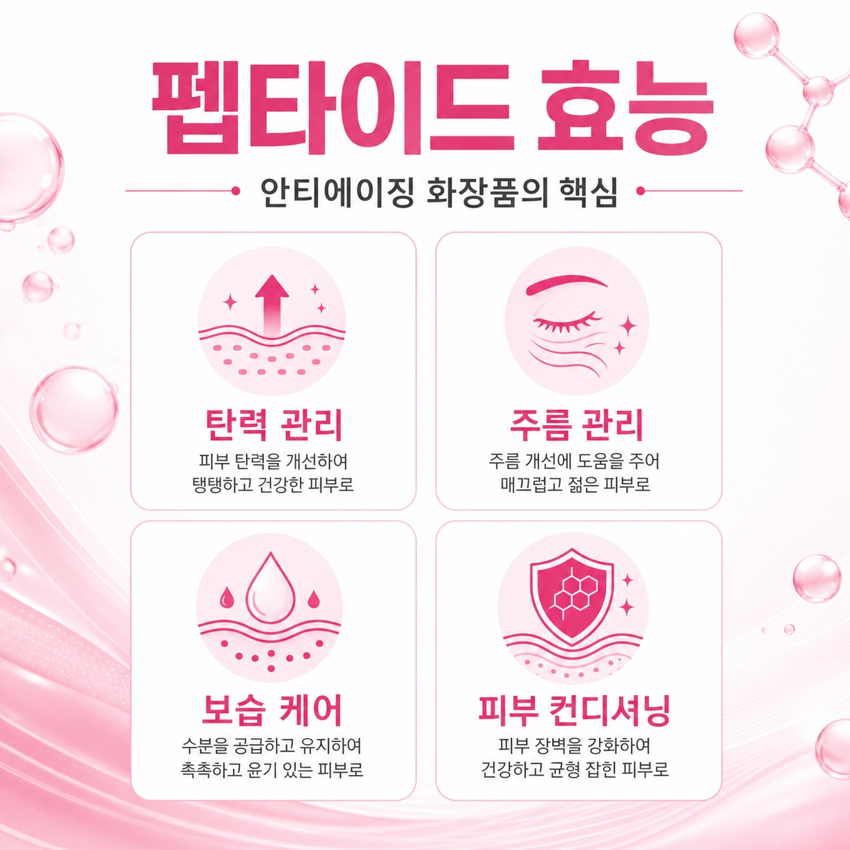
Peptide benefits for skin refer to the role these ingredients play in supporting skin elasticity, hydration, and barrier condition.
As skin ages, it tends to become drier and lose elasticity,
and fine lines start to show up in expressive areas like the eyes and mouth.
External factors — UV exposure, lack of sleep, dry environments — can repeatedly add to this decline.
That’s why anti-aging skincare has moved beyond simple hydration toward comprehensively addressing elasticity, barrier function, and overall skin condition.
· Skin elasticity care: used in firming serums, ampoules, and eye creams
· Care for wrinkle-prone areas: eyes, mouth, forehead, and other expressive zones
· Hydration and barrier care: often formulated alongside ceramides and hyaluronic acid
· Overall skin condition maintenance: used as a daily skincare ingredient
That said, using a cosmetic product doesn’t guarantee that existing deep wrinkles will disappear.
It’s best understood as part of an ongoing skincare routine rather than a guaranteed fix.
Do Peptides Replenish Collagen in the Skin?
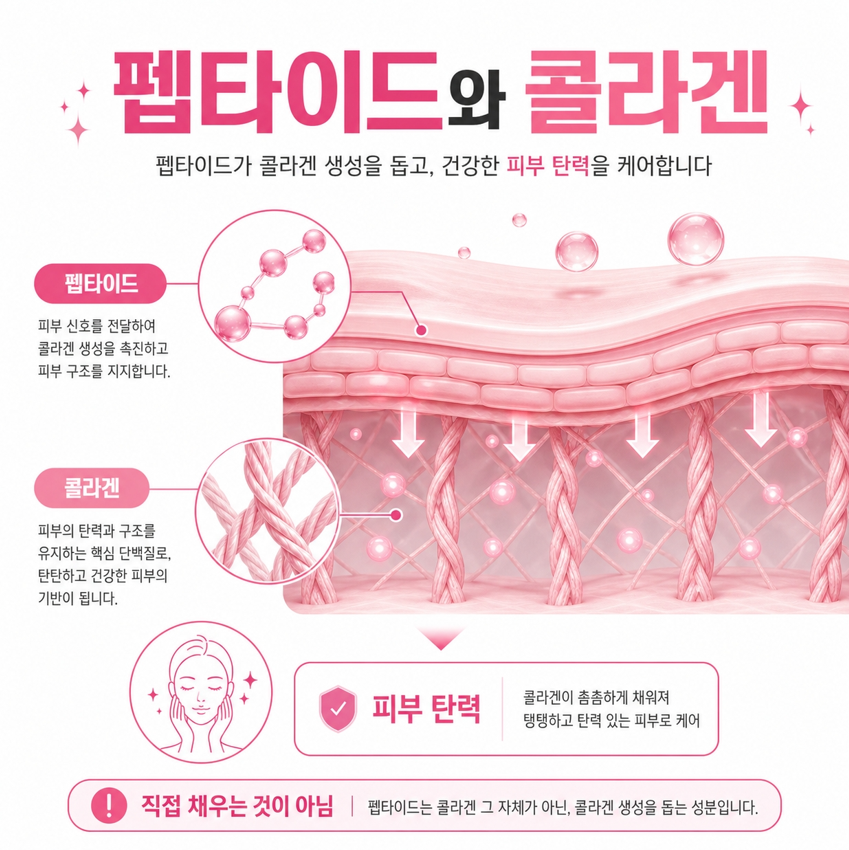
No — peptides don’t directly refill collagen in the skin.
Peptides and collagen are closely related terms, but they aren’t the same thing.
Collagen is a key protein that makes up the skin’s dermis, playing an important role in skin structure and elasticity.
As skin ages and is repeatedly exposed to UV light, the balance between collagen production and breakdown can shift.
Against this backdrop, some peptides have been studied in relation to skin condition.
One example is copper peptide (GHK-Cu), a copper-bound peptide that has been examined in research related to skin renewal and antioxidant activity.
However, this reflects findings from lab and clinical studies, and results aren’t guaranteed to be the same for everyone.
Peptide skincare should not be understood as directly injecting or refilling collagen inside the skin.
Cosmetics should be understood within the scope of topical skincare products, and their effects can vary depending on the type, formulation, concentration, and combination of peptides used.
Can You Use Peptide Skincare With Retinol and Vitamin C?
Yes, they can be used together, but application order and monitoring your skin’s response matter.
Suggested Order for Applying Peptide Skincare
- Cleanser
- Toner
- Peptide serum/ampoule
- Moisturizer
- Sunscreen (morning)
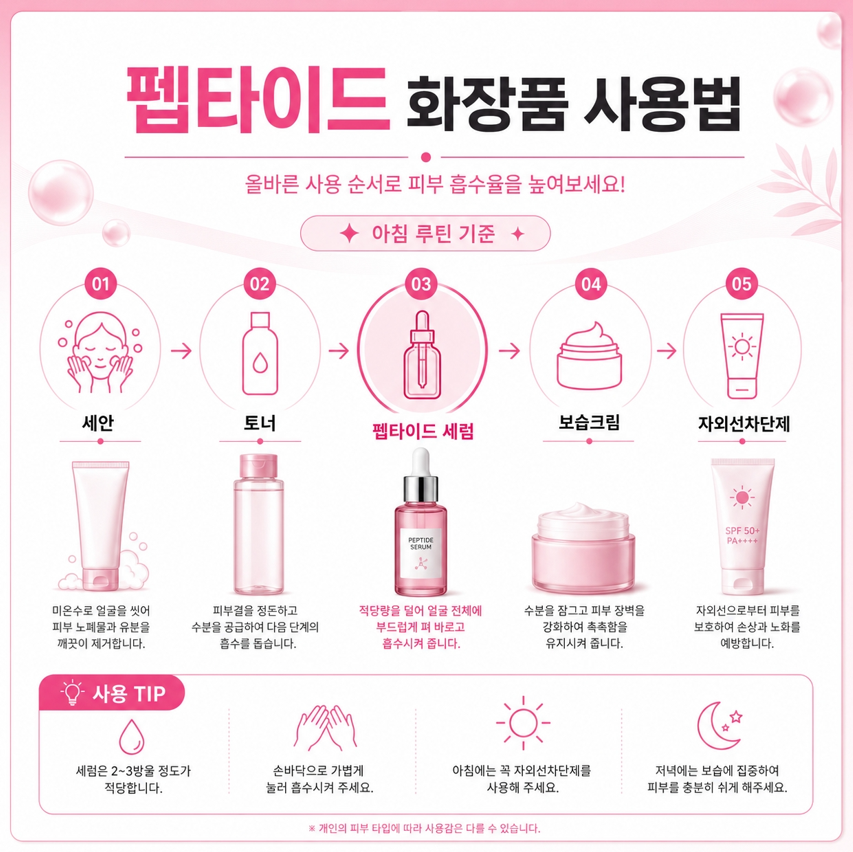
Keep in mind that recommended application order can vary by product, so check the manufacturer’s instructions first.
When trying a new product, it’s safer to introduce one active ingredient at a time and watch how your skin responds, rather than layering several actives at once.
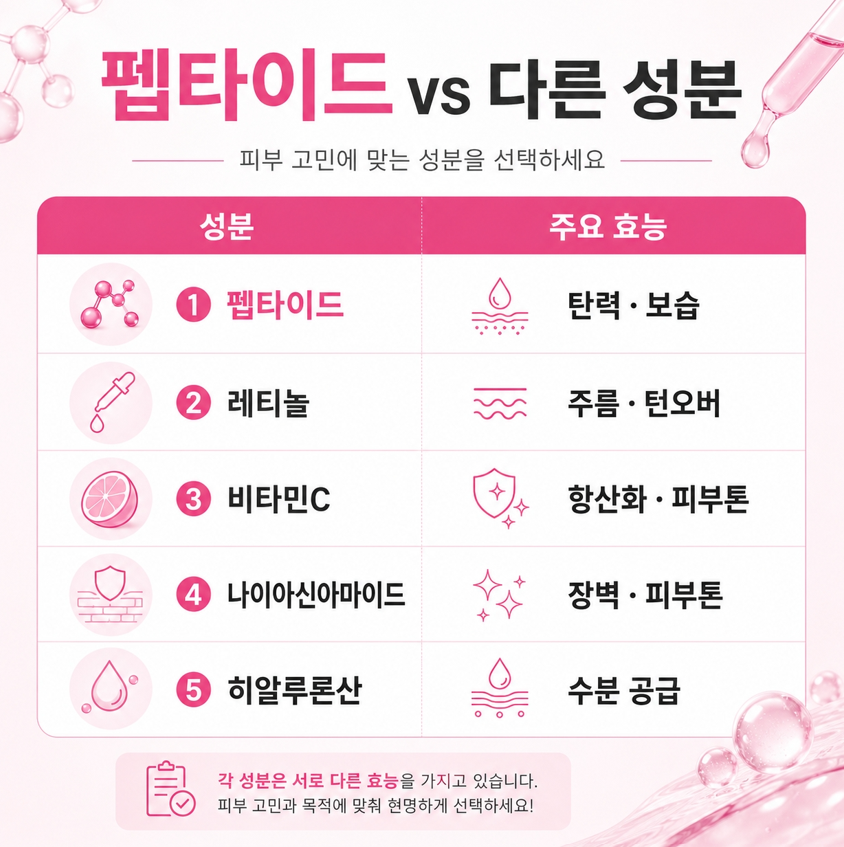
How Does It Compare to Other Anti-Aging Ingredients?
| Ingredient | Primary Care Focus |
|---|---|
| Peptides | Elasticity, hydration, skin conditioning |
| Retinol | Texture, wrinkles, cell turnover |
| Vitamin C | Antioxidant support, skin tone |
| Niacinamide | Barrier, tone, oil control |
| Hyaluronic Acid | Hydration, moisture retention |
Using several potentially irritating products at once — like high-strength retinol or acidic ingredients — can leave skin stinging or dry.
If your skin is sensitive, consider splitting these into AM/PM routines or alternating days.
Also, sunscreen is essential during the day whenever you’re using retinol.
Checklist for Choosing Peptide Skincare
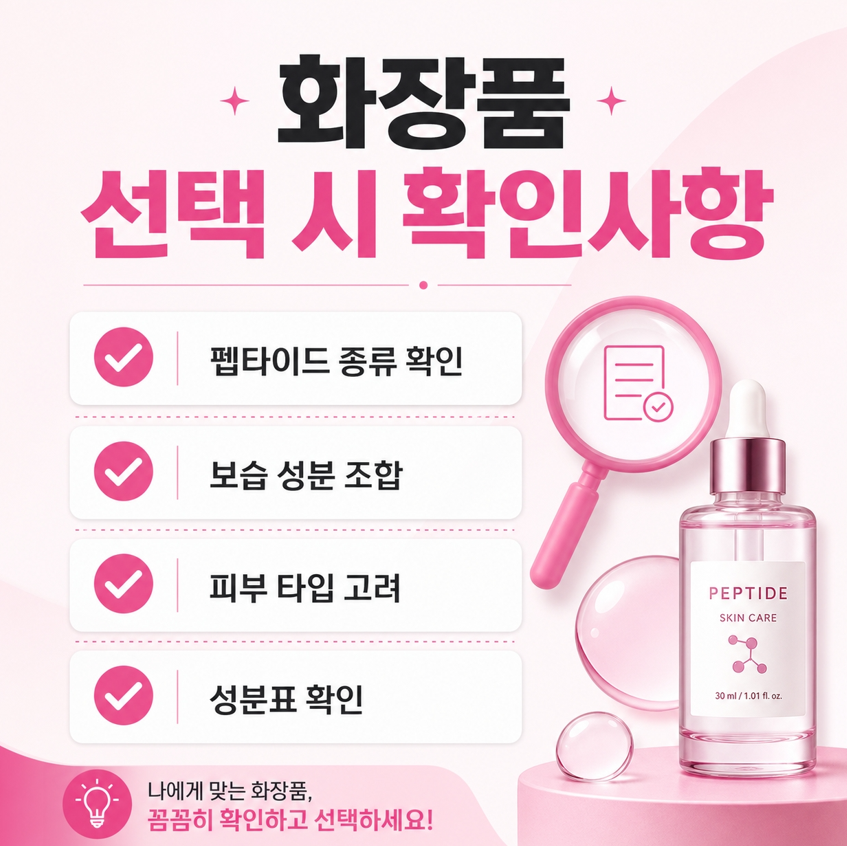
✅ Have you checked which specific peptide types are listed on the label?
✅ Is it formulated alongside hydrating ingredients like hyaluronic acid or ceramides?
✅ Does the combination with other actives, like niacinamide, suit your skin?
✅ If you have sensitive skin, have you avoided adding several high-strength actives all at once?
If you’d like to explore collagen and peptide ingredients together, you can find more information at the Atelofill Collagen Skin Research Institute homepage.
Pair that with consistent hydration and daily sun protection to help support your anti-aging skincare routine.
Frequently Asked Questions

1. Is a peptide an anti-aging ingredient?
Peptides are used in a wide range of anti-aging cosmetics for skin conditioning, elasticity, and hydration. However, since there are many different types of peptides, not all of them share the same characteristics.
2. Does applying peptide skincare refill collagen?
Peptides in cosmetics should not be understood as directly injecting or refilling collagen in the skin. As a skincare ingredient, peptides are used to support skin conditioning and elasticity.
3. Which is better, peptides or retinol?
The two ingredients work differently, so a direct comparison isn’t straightforward. Retinol is mainly associated with cell turnover, wrinkles, and texture, while peptides are mainly associated with elasticity and skin conditioning — so it’s best to choose based on your own skin concerns and sensitivity.
4. Can peptide skincare be used every day?
It varies by product, but most peptide skincare is formulated for daily use. That said, it’s best to follow the specific usage instructions for your product.
References
· Dou Y, et al., “The Potential of GHK as an Anti-Aging Peptide,” Aging Pathobiology and Therapeutics, 2022. View source
· Lim KS, et al., “Preventive Effects of Collagen Peptides on Skin Photoaging,” Journal of the Korean Society of Food Science and Nutrition, Korean Society of Food Science and Nutrition. View source

Peptides are chains of linked amino acids, and they’re used in anti-aging skincare as ingredients that support elasticity, hydration, and skin conditioning.
That said, it isn’t accurate to assume that “containing peptides” automatically means wrinkles will improve, or that they’ll directly refill collagen.
Skin aging is influenced by many factors beyond collagen changes — including UV exposure, dryness, lifestyle habits, and age.
Whatever anti-aging ingredient you use, the fundamentals stay the same.
Consistent hydration and daily sun protection remain the most basic starting point for skin care.
This article is intended for general informational purposes only and is not a substitute for individual diagnosis or treatment. If you have any concerns, please consult a dermatologist or qualified professional.