
Have you ever finished washing your face, looked in the mirror, and felt happy with your complexion — only to notice the horizontal lines on your neck standing out?
It’s easy to carefully apply toner and cream to your face while skipping your neck entirely.
And in drier seasons, fine lines and rough texture tend to show up more noticeably than usual.
Let’s take a closer look at why neck wrinkles form and how to start a neck wrinkle care routine.
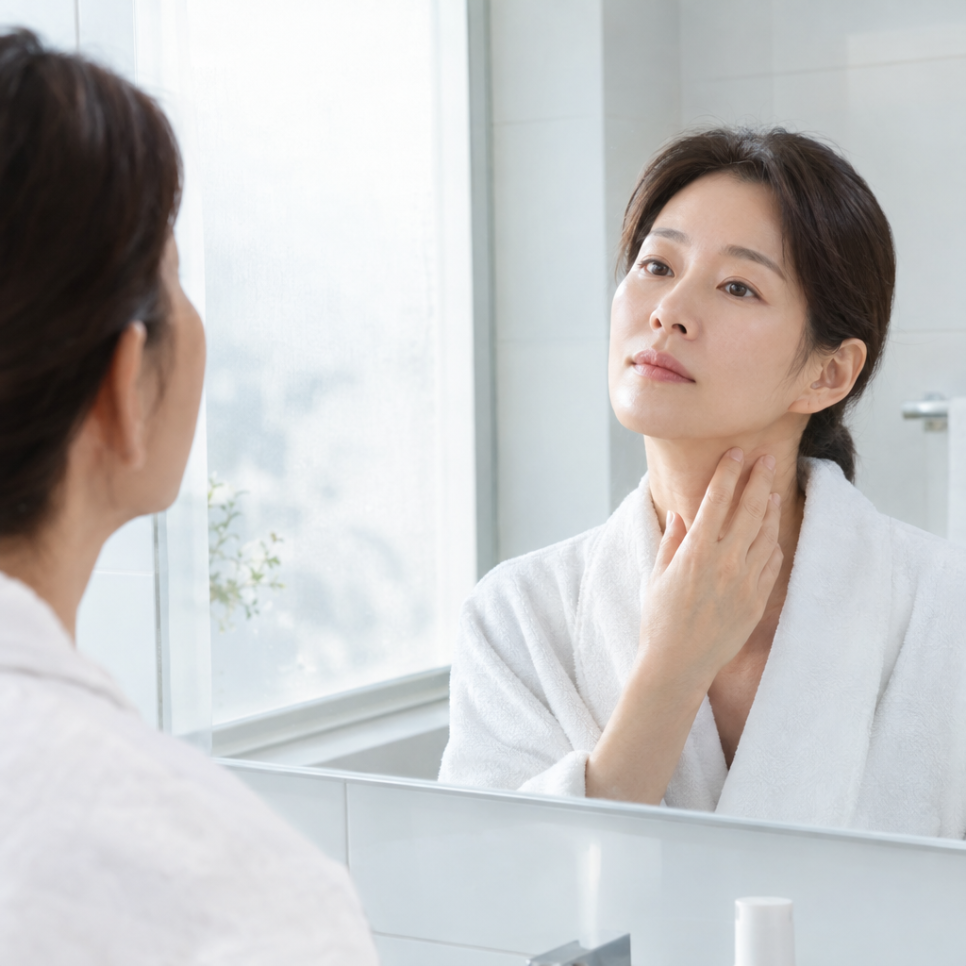
The foundation of neck wrinkle care is applying sun protection, moisturizer, and mindful posture habits to your neck just as consistently as you do your face.
Reports suggest that skin collagen declines by about 1% each year starting in the mid-20s, and that tilting your head forward around 30 degrees to look at a smartphone can increase the load on your neck to roughly 18kg (about 40 lbs) — so it’s worth paying attention to everyday posture and care habits.
Because deep, established neck wrinkles are difficult to fully eliminate with cosmetics or massage alone, prevention and consistent lifestyle habits matter even more.

Why Do Neck Wrinkles Form?
Neck wrinkles don’t form from aging alone — they result from a combination of posture, sun exposure, dryness, and skin aging.
Neck wrinkles are horizontal lines that develop when repetitive neck movement, external stressors, and internal skin aging act together.
Repeatedly tilting your head down to look at a smartphone or laptop for long periods causes the skin to fold in the same spot over and over.
That said, it’s more accurate to view smartphone use as one factor that makes existing wrinkle lines more noticeable, rather than concluding that phone use alone causes neck wrinkles.

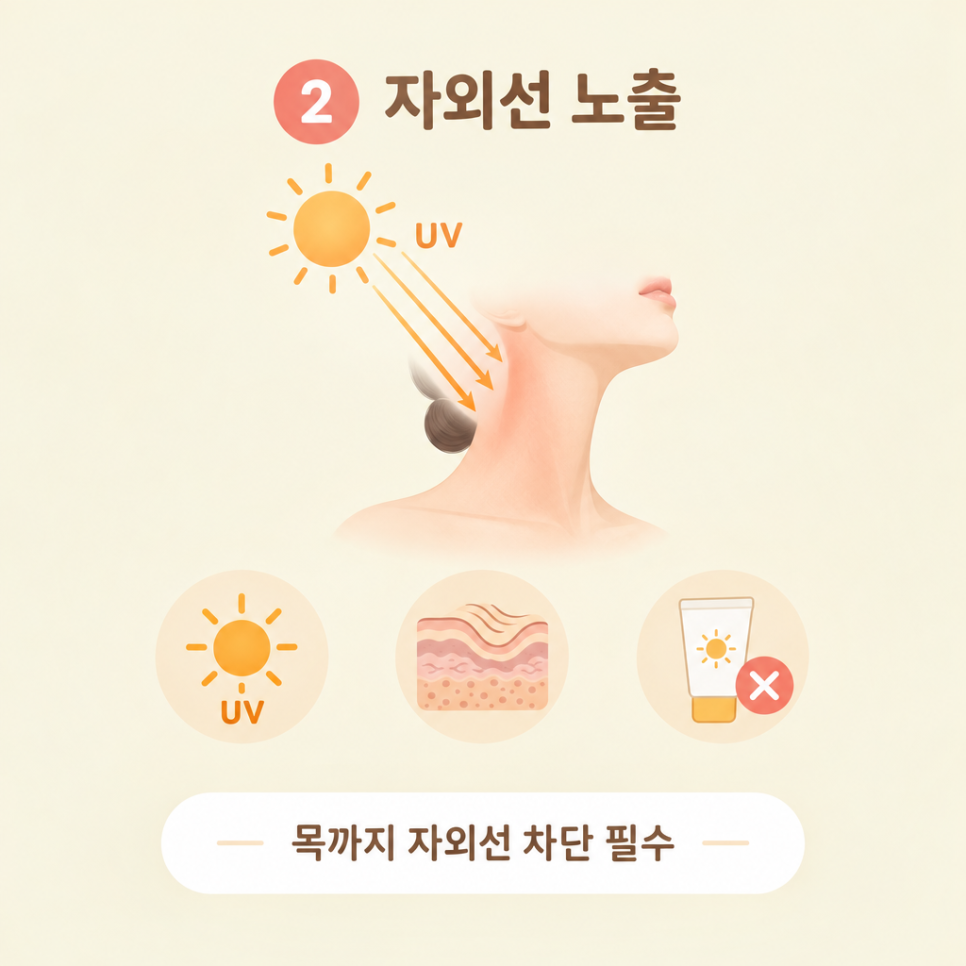
Many people apply sunscreen carefully to their face but forget their neck.
Long-term UV exposure can lead to photoaging, which may also affect the structures that help skin maintain its elasticity.
Excessive exposure can accelerate skin aging and may lead to health risks such as skin cancer.
Korea’s Ministry of Food and Drug Safety (MFDS) explained this while guiding proper sunscreen use.
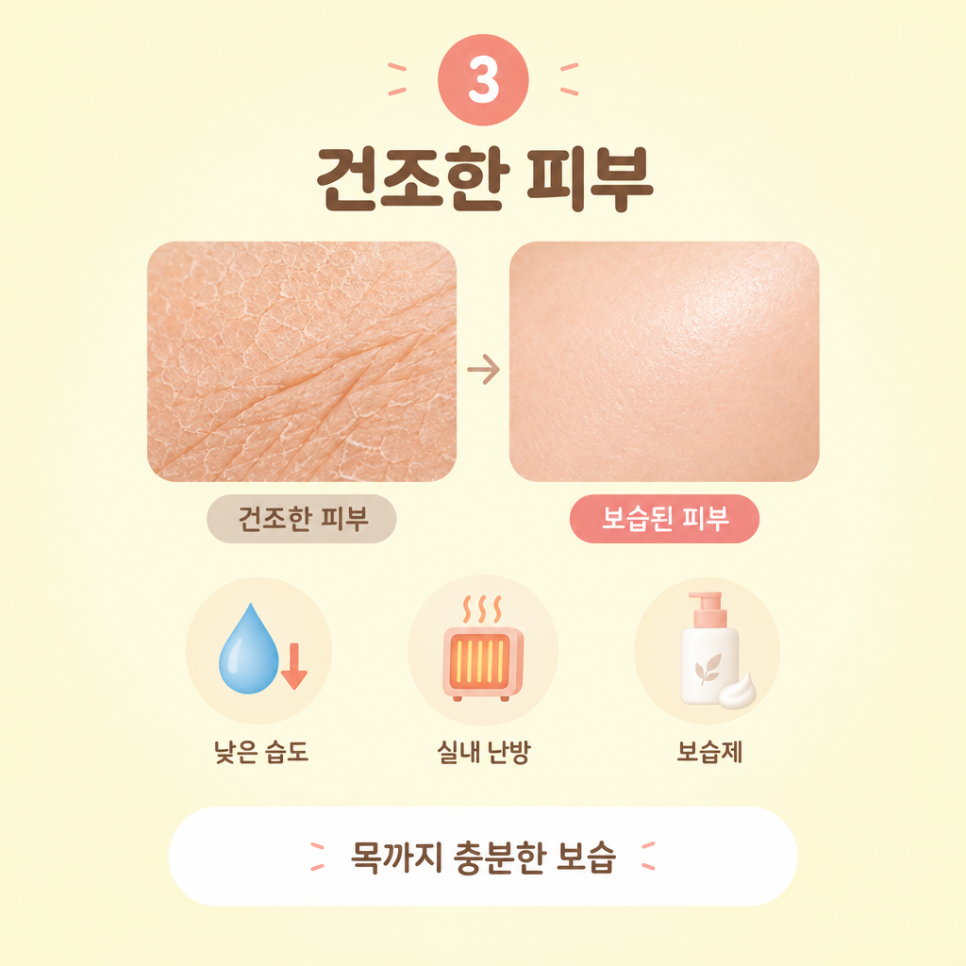
When skin is dry, fine surface lines and rough texture can appear more pronounced than usual.
In fall and winter, lower humidity combined with indoor heating can easily dry out not just your face but your neck as well.
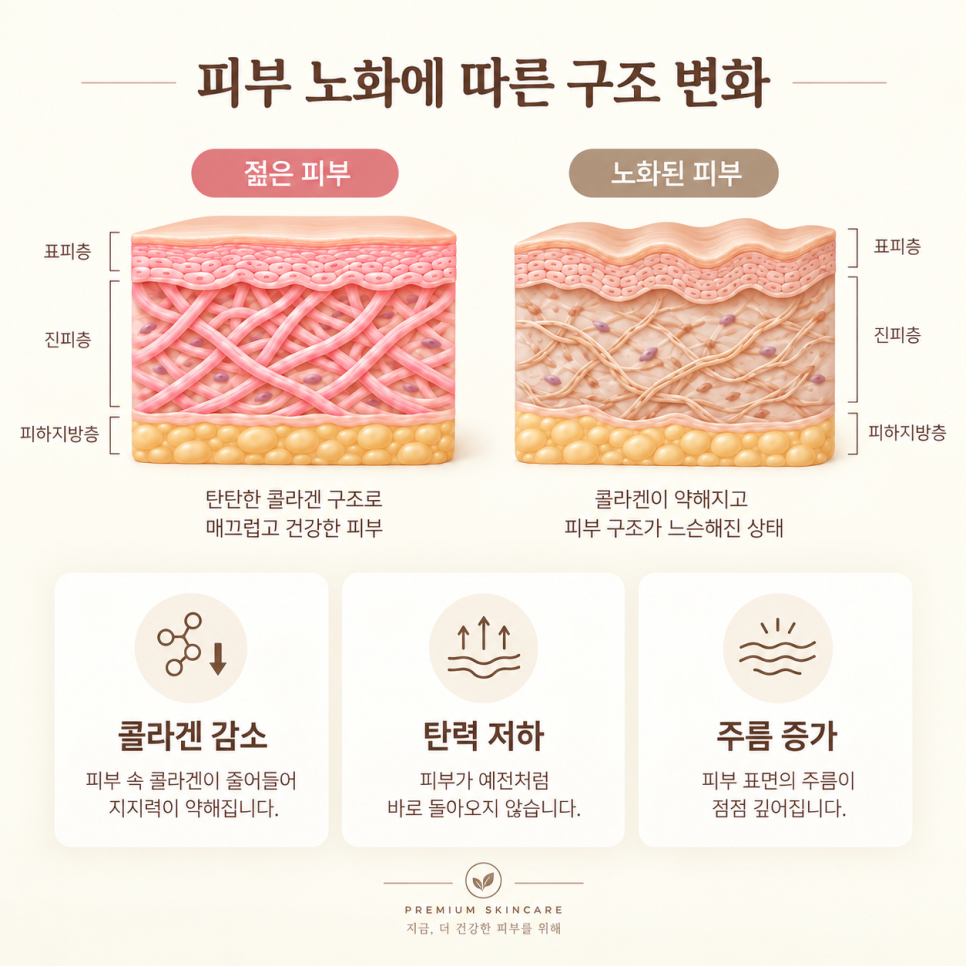
As we age, the production and structure of collagen and elastin in the skin change.
As the dermis loses supportive strength, elasticity declines — meaning neck wrinkles aren’t just a surface-level issue but a change that appears alongside internal aging.
| Cause | Description |
|---|---|
| Repeated posture | Habit of looking down at a smartphone or laptop for long periods |
| UV exposure | Easy to forget sun protection on the neck |
| Skin dryness | Lack of moisture from low humidity and indoor heating |
| Structural changes from aging | Decreased collagen and elastin, reduced dermal support |
Why Does Collagen Matter for Neck Skin?
Behind the loss of elasticity in neck skin lies a decline in collagen.
Collagen is a key protein that makes up the skin’s dermis and helps maintain its structure and support.
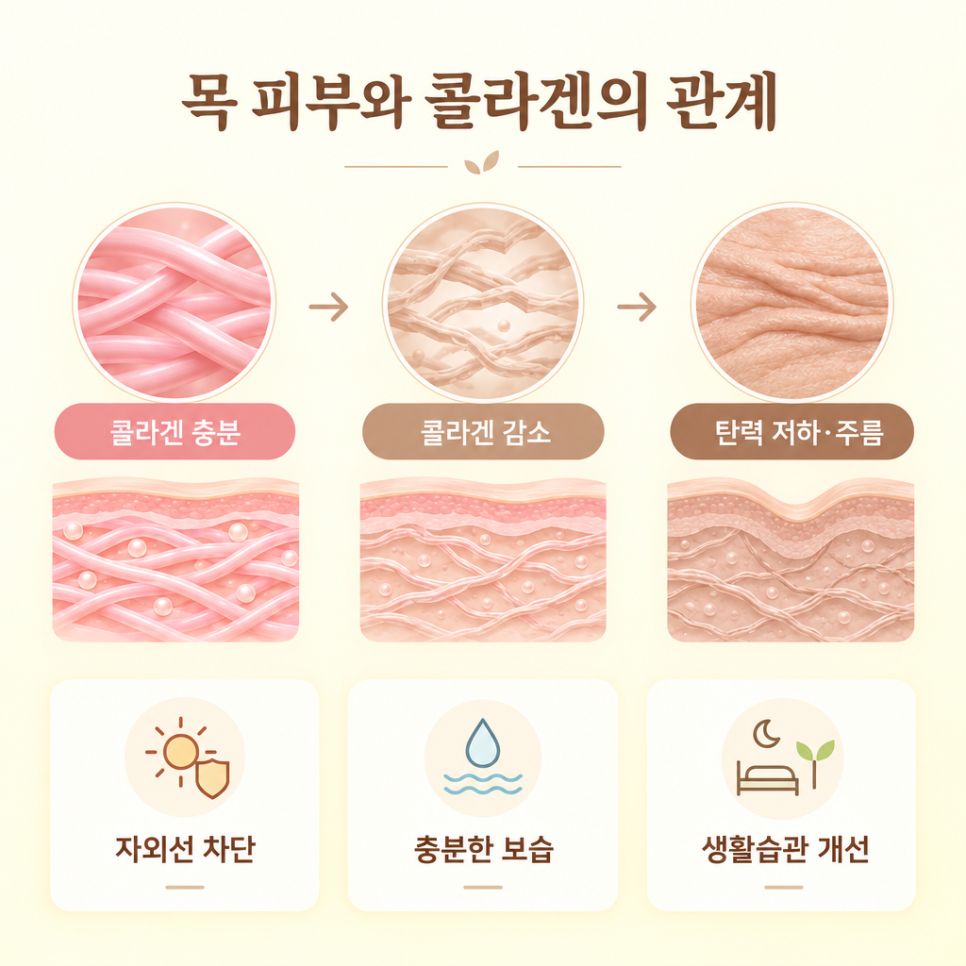
According to one media report, collagen is said to decline by about 1% per year starting in the mid-20s, dropping to roughly half of 20-something levels by the 40s and to about 10% of that level by the 70s.
Other reports note that type I procollagen in skin over age 80 was measured at about 68% lower than in ages 18-29, and that dermal thickness in sun-protected areas can thin by up to 50% between ages 30 and 80.
On top of this, repeated exposure to external factors like UV light can accelerate aging, making fine lines or deeper wrinkles more noticeable than before.
✔ Collagen is reported to naturally decline by about 1% per year starting in the mid-20s
✔ Reports suggest levels drop to about half by the 40s and to roughly 10% by the 70s, compared to the 20s
✔ Dermal thickness may thin by up to 50% between ages 30 and 80, according to reports
Neck Wrinkle Care: Where Should You Start?
The key isn’t trying a special technique once — it’s consistently repeating basic care.
Neck wrinkle care means extending sun protection, moisturizing, and posture habits to your neck, just as you already do for your face.
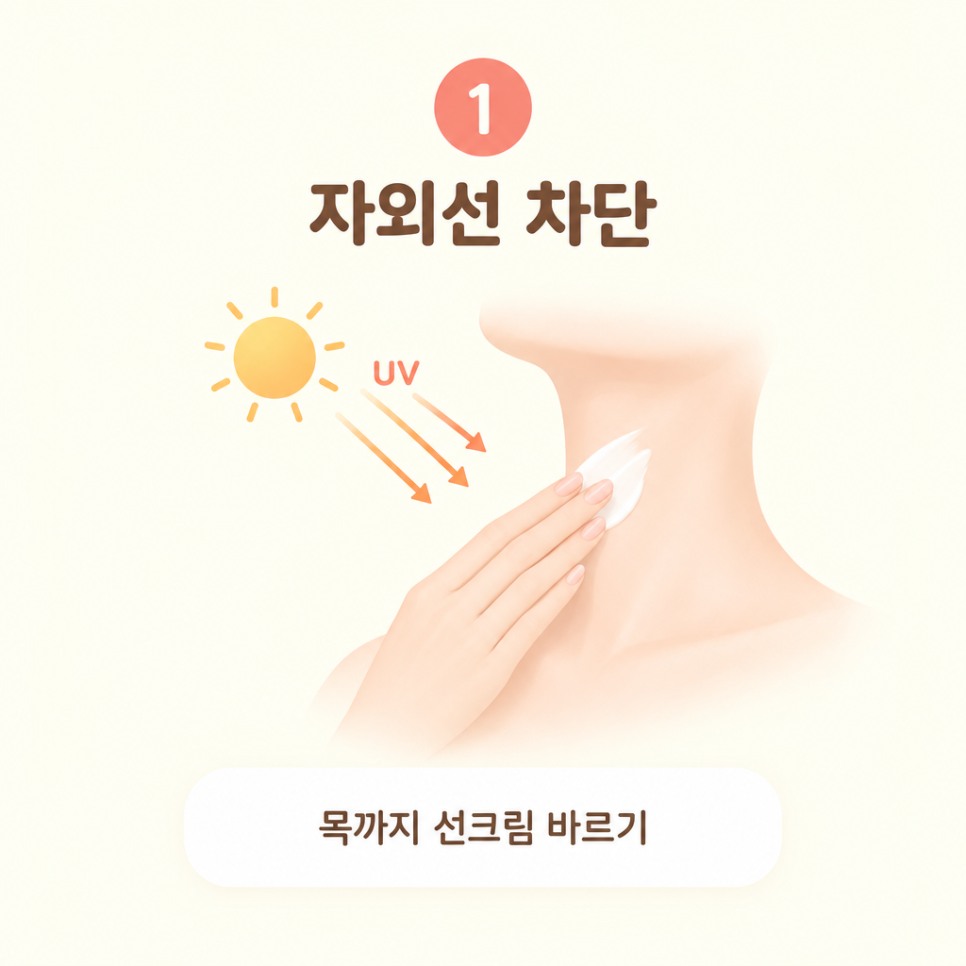
① When heading outside, apply sunscreen evenly to your neck as well as your face.
If you’ve sweated heavily or spent a long time outdoors, reapply according to the product’s directions.
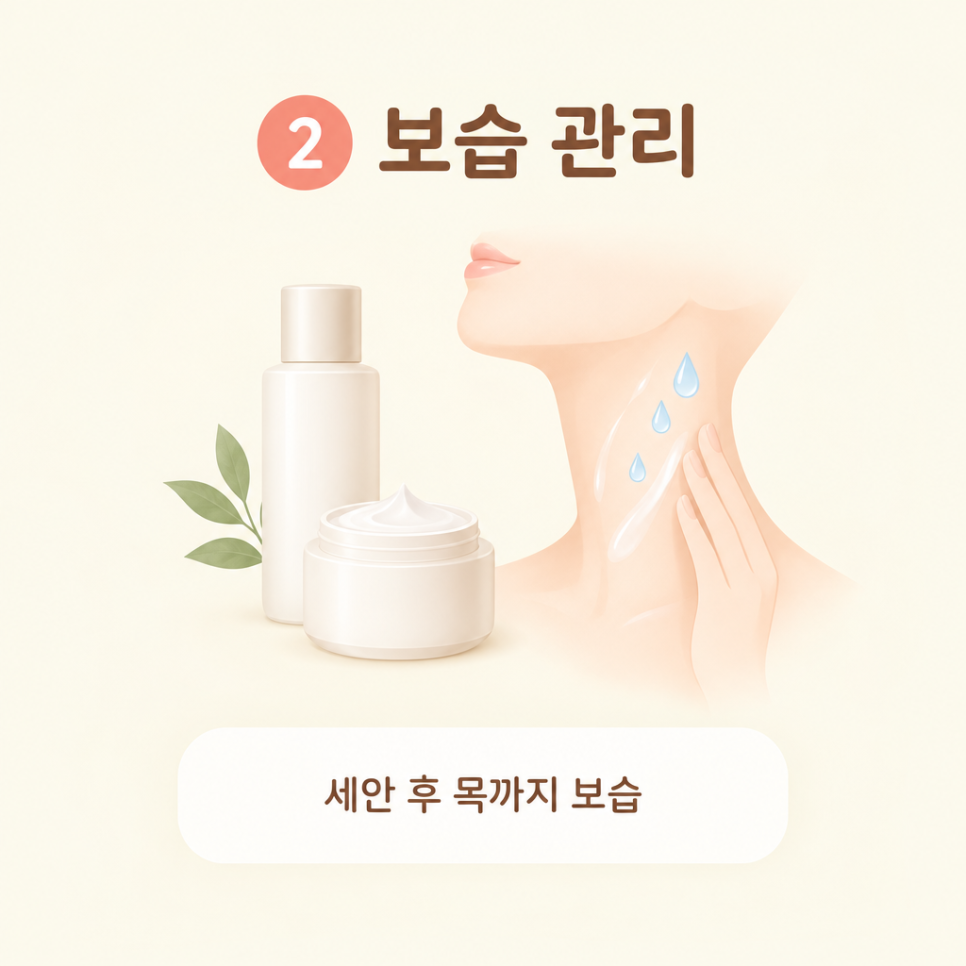
② After washing your face or showering, gently extend the moisturizer you use on your face down to your neck.
An expensive neck-specific product isn’t necessary — any gentle, well-suited product that doesn’t irritate your skin is enough.
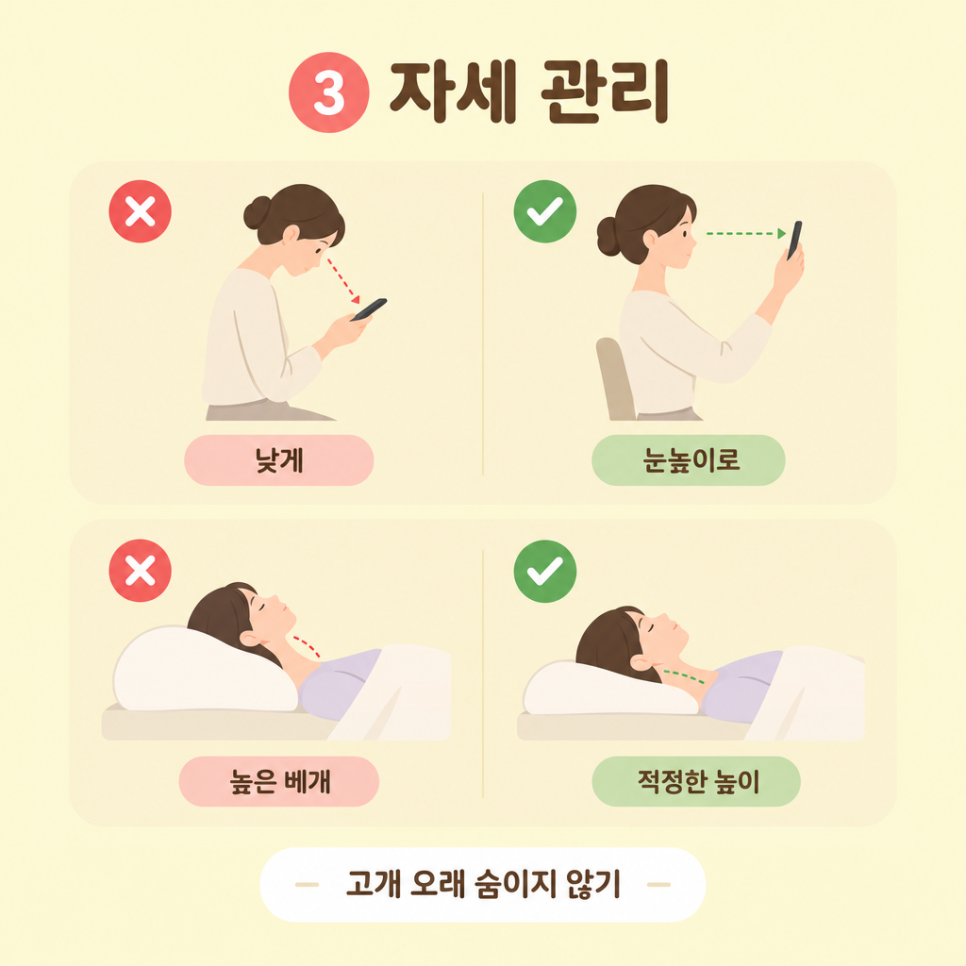
③ Hold your phone screen closer to eye level, and change position periodically instead of holding one posture for too long.
An overly high pillow can also force your neck into an excessively bent position, so choose a height that suits your body.
Repeatedly pulling the skin tightly or massaging it too hard in an attempt to erase neck wrinkles can actually irritate the skin.
When applying moisturizer, gently smooth it on rather than rubbing it in forcefully.
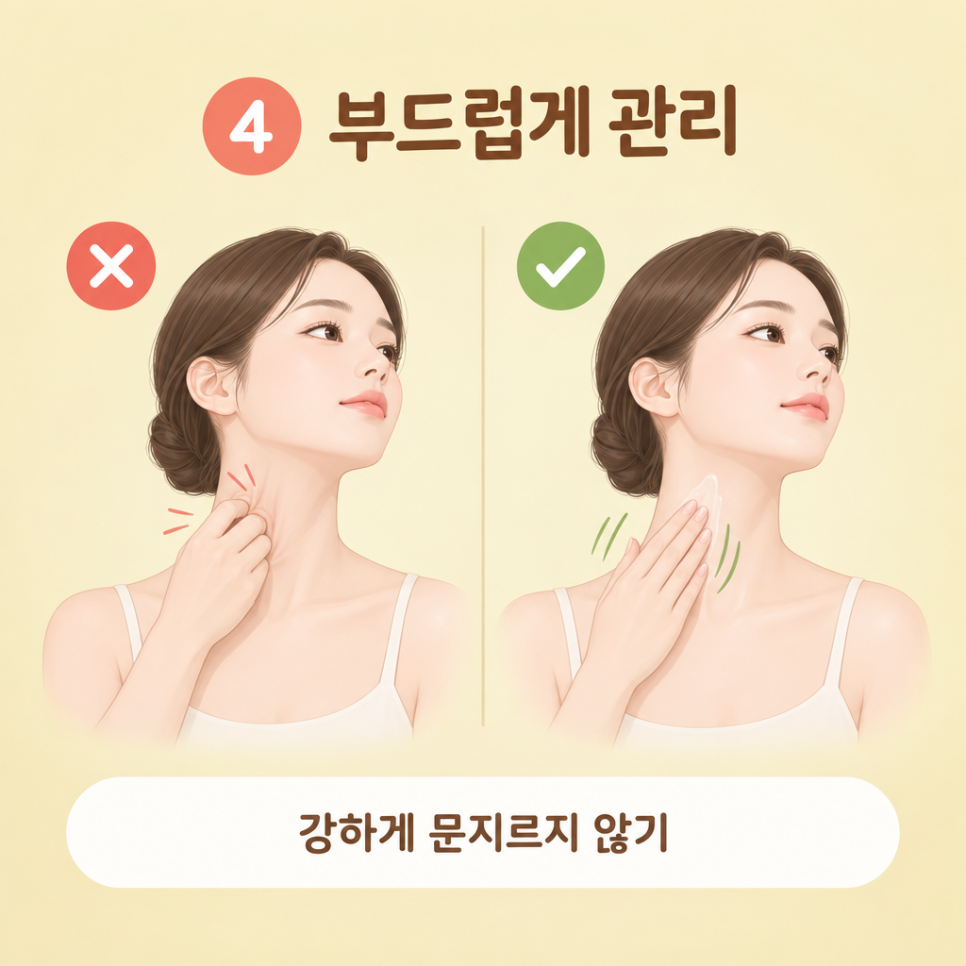
④ It’s also important not to expect that massage alone can eliminate neck wrinkles that are already deeply set.

✅ Apply sun protection to your neck when going outside
✅ Moisturize your neck after washing your face or showering
✅ Avoid tilting your head down for long periods
✅ Avoid rubbing your neck skin harshly
✅ Avoid smoking and maintain a balanced lifestyle
Can Home Care Alone Get Rid of Neck Wrinkles?
It’s important to distinguish between fine lines made more visible by dryness and wrinkles that have already become deeply set.
Home care refers to methods you can practice at home, such as moisturizing or massage.
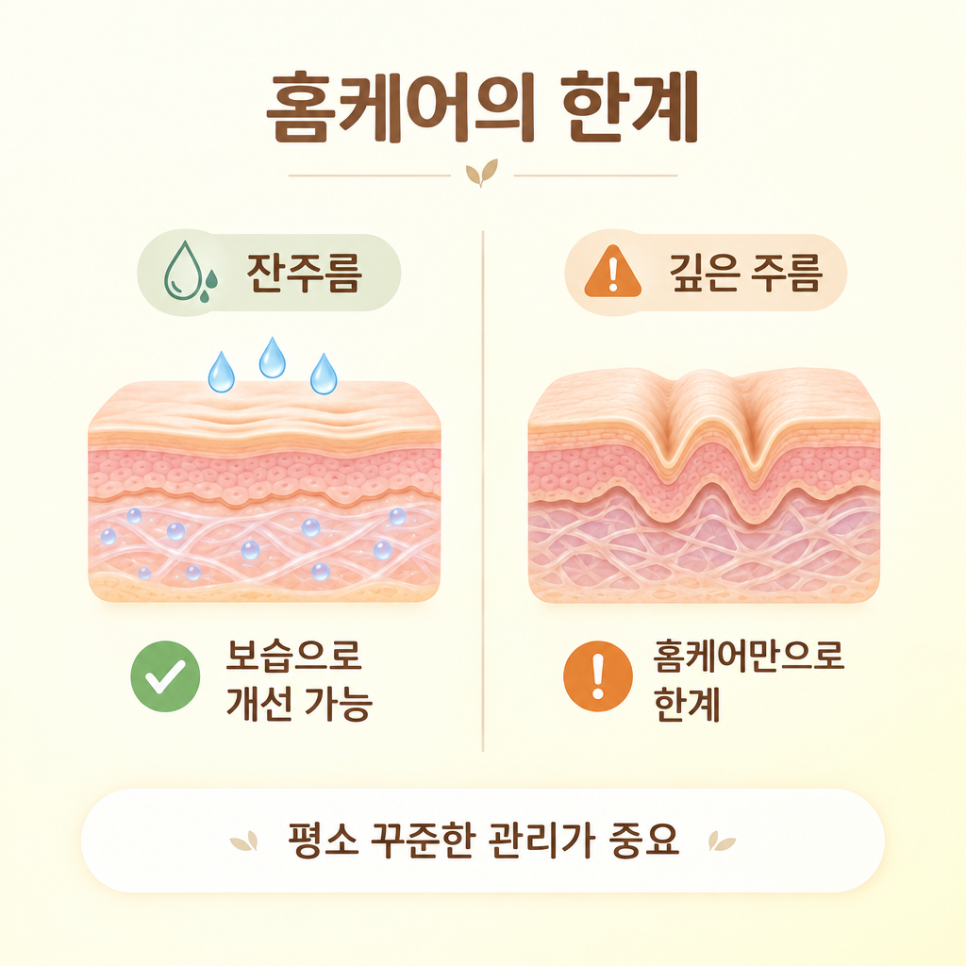
If fine lines look more pronounced because your skin is dry, they may appear less noticeable once your skin becomes hydrated after adequate moisturizing.
However, wrinkles that have already become deeply set due to skin aging and structural changes are difficult to eliminate completely through home care alone, such as moisturizers or massage.
✔ Fine lines and rough texture caused by dryness may be eased
✔ Aging-accelerating factors like UV exposure and friction can be reduced
✔ May help keep skin in a healthier overall condition
Why You Should Care for Your Neck Just Like Your Face
We tend to pay close attention to our facial skin while leaving the neck out of the routine almost entirely.
But the neck is also continuously exposed to UV rays and outside conditions, and it’s an area where structure and elasticity change as we age.
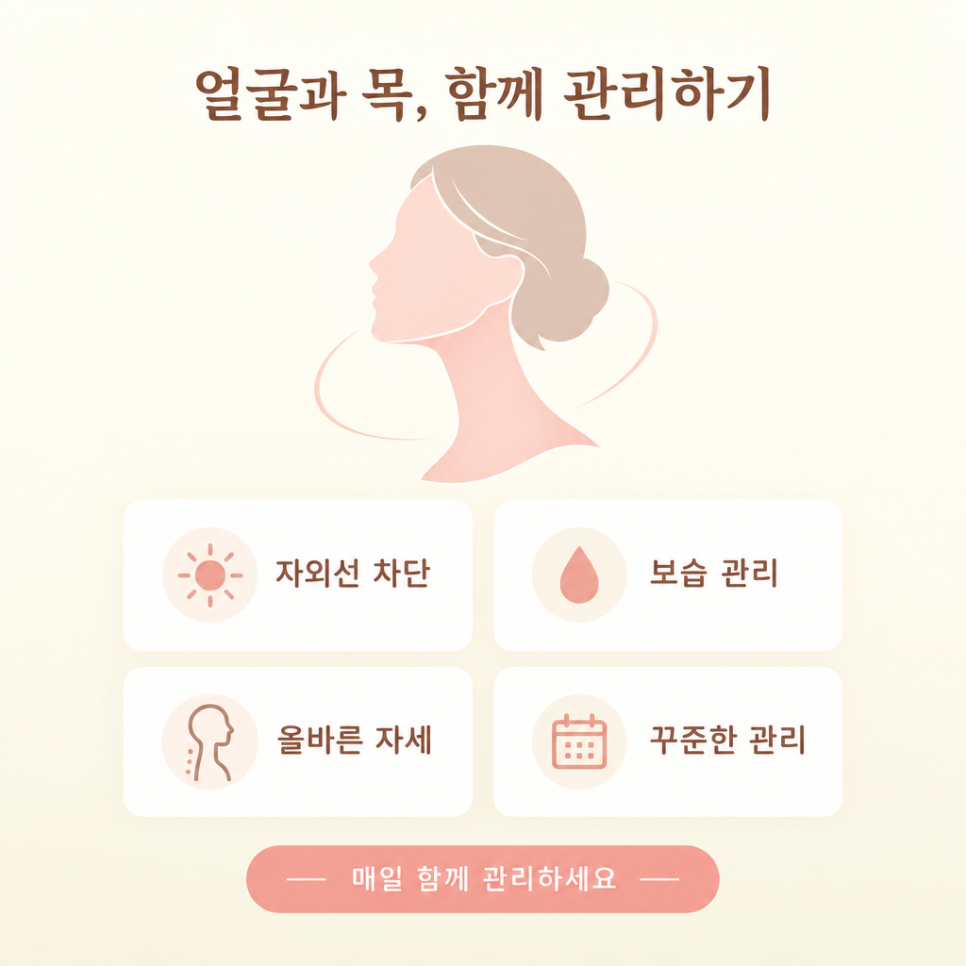
It’s enough to apply sunscreen to your neck whenever you apply it to your face, extend your moisturizer down to your neck after washing or showering, and cut back on prolonged head-down posture.
Thinking of your face and neck as a single skincare zone is the most basic neck wrinkle care habit you can start in everyday life.
If you’re curious about skin aging and collagen changes, you can find more detailed information on the Atelofill Collagen Skin Research Institute homepage.
Frequently Asked Questions
1. Can I use my facial sunscreen on my neck too?
Generally, sunscreen made for the face can also be used on the neck. However, if you notice irritation or breakouts on your neck skin, stop use and check your skin’s condition.
2. Do I need to use a neck-specific cream?
A neck-specific product isn’t strictly necessary. If the moisturizer you’re already using suits your neck skin well, you can use it there too — consistent moisturizing and sun protection habits matter more than the specific product type.
3. I’m in my 20s or 30s — does having neck wrinkles mean it’s aging?
Not necessarily. Horizontal neck lines can appear even at a relatively young age, and various factors — skin characteristics, genetics, and repetitive neck movement or posture — can play a role.
4. Once neck wrinkles form, are they permanent?
It’s difficult to fully eliminate deep-set wrinkles with cosmetics or massage, but consistently maintaining sun protection, moisturizing, and good posture habits may help slow further deepening.
References
· The Korea Daily (LA), “The Secret to a Youthful Look Is Collagen… Declines 1% Every Year After Age 25,” The Korea Daily. View source
· Lee Soon-yong, “UV Rays ‘Destroy Collagen and Elastin Fibers, Accelerating Skin Aging,’” Edaily, 2014. View source
· Ministry of Food and Drug Safety (MFDS), “Sunscreen Works Better When Applied Correctly… What’s the Right Way to Use It?,” Korea Policy Briefing (korea.kr). View source
· Jaseng Hospital of Korean Medicine, “Tilting Your Head to Look at Your Phone? Cervical Spine Load Up to 27kg,” Encyclopedia of Korean Medicine. View source
This article is provided for general health information purposes only and is not a substitute for individual diagnosis or treatment. If you have symptoms, please consult a medical professional.