Tag: Nasolabial Folds

  • Facial Collagen Injection: 3 Ways to Manage Under-Eye Hollows and Nasolabial Folds in Your 40s

    Facial Collagen Injection: 3 Ways to Manage Under-Eye Hollows and Nasolabial Folds in Your 40s

    SummaryFacial collagen injection is one option people consider for under-eye hollows, nasolabial folds, and reduced cheek volume that often appear in your 40s. This article covers what atelocollagen is, the features of AteloFill, and what to check before a procedure. Use it as a reference before your consultation.

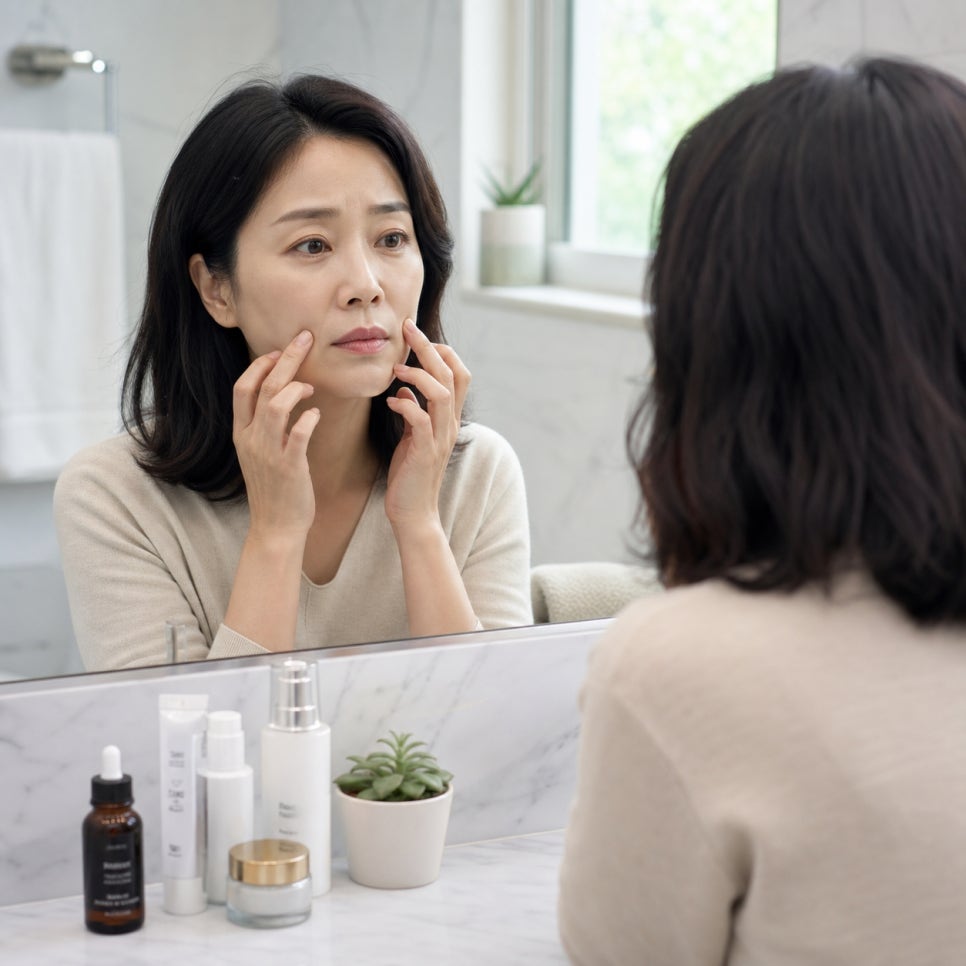
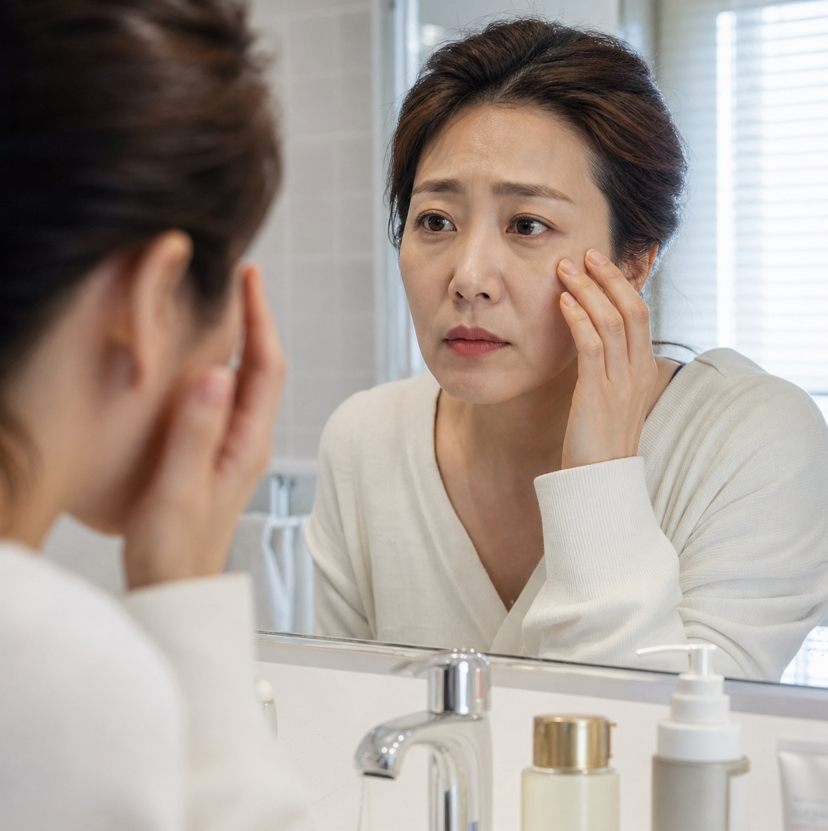
    If your under-eye area looks hollow even after a full night’s sleep,
    it may not simply be from fatigue.

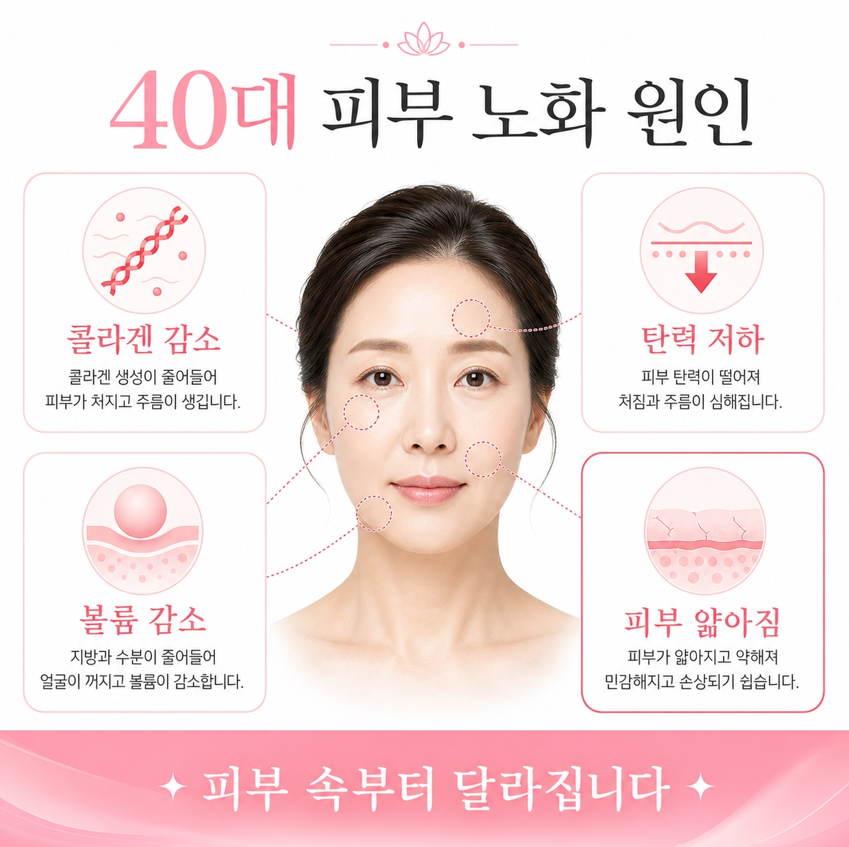
    In your 40s, collagen in the skin decreases and elasticity declines,
    and it’s common for under-eye hollows, nasolabial folds, and reduced cheek volume to appear together.

    That’s why one option that’s been mentioned recently to help address these changes
    is facial collagen injection.
    facial collagen injection

    This article explains why under-eye hollows and nasolabial folds become more noticeable in 40s skin,
    what a facial collagen injection is and how atelocollagen works,
    and what to check before a procedure.

    Based on verified sources,
    it focuses on practical, reference-worthy information rather than promotional claims.

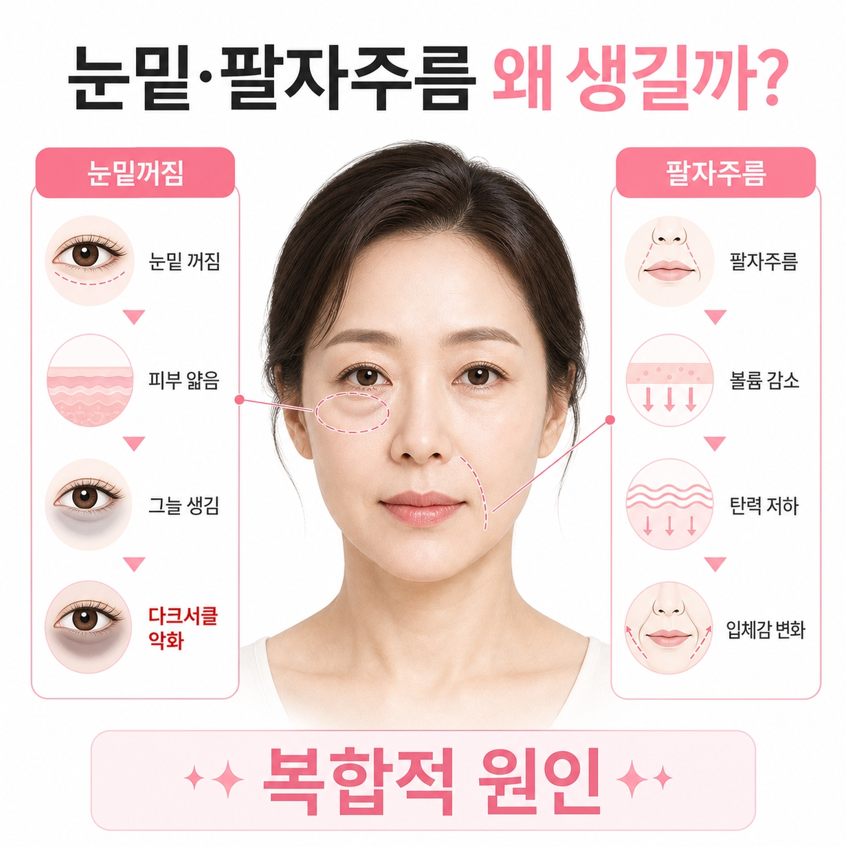
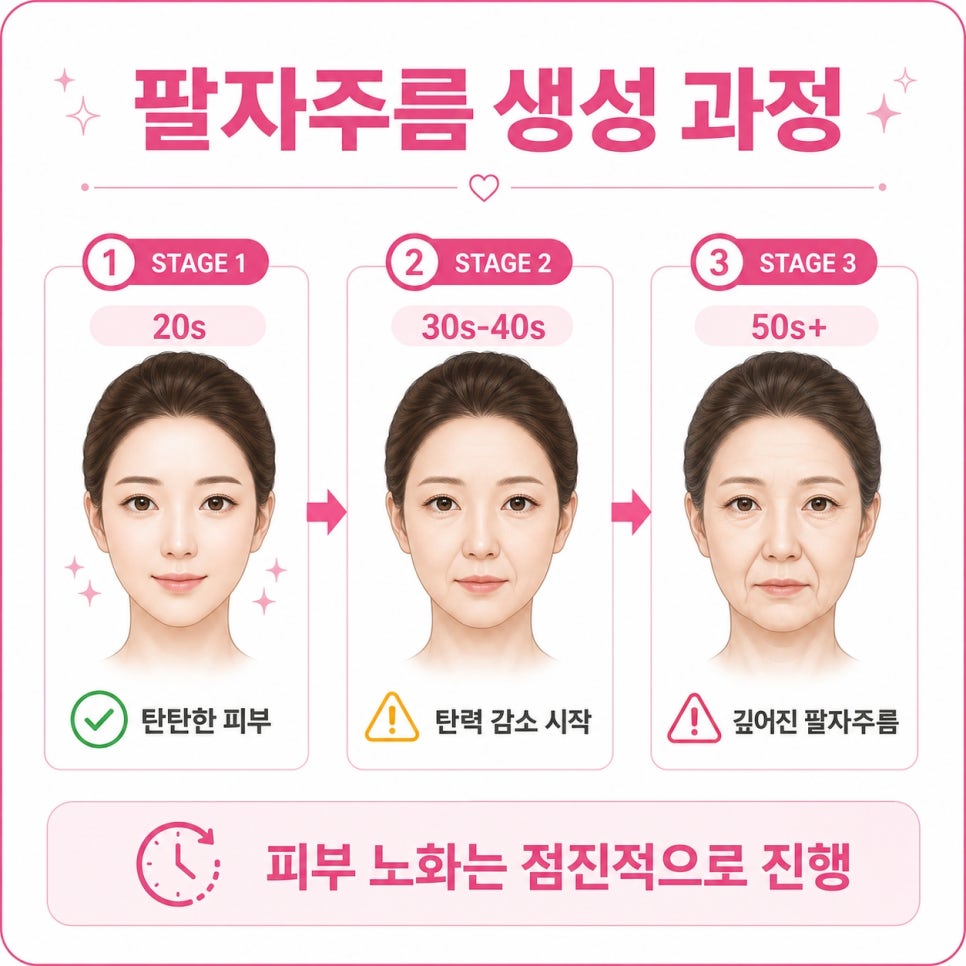
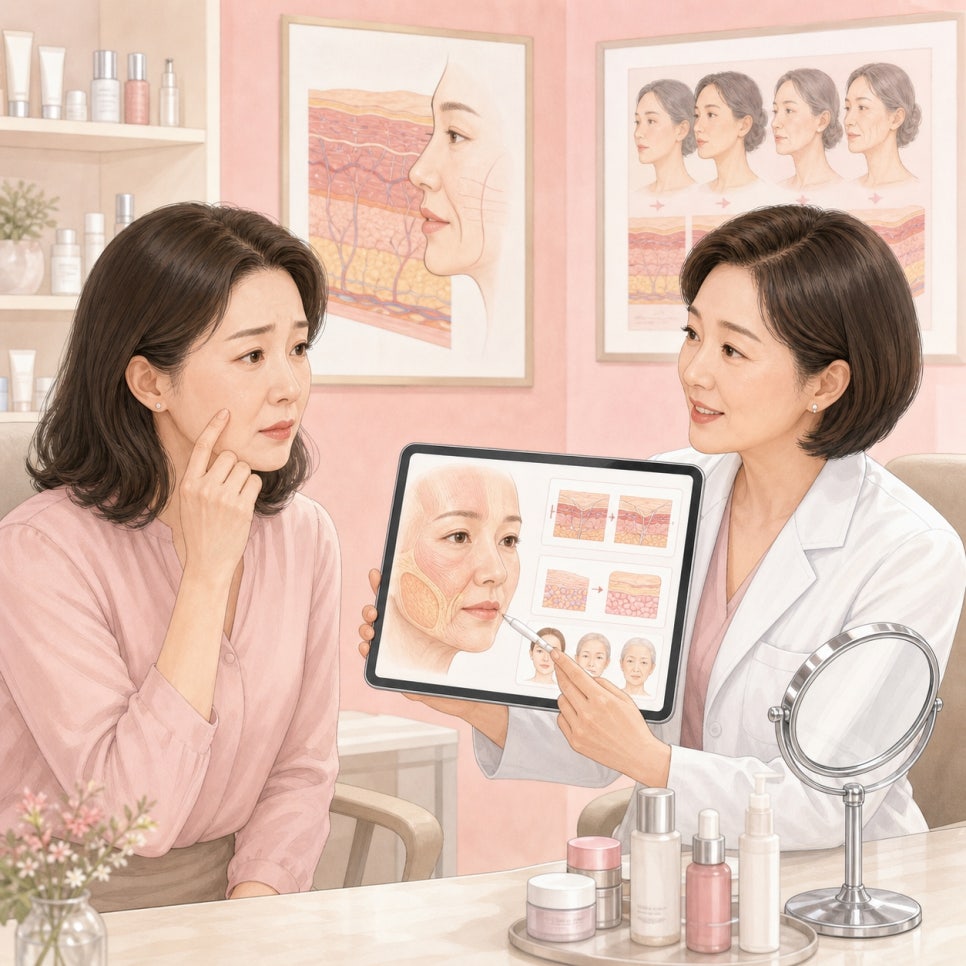
    Why do under-eye hollows and nasolabial folds get more noticeable in your 40s?

    In short, it’s because collagen loss and reduced skin elasticity progress together.
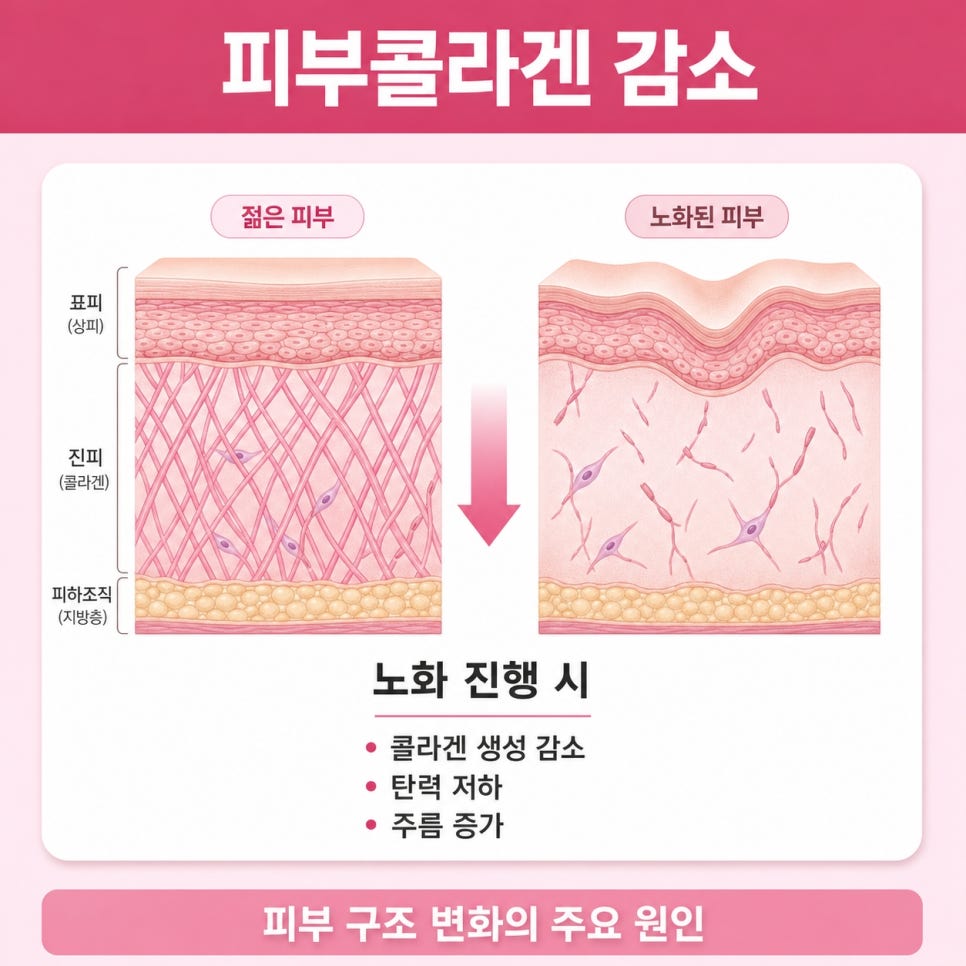
    Skin aging refers to the process in which collagen and elastin in the dermis decrease,
    causing structural support and elasticity to decline together.

    The dermis contains components such as collagen and elastin
    that support the skin’s structure and elasticity.

    As we age, the activity of fibroblasts, which produce collagen, naturally declines,
    leading to gradual changes in the skin’s structural support and elasticity.

    When factors like UV exposure, dry environments, and lifestyle habits are added,
    signs of skin aging can become more noticeable.
    facial collagen injection related image 3

    facial collagen injection related image 4

    In your 40s especially, it’s common to see the changes below
    appear together, rather than just a single fine line.

    Checklist · Changes that often appear together in 40s skin
    ✅ Shadowing caused by hollowing under the eyes
    ✅ Nasolabial folds running from beside the nose to the corners of the mouth
    ✅ Reduced volume in the cheek area
    ✅ Overall decline in skin elasticity
    ✅ Skin that looks thin and dull
    Key Points
    ✔ In your 40s, under-eye hollows, nasolabial folds, and reduced cheek volume often appear together.
    ✔ Rather than focusing on visible wrinkles alone, it helps to consider elasticity and volume together.

    What exactly is a facial collagen injection?

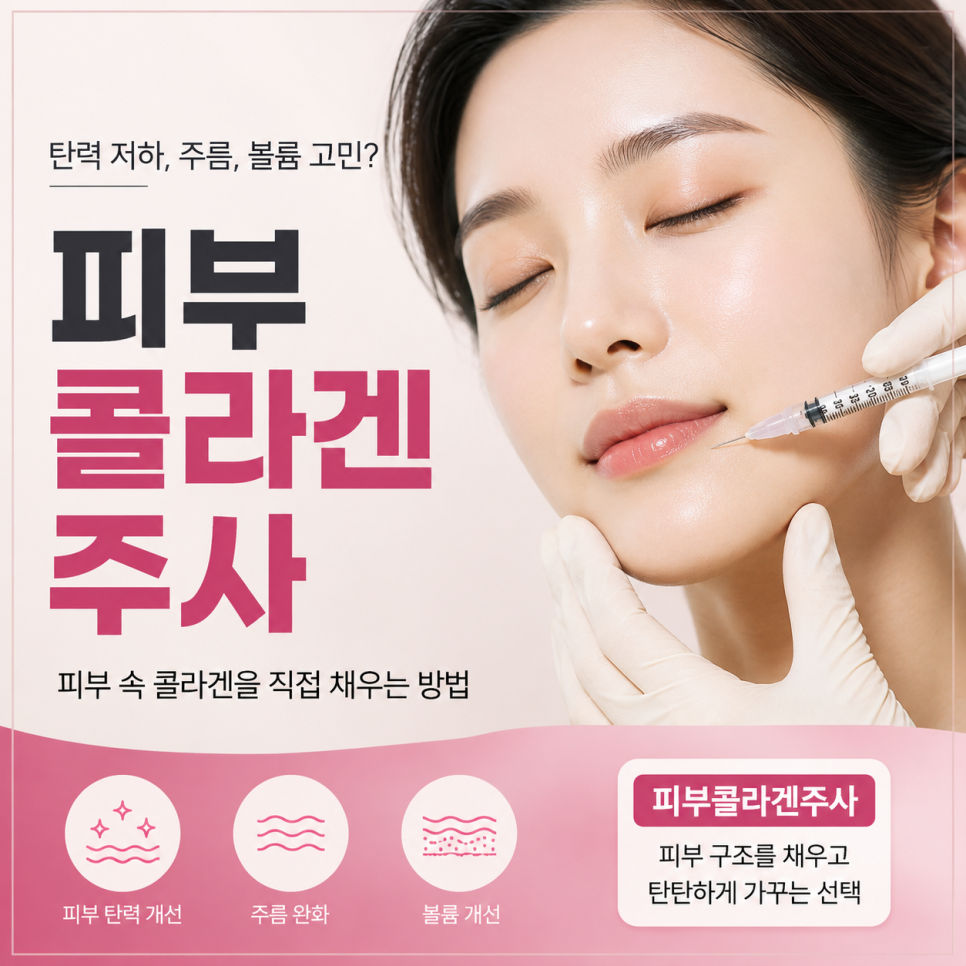
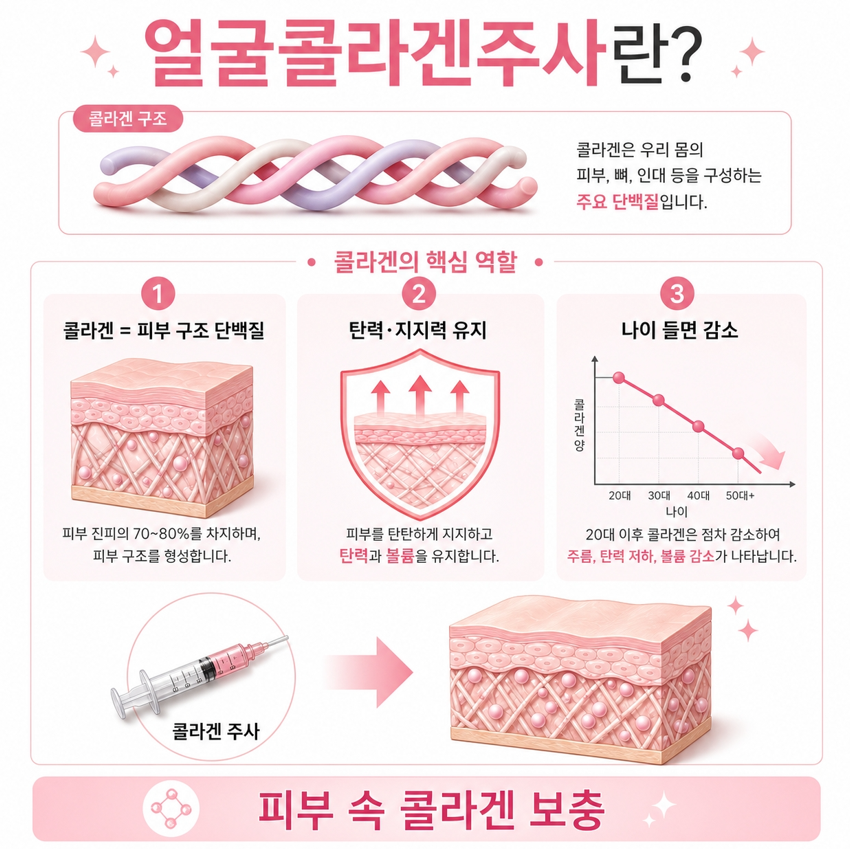
    Facial collagen injection is a general term for procedures that replenish collagen within the skin
    to help address hollowed areas and reduced elasticity.

    Collagen is one of the main proteins that support the skin’s structure.
    As collagen levels decrease with age, skin can become thinner,
    and wrinkles and hollowing may become more noticeable.

    These changes are part of why collagen-based skincare
    has drawn growing interest.

    That said, not every product marketed as a “collagen injection”
    shares the same ingredients or mechanism of action.

    That’s why it matters to check what raw material was used, whether the product is a medical device approved by Korea’s Ministry of Food and Drug Safety (MFDS),
    and what its approved intended use actually is.
    facial collagen injection related image 5


    How is atelocollagen different from regular collagen?

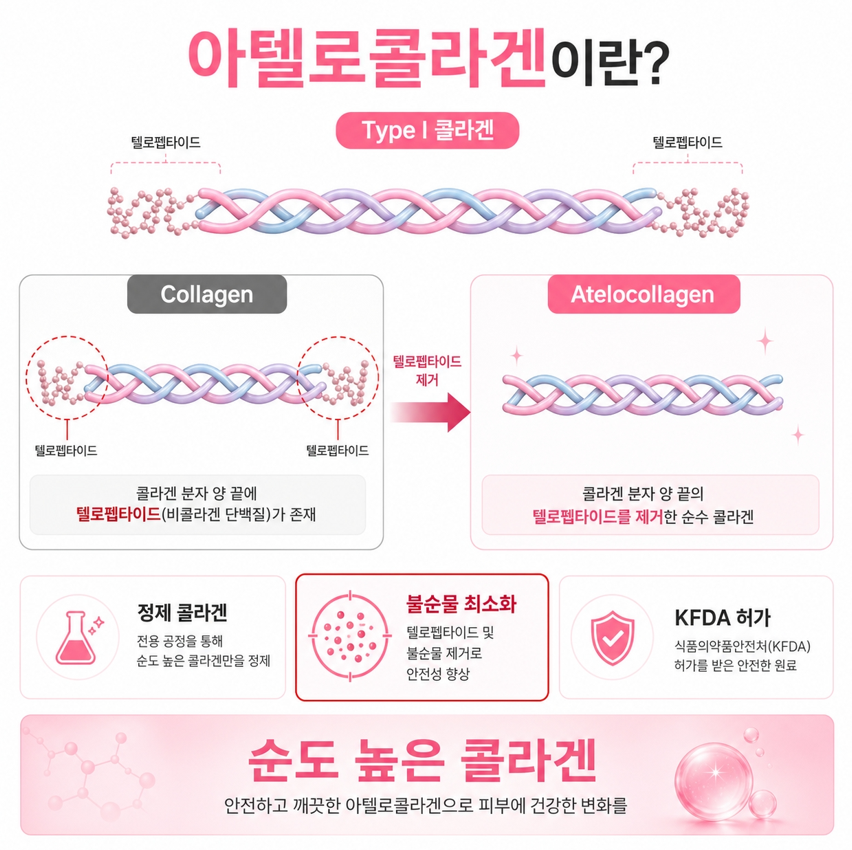
    Atelocollagen is purified collagen with the telopeptides removed from the ends of the collagen molecule,
    lowering its potential to trigger an immune response
    .

    Type I collagen has a region called the telopeptide at each end,
    which is known to be a major factor behind immune responses in the body.

    When these telopeptides are removed using enzymes,
    the collagen keeps its original structure while its immunogenicity is lowered —
    this is what’s known as atelocollagen.

    So when looking at a collagen product applied to the skin,
    it’s worth checking what form of collagen it uses and how it was purified.
    facial collagen injection related image 6


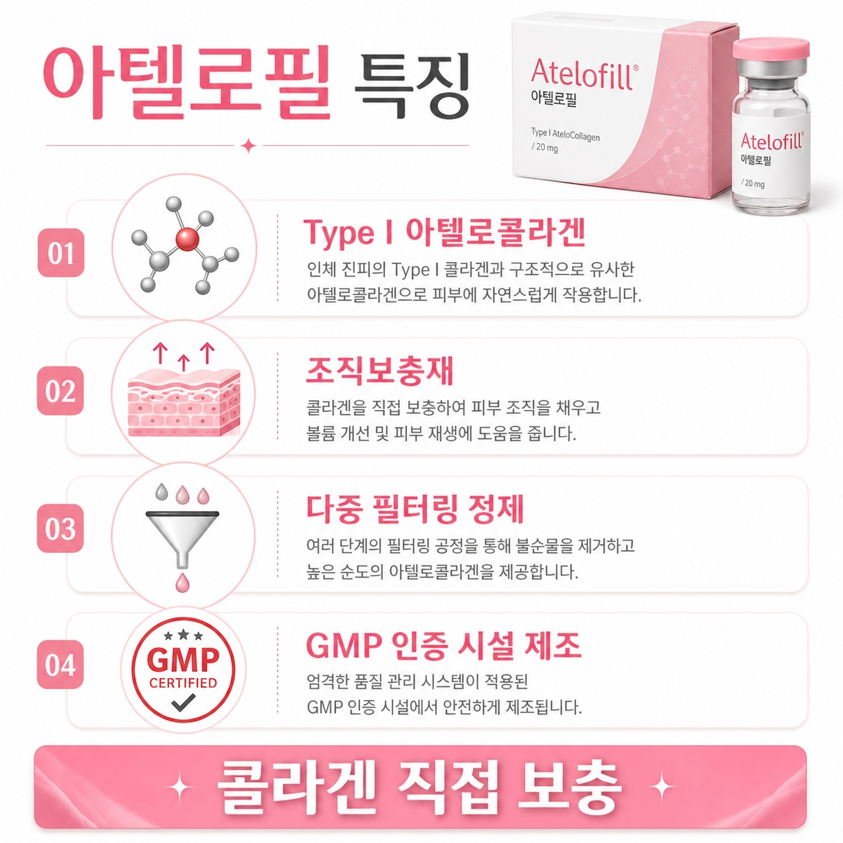
    What are the features of AteloFill?

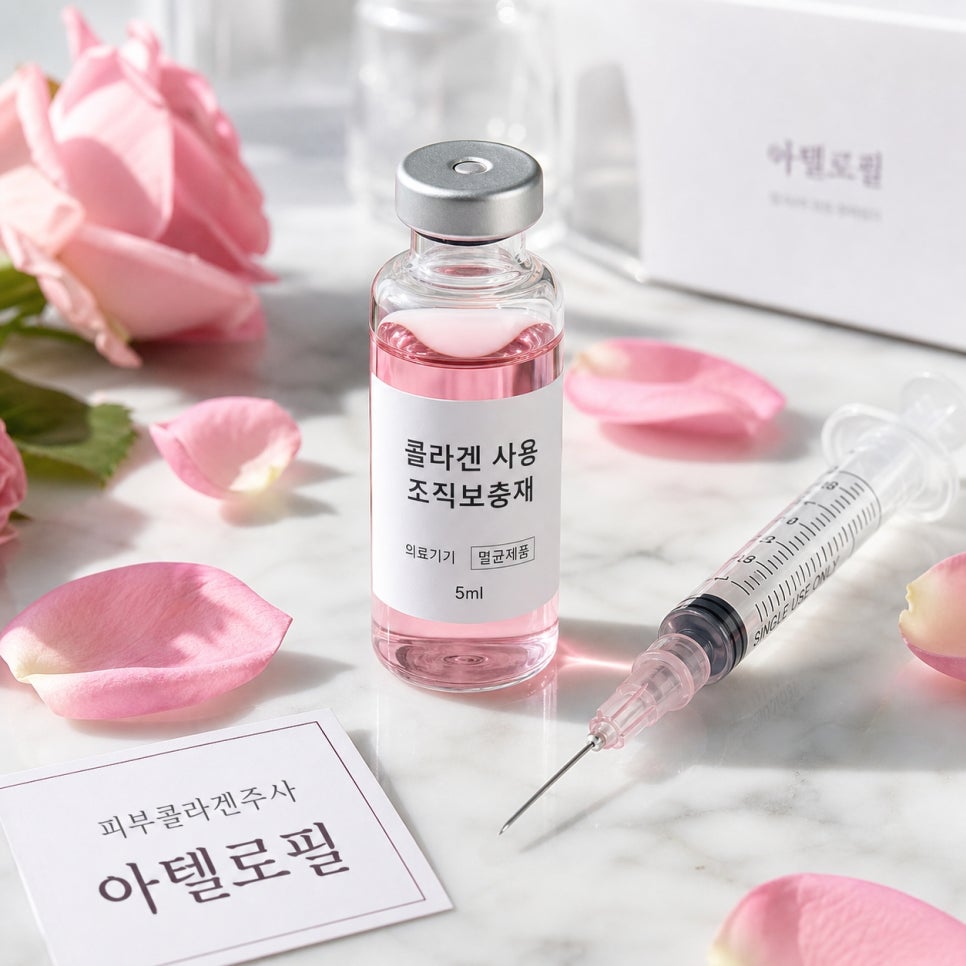
    AteloFill is a collagen-based tissue filler
    formulated with Type I atelocollagen
    .

    It was developed using Dalim Tissen’s patented multi-stage filtration and purification process,
    with a focus on minimizing impurities and telopeptides.

    It is a medical device approved by Korea’s Ministry of Food and Drug Safety (MFDS),
    and it is manufactured under the quality control standards of a GMP-certified facility.

    In other words, rather than looking at the name “collagen” alone,
    it’s important to check what type of collagen was used and how it was purified and managed.

    More details on AteloFill are available at the
    AteloFill Collagen Skin Research Institute website.

    facial collagen injection related image 7

    facial collagen injection related image 8

    Key Points
    ✔ AteloFill is a medical device approved by Korea’s MFDS, formulated with Type I atelocollagen.
    ✔ It’s important to check the purification method and approval status, not just the ingredient name.

    What changes might a facial collagen injection help with?

    Depending on an individual’s skin condition and the area treated,
    it may be used to help add volume to hollowed tissue.

    However, results and degree of change can vary from person to person,
    so no single outcome can be assumed for everyone.

    Under-eye hollows and nasolabial folds may look similar on the surface,
    but the underlying tissue changes behind them differ somewhat.
    The table below summarizes these differences.

    Area Main Cause Visible Change
    Under-Eye Hollows Reduced skin elasticity, changes in surrounding tissue Shadowing, an appearance similar to dark circles
    Nasolabial Folds Reduced elasticity, changes in midface volume and fat position Deeper folds, a sagging appearance

    So when considering a facial collagen injection,
    it helps to look at the balance of volume across the whole face
    rather than focusing on just the under-eye area or the nasolabial folds alone.

    facial collagen injection related image 9

    facial collagen injection related image 10


    What should you check before the procedure?

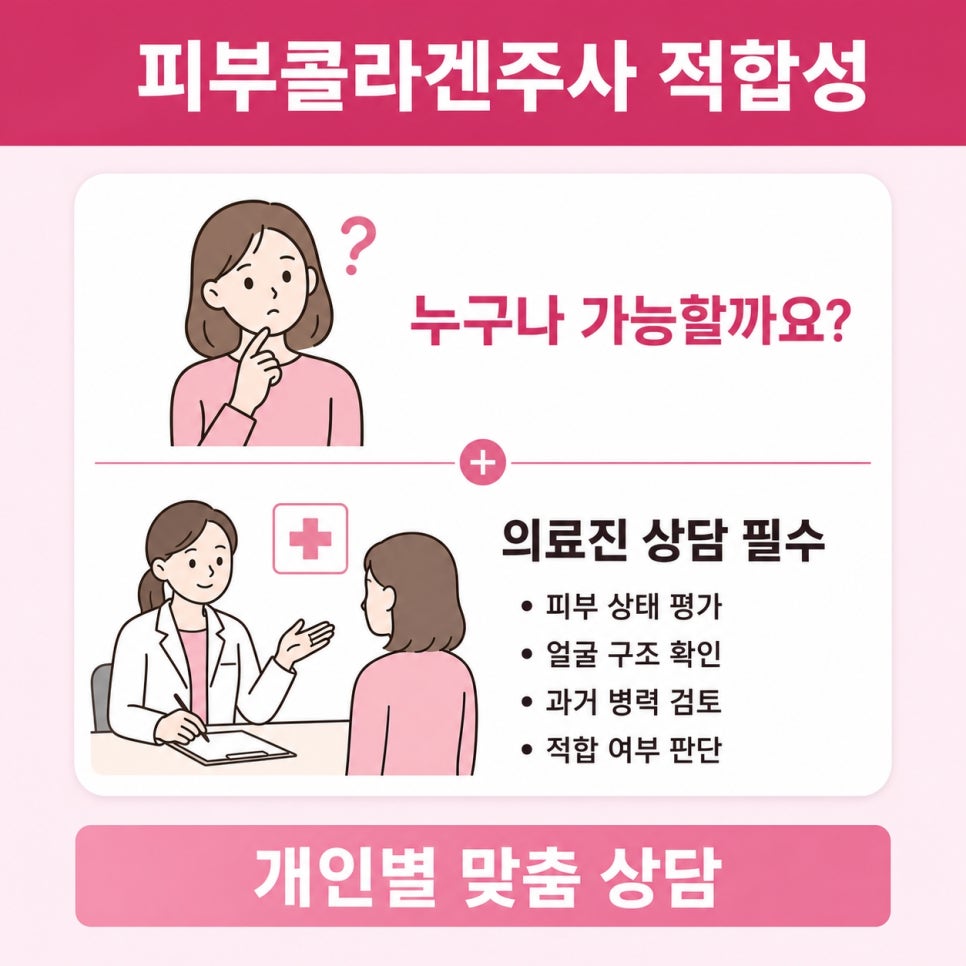
    Even among people in their 40s, the degree of skin aging and facial structure vary from person to person.
    That’s why a thorough consultation should come first.

    Checklist · Before your consultation
    ✅ Have you discussed the cause of your concern (reduced elasticity, volume loss, etc.) with a medical professional?
    ✅ Have you confirmed the product’s ingredients and whether it’s an MFDS-approved medical device?
    ✅ Does the treatment area and intended use match your specific concern?
    ✅ Have you told your provider about past procedures and any allergy history?
    ✅ Have you been given a full explanation of possible post-procedure reactions such as swelling, bruising, or pain?

    facial collagen injection related image 12

    Precautions
    Reactions such as swelling, bruising, or pain after the procedure, as well as recovery time, can vary from person to person.
    Be sure to consult thoroughly with a medical professional before deciding.

    Frequently Asked Questions

    1. Do I need collagen care once I’m in my 40s?
    Age alone can’t determine whether a specific procedure is needed. That said, collagen levels and elasticity can change as skin ages, so if under-eye hollows, nasolabial folds, or reduced elasticity are a concern, it can help to discuss a management approach suited to your current condition.

    2. Is AteloFill the same as a typical skin booster?
    AteloFill is a collagen-based tissue filler formulated with Type I atelocollagen. Since products differ in main ingredients, approved purpose, and application method, it’s best to check each product’s individual characteristics rather than assuming they all fall into the same category.

    3. Can it be applied the same way to both the under-eye area and nasolabial folds?
    Because skin thickness and tissue structure differ across areas of the face, the same approach can’t be applied uniformly. Thinner-skinned areas like under the eyes in particular require a medical professional to fully assess the individual’s skin and anatomy before deciding whether to proceed.

    4. How long do the effects of a facial collagen injection last?
    How long results last can vary depending on the product used, individual skin condition, and treatment area. For an accurate estimate, it’s best to check directly with a medical professional during a consultation.

    facial collagen injection related image 13


    References

    · Rapportian, “Dalim Tissen Enters the Aesthetics Market with ‘AteloFill,’ Built on Its Collagen Research,” Rapportian. View source
    · HiDoc, “‘Atelocollagen,’ Which Restores Muscle and Cartilage… Drawing Attention as a Key Material in Regenerative Medicine,” HiDoc. View source
    · Vogue Korea, “Collagen Declines With Age — Is There a Way to Restore Elasticity?” Vogue Korea, 2025. View source
    facial collagen injection related image 14


    This article is intended for general health information purposes only and is not a substitute for individual diagnosis or treatment. If you have symptoms, please consult a medical professional.

  • Skin Collagen Injection: 3 Key Checks for Atelocollagen

    Skin Collagen Injection: 3 Key Checks for Atelocollagen

    SummaryUnlike cosmetics or health supplements, a skin collagen injection is generally used to help replenish collagen in depleted skin tissue. This article covers the causes of collagen loss and the features of AteloFill, a Type I atelocollagen-based product.

    There was a time when even a light layer of foundation made your face look firm and plump.
    If no amount of makeup can hide hollowness under your eyes or in your cheeks these days, it may not just be an optical illusion.

    It’s more likely a structural change caused by declining collagen — the protein that supports skin from within, not just on the surface.

    This article explains why skin collagen decreases and introduces the concept of a skin collagen injection, a method that directly replenishes depleted collagen in the tissue.

    We’ll also look at the features of AteloFill, based on Type I atelocollagen, and what to check before undergoing the procedure.

    skin collagen injection

    Why Does Skin Increasingly Look Hollow and Wrinkled With Age?

    Thinning skin and reduced elasticity are closely linked to declining collagen.
    Collagen is a protein that makes up the dermis and helps maintain skin density and shape.

    As we age, the activity of fibroblasts — the cells that produce collagen — naturally slows down,

    and combined with UV exposure, repeated facial expressions, dry environments, and lack of sleep,
    changes in skin structure can become noticeably visible.

    skin collagen injection – image 2

    Key Points
    ✔ Collagen is a key protein that maintains the elasticity and density of the dermis.
    ✔ As aging progresses, fibroblasts’ ability to produce collagen naturally declines.

    skin collagen injection – image 3

    As a result, the following changes may appear together in the skin.

    • Reduced elasticity compared to before
    • Fine lines and deeper wrinkles
    • Hollowing under the eyes or in the cheeks
    • Deeper-looking nasolabial folds
    • Skin that overall appears thin and lacks firmness

    skin collagen injection – image 4

    Facial aging isn’t driven by a single cause.

    Because changes in multiple structures — skin, fat, muscle, and bone — act together,
    it helps to first identify which areas actually need attention.

    skin collagen injection – image 5


    What Exactly Is a Skin Collagen Injection?

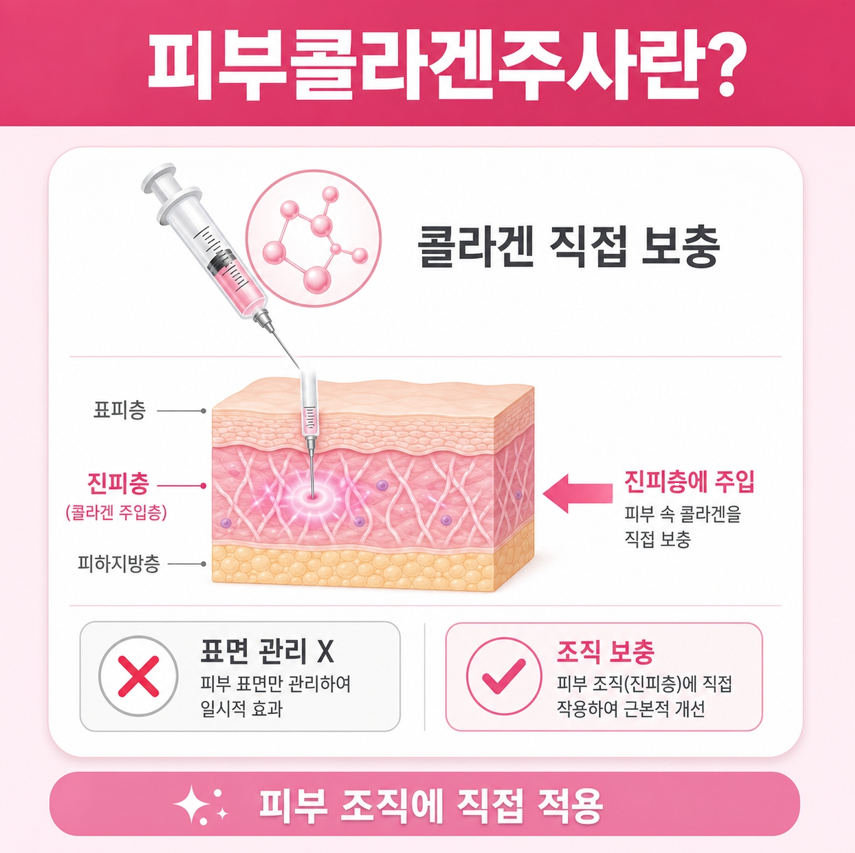
    A skin collagen injection applies a collagen-containing medical device directly into skin tissue, and is generally intended to help replenish areas that have become depleted.
    This approach is fundamentally different from cosmetics or health supplements, which only address the skin’s surface.

    skin collagen injection – image 6

    Category Collagen Cosmetics/Supplements Skin Collagen Injection (Medical Device)
    Method of Application Applied to the skin surface or ingested Applied directly to the affected skin tissue
    Area of Action Mainly epidermis to stratum corneum Dermal tissue where collagen is depleted
    Product Classification Cosmetic/health supplement Medical device approved by Korea’s MFDS

    That said, the degree of hollowing or wrinkling, skin thickness and elasticity, and overall facial volume vary from person to person.

    So the same amount and method isn’t applied to everyone —
    a thorough consultation is needed to assess your current condition before deciding on the treatment area and method.

    skin collagen injection – image 7


    How Is AteloFill’s Atelocollagen Different From Regular Collagen?

    AteloFill is a collagen-based tissue filler developed using Type I atelocollagen.
    The key lies in the form of collagen it uses — ‘atelocollagen.’

    skin collagen injection – image 8

    A typical collagen molecule has a segment called telopeptide at each end.

    Atelocollagen refers to collagen that has had this segment removed during purification.
    AteloFill is manufactured through a patented, multi-stage filtration purification process focused on minimizing impurities.

    Key Points
    ✔ Atelocollagen is Type I collagen purified by removing the telopeptide.
    ✔ AteloFill is a medical device approved by Korea’s MFDS and is manufactured in a GMP-certified facility.

    Ultimately, when researching a skin collagen injection, it’s not enough to know that a product ‘contains collagen.’

    It’s important to also check what form of collagen is used and how it’s purified and manufactured.

    skin collagen injection – image 9


    What Should You Check Before Getting a Skin Collagen Injection?

    Rather than focusing on how well-known a product is, it’s more important to first assess your own skin condition and the nature of the procedure.
    Even similar nasolabial folds or under-eye hollowing can have different underlying causes from person to person.

    skin collagen injection – image 10

    Checklist
    ✅ Have you identified whether it’s reduced elasticity, volume loss, sagging, or a combination?
    ✅ Have you been informed of the product’s approval status, treatment area, and required amount?
    ✅ Has your provider fully explained the expected changes and precautions?
    ✅ Have you also confirmed the aftercare instructions in advance?

    The procedure generally follows this sequence:

    1. Assessment of skin condition and facial structure
    2. Consultation on product characteristics and treatment area
    3. Application of the collagen tissue filler to the needed area
    4. Post-procedure monitoring and aftercare

    skin collagen injection – image 11

    Precautions
    ⚠ Temporary swelling, bruising, redness, or pain may occur after the procedure.
    ⚠ Rather than a ‘more is better’ approach, a plan tailored to your facial structure matters more.
    ⚠ Any prior medical history or allergies must be disclosed to your provider beforehand.

    Why You Should Start Paying Attention to Collagen in Your Skin Now

    Skin aging doesn’t start suddenly overnight.

    If makeup tends to settle into your wrinkles, or your nasolabial folds look pronounced even when you’re not smiling,
    it’s worth looking beyond the surface at the structural changes supporting your skin from within.

    skin collagen injection – image 12

    AteloFill is a collagen-based tissue filler made with Type I atelocollagen,

    and its defining feature is that a skin collagen injection may help replenish collagen directly into skin tissue.
    Rather than choosing a trending procedure first, the better approach is to first check what changes are actually occurring in your skin.

    In Summary
    ▶ A skin collagen injection can be considered as a way to directly replenish collagen in depleted tissue.
    ▶ It’s important to decide only after thoroughly discussing the product’s ingredients, purification method, and approval status with your provider.

    If you’re concerned that your skin’s elasticity and volume aren’t what they used to be, an AteloFill skin collagen injection is one option worth exploring.
    For a detailed consultation, visit the AteloFill Collagen Skin Institute homepage.

    skin collagen injection – image 13


    Frequently Asked Questions

    skin collagen injection – image 14

    1. How is a skin collagen injection different from regular skincare?
    Because it applies a collagen-containing medical device directly into skin tissue, the approach is fundamentally different from home care with topical cosmetics.

    2. What type of collagen is used in AteloFill?
    It’s a collagen-based tissue filler made from Type I atelocollagen that has been purified by removing the telopeptide.

    3. Can anyone get a skin collagen injection?
    Suitability can vary depending on skin condition, facial structure, and medical history, so an evaluation and consultation with a provider is required beforehand.

    4. Can I return to daily activities right after the procedure?
    Recovery can vary depending on individual skin condition and treatment area, so it’s best to ask your provider about the expected course beforehand.

    5. How long do results last?
    How long a collagen tissue filler lasts can vary depending on individual skin condition and lifestyle, so accurate guidance should be confirmed through a consultation.


    References

    · Rapportian, “Darim T·Sen Enters the Aesthetics Market With ‘AteloFill,’ a Product Built on Collagen Research Technology,” Rapportian, 2026. View source
    · Hwang Seung-guk (Standing Advisor, Korean Academy of Obesity & Aesthetic Body Shape), “To Fight Skin Aging, Target the ‘Fibroblasts,’” Health Kyunghyang, 2021. View source


    This article is intended for general health information purposes only and is not a substitute for individual diagnosis or treatment. If you have symptoms, please consult a qualified medical professional.

  • Get Rid of Nasolabial Folds: Do Exercise, Masks & Gua Sha Really Work? (3 Methods)

    Get Rid of Nasolabial Folds: Do Exercise, Masks & Gua Sha Really Work? (3 Methods)

    SummaryCan you really get rid of nasolabial folds with exercise, sheet masks, and gua sha alone? This guide covers what causes nasolabial folds, the real effects and limits of facial exercises, sheet masks, and gua sha massage, and practical at-home care methods you can try.

    Do you find yourself noticing the nasolabial folds running from beside your nose to the corners of your mouth every time you look in the mirror?

    Many people have tried all kinds of ways to get rid of nasolabial folds, from the classic spoon-in-mouth exercise to sheet masks and gua sha massage.

    But can self-care methods like these really make folds that have already formed disappear?

    how to get rid of nasolabial folds

    The short answer: exercise, masks, and gua sha alone are unlikely to fully get rid of nasolabial folds.

    This article covers why nasolabial folds form, the real effects and limits of exercise, masks, and gua sha, and realistic at-home care methods you can put into practice.

    Key Points
    ✔ Nasolabial folds result from a combination of factors, including reduced skin elasticity, collagen loss, and changes in facial volume
    ✔ Exercise, masks, and gua sha can help manage overall skin condition, but they’re unlikely to eliminate folds that have already deepened
    ✔ Excessive massage or facial exercises can actually irritate the skin

    Why Do Nasolabial Folds Form?

    image related to nasolabial folds 2

    The short answer: nasolabial folds aren’t simply creases caused by skin folding over.

    Nasolabial folds are lines that become more visible as the skin and soft tissue running from beside the nostrils to the corners of the mouth begin to sag.

    As we age, collagen and elastin in the skin decrease and elasticity drops, which makes it easier for skin creases to leave a lasting mark.

    On top of that, shifts in facial fat and soft tissue position, midface sagging, and changes in bone structure can make the nasolabial area look even deeper.

    image related to nasolabial folds 3

    The main causes of nasolabial folds include:

    • Skin aging and reduced elasticity
    • Collagen and elastin loss
    • Changes in facial volume and fat distribution
    • Midface tissue sagging
    • Repetitive facial expression habits
    • Photoaging from UV exposure
    • Rapid weight loss
    • Individual facial bone structure and genetic factors

    So if you’re looking into how to get rid of nasolabial folds, it helps to first understand what’s causing your folds to look deeper, rather than jumping straight to tightening the skin.


    Can You Get Rid of Nasolabial Folds With Exercise Alone?

    image related to nasolabial folds 4

    The short answer: facial exercises alone are unlikely to reverse nasolabial folds that have already deepened.

    Common methods include puffing out your cheeks, puckering your lips, and exaggeratedly mouthing “A-E-I-O-U.”

    Moving your facial muscles isn’t inherently bad — working muscles you don’t normally use can even create a temporary tightening sensation.

    But nasolabial folds aren’t caused by muscle weakness alone,

    so once skin elasticity and volume have already declined, exercise alone is unlikely to restore your skin to how it was before.

    In fact, puckering the mouth area too tightly or repeating the same expression over and over can cause the skin to keep folding in the same spot, leading to cumulative irritation.

    Caution
    ⚠ Repeating strong mouth-puckering exercises for long periods in an effort to get rid of nasolabial folds can actually make skin irritation worse
    ⚠ It’s safer to keep facial exercises light and gentle

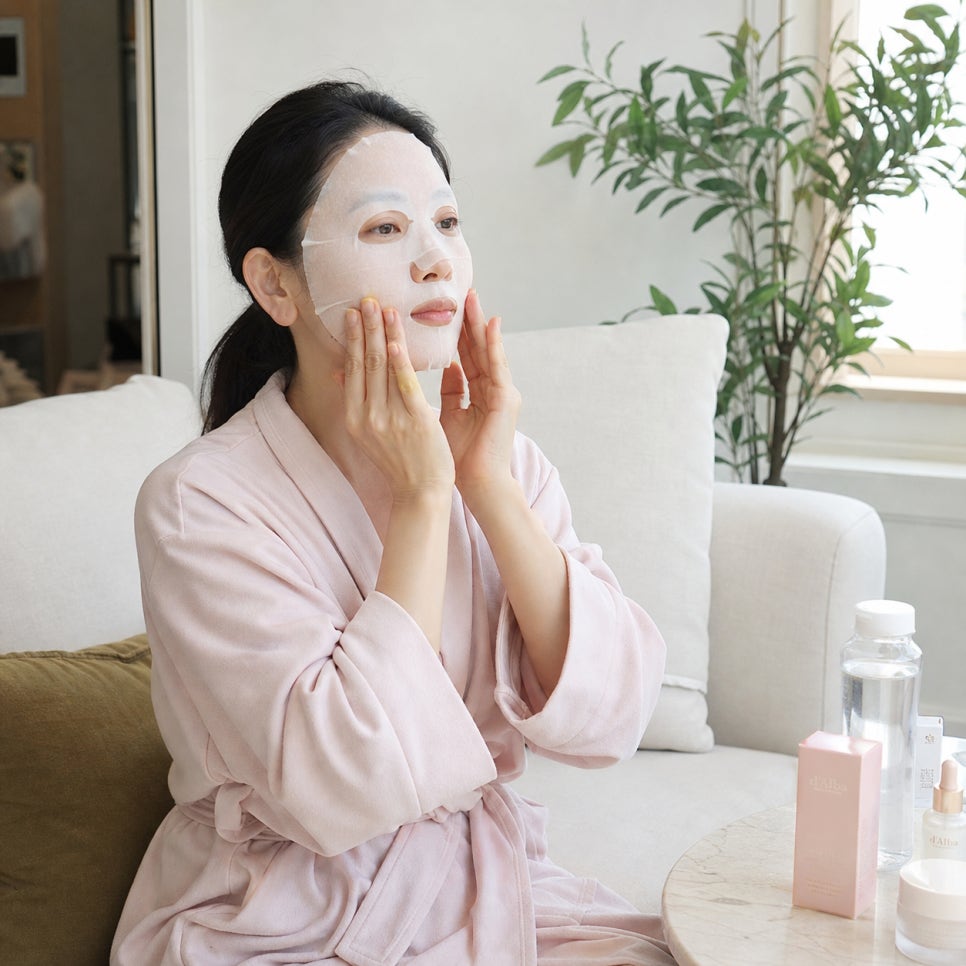
    Do Sheet Masks and Gua Sha Really Help With Nasolabial Folds?

    image related to nasolabial folds 5

    The short answer: masks and gua sha are best thought of as hydration and skin-condition care, not as ways to eliminate the folds themselves.

    Sheet masks are a hydrating skin care method that supplies moisture to the skin, temporarily softening the look of fine lines caused by dryness.

    image related to nasolabial folds 6

    When skin is dry, the surface becomes rougher and fine lines look more pronounced,

    while adequate hydration can make the skin look noticeably smoother.

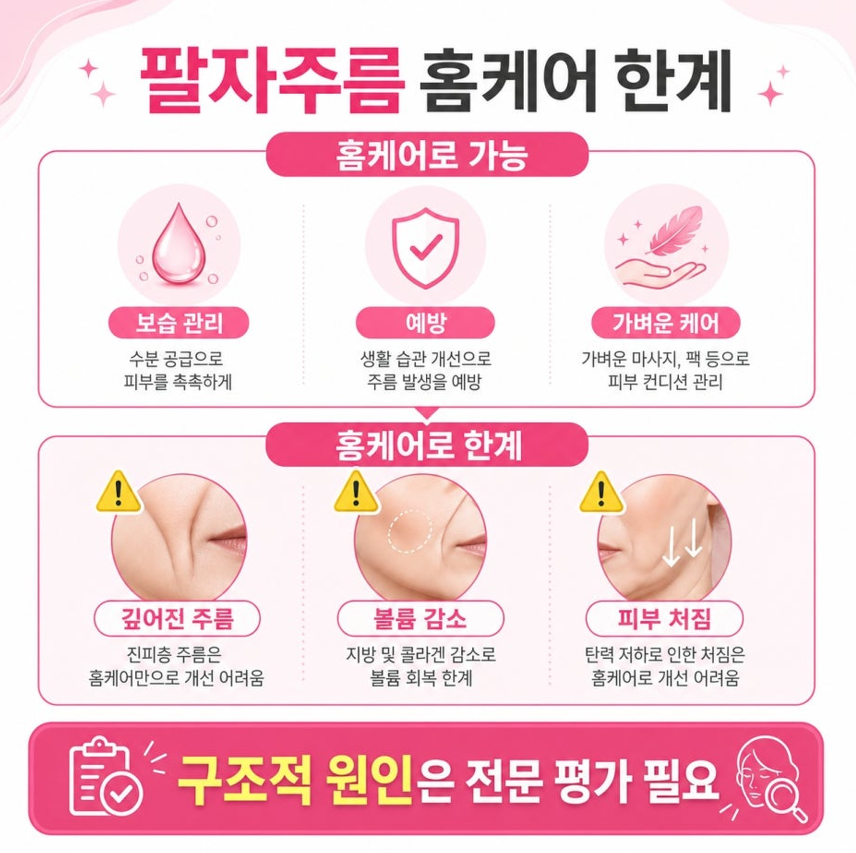
    However, a mask can’t reverse deeper volume loss or sagging happening beneath the surface.

    image related to nasolabial folds 7

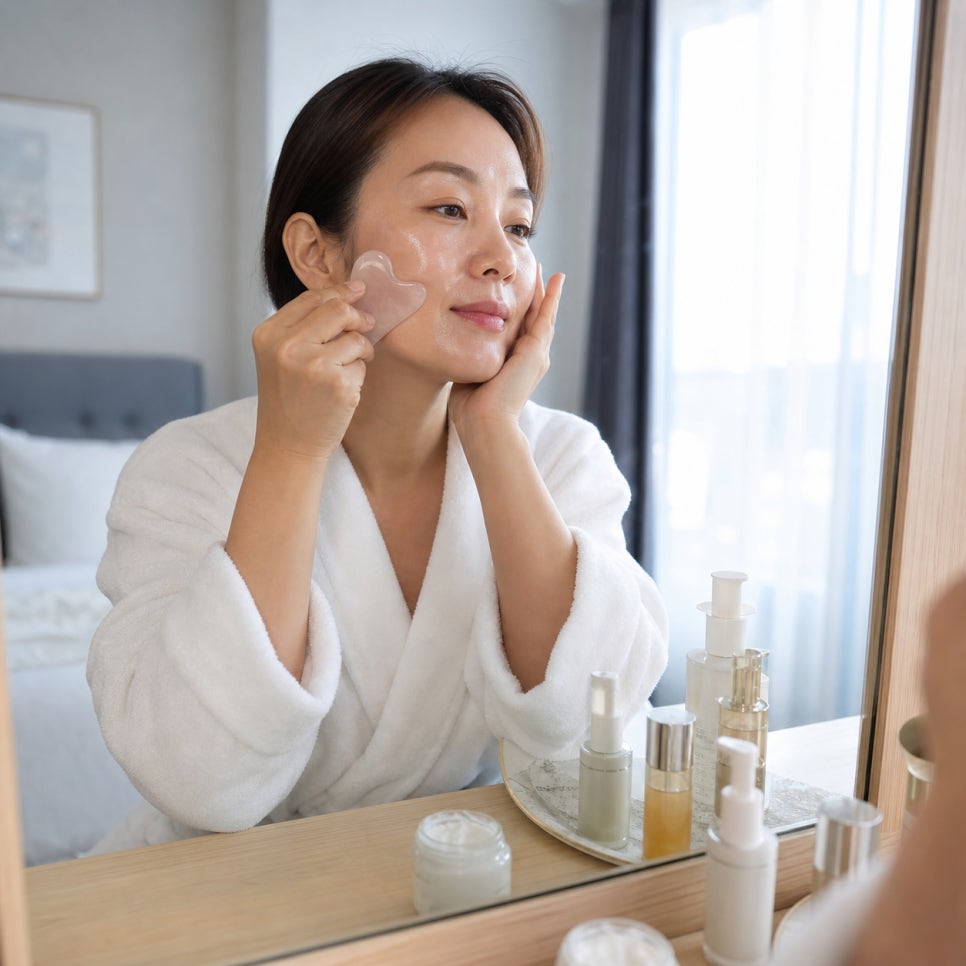
    Gua sha works the same way.

    Gua sha or gentle massage can be useful for managing facial puffiness and tension,

    and right after a session your facial contour may look more defined, making nasolabial folds seem temporarily less visible.

    But this kind of change is unlikely to reflect an actual change in the skin’s underlying structure.

    image related to nasolabial folds 8

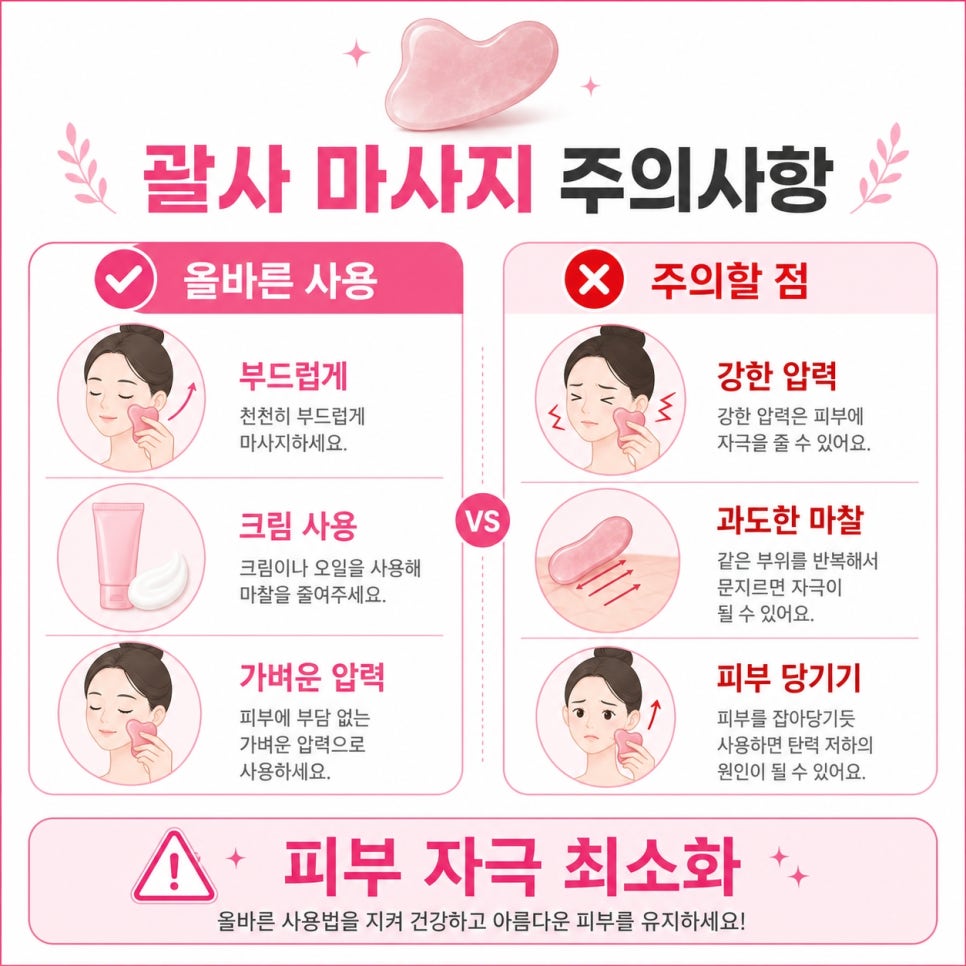
    Be especially careful about pressing hard or repeatedly pulling at the skin in an effort to get rid of nasolabial folds.

    Excessive pressure and friction can cause irritation, redness, and sensitivity.

    If you use a gua sha tool, it’s better to reduce friction with a cream or oil and work gently rather than scraping hard,

    and you should avoid vigorous massage if your skin already has breakouts or inflammation.


    What At-Home Care Can Help Manage Nasolabial Folds?

    image related to nasolabial folds 9

    You can’t get rid of nasolabial folds overnight, but lifestyle habits that slow down further deepening are genuinely worthwhile.

    Checklist
    ✅ Apply sunscreen before going outside year-round, and reapply during outdoor activities
    ✅ Moisturize right after cleansing, before skin has a chance to dry out, to balance hydration and oil
    ✅ Manage weight gradually instead of crash dieting
    ✅ Avoid rubbing or pulling the skin hard while cleansing or massaging
    ✅ Eat a balanced diet with protein, vitamins, and minerals, and get enough sleep

    image related to nasolabial folds 10

    Of these, UV exposure is considered one of the leading causes of aging, breaking down collagen and elastic fibers in the skin.

    And when weight drops significantly over a short period, facial subcutaneous fat and volume decrease along with it,

    which can make nasolabial folds or cheek hollowing look more pronounced than before — so it’s best to avoid rapid weight loss.

    If you’d like more information on managing your skin’s collagen condition, you can also check the Atelofill Collagen Skin Research Institute homepage.


    What If Nasolabial Folds Don’t Change Despite Exercise, Masks, and Gua Sha?

    image related to nasolabial folds 11

    It’s not unusual to see little to no change even after consistently doing nasolabial fold exercises, masks, or gua sha.

    That’s because nasolabial folds aren’t just a surface-level skin issue — reduced elasticity, volume loss, and shifts in tissue position all play a role together.

    The underlying causes also vary from person to person.

    For some, thin, less elastic skin makes the folds stand out; for others, reduced facial volume or bone structure can make them noticeable from a relatively young age.

    image related to nasolabial folds 12

    In Summary
    ✔ Sun protection, moisturizing, and healthy habits are the basics of managing skin aging
    ✔ Masks and gentle massage can be used as supplementary condition-care tools
    ✔ For folds that have already deepened, it’s important to take an approach suited to your current skin condition and its underlying causes

    Frequently Asked Questions

    image related to nasolabial folds 13

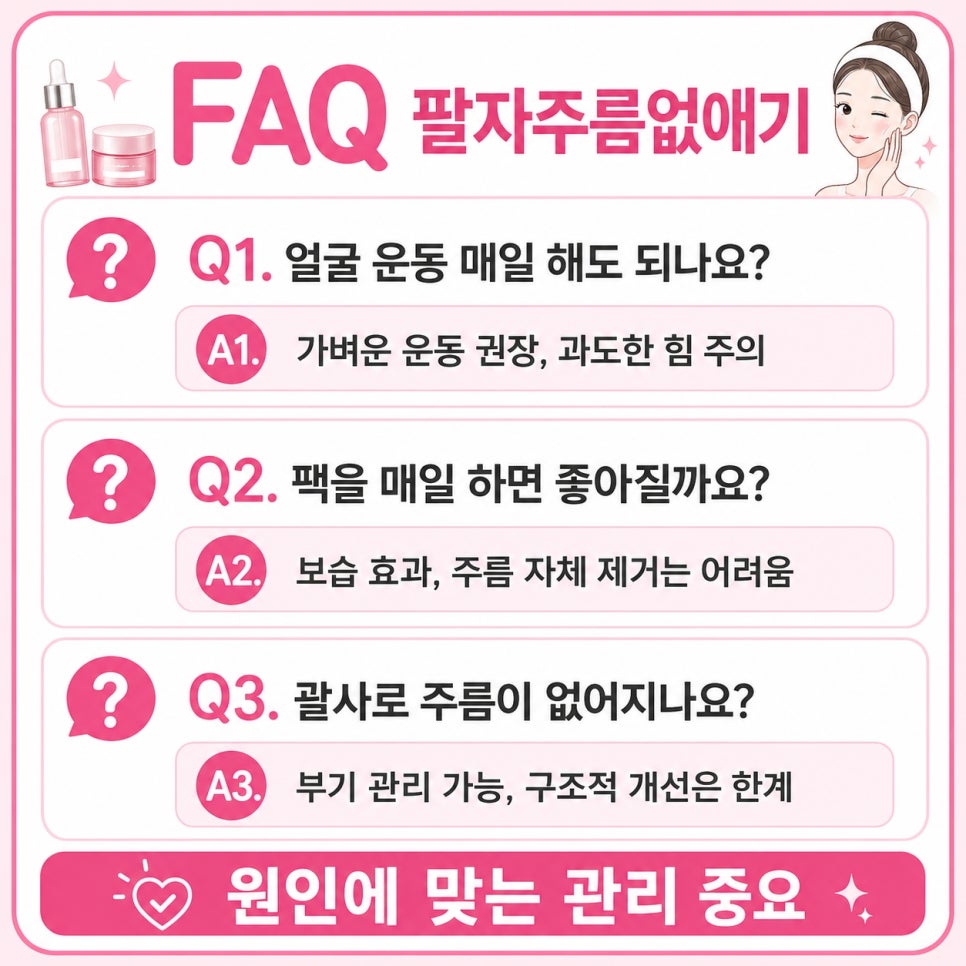
    1. Is it okay to do nasolabial fold exercises every day?
    Light facial exercises are fine, but exercises that repeatedly fold the skin forcefully or put excessive strain around the mouth in an attempt to erase folds aren’t recommended. Moving your facial muscles naturally and gently is enough.

    2. Will using a sheet mask every day improve nasolabial folds?
    Masks can help with hydration and skin condition, but that’s different from actually getting rid of folds that have already deepened. Recommended usage frequency varies by product, so it’s a good idea to check the label.

    3. Will continuously pushing up on nasolabial folds with gua sha make them go away?
    Right after gua sha, puffiness may go down and your facial contour may look more defined, but this isn’t considered a way to address the structural causes of nasolabial folds. Strong pressure and repeated friction can actually irritate the skin, so caution is needed.

    4. Can nasolabial folds appear even at a young age?
    Yes, they can. Factors like reduced facial volume, bone structure, or rapid weight changes can make the nasolabial area noticeable even in relatively young people.

    References

    · Miju Joongang Daily, “The Secret to Looking Youthful Is Collagen… Down 1% a Year After Age 25,” Miju Joongang Daily. Read more
    · Hidoc, “3 Causes That Break Down the Collagen That Supports Skin Elasticity,” Hidoc. Read more
    · KorMedi, “‘My Face Suddenly Looked Older After Losing Weight’… What’s This Dieting Side Effect That Accelerates Aging?,” KorMedi, 2026. Read more
    · Korea Health Log, “Gua Sha Facial Massage: The Real Reason Dermatologists Don’t Recommend It,” Korea Health Log. Read more

    This article is intended for general health information purposes only and is not a substitute for individual diagnosis or treatment. If you have symptoms, please consult a medical professional.