Tag: Hyperpigmentation Care

  • Retinol Side Effects: 3 Steps to Reduce Irritation and Keep the Benefits

    Retinol Side Effects: 3 Steps to Reduce Irritation and Keep the Benefits

    SummaryWorried about retinol side effects? This guide, based on dermatology references, walks through concentration-based usage tips, moisturizing pointers, and sun protection habits that may help reduce dryness, stinging, and redness while still supporting retinol’s benefits. Take a look below.

    Have you ever finally worked up the nerve to try retinol for wrinkles, only to wake up the next day with stinging skin and flaking patches?

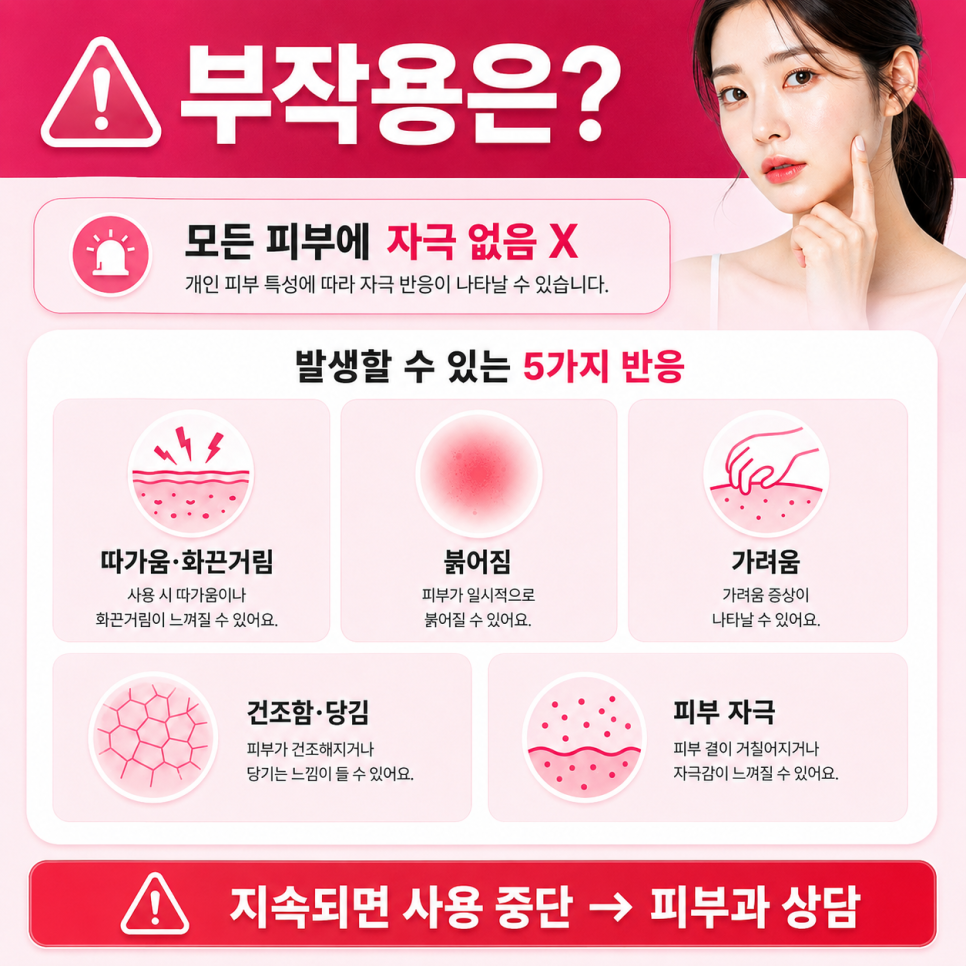
    In most cases, this isn’t really a problem with the ingredient itself — it’s retinol side effects that show up when the concentration or frequency of use doesn’t match your skin.
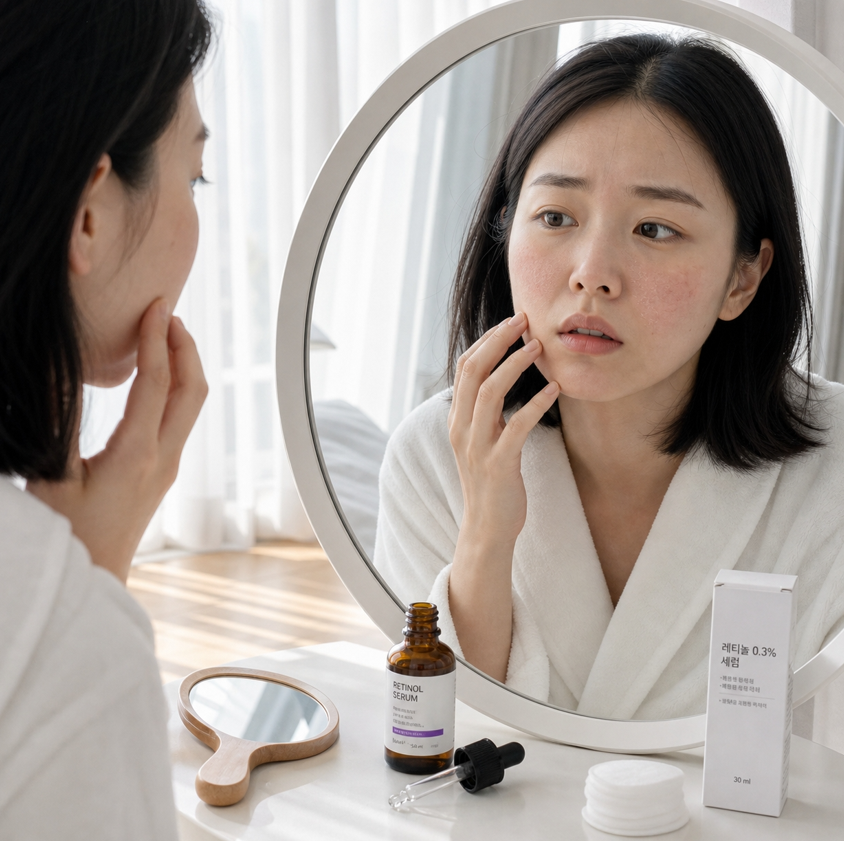
    Retinol side effects

    This article walks through how retinol actually works on skin, what its benefits are, and why retinol side effects happen in the first place.

    You’ll also find concentration-based usage tips and the reasons sunscreen is essential while using it.

    Key Points
    ✔️ Retinol is a vitamin A derivative commonly used as an anti-aging ingredient, involved in skin cell turnover and collagen production.
    ✔️ Starting with a high concentration or using it too frequently can easily lead to retinol side effects like dryness, stinging, and redness.
    ✔️ The key is to start with a low concentration and pair it with proper moisturizing and sun protection.
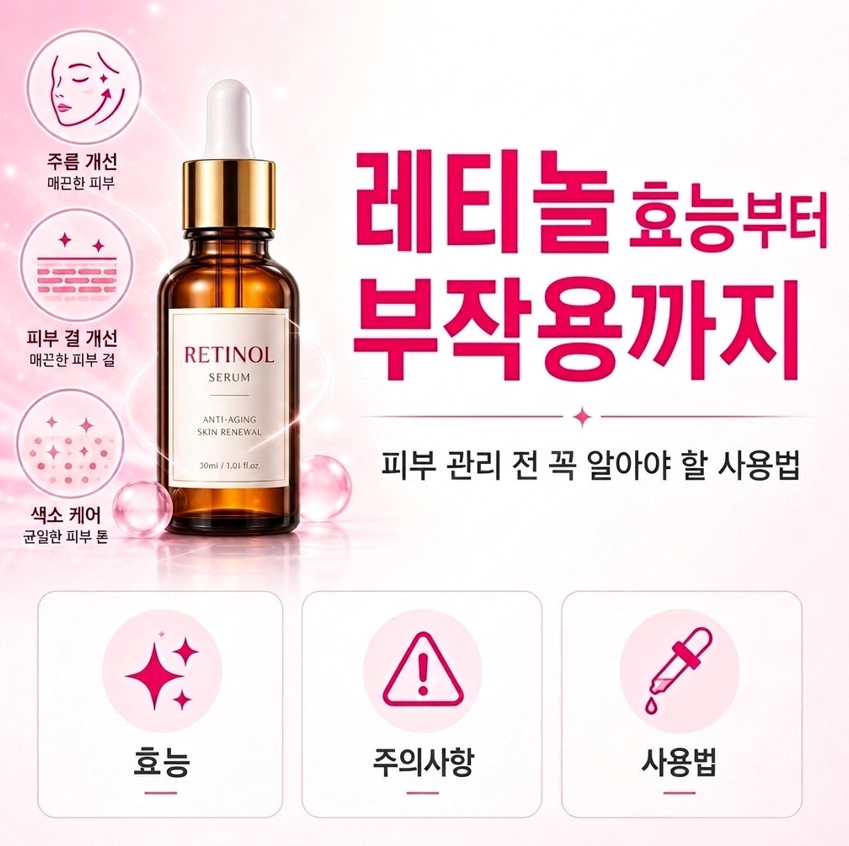
    Retinol side effects illustration 2

    What Exactly Is Retinol?

    Retinol side effects illustration 3

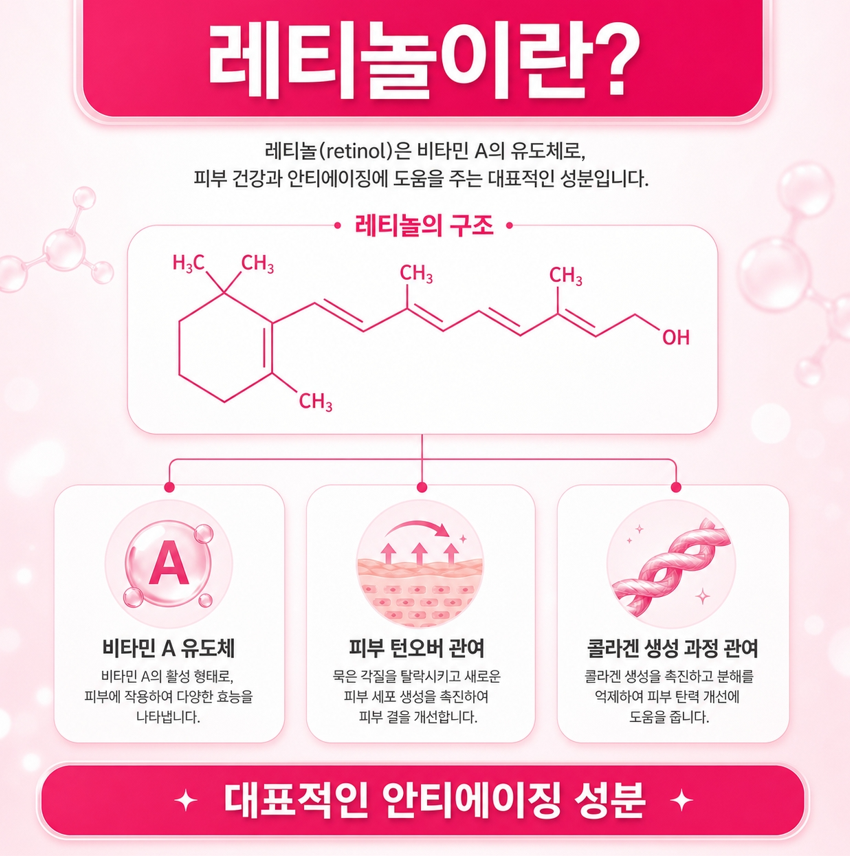
    Retinol is a vitamin A derivative that, once absorbed into the skin, goes through several conversion steps before acting in the form of retinoic acid.

    In this process, it’s understood to influence skin cell turnover and collagen-related metabolism.

    As turnover slows and collagen decreases with age, skin can become thinner, lose elasticity, and show fine lines more easily.

    This is why retinol is often used as an anti-aging ingredient to help address these changes.
    Retinol side effects illustration 4


    What Changes Can Retinol Benefits Bring to Skin?

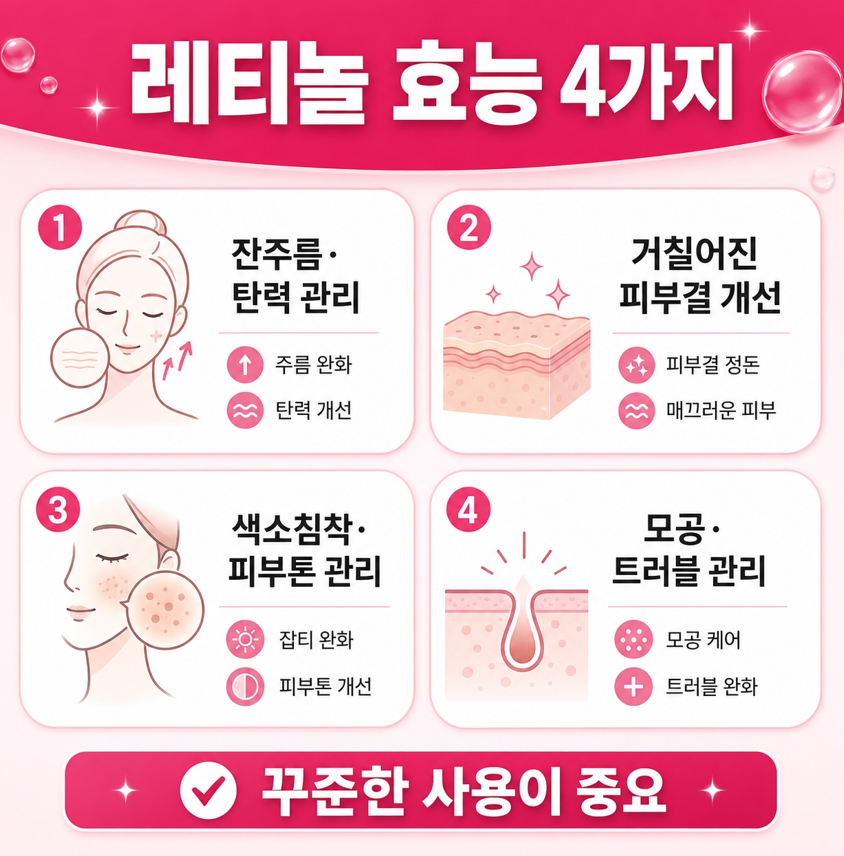
    Retinol benefits are generally seen in four areas: fine lines and elasticity, skin texture, pigmentation, and pores and breakouts.

    Benefit Area Key Details
    Fine Lines & Elasticity Involved in collagen production; used to help manage fine lines around the eyes and mouth, and support elasticity
    Skin Texture Supports turnover to help manage rough, dull texture caused by built-up dead skin cells
    Pigmentation May help surface pigmentation shed naturally as part of the turnover process
    Pores & Breakouts Used to help manage clogged pores caused by dead skin and sebum (separate from prescription retinoid medications)

    That said, it’s worth keeping in mind that cosmetic products alone typically cannot fully reverse deep, established wrinkles or noticeable volume loss.

    Prescription retinoids used to treat acne differ from cosmetic retinol in both concentration and mechanism of action, so they shouldn’t be considered the same thing.
    Retinol side effects illustration 5


    Why Do Retinol Side Effects Happen, and What Do They Look Like?

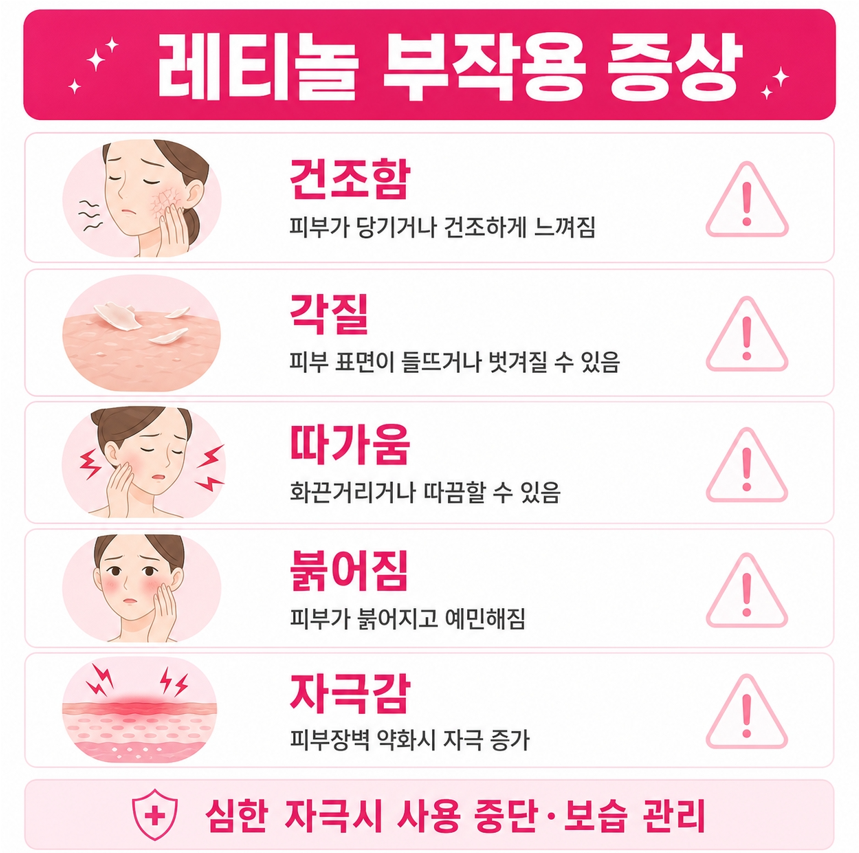
    Retinol side effects occur when skin becomes irritated as the ingredient converts into retinoic acid, and can range from dryness to redness.

    When starting with a low-concentration product, it’s common to feel slight tightness for the first one to two weeks, which tends to gradually ease afterward.

    Symptom Description
    Dryness Skin feels tight or drier than usual
    Flaking Skin surface may lift or peel
    Stinging May burn or sting on application
    Redness Skin may become red and sensitive
    Irritation May feel more pronounced if the skin barrier is compromised
    Caution
    ⚠️ If redness, stinging, or flaking is severe, don’t dismiss it as a normal ‘adjustment period’ — reduce how often you use it or pause use for a while.
    ⚠️ If symptoms persist or worsen, it’s safer to have a dermatologist check your skin.
    Retinol side effects illustration 6


    Retinol Usage: How Should You Adjust Concentration and Order?
    Retinol side effects illustration 7

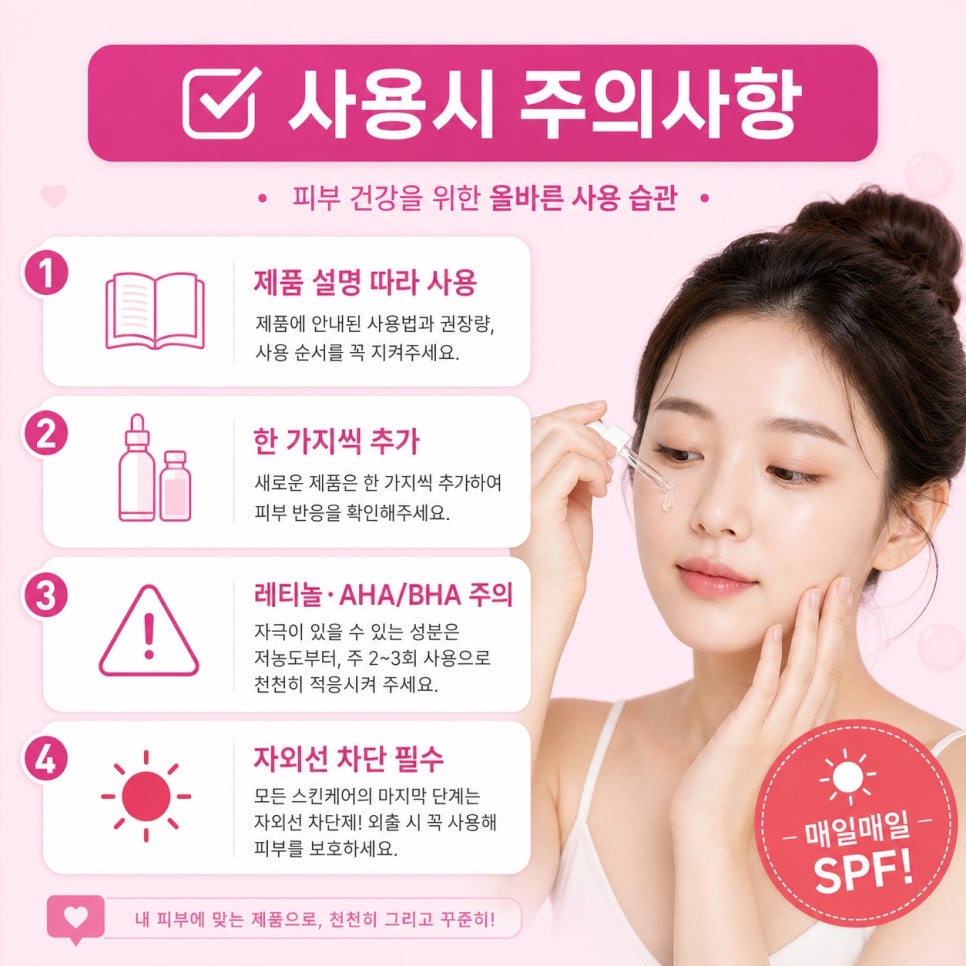
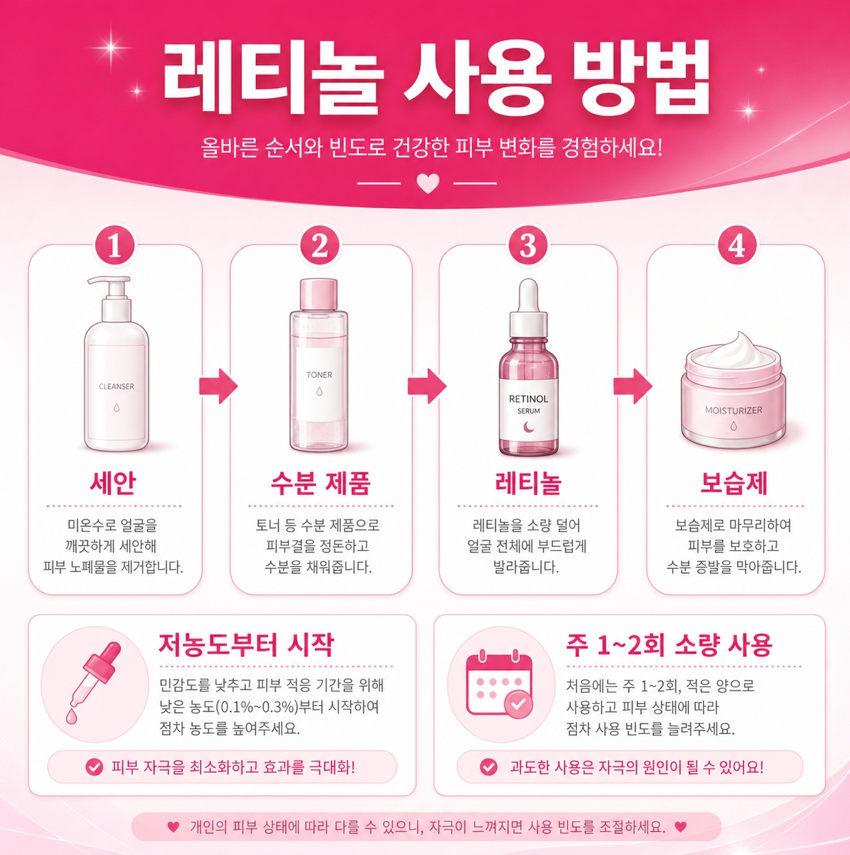
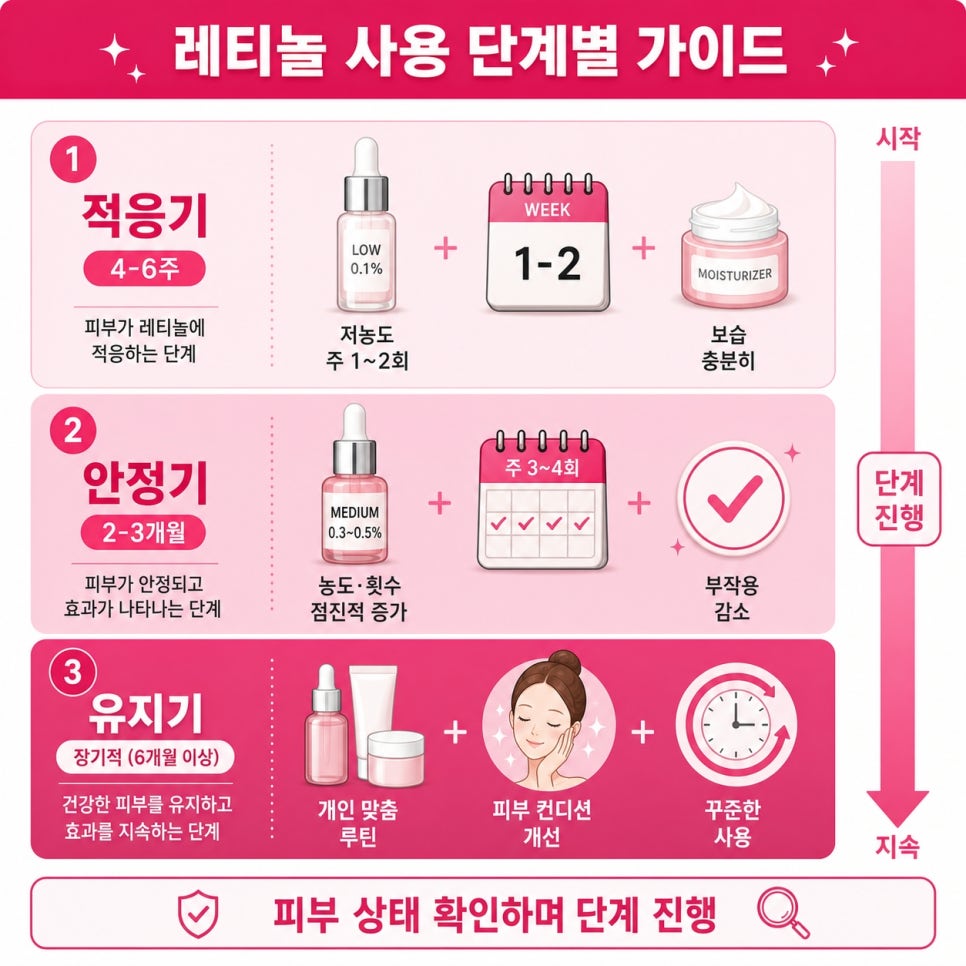
    The key to using retinol is to start with a low concentration and low frequency, then gradually increase based on how your skin responds.

    1. Start with a low-concentration product, using a small amount just 1–2 times a week.
    2. If there’s no irritation, gradually increase frequency while monitoring your skin.
    3. Apply in this order: cleanser → hydrating product → retinol → moisturizer.
    4. If your skin is sensitive, apply a thin layer of moisturizer first, then layer retinol on top.
    5. Avoid adding several active ingredients at once — let your skin adjust to retinol on its own first.

    Retinol side effects illustration 8

    Checklist
    ✅ Did you start with a low-concentration product?
    ✅ Did you limit use to 1–2 times a week?
    ✅ Did you follow up with enough moisturizer?
    ✅ Did you check the application area for any irritation?

    Which Ingredients Increase Irritation When Combined With Retinol?

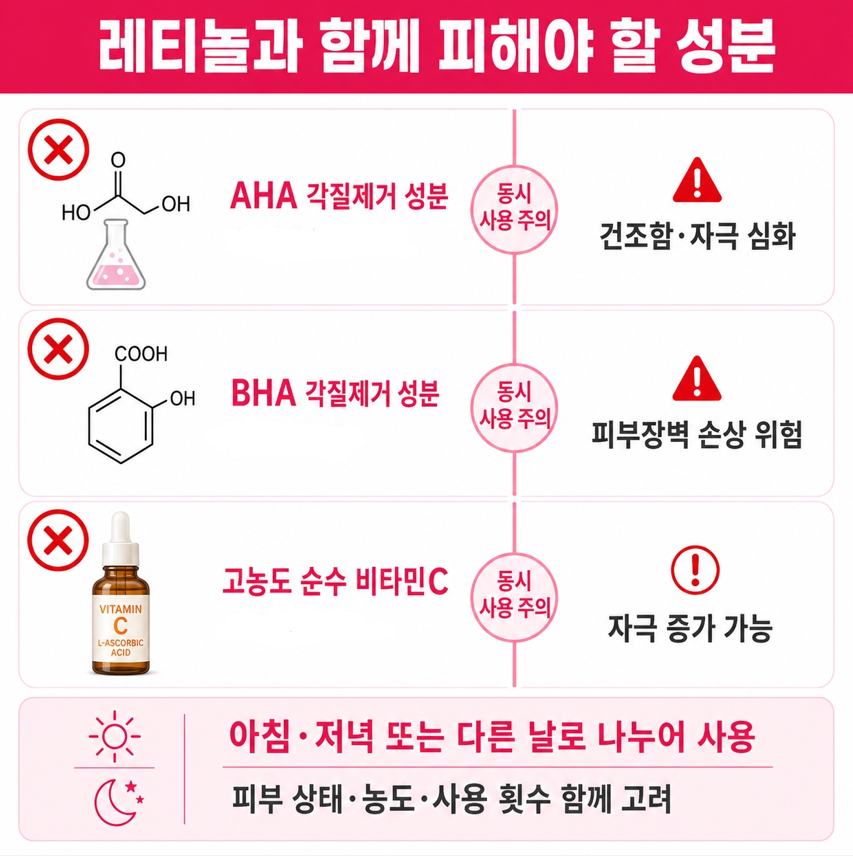
    High-concentration AHA/BHA, physical scrubs, and high-strength vitamin C are common ingredients that can increase irritation when layered with retinol on the same day.

    Using vitamin C in the morning and retinol at night can help reduce irritation by separating the two.

    Key Points
    ✔️ High-concentration AHA/BHA and scrubs can increase dryness and irritation when combined with retinol.
    ✔️ Consider using high-strength vitamin C in the morning and retinol at night.
    ✔️ Your current skin condition, along with concentration and frequency, matters more than the ingredient combination itself.
    Retinol side effects illustration 9


    Why Is Sunscreen Essential While Using Retinol?

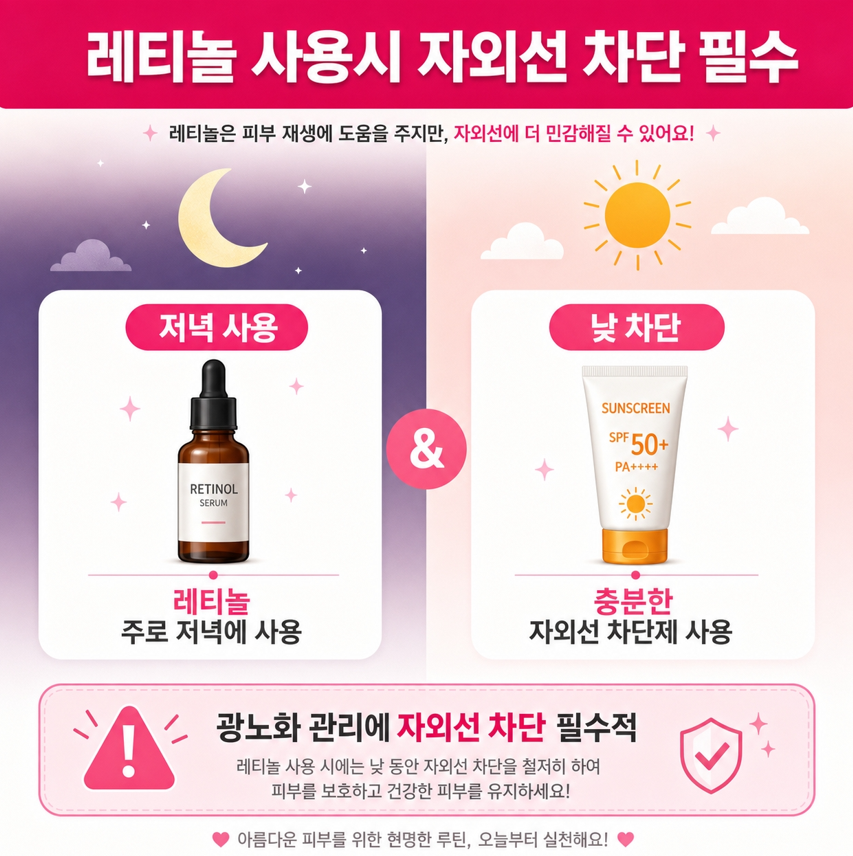
    Neglecting sunscreen while using retinol can allow photoaging to progress, potentially offsetting the benefits retinol provides.

    This is because retinol oxidizes easily with light and heat, and can make skin more sensitive to UV exposure.

    No matter how effective an ingredient is, repeated daytime UV exposure makes it difficult to prevent collagen loss and pigmentation.

    For this reason, it’s best to use retinol mainly at night and apply a sunscreen with adequate SPF thoroughly during the day.

    Takeaway
    🌤️ Consistently using retinol at night and sunscreen during the day may help manage both collagen loss and pigmentation.
    Retinol side effects illustration 10


    What Matters Most for Getting the Full Benefits of Retinol?

    To get the most from retinol’s benefits, finding the concentration and frequency your skin can tolerate matters more than rushing into a high concentration.

    Even this ingredient doesn’t work at the same concentration and frequency for every skin type.

    If you’re interested in collagen and skin elasticity care, you may also find it helpful to check out the Atelofill Collagen Skin Research Lab homepage for related information.
    Retinol side effects illustration 11


    Frequently Asked Questions

    Retinol side effects illustration 12

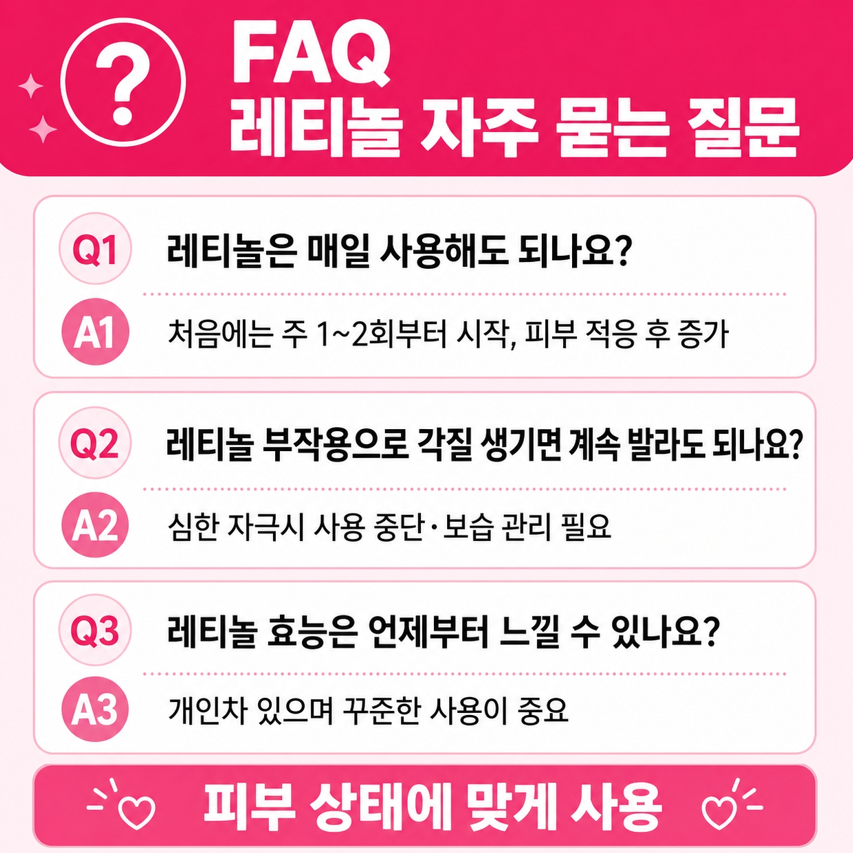
    1. Can I use retinol every day?
    Once your skin has fully adjusted, you may be able to increase frequency, but using it daily from the start can cause irritation. It’s best to begin with 1–2 times a week and monitor your skin’s response.

    2. If flaking occurs as a retinol side effect, should I keep using it?
    Mild dryness or flaking can occur, but if stinging or redness is severe, or your skin is visibly peeling, you should reduce use or stop altogether. If symptoms persist, please see a dermatologist.

    3. When can I expect to notice retinol’s benefits?
    This varies depending on skin condition, product concentration, and frequency of use. Retinol isn’t an ingredient that produces changes quickly — it’s important to use it consistently over time and observe how your skin responds.

    4. Can sensitive skin use retinol?
    It’s possible, but you should start with a low concentration and limited frequency. If your skin barrier is compromised or you have dermatitis or significant irritation, it’s best to stabilize your skin condition first.

    5. What matters most when using retinol?
    Avoiding overuse, moisturizing sufficiently, and applying sunscreen consistently during the day. Ignoring signs of irritation from your skin and increasing usage anyway is something to avoid.


    References

    · Kafi R, Kwak HS, Schumacher WE, et al., “Improvement of Naturally Aged Skin With Vitamin A (Retinol),” Archives of Dermatology, 2007. View source
    · Park KD, “Use of Retinoids in Dermatology,” Journal of the Korean Medical Association (J Korean Med Assoc), 2022. View source


    This article is intended for general health information purposes only and is not a substitute for individual diagnosis or treatment. If you have symptoms, please consult a medical professional.

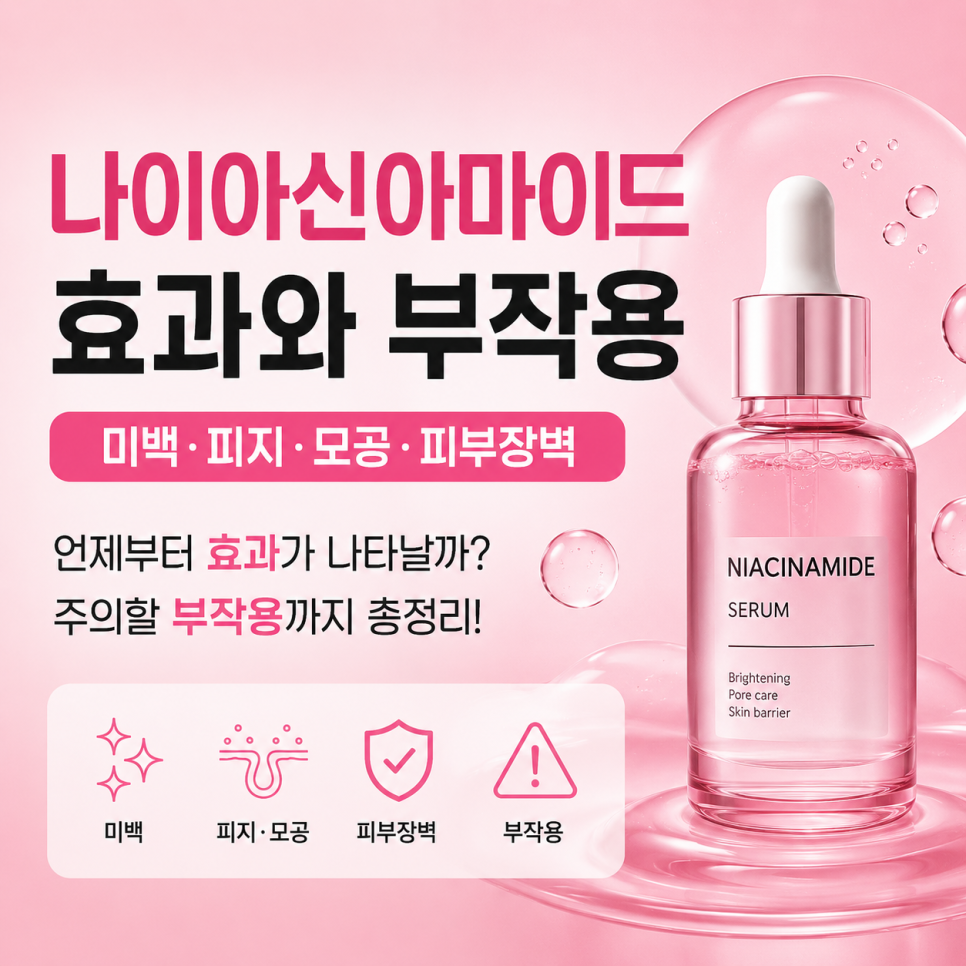
  • Niacinamide Results Timeline: How Long It Takes to Work (2-12 Weeks)

    Niacinamide Results Timeline: How Long It Takes to Work (2-12 Weeks)

    SummaryCurious about the niacinamide results timeline? Research shows changes in pigmentation and oil production within 2 to 4 weeks, while improvements in fine lines and skin elasticity have been studied over 8 to 12 weeks. Here’s a full breakdown of what to expect, how to choose a concentration, and how to avoid side effects.

    Have you ever used a brightening serum for two months only to feel like your skin looked exactly the same in the mirror?
    It’s easy to expect visible change within a week of starting a niacinamide serum, but in reality, it can take longer than that.

    As it turns out, the point at which change becomes visible depends heavily on the ingredient and what you’re actually trying to treat.

    This article breaks down the niacinamide results timeline based on published research.
    You’ll find expected timeframes by concern — pigmentation, oil, and wrinkles — along with guidance on choosing a concentration and understanding side effects.

    Key Takeaways
    ✔ Niacinamide is a vitamin B3 derivative used to help manage skin tone, oil production, and the skin barrier.
    ✔ Studies have observed pigmentation and oil-related changes within 2 to 4 weeks, while wrinkle and elasticity changes have been studied over 8 to 12 weeks.
    ✔ A higher concentration doesn’t automatically mean better results — starting with a lower concentration and monitoring your skin’s response is the safer approach.

    niacinamide results timeline

    niacinamide effects illustration 2

    What Is Niacinamide?

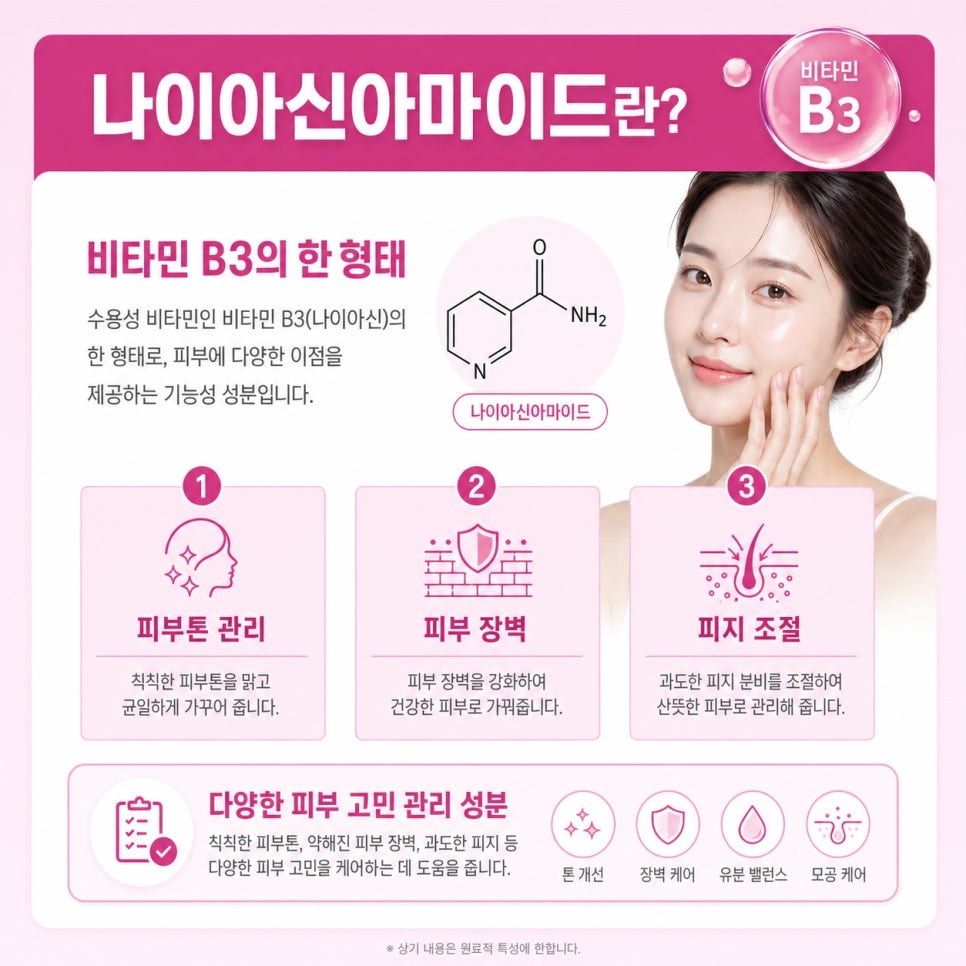
    Niacinamide is a form of vitamin B3, also known as nicotinamide, used widely in skincare formulations.
    It’s used to help manage skin tone and pigmentation, support the skin barrier and moisture retention, and regulate oil production.

    Unlike ingredients such as retinol or vitamin C, which tend to target one specific concern, niacinamide stands out for being incorporated into a wide range of skincare products.
    Recent literature reviews describe it as an ingredient used to support skin barrier protection and manage skin tone and signs of aging.

    niacinamide effects illustration 3


    What Exactly Are the Effects of Niacinamide?

    Niacinamide has been studied for its ability to address multiple skin concerns at once, rather than just one.
    Changes have most commonly been reported in four areas: pigmentation, oil production, the skin barrier, and skin texture.

    niacinamide effects illustration 4

    Skin Tone and Pigmentation Management

    To put it simply, niacinamide is one of the ingredients that has been actively studied for pigmentation management.

    Melanin is produced in melanocytes and then transferred to keratinocytes via melanosomes.
    Niacinamide is understood to work not by directly breaking down melanin, but by influencing this transfer process.

    In one study using niacinamide, reduced pigmentation and a change in skin brightness were observed after 4 weeks of use.
    That said, this doesn’t mean pigmentation that’s already formed will disappear within a few days.
    It’s more accurate to think of niacinamide as an ingredient that helps manage skin tone with consistent, ongoing use.

    Research Findings
    In a study where participants used 5% niacinamide for 4 weeks, both reduced pigmentation and improved skin brightness were observed.

    niacinamide effects illustration 5

    Skin Barrier and Moisture Retention

    If your skin becomes dry easily or feels sensitive to irritation, it’s worth also looking at your skin barrier.

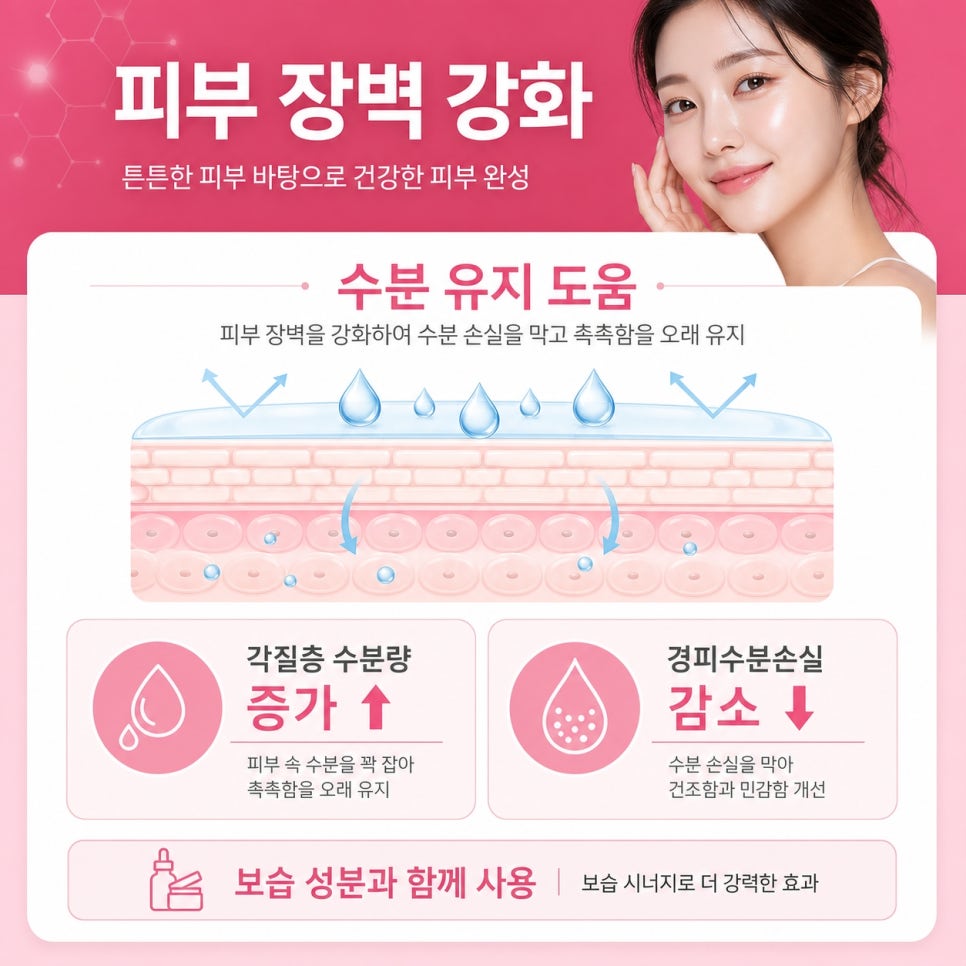
    In related clinical studies, groups using formulations containing niacinamide showed increased stratum corneum moisture and reduced transepidermal water loss.
    That said, the actual result isn’t determined by niacinamide alone.
    Other formulated ingredients — such as ceramides and moisturizing agents — and the product’s overall formula also play a role.

    niacinamide effects illustration 6

    Oil Control

    If shine or excess oil is a concern, niacinamide may be worth considering.

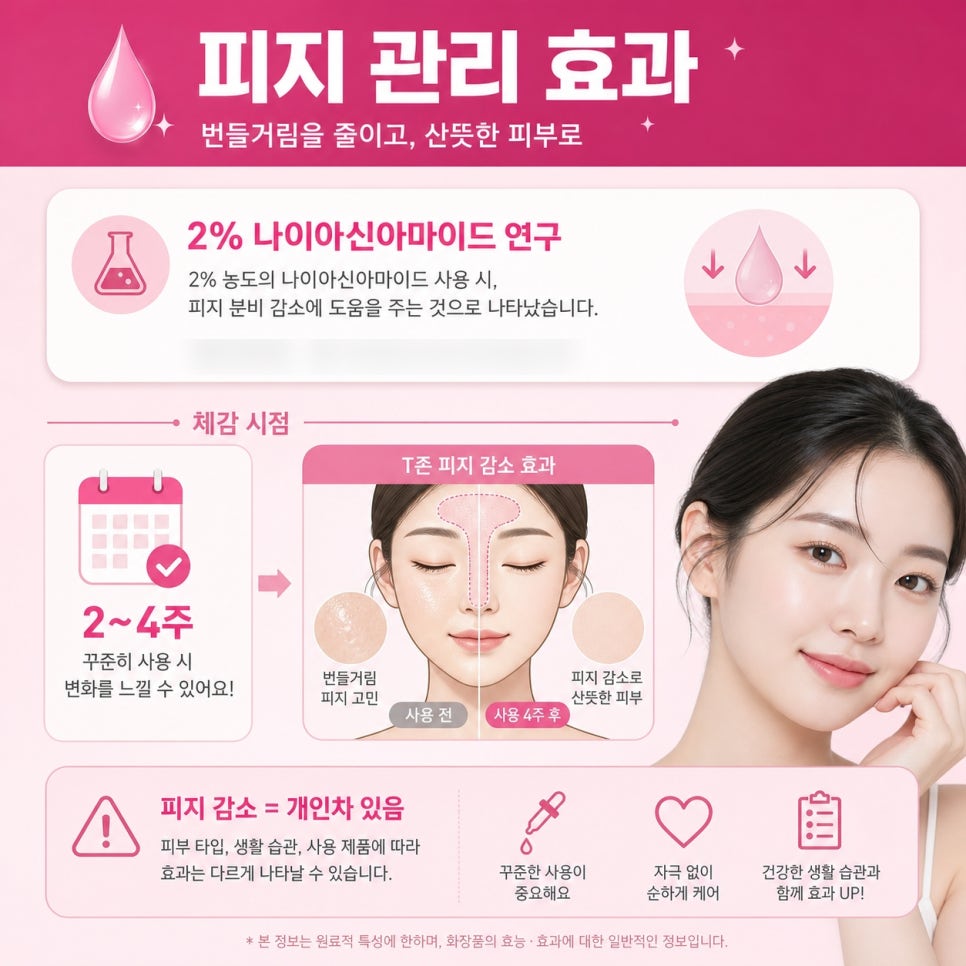
    In a study using a 2% concentration, sebum-related measurements decreased in some participants after 2 to 4 weeks of use.
    However, results have varied across ethnic groups in research, so it’s hard to say everyone will see the same degree of change.
    If you have oily skin, it also helps to adjust your cleansing routine, moisturizing, and the oil content of your other products.

    niacinamide effects illustration 7

    Skin Texture, Fine Lines, and Elasticity

    Niacinamide has also been studied for managing signs of aging.

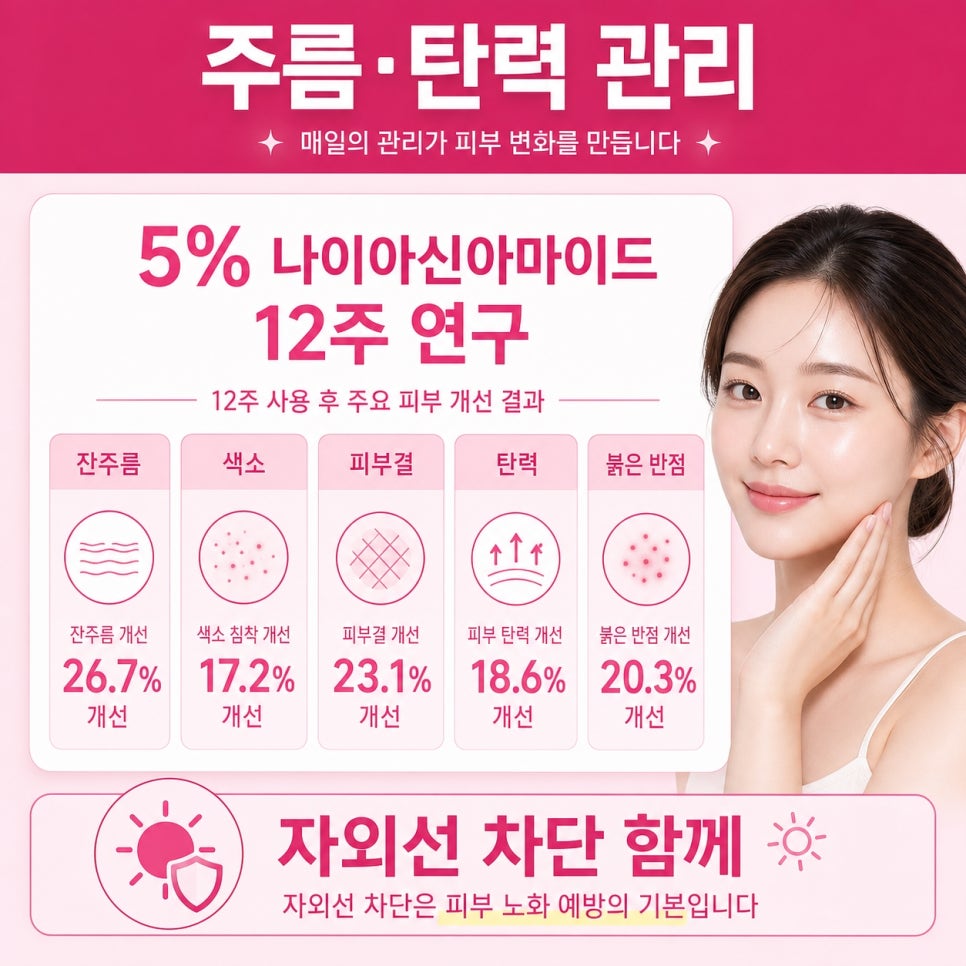
    In a clinical trial using a 5% concentration for 12 weeks, improvements in fine lines, pigmentation, red blotchiness, skin texture, and elasticity were observed compared to a control group.
    That said, deeply set wrinkles won’t disappear from skincare products alone.
    Daily sun protection and moisturizing remain essential, and it’s important to take a long-term view when using this ingredient.


    Niacinamide Results Timeline: How Long Does It Take?

    When niacinamide effects appear depends on what you’re trying to address.
    There’s no single, exact number of days that applies across the board.

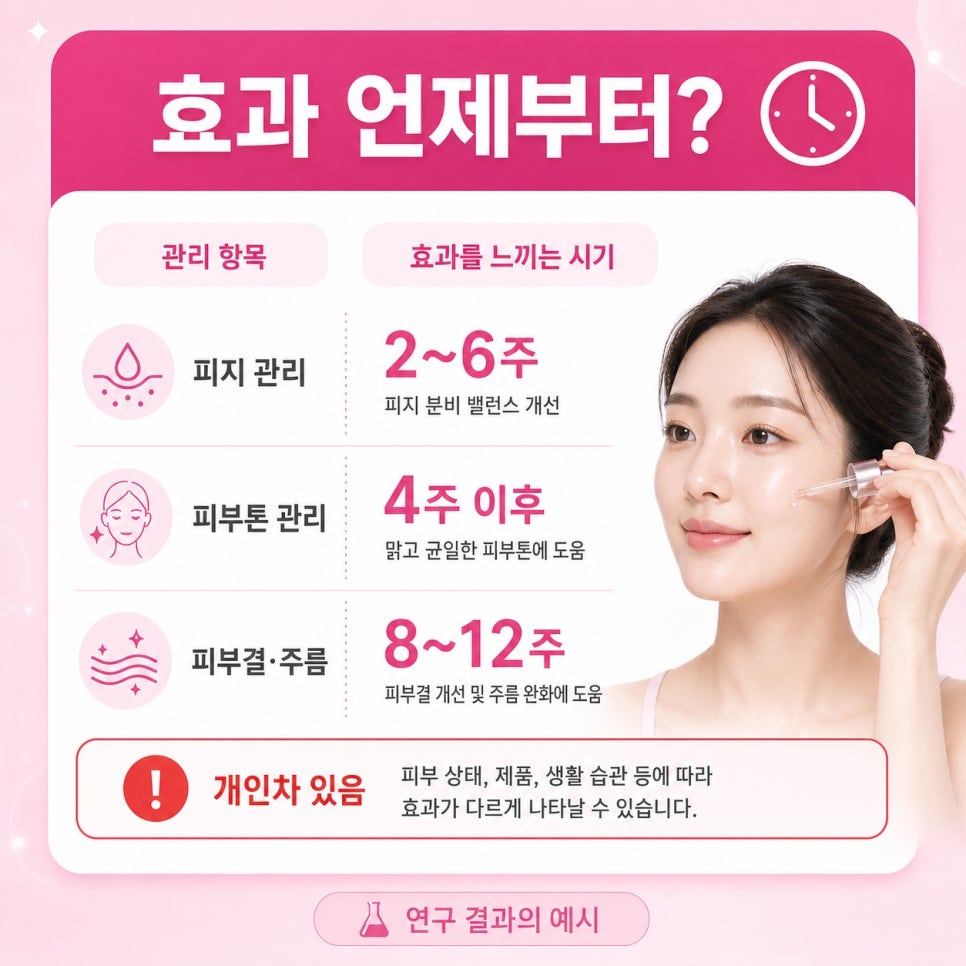
    Taken together, research suggests oil-related measurements have changed within about 2 to 4 weeks, while pigmentation-related changes have been observed from around 4 weeks onward.
    Studies evaluating wrinkles, skin texture, and elasticity, on the other hand, have generally looked at results after 8 to 12 weeks of longer-term use.

    niacinamide effects illustration 8

    Skin Concern Timeframe Evaluated in Studies
    Oil control About 2-6 weeks
    Pigmentation & skin tone From about 4 weeks onward
    Skin texture & fine lines About 8-12 weeks
    Elasticity & signs of aging Requires long-term, consistent use

    It’s important to note that these timeframes aren’t a guarantee of results for everyone.
    They’re simply examples of when changes were observed in research.

    How quickly you notice results can vary depending on the product’s concentration and formulation, other ingredients used alongside it, your skin condition, and your sun exposure.
    That’s why, if you’re managing pigmentation, you shouldn’t rely on niacinamide alone while neglecting sun protection.

    Does a Higher Concentration Mean Better Results?

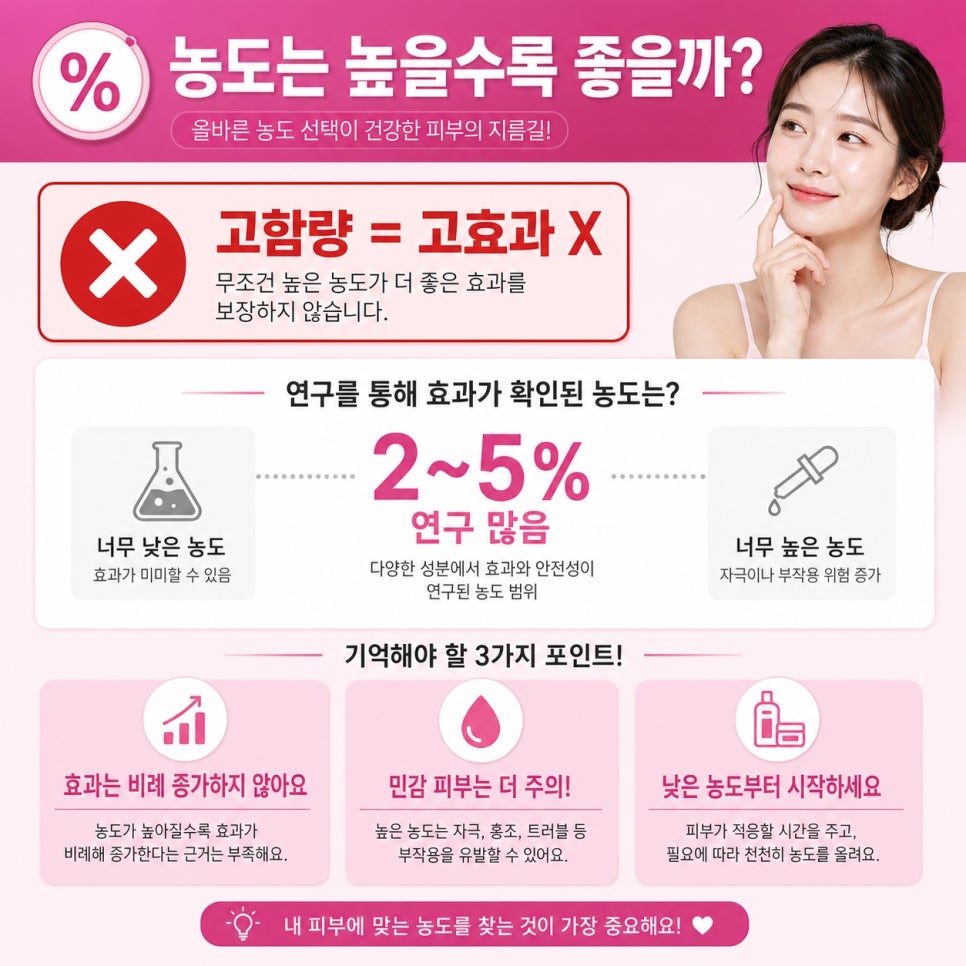
    In short, there’s no clear evidence that a higher concentration produces proportionally better results.

    Most clinical studies have used concentrations in the 2% to 5% range.
    For example, one study evaluated oil control using a 2% product, while another assessed pigmentation and signs of aging using a 5% product.

    It’s tempting to assume 10% works twice as well as 5%, but there isn’t enough evidence to support that.
    If you’re a first-time user or have sensitive skin, it’s safer to start with a lower concentration and see how your skin responds.

    niacinamide effects illustration 9

    Concentration Selection Checklist
    ✅ If you’re new to niacinamide, start with a product in the 2-5% range
    ✅ Watch for stinging or redness for 3 to 5 days after use
    ✅ If there’s no irritation, gradually increase how often you use it
    ✅ Use sunscreen daily regardless of the concentration you choose

    Niacinamide Side Effects and How to Use It Safely

    Niacinamide is generally considered a mild ingredient, but that doesn’t mean it’s free of irritation for everyone.

    Depending on your skin condition and the product’s concentration and formulation, you may experience stinging, burning, redness, itching, dryness, tightness, or general irritation.
    In fact, a clinical study using a 4% concentration reported side effects in some participants.

    If your skin barrier is already compromised, or if you’re using several active ingredients at once, the risk of irritation should be considered more carefully.
    If persistent redness, severe itching, swelling, or other unusual reactions occur, stop using the product and consult a dermatologist.

    niacinamide effects illustration 10

    Precautions
    ⚠ Stop use immediately if stinging, redness, or itching persists.
    ⚠ If your skin barrier is compromised, it’s safer to avoid high-concentration products.
    ⚠ If unusual reactions continue, see a dermatologist rather than self-diagnosing.

    What to Keep in Mind When Using It

    If you’re using it for the first time, it’s best to follow the usage directions and frequency listed on the product.

    Rather than adding several active ingredients at once, it’s better to introduce them one at a time and monitor how your skin reacts.
    Combining niacinamide with potentially irritating ingredients like retinol or AHA/BHA isn’t prohibited, but irritation can add up.
    If you have sensitive skin, consider adjusting how often you use it or splitting active ingredients between morning and night.

    If you’re managing pigmentation or signs of aging, using sunscreen during the day is an especially important habit.
    If you’d like to learn more about specific ingredients and product details, you can find related information on the Atelofill Collagen Skin Research Institute homepage.

    niacinamide effects illustration 11

    Niacinamide isn’t an ingredient limited to managing skin tone alone.
    It has been studied broadly for pigmentation, oil control, the skin barrier, and skin texture.

    That said, when results appear varies by individual and by goal, and a higher concentration doesn’t automatically mean faster or better results.
    Consistent care built around moisturizing and sun protection remains essential.

    niacinamide effects illustration 13


    Frequently Asked Questions

    niacinamide effects illustration 12

    1. Will I see niacinamide results in just a week?
    Some people notice a change in how their skin feels within a week, but that’s often too short a time to judge specific improvements in pigmentation, oil, or wrinkles. Research has evaluated changes over timeframes ranging from about 2 to 12 weeks, depending on the goal.

    2. Do I need 10% niacinamide for it to work well?
    Not necessarily. Studies have shown results with concentrations as low as 2-5%, so a higher percentage isn’t automatically the better choice. It’s best to consider your skin type and the product’s overall formulation together.

    3. Can I use niacinamide every day?
    Many products are designed for daily use according to their instructions. That said, if you’re using it for the first time, watch how your skin responds, and reduce frequency or stop if stinging or redness occurs.

    4. Can I use it alongside vitamin C or retinol?
    Combining them isn’t prohibited, but irritation can build up depending on the individual. If you have sensitive skin, consider splitting them between morning and night or adjusting how often you use each one.


    References

    · Hakozaki T, et al., “The effect of niacinamide on reducing cutaneous pigmentation and suppression of melanosome transfer,” British Journal of Dermatology, 2002. View source
    · Bissett DL, et al., “Topical niacinamide reduces yellowing, wrinkling, red blotchiness, and hyperpigmented spots in aging facial skin,” International Journal of Cosmetic Science, 2004. View source
    · Draelos ZD, et al., “The effect of 2% niacinamide on facial sebum production,” Journal of Cosmetic and Laser Therapy, 2006. View source
    · Marques C, et al., “Mechanistic Basis and Clinical Evidence for the Applications of Nicotinamide (Niacinamide) to Control Skin Aging and Pigmentation,” Antioxidants (MDPI), 2021. View source


    This article is intended for general health information purposes only and is not a substitute for professional diagnosis or treatment. If you have symptoms, please consult a qualified healthcare provider.