Have you ever come home from vacation, looked in the mirror, and been startled by what you saw?
Your face is flushed and feels hot to the touch, but it’s easy to assume it will fade in a few days.
Here’s the thing — these symptoms aren’t just a tan. They can be an early sign of sun damaged skin.
Left unaddressed, this can weaken the skin barrier, drain moisture, and eventually lead to a loss of elasticity.
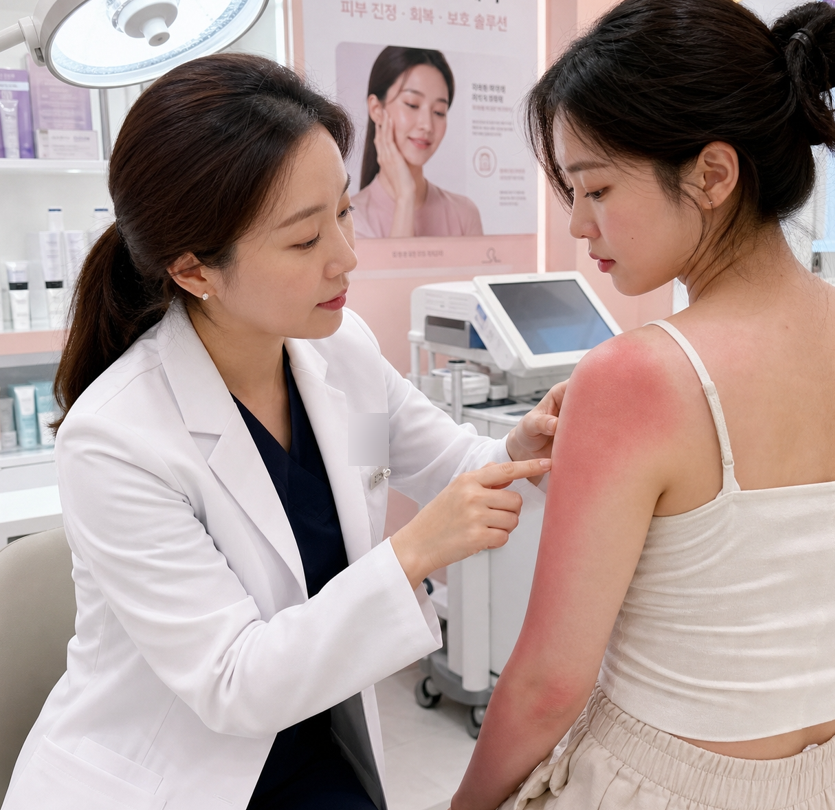
In this article, we’ll cover the common sun damaged skin symptoms, why they happen, and how to tell sunburn apart from mild skin irritation.
We’ll also walk through step-by-step care — from cooling down skin heat early on to restoring your skin barrier after vacation.
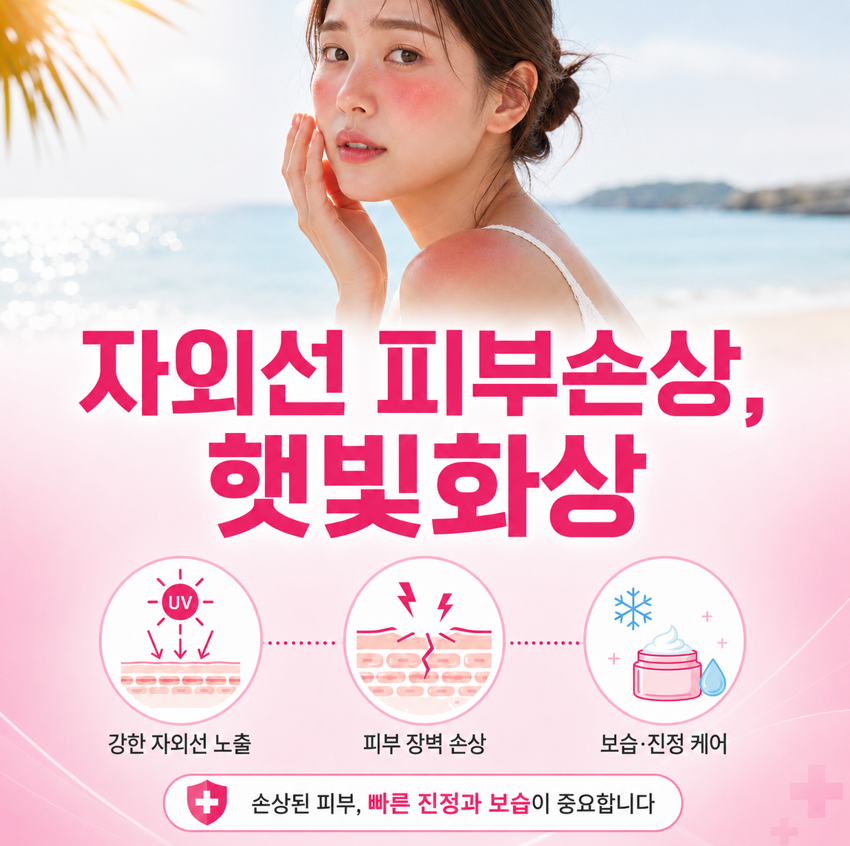
What Are Sun Damaged Skin Symptoms, and Why Does Skin Turn Red?
To put it simply, sun damaged skin refers to a condition in which UV-exposed skin shows redness, heat, moisture loss, and barrier damage all at once.
It’s a different concept from simply getting a tan.
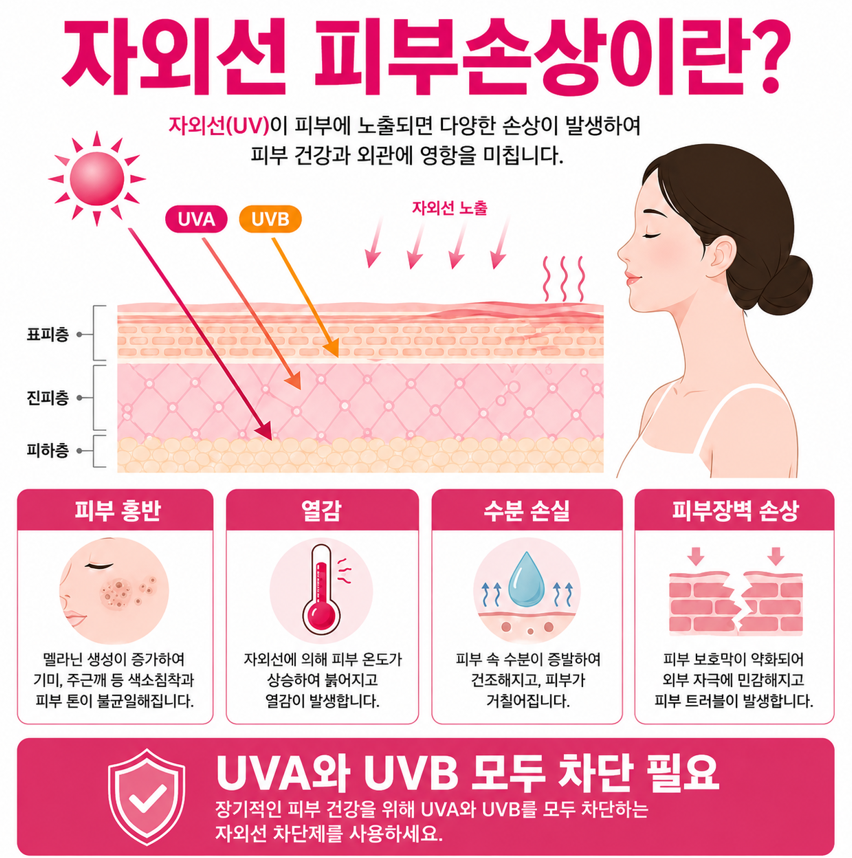
In summer, more outdoor activities and vacations naturally mean longer exposure to strong UV rays.
UV light doesn’t just darken the skin — it can also trigger changes within the skin cells themselves.
✔ UV exposure can cause redness and a warm, heated feeling in the skin
✔ Moisture can be lost from the skin, weakening the skin barrier
✔ It may lead to hyperpigmentation and reduced skin elasticity
✔ Repeated exposure is considered one of the factors that can accelerate skin aging
UV rays are broadly divided into UVA and UVB, and each affects the skin somewhat differently.
| Type | Characteristics |
|---|---|
| UVA | Penetrates deep into the skin and may contribute to reduced elasticity and photoaging |
| UVB | Acts on the skin’s surface and is more likely to cause sunburn and redness |
Redness Is a Sign That an Inflammatory Response Has Begun
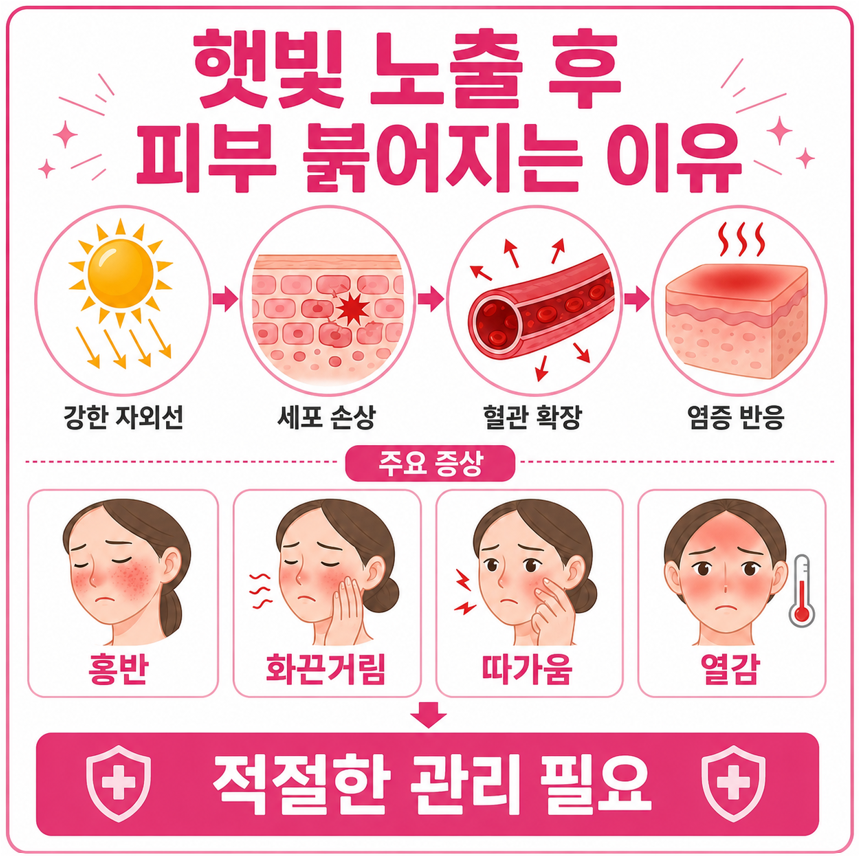
It’s tempting to write off redness as just a tan, but it can actually signal that an inflammatory response has started.
When skin is exposed to strong UV rays, blood vessels dilate to help repair the damaged cells.
This process is what causes the redness, heat, and stinging you feel on your face.
If symptoms are mild, they often improve within a day or two.
However, continued UV exposure or a lack of proper care can weaken the skin barrier further and worsen moisture loss.
How Can You Tell Sunburn Apart from Mild Skin Irritation?
Not all post-vacation redness means you have a sunburn.
That said, if symptoms are severe, it’s worth considering the possibility of sunburn.
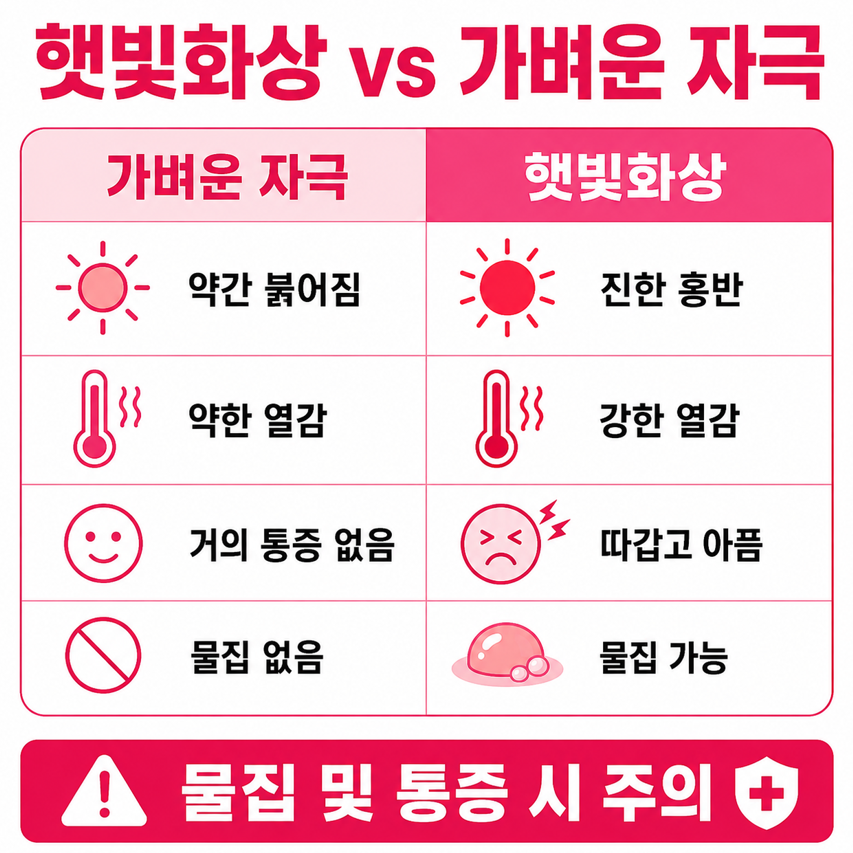
Sunburn is an acute inflammatory reaction of the skin caused by excessive UV exposure, and in severe cases it can involve blistering and pain.
According to Korea Disease Control and Prevention Agency data, sunburn symptoms typically begin 3 to 6 hours after exposure.
They tend to peak between 12 and 24 hours, then gradually fade over the following 3 to 7 days.
| Feature | Mild Irritation | Sunburn |
|---|---|---|
| Skin color | Slight redness | Deep, intense redness |
| Heat | Mild | Intense |
| Pain | Little to none | Stinging and painful |
| Blisters | None | May occur |
| Recovery | Improves within a few days | Can take days to weeks |
If redness is accompanied by blistering or significant pain, sunburn is more likely than simple irritation.
How Should You Manage Skin Heat and Pain in the Early Stage?
If your skin feels hot and stings, the first step is to cool the skin down.
Once the heat has settled, following up with hydration and soothing care can support recovery.
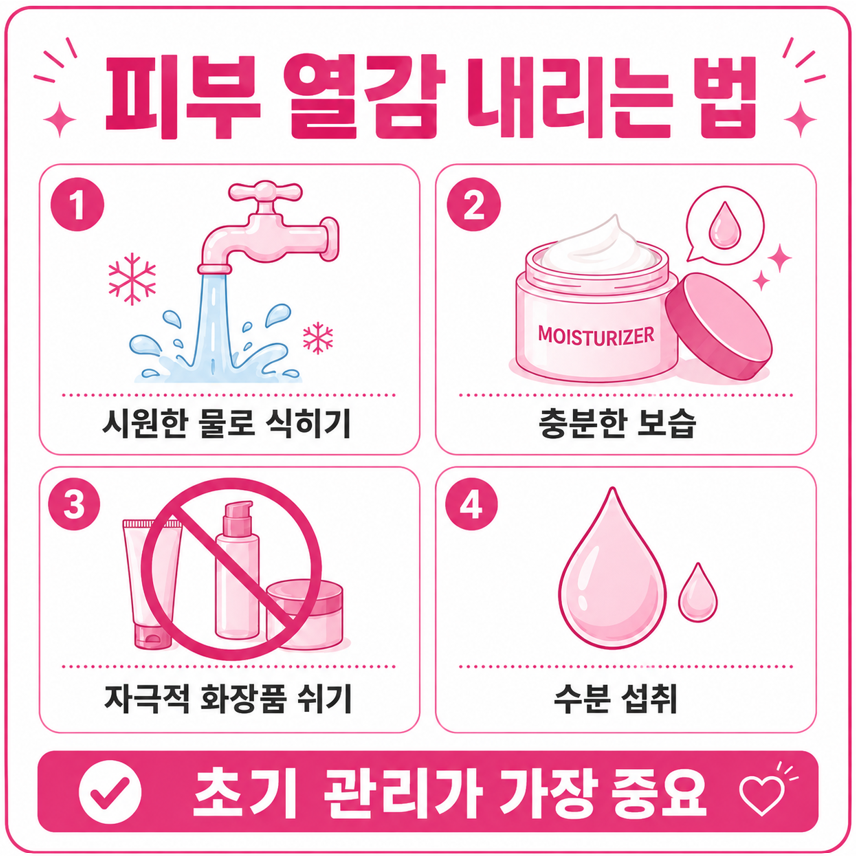
✅ Cool skin with lukewarm or cool water (never apply ice directly)
✅ Hydrate thoroughly with a moisturizing cream
✅ Pause scrubs, peels, high-strength vitamin C, and retinol products
✅ Drink enough water to help maintain skin hydration
When skin is sun damaged, moisture is lost from the skin rapidly.
That’s why soothing and hydration should be the top priority during this time.
It’s best to hold off on active or functional products that could irritate the skin until it has stabilized.
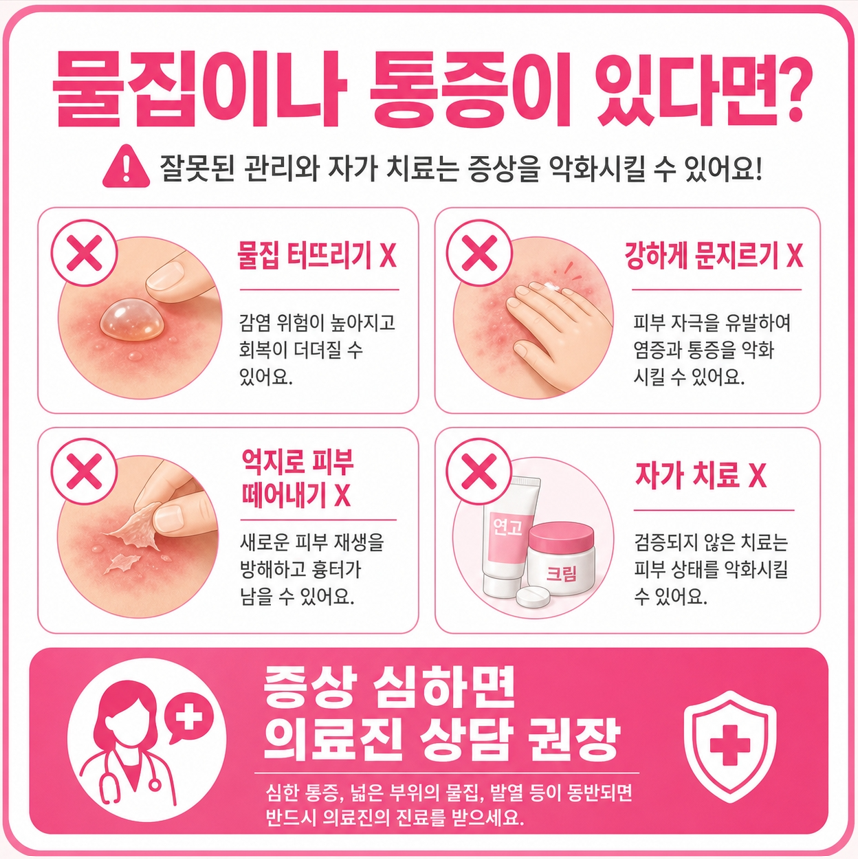
⚠ Don’t pop blisters yourself or rub the skin roughly
⚠ Forcibly peeling off flaking skin can raise the risk of infection
⚠ If you notice oozing or widespread redness, see a doctor
If blisters form, pain is severe, there’s oozing,
or a large area of skin is red, an accurate diagnosis should take priority over self-care.
If symptoms don’t improve, be sure to consult a physician.
How Do You Restore Your Skin Barrier and Prevent Elasticity Loss After Vacation?
Many people jump straight into brightening treatments or exfoliation right after vacation.
But at this stage, the skin barrier is often already compromised. Barrier repair should come first.
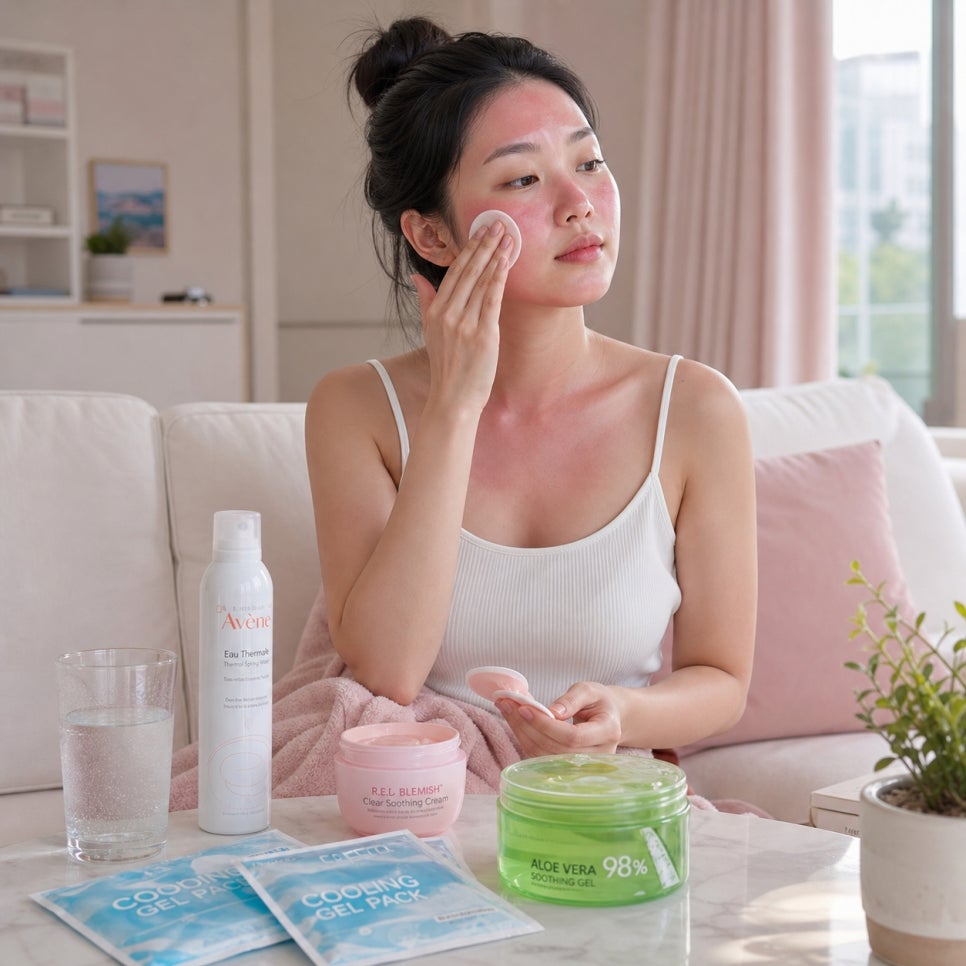
When the skin barrier weakens, the following changes can occur alongside it.
✔ Increased water evaporation makes skin dry out more easily
✔ Skin can become more sensitive and reactive to irritants
✔ Redness may linger longer than usual
✔ Skin texture can become rougher and less refined
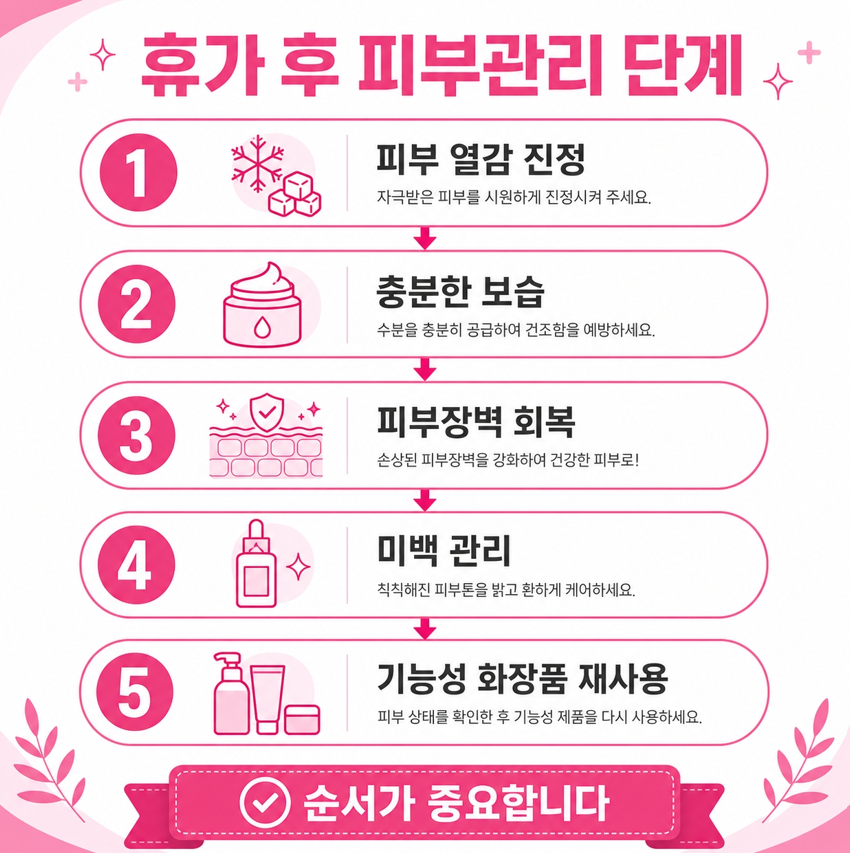
That’s why following the right order matters for after-sun skincare.
Step 1: soothe skin heat → Step 2: hydrate thoroughly → Step 3: repair the skin barrier → Step 4: address brightening → Step 5: reintroduce active/functional products.
🟢 Following this order can help redness and heat gradually calm down
🟢 Skin hydration may be restored and texture can become smoother
🟢 Brightening and functional products may cause less irritation afterward
Why Does Skin Lose Elasticity, and How Can You Minimize It?
Collagen and elastin play a key role in maintaining skin elasticity.
Repeated exposure to strong UV rays can reduce collagen levels and accelerate its breakdown in the skin.
As a result, skin can lose firmness and fine lines may become more noticeable.
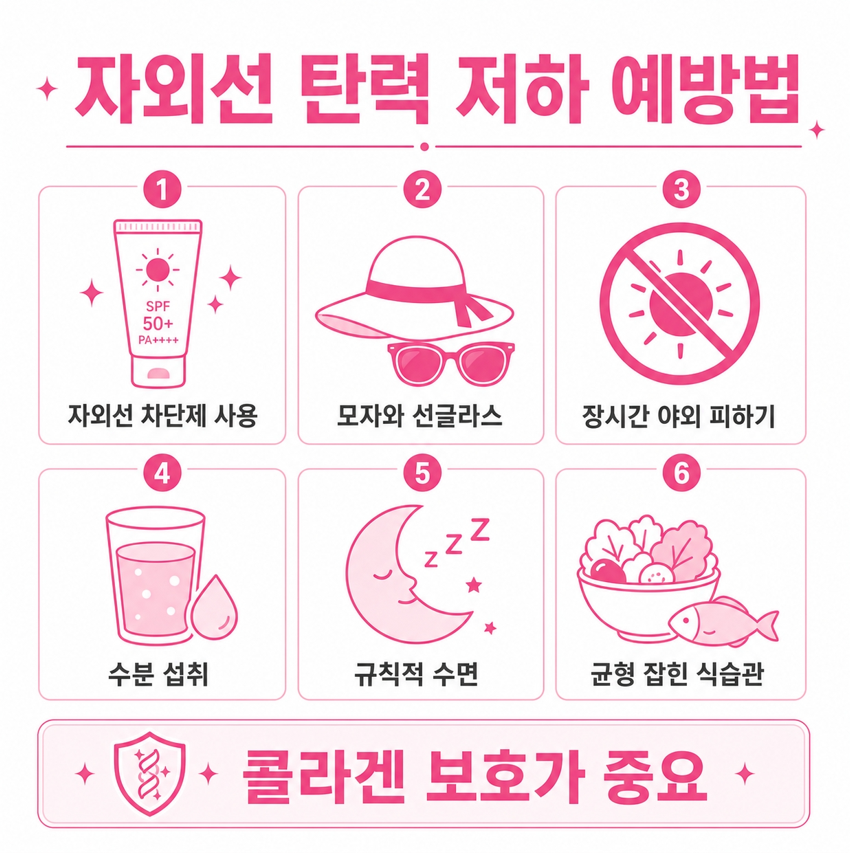
In fact, domestic research has reported UV-related collagen loss and increased wrinkling.
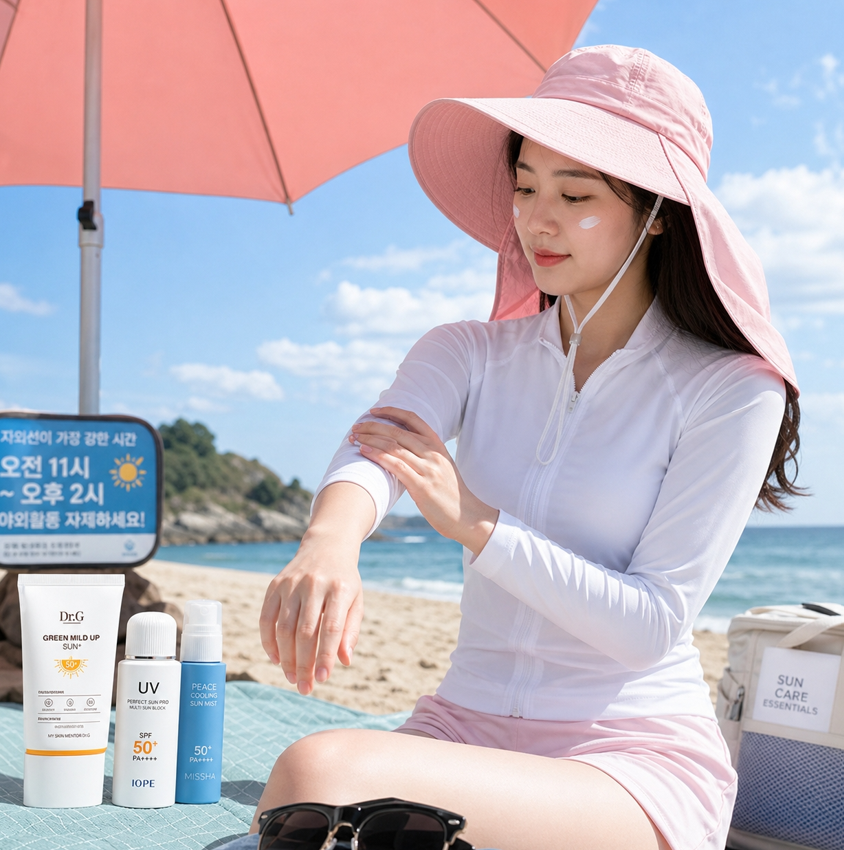
To help minimize these changes, use sunscreen consistently and wear a hat and sunglasses.
It also helps to avoid prolonged outdoor exposure and support your skin with adequate water intake, regular sleep, and a balanced diet.
If you’d like to support skin elasticity from within,
you can also check out the Atelofill Collagen Skin Research Institute homepage for more information on skin barrier and elasticity care.

While skin is still red and warm, it’s best to avoid exfoliation, vigorous massage, and potentially irritating active products.
Soothe and hydrate the skin first, then gradually reintroduce active products once it has recovered.
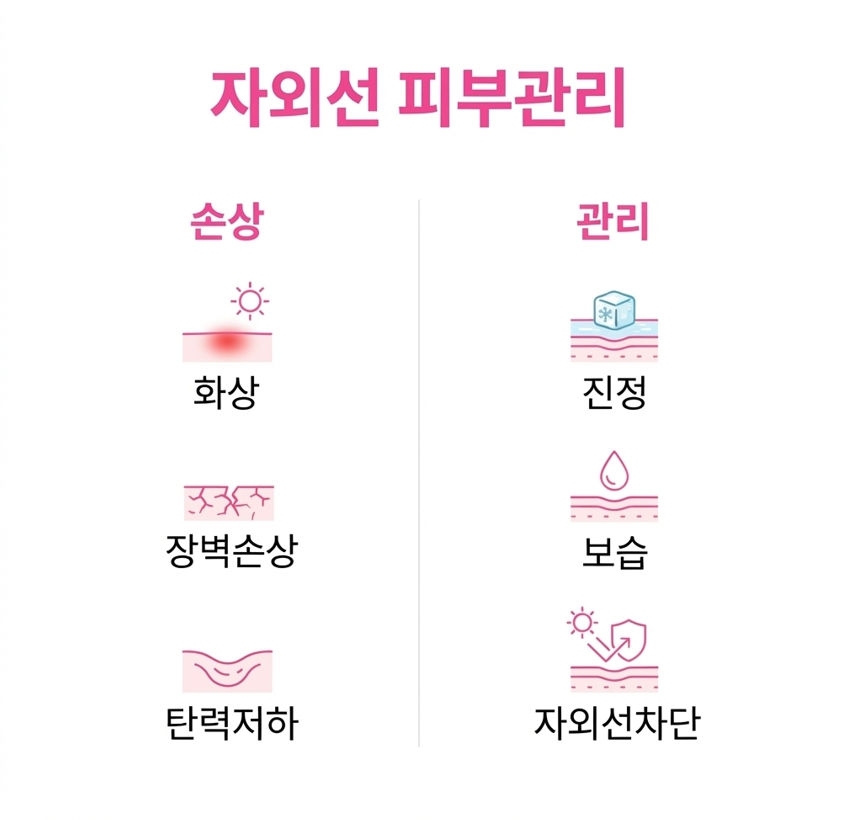
Sun damaged skin can lead not only to sunburn but also to a weakened skin barrier and reduced elasticity.
If your skin feels hot and stings after vacation, focus on cooling, soothing, and hydrating it first.
Consistent sun protection and proper after-sun care can go a long way toward keeping your skin healthy.
Frequently Asked Questions
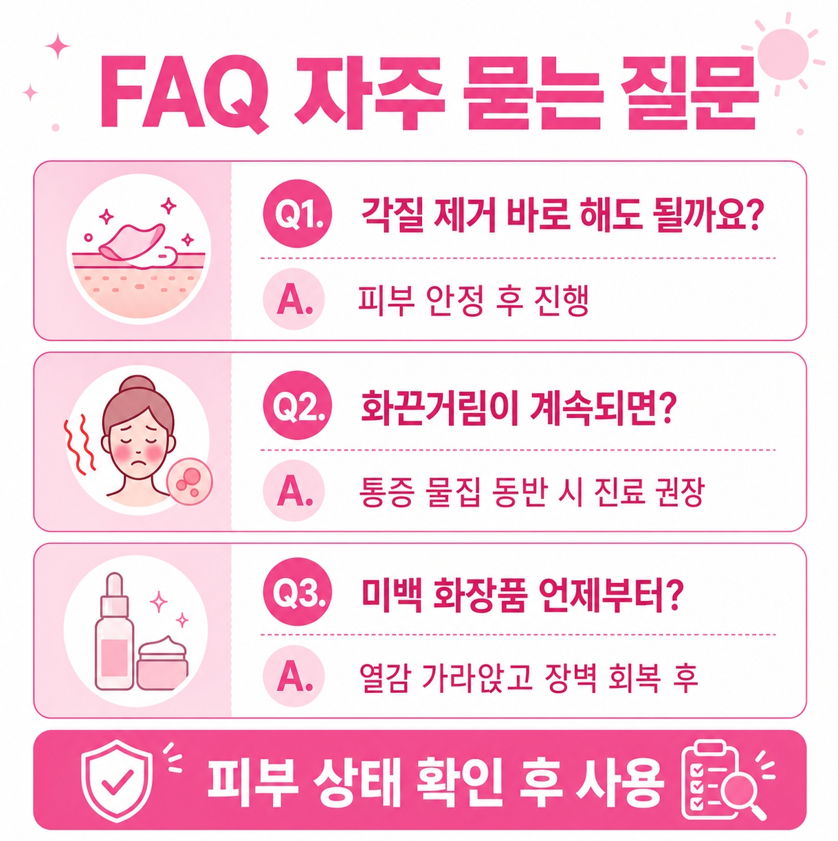
1. Can I exfoliate right after getting sun damaged skin?
If your skin is red or stinging, it’s best to avoid exfoliation. Wait until the skin barrier has stabilized, then reassess before proceeding.
2. My skin still feels hot after vacation — is that normal?
If the heat lingers, or is accompanied by pain, blisters, or oozing, it may not be simple irritation, so it’s best to see a doctor.
3. When can I start using brightening products after sun exposure?
It’s generally recommended to wait until redness and heat have subsided and the skin barrier has recovered to some degree.
4. Should I wear sunscreen even on cloudy days?
A significant amount of UV radiation is known to pass through clouds, so wearing sunscreen even on overcast days can help prevent sun damaged skin.
References
· Korea Disease Control and Prevention Agency, “Sunburn,” National Health Information Portal. View source
· Seoul National University Hospital, “Sunburn,” SNUH Medical Information. View source
· Korean Journal of Food Science and Technology, “Preventive Effect of Collagen Peptides on Skin Photoaging,” Korean Society of Food Science and Technology, 2009. View source
This article is intended for general health information purposes only and is not a substitute for individual diagnosis or treatment. If you have symptoms, please consult a physician.