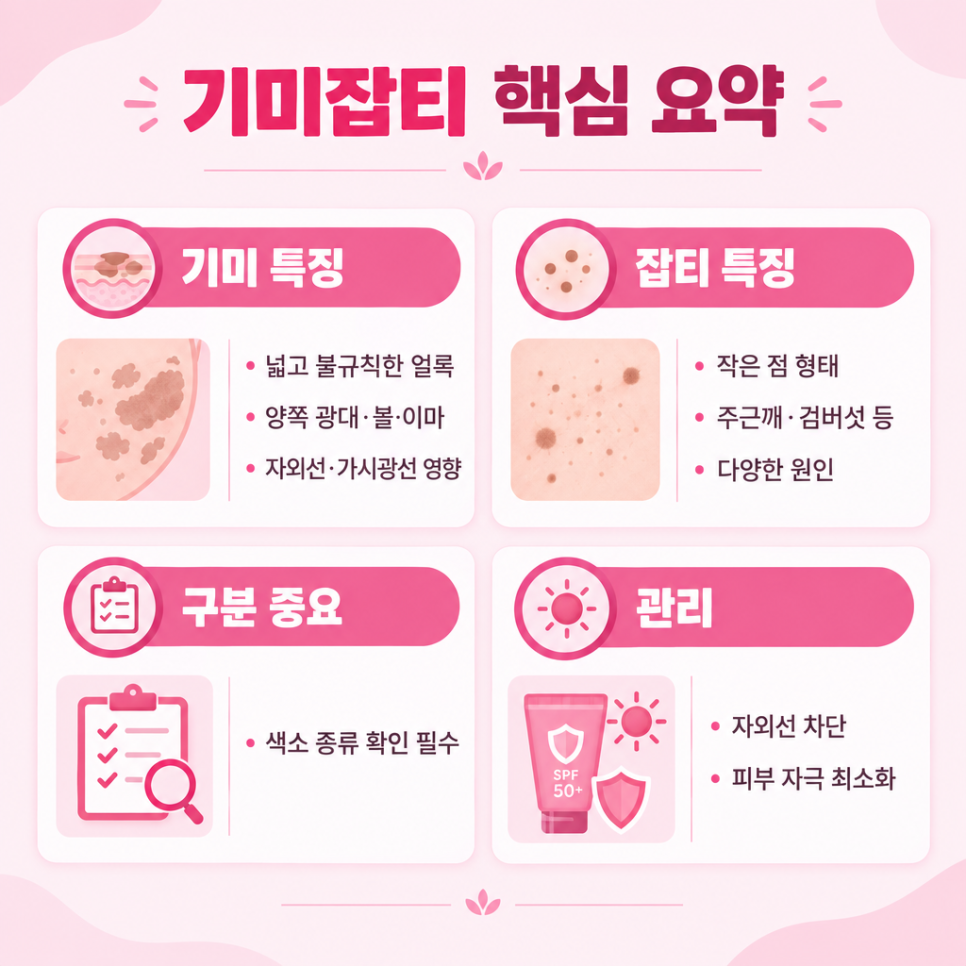
Have you ever looked in the mirror at a brown patch spreading across your cheekbones
and wondered, ‘Is this melasma, or just a dark spot?’
They can look similar on the surface, but the right approach depends entirely on the type of pigment involved,
so figuring out which one you’re dealing with comes before searching for how to get rid of melasma.
Reaching for a brightening product without knowing the cause first can actually make it less effective.
This article compares melasma and dark spots by location, shape, and cause,
and breaks down how to get rid of melasma into a 4-step process — from identifying your pigment type to sun protection, reducing irritation, and considering targeted treatment.
We’ve also included a pigment checklist you can use at home.

What Exactly Is the Difference Between Melasma and Dark Spots?
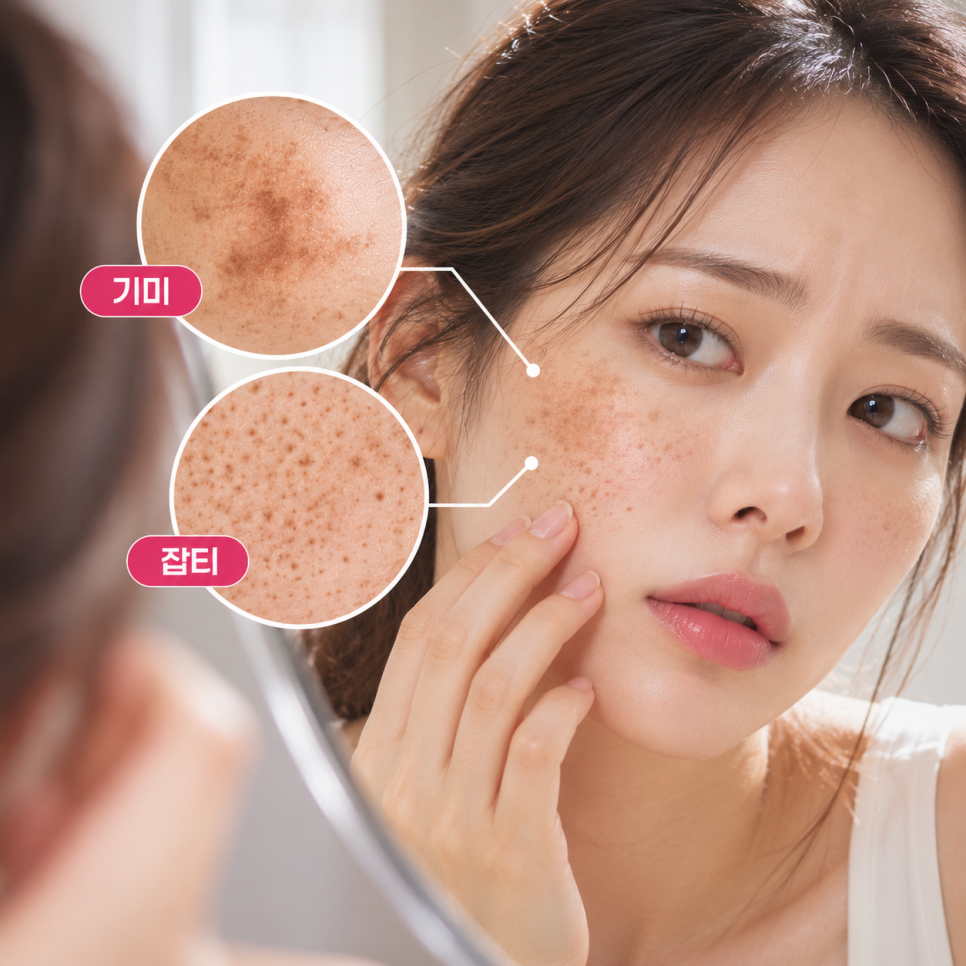
To put it simply, melasma is a pigmentation condition that appears symmetrically on both sides of the face, while “dark spots” is more of an umbrella term covering several different types of pigmentation.
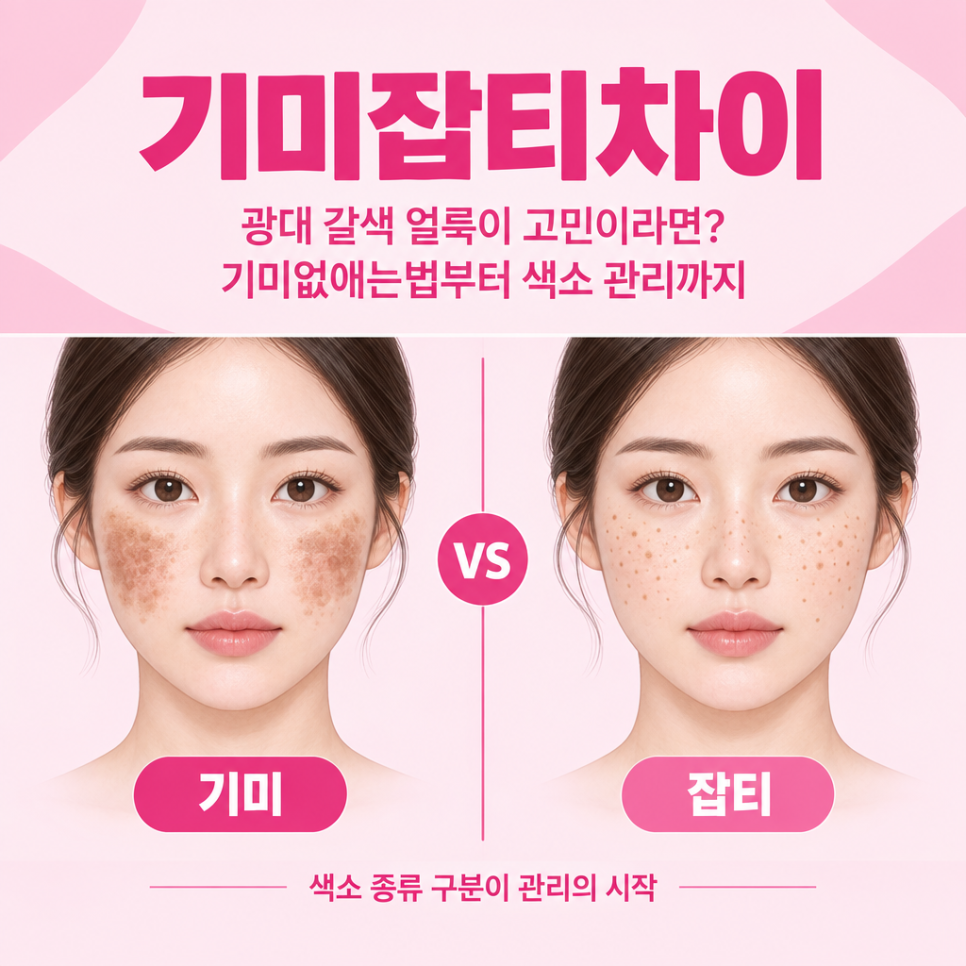
Melasma is a pigmentation condition in which brown or grayish-brown patches appear as broad, ill-defined areas on both sides of the face — commonly on the forehead, cheekbones, cheeks, and around the nose.
“Dark spots,” on the other hand, isn’t a specific diagnosis.
It’s a general term for various types of facial pigmentation, including
freckles, solar lentigo, and post-inflammatory hyperpigmentation.
So seeing brown pigmentation on your skin
doesn’t automatically mean it’s melasma.
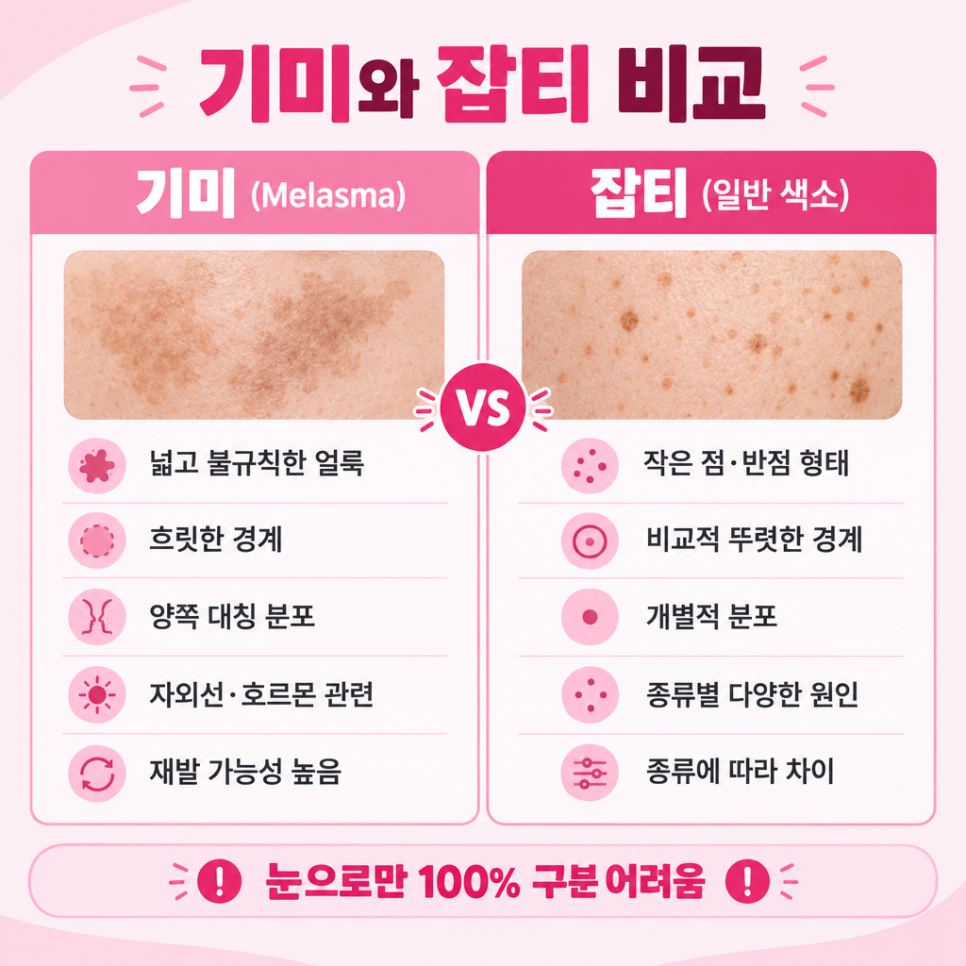
| Category | Melasma | Dark Spots |
|---|---|---|
| Shape | Broad, irregular patches | Often small dots or spots |
| Border | Can be relatively ill-defined | Often relatively well-defined |
| Distribution | Symmetrical — both cheekbones, cheeks, forehead, etc. | Can appear individually in specific areas |
| Related factors | Multiple factors — UV exposure, visible light, hormones, etc. | Varies by type — UV exposure, inflammation, genetics, etc. |
| Recurrence | Can darken again | Varies depending on the type |
✔ Melasma and dark spots can be difficult to tell apart by sight alone.
✔ Solar lentigo and post-inflammatory hyperpigmentation can sometimes resemble melasma, so a Wood’s lamp or dermoscopy may be used to assess pigment characteristics when needed.
Where on the Face Does Melasma Appear, and What Does It Look Like?
Melasma often appears as broad, ill-defined patches on both cheekbones or cheeks. If you notice small, well-defined spots scattered across your skin instead, that may point to freckles, solar lentigo, or another type of pigmentation.

✅ Appears similarly on both cheekbones
✅ Looks more like broad patches than dots
✅ Edges aren’t sharply defined
✅ Gets darker after sun exposure
✅ Also appears around the forehead, cheeks, nose, and upper lip
That said, shape alone isn’t enough for an accurate diagnosis,
so treat this checklist as a general reference rather than a definitive answer.
What Causes Melasma?
Melasma usually isn’t caused by a single factor — it tends to result from multiple factors acting together.
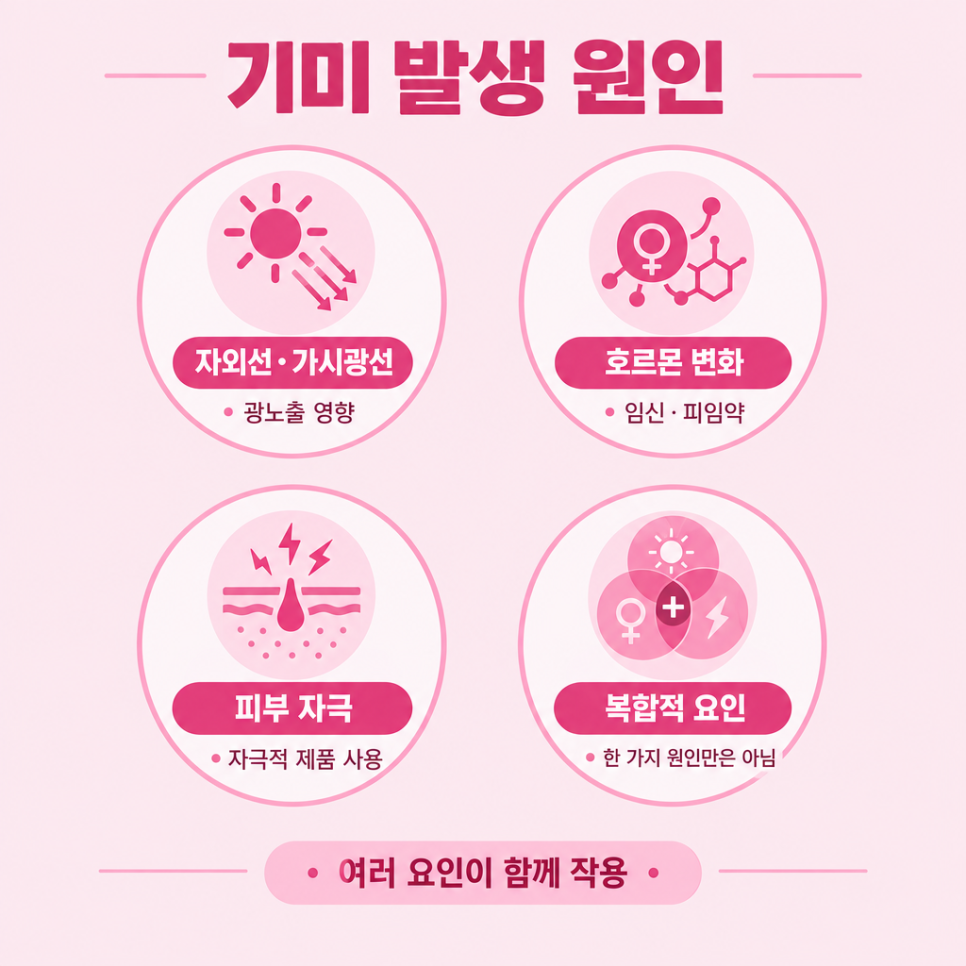
- UV and visible light — Repeated light exposure can stimulate pigment production and darken melasma.
- Hormonal changes — Melasma has also been linked to hormonal changes, such as those from pregnancy or oral contraceptive use.
- Skin irritation — Excessive exfoliation and irritating skincare products can make pigmentation more noticeable.
✔ Not just UV rays — visible light (especially blue light) can also stimulate melanocytes and worsen hyperpigmentation.
✔ That’s why, when looking into how to get rid of melasma, sun protection needs to go hand in hand with reducing skin irritation.
How to Get Rid of Melasma: What Order Should You Follow?
When looking into how to get rid of melasma, it’s easy to jump straight to lasers or brightening products,
but identifying your pigment type first and managing it step by step matters more.

- STEP 1. Identify Your Pigment Type
Determine whether it’s melasma or another type of pigmentation, such as freckles, solar lentigo, or post-inflammatory hyperpigmentation. Since multiple types can appear together, an accurate diagnosis by sight alone can be difficult. - STEP 2. Protect Against UV and Visible Light
Consistent sun protection is the foundation of melasma management. Use a broad-spectrum sunscreen with SPF 30 or higher, and reapply regularly during outdoor activity. If you want to address visible light as well, a tinted sunscreen containing iron oxide can be an option. - STEP 3. Reduce Skin Irritation
Using high-concentration brightening products, exfoliants, and peels all at once can increase skin irritation. If stinging or burning persists, it’s a good idea to adjust how often you use these products or switch products altogether. - STEP 4. Consider Treatment If Needed
Depending on skin condition, options such as topical agents, chemical peels, or laser and light-based treatments may be considered. Because the right approach can vary based on how deep the melasma sits and your skin tone, it’s important to get an approach suited to your individual condition.
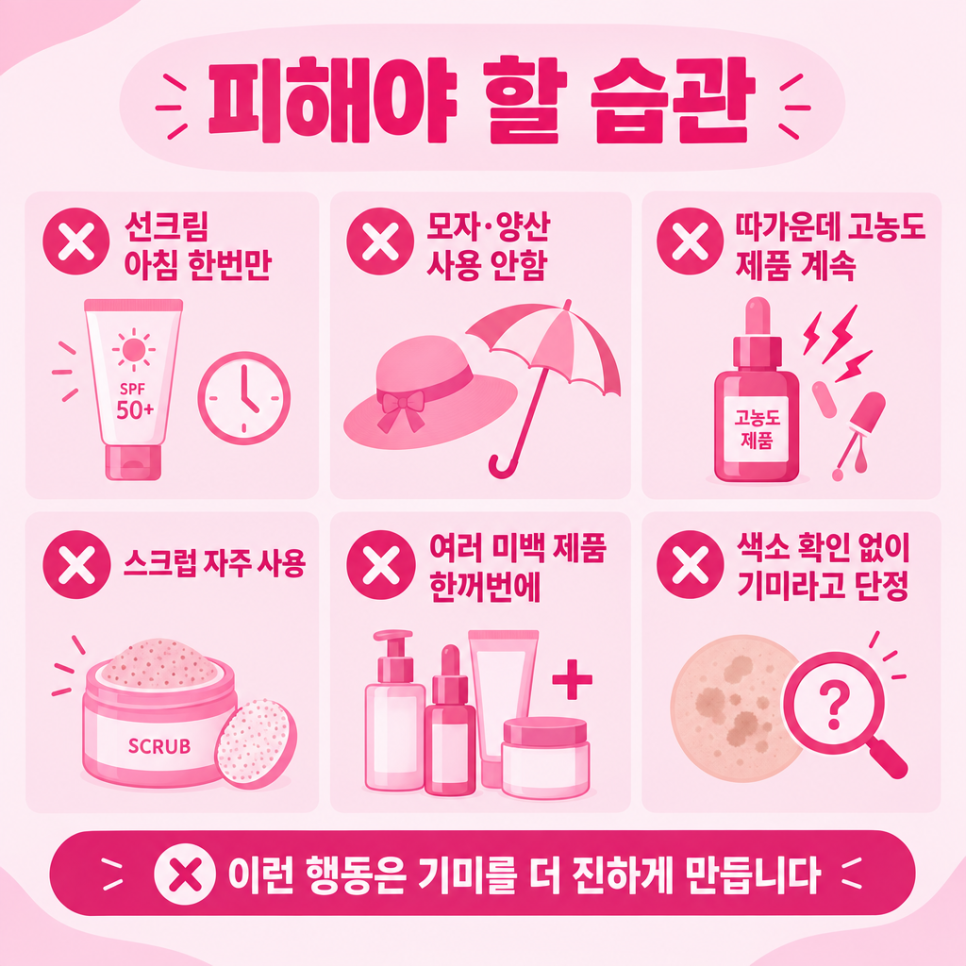
⚠ Applying sunscreen only once in the morning
⚠ Spending a lot of time outdoors without a hat or umbrella
⚠ Continuing to use high-concentration functional cosmetics even when your skin stings
⚠ Scrubbing frequently, thinking exfoliation will brighten your skin
⚠ Using several brightening ingredients all at once
⚠ Assuming it’s melasma without checking the type of pigmentation first
Because melasma can darken again even after treatment,
reducing the conditions that cause it to recur
matters just as much as fading it in the short term.
A 1-Minute Self-Check to Gauge Your Pigment Type
Check the items below while looking in a mirror near natural light.

✅ Shape — Spread out like broad patches / Appears as small, individual dots
✅ Location — Similar on both cheekbones / Clustered on just one side
✅ Changes — Seems to darken in summer / Left brown marks where breakouts occurred / Became noticeable after pregnancy or hormonal changes
Checking shape, location, onset, and how it changes together
can help you describe your condition more accurately during a skin consultation.

At a glance, melasma and dark spots can look like the same brown pigmentation.
But when you look closely at the difference between melasma and dark spots,
there are clear differences in how they form, what causes them, and how they should be managed.
So rather than jumping straight into brightening products or pigment procedures,
it’s better to approach how to get rid of melasma in this order:
① Identify pigment type → ② Manage UV and visible light → ③ Reduce skin irritation → ④ Consider targeted treatment if needed.
If you have pigmentation that’s lasted a long time, or if its color or shape has recently changed, it’s worth having it properly evaluated rather than assuming it’s just a dark spot.
If you’d like more information on skin condition and elasticity care, check out related articles at the Atelofill Collagen Skin Research Lab homepage.
Frequently Asked Questions
1. Can melasma be completely removed with skincare products?
Because melasma involves multiple factors like UV exposure and hormones, it’s hard to say that any single product can remove it completely. Managing light exposure and minimizing skin irritation are the basics, and treatment suited to your skin condition may be added if needed.
2. Does laser treatment clear melasma in one session?
Not necessarily. Melasma can darken again even after treatment, and depending on skin condition, some laser or light-based treatments may actually trigger hyperpigmentation or worsen melasma. Checking your individual pigment condition first is an important step.
3. What’s the most basic step in how to get rid of melasma?
Consistent light management. Use a broad-spectrum sunscreen with SPF 30 or higher as your foundation, and pair it with a hat or shade when you’re outdoors. If you want to address visible light too, choosing a tinted sunscreen with iron oxide is another option.
4. Can I tell melasma and dark spots apart at home?
Looking at shape, location, onset, and how it changes over time can give you a rough idea, but it’s difficult to tell them apart with complete accuracy by sight alone. Since multiple types of pigmentation can appear at the same time, a professional evaluation can be helpful.
References
· Asan Medical Center, “Melasma,” Disease Encyclopedia. View source
· Boukari F, et al., “Prevention of melasma relapses with sunscreen combining protection against UV and visible light,” Journal of the American Academy of Dermatology, 2015. View source
· Journal of Drugs in Dermatology, “Photoprotection Efficacy of Sun Protection Factor and Iron Oxide Formulations in Diverse Skin With Melasma and Photodamage,” 2025. View source
This article is intended for general health information purposes only and is not a substitute for individual diagnosis or treatment. If you have symptoms, please consult a healthcare professional.