Even when you follow the same cleansing and makeup routine,
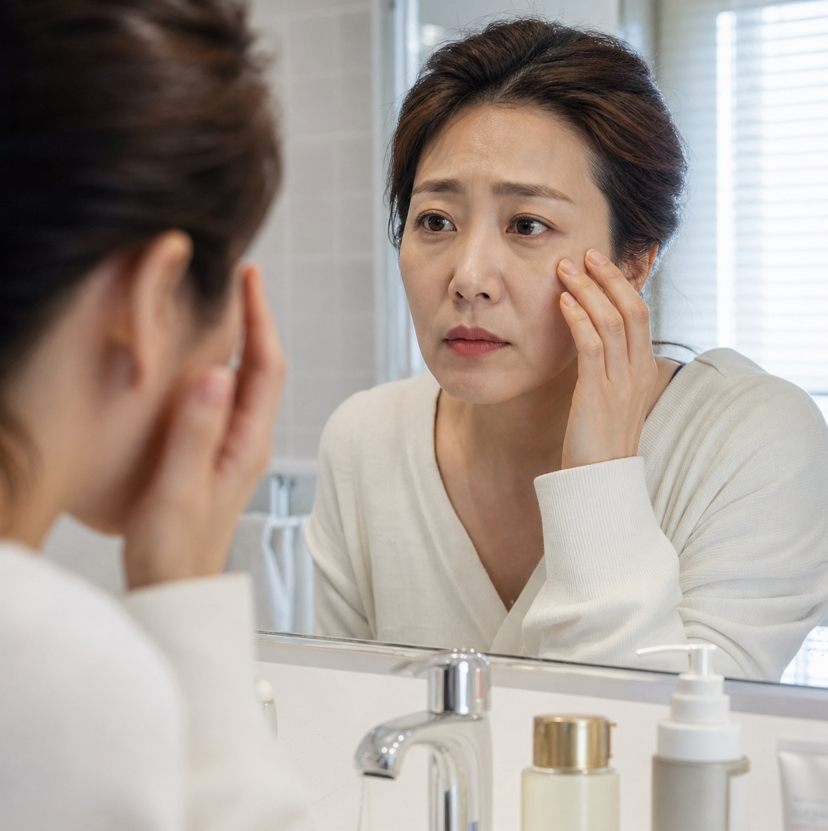
there are days your face looks unusually tired in the mirror.
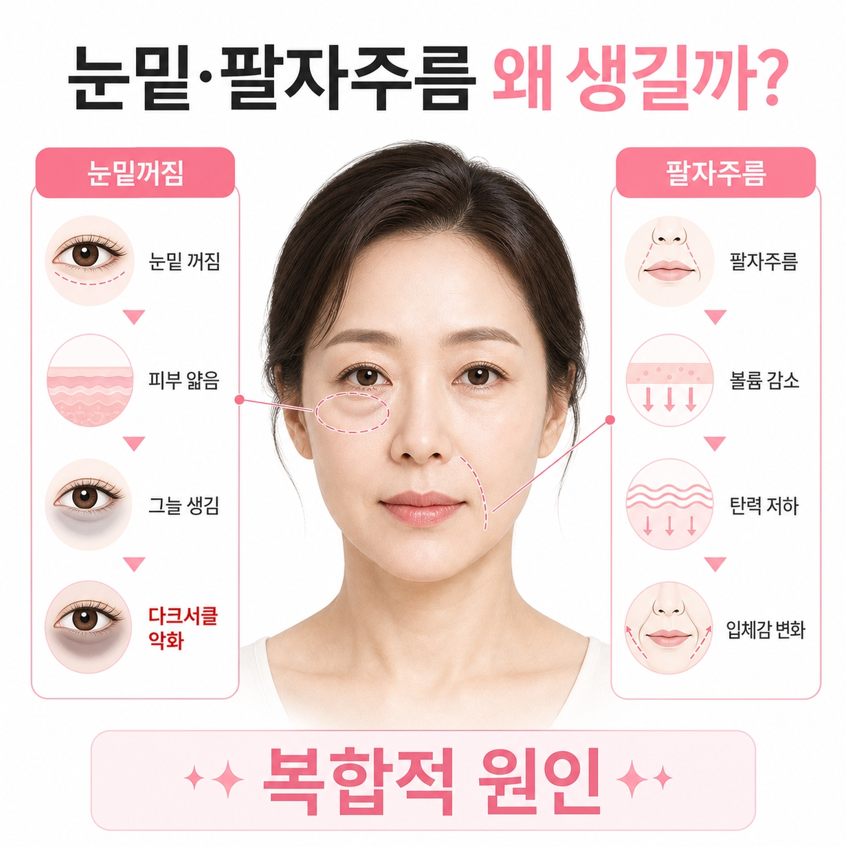
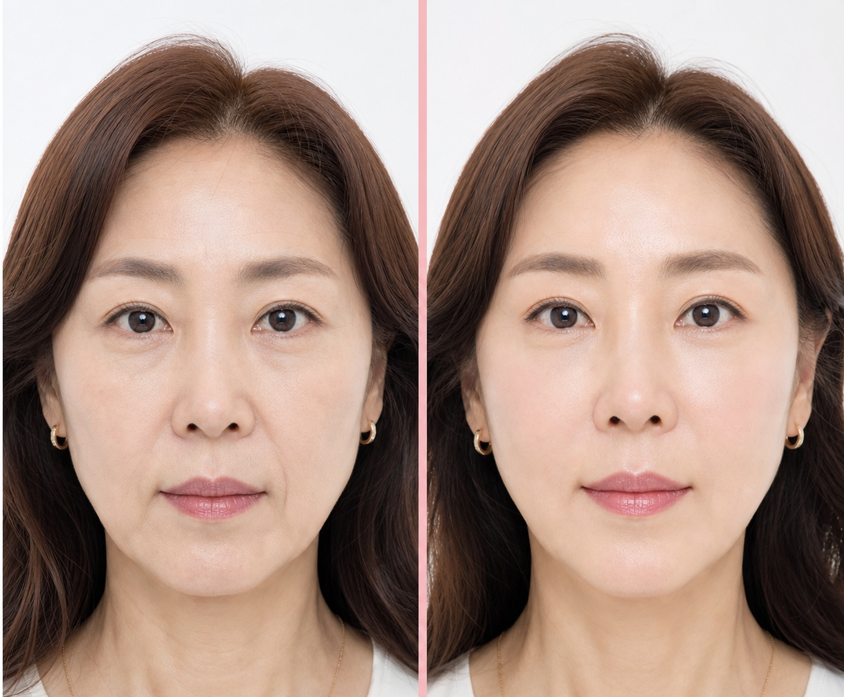
Your cheeks may look slightly hollow, and fine lines around the eyes and nasolabial folds can seem more noticeable than before.
Is it simply fatigue? In many cases, these changes may actually be linked to
shifts in your skin’s collagen.

This article covers what’s useful to know about collagen’s role before considering a facial firming treatment,
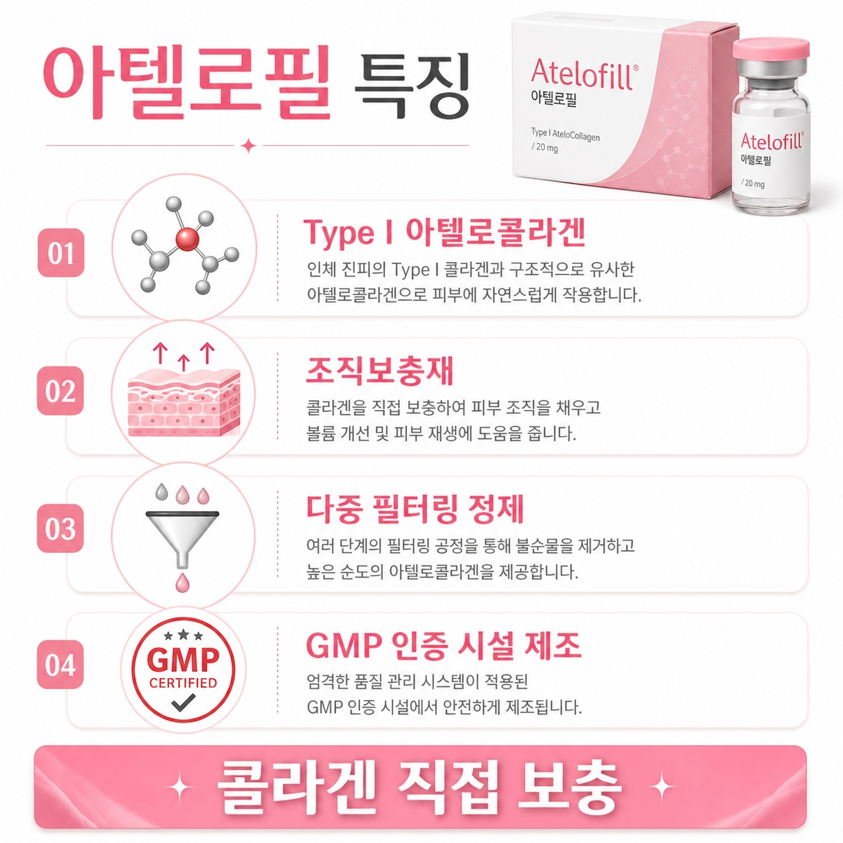
along with the features of Atelofill, a tissue filler based on Type I atelocollagen.
We’ll walk through the differences between regular collagen and atelocollagen, treatment time and intervals, and side effects and precautions, in order.
✔ A decline in facial elasticity may result from a combination of factors, including collagen changes, aging, UV exposure, and dryness.
✔ Atelofill is a collagen-based tissue filler made from Type I atelocollagen and is a medical device authorized by Korea’s Ministry of Food and Drug Safety (MFDS) for use in Korea; this authorization is not FDA clearance or approval in the United States.
✔ A defining feature of atelocollagen is that telopeptides, which may be involved in immune response, have been removed.

Why Does Facial Elasticity Decline With Age?
A decline in facial elasticity isn’t simply the result of sagging skin.
Facial elasticity is influenced by a combination of factors, including support structures like collagen and elastin, changes in subcutaneous fat and soft tissue, repeated facial expressions, and UV exposure.
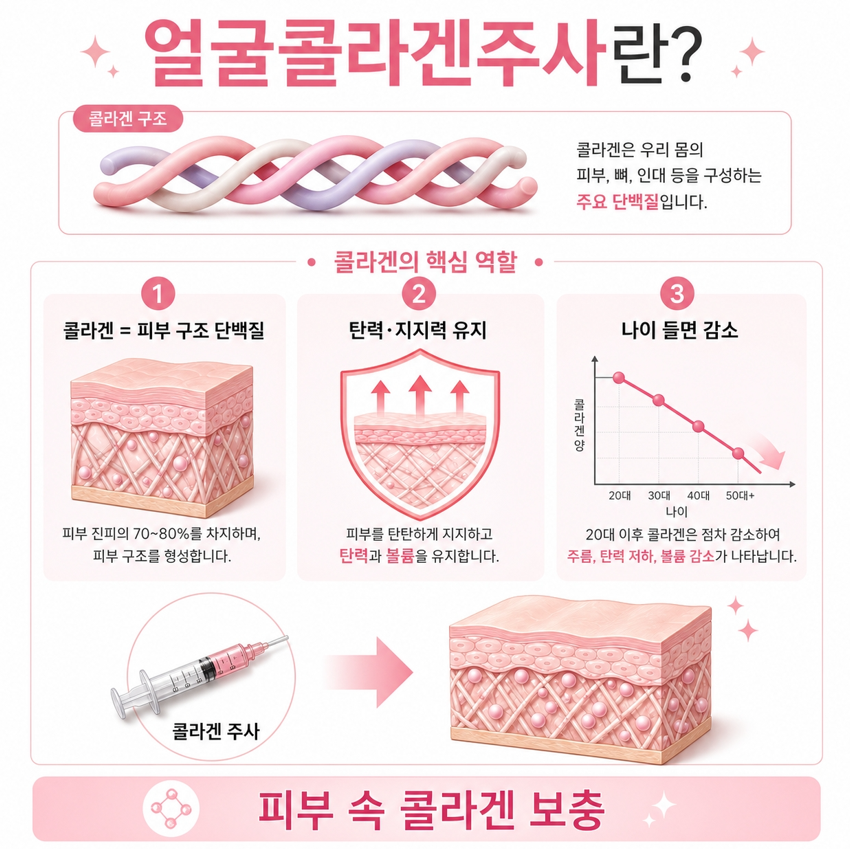
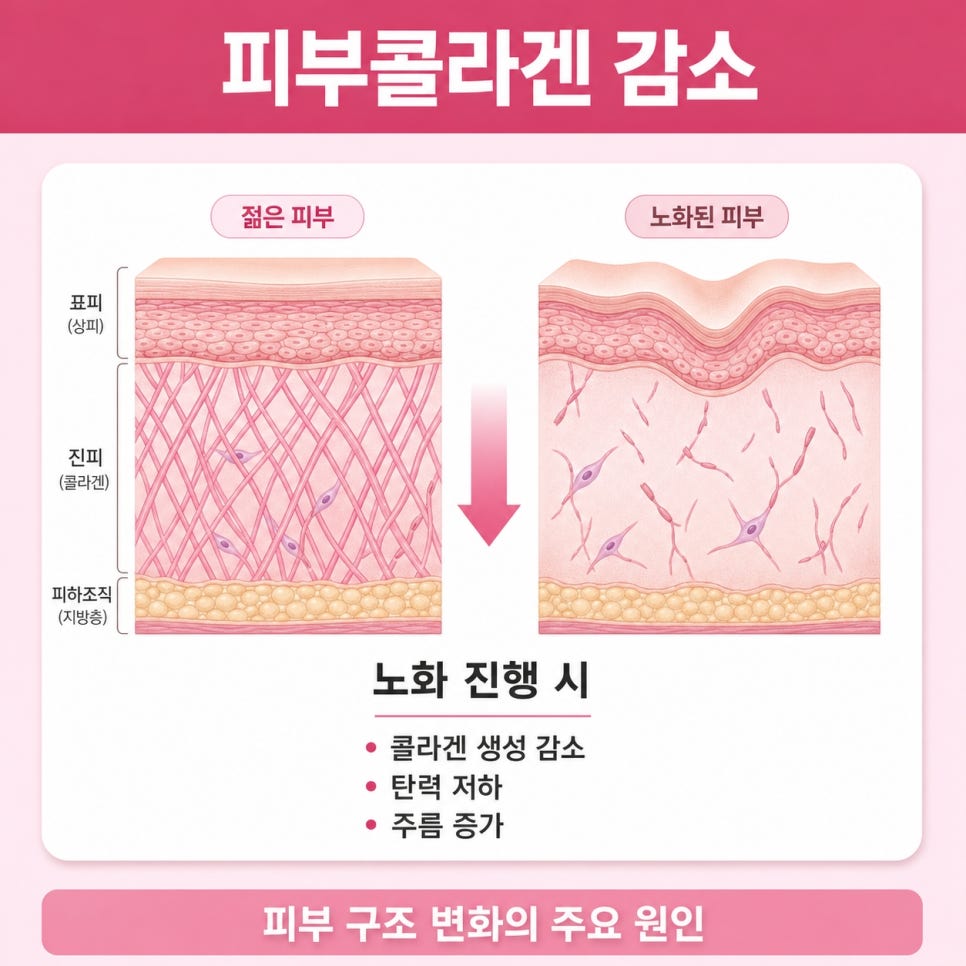
Collagen in particular is a key protein that helps maintain skin structure,
so when this environment changes, skin may feel thinner and less firm than before,
fine lines can become more noticeable, and certain areas may appear to lack volume.
According to various sources, skin collagen is known to gradually decrease each year starting in the mid-20s,
and this decline can speed up further with UV exposure, dry conditions, and certain lifestyle habits.
That’s why, when researching a facial firming treatment, it’s important to look beyond visible wrinkles alone
and take a comprehensive look at your skin’s current elasticity, volume, and texture.

What Is Atelofill, the Atelocollagen Filler Gaining Attention?
Atelofill is a collagen-based tissue filler made from Type I atelocollagen, and it is a medical device authorized by Korea’s Ministry of Food and Drug Safety (MFDS) for use in Korea; this authorization is not FDA clearance or approval in the United States.
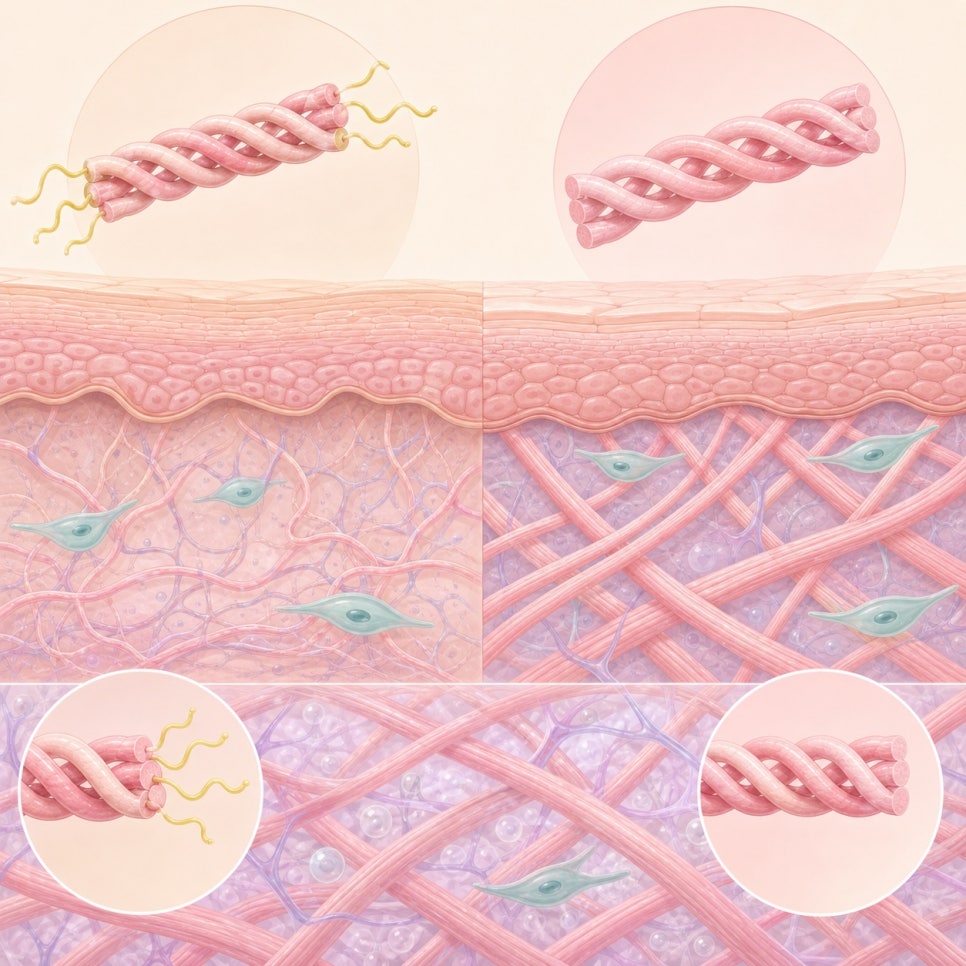
It works by injecting the product into skin tissue to directly replenish collagen, which may help improve volume and skin elasticity.

One notable point is that it may also play a role in stimulating your own collagen production.
Because replenishing atelocollagen in skin tissue can affect the skin’s internal environment and may support your body’s own collagen production,
it can be considered—under a medical professional’s judgment—for concerns such as volume loss, reduced elasticity, fine lines, and uneven skin texture.
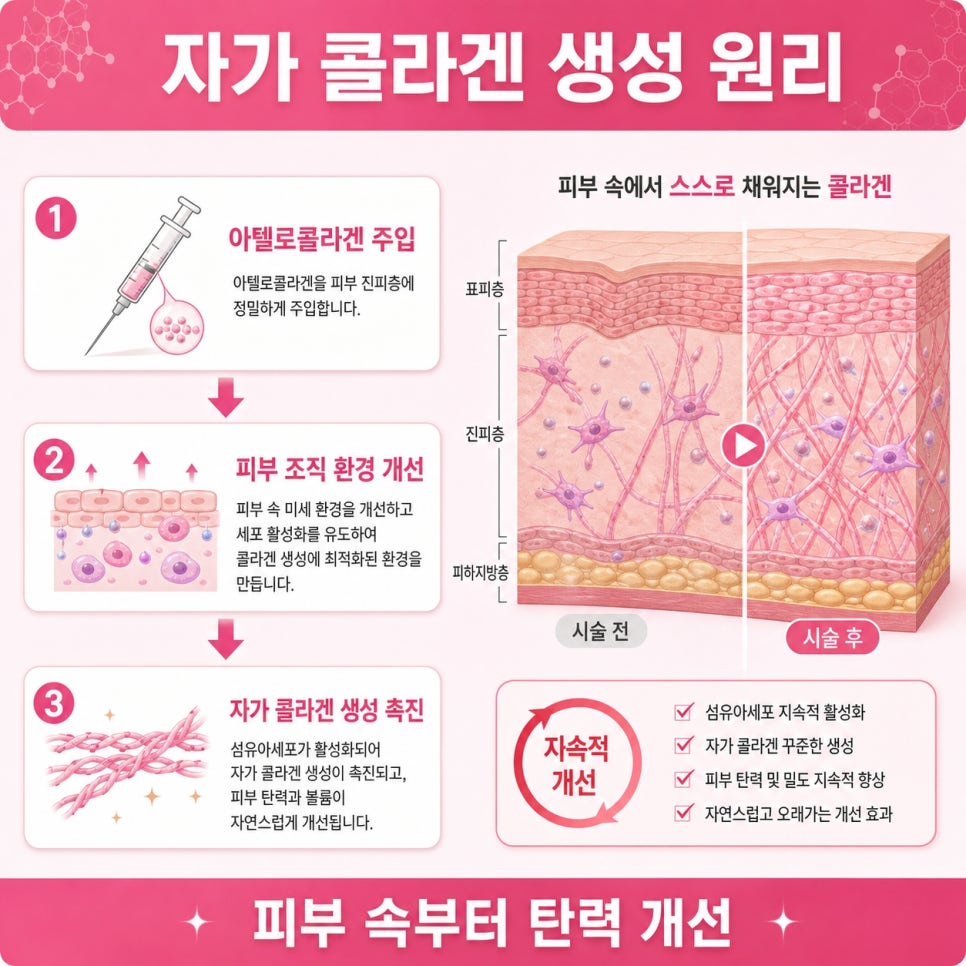
✔ Atelofill works by directly replenishing collagen in skin tissue.
✔ The atelocollagen introduced may also play a role in stimulating your own collagen production.
✔ Results can vary depending on individual skin condition, degree of aging, and the injection site and volume.
✅ Improvement in areas with volume loss
✅ Improved skin elasticity in areas that appear less firm than before
✅ Care for noticeable fine lines
✅ Improvement in uneven skin texture
That said, results are not the same for everyone.
The degree of improvement and how long it lasts can vary depending on skin condition, treatment area, and injected volume.
How Is Atelocollagen Different From Regular Collagen?
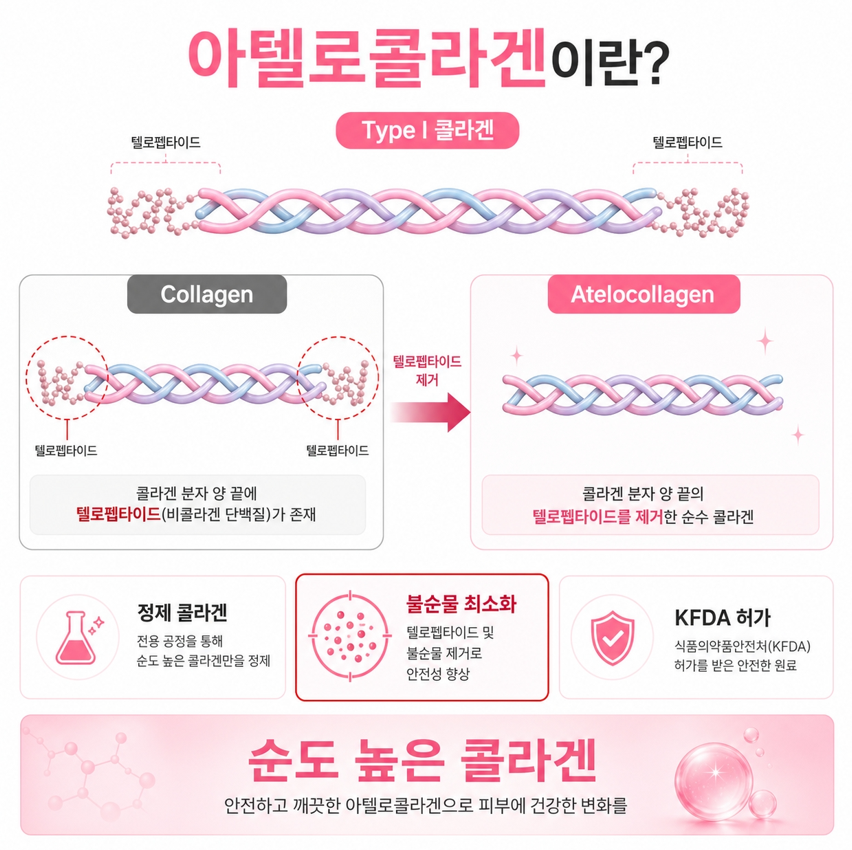
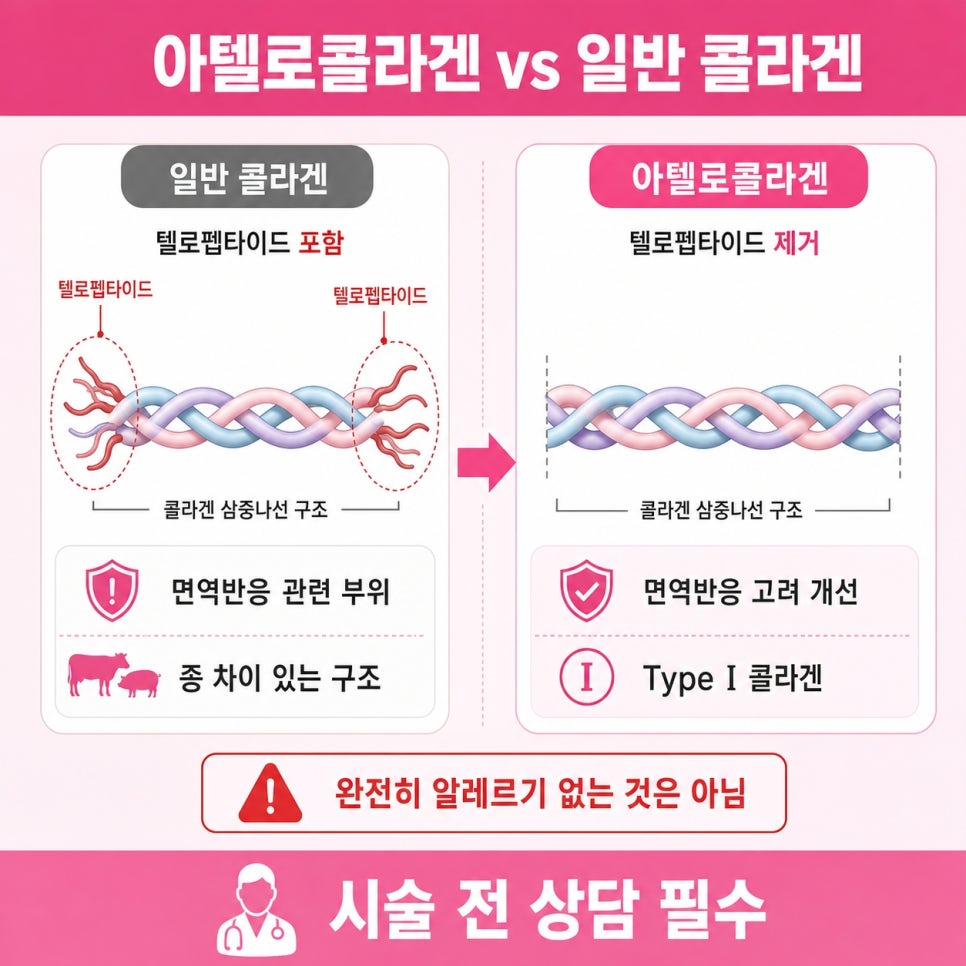
Atelocollagen is collagen with the telopeptides removed from both ends of the collagen molecule.
Telopeptides are non-helical regions where amino acid sequences vary between species, making them a part of the molecule that can be associated with immune response.
| Category | Regular Collagen | Atelocollagen |
|---|---|---|
| Telopeptides | Present | Removed |
| Potential for Immune Response | Relatively higher | Relatively lower |
| Main Use | Limited | Medical materials such as tissue fillers |
That said, removing telopeptides does not completely eliminate the possibility of allergies or immune reactions.
If you’ve previously experienced a hypersensitivity reaction to collagen or related ingredients, be sure to inform your medical provider before treatment.

What Are the Treatment Time, Intervals, and Side Effects?
Atelofill treatment time varies by area but typically takes about 20 to 40 minutes.
Afterward, redness, swelling, or bruising may appear at the injection site, and some discomfort may last for about 1 to 3 days.

The number of sessions also isn’t the same for everyone.
Depending on skin condition and goals, 2 to 3 sessions spaced 2 to 4 weeks apart may be considered,
after which follow-up touch-up treatments may be considered if needed, based on how well results are maintained.
In terms of side effects, redness, swelling, bruising, and pain may occur at the injection site,
and you may temporarily notice small nodules or an uneven surface.
In rare cases, infection, inflammation, or hypersensitivity reactions may occur,
so if any abnormal reaction persists or worsens, you should contact the clinic where you received treatment.

⚠ Redness, swelling, bruising, and pain may temporarily occur at the treatment site.
⚠ In rare cases, infection, inflammation, or hypersensitivity reactions may occur.
⚠ If any abnormal reaction persists, contact the clinic where you were treated immediately.
✅ If you have a history of hypersensitivity to collagen or injected ingredients
✅ If you are pregnant or breastfeeding
✅ If you have active infection, inflammation, or a skin condition at the treatment site
✅ If you have a history of abnormal scarring, such as keloids
✅ If you have an autoimmune condition or another issue requiring separate medical judgment

Rather than assuming ‘a fixed number of sessions will finish the job’ or that results ‘will definitely last a certain number of months,’
it’s better to build a plan around your actual post-treatment changes and skin condition.
When skin starts to feel different than before, many people first turn to new skincare products or home care routines.
But if changes in elasticity and volume are already a concern,
looking beyond the skin’s surface to your skin’s internal collagen environment can be another approach worth considering.
What matters isn’t whether a treatment is popular, but whether it’s right for your skin right now.
If you’re considering a facial firming treatment, we recommend reviewing not only Atelofill’s features and possible changes,
but also its side effects and precautions, and making your decision after consulting a medical professional.
For more information about Atelofill, you can also visit the Atelofill Collagen Skin Research Institute website.
Frequently Asked Questions
1. Is Atelofill the same as a regular filler?
Atelofill is a collagen-based tissue filler made from Type I atelocollagen. Because ingredients and approved uses vary by product, it’s best to check the specific ingredients and characteristics of the product being used rather than assuming it’s the same as other treatments.
2. Do I only need one facial firming treatment session?
The number of sessions needed depends on your individual skin condition and treatment goals. Atelofill is generally considered in 2 to 3 sessions spaced 2 to 4 weeks apart, but your actual treatment plan will be determined by your medical provider’s assessment.
3. Can I resume normal activities right after treatment?
This varies by individual, but redness, swelling, bruising, and pain may occur at the injection site, causing discomfort for about 1 to 3 days. If you have an important event coming up, it’s a good idea to schedule your treatment with this in mind.
4. How long do results last?
How long results last can vary depending on skin condition, injection site and volume, and individual lifestyle habits, so it’s difficult to state a fixed duration. It’s best to monitor your results after treatment and decide on any additional sessions accordingly.
5. Is atelocollagen safer than regular collagen?
Removing telopeptides is designed to lower the potential for immune response, but this does not completely eliminate the possibility of allergies or hypersensitivity reactions. If you’ve had a hypersensitivity reaction to collagen ingredients in the past, be sure to inform your medical provider before treatment.
References
· Raportian, “Dalim Tissen Enters the Aesthetics Market With ‘Atelofill,’ Built on Concentrated Collagen Research,” Raportian, 2026. Read more
· DailyVet, “[Understanding Collagen ①] What Exactly Is Atelocollagen?,” DailyVet, 2024. Read more
· Vogue Korea, “Collagen Declines With Age — Is There a Way to Restore Elasticity?,” Vogue Korea, 2025. Read more
This article is intended for general health information purposes only and is not a substitute for individual diagnosis or treatment. If you have symptoms, please consult a medical professional.