Have you ever finally worked up the nerve to try retinol for wrinkles, only to wake up the next day with stinging skin and flaking patches?
In most cases, this isn’t really a problem with the ingredient itself — it’s retinol side effects that show up when the concentration or frequency of use doesn’t match your skin.
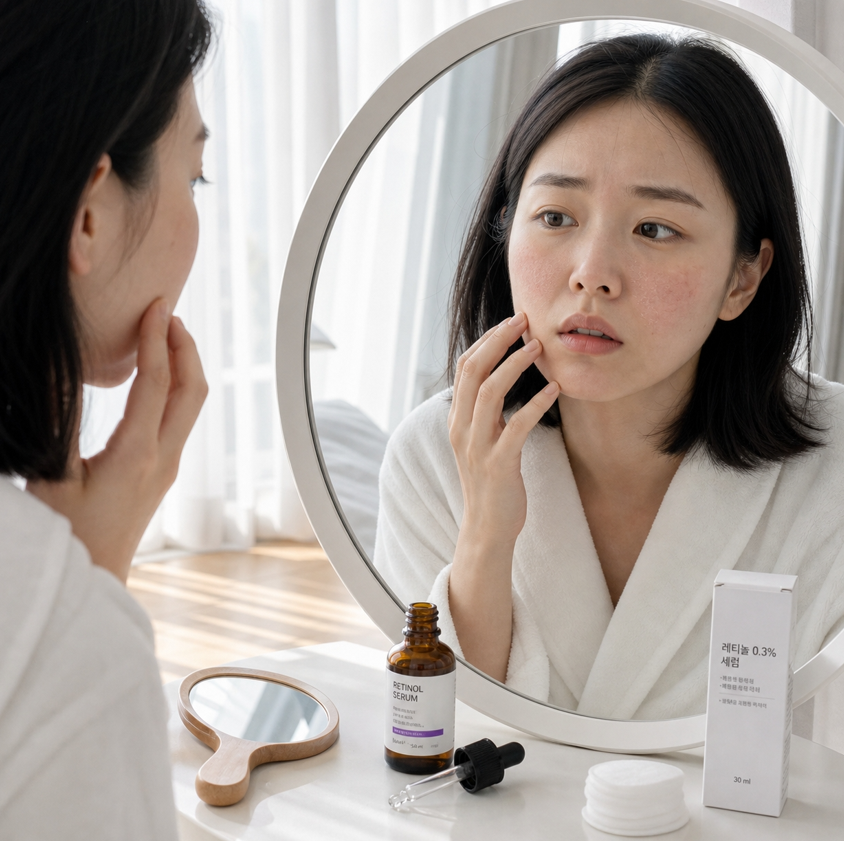
This article walks through how retinol actually works on skin, what its benefits are, and why retinol side effects happen in the first place.
You’ll also find concentration-based usage tips and the reasons sunscreen is essential while using it.
✔️ Retinol is a vitamin A derivative commonly used as an anti-aging ingredient, involved in skin cell turnover and collagen production.
✔️ Starting with a high concentration or using it too frequently can easily lead to retinol side effects like dryness, stinging, and redness.
✔️ The key is to start with a low concentration and pair it with proper moisturizing and sun protection.
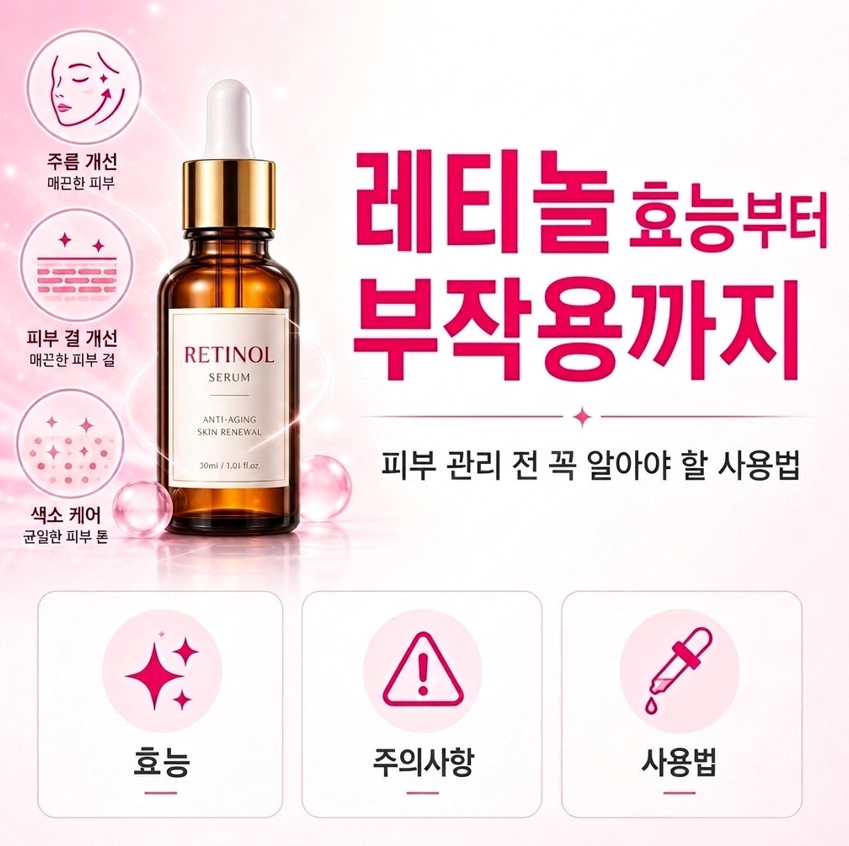
What Exactly Is Retinol?
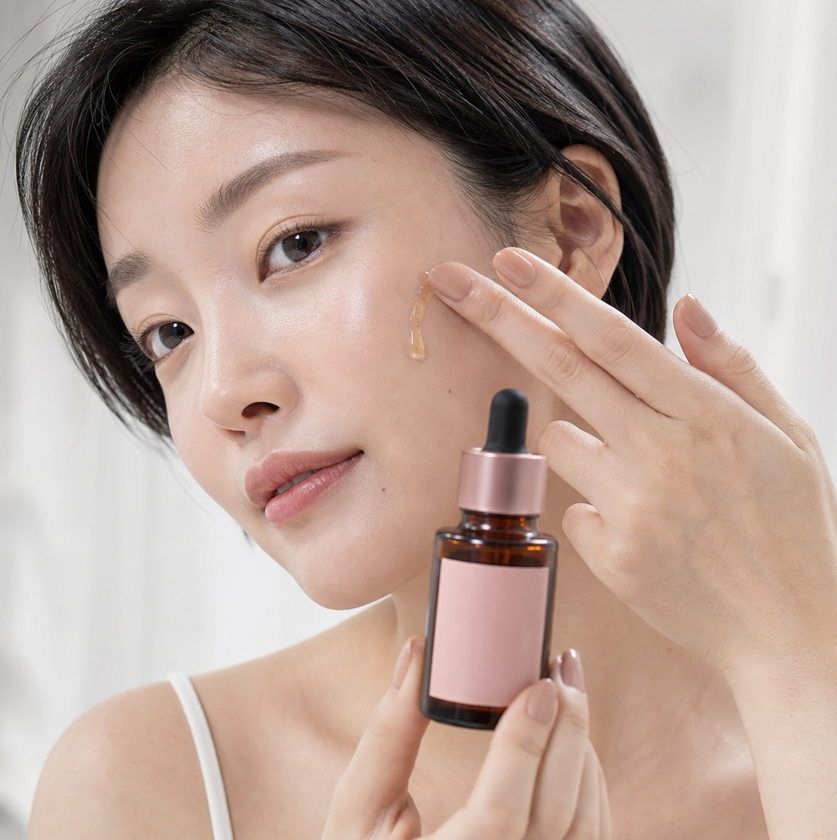
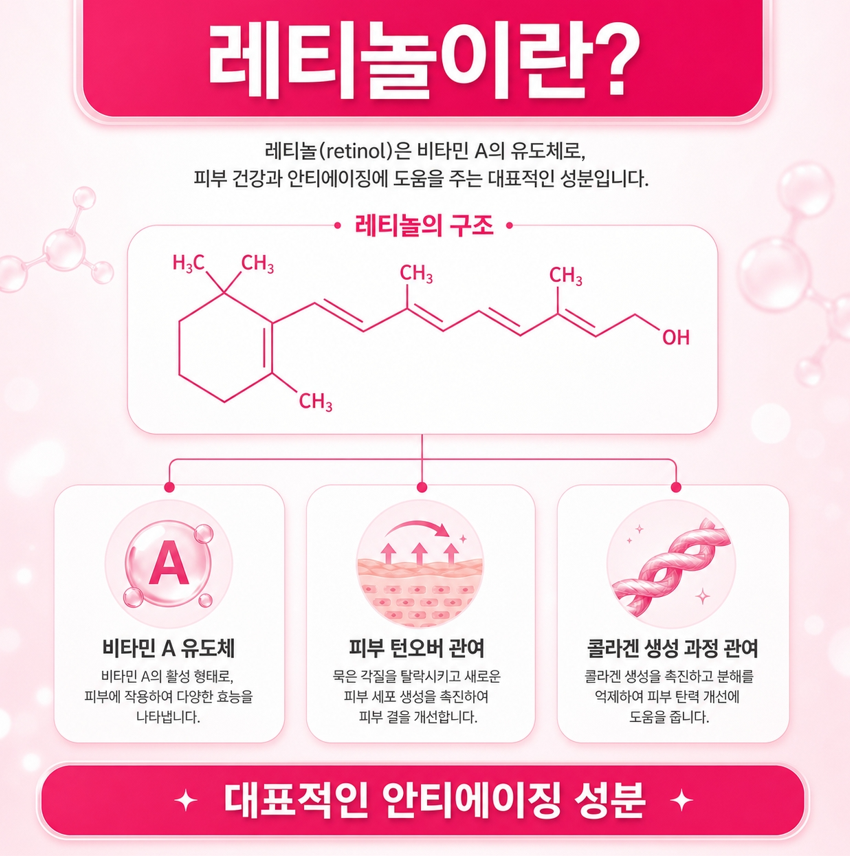
Retinol is a vitamin A derivative that, once absorbed into the skin, goes through several conversion steps before acting in the form of retinoic acid.
In this process, it’s understood to influence skin cell turnover and collagen-related metabolism.
As turnover slows and collagen decreases with age, skin can become thinner, lose elasticity, and show fine lines more easily.
This is why retinol is often used as an anti-aging ingredient to help address these changes.
What Changes Can Retinol Benefits Bring to Skin?
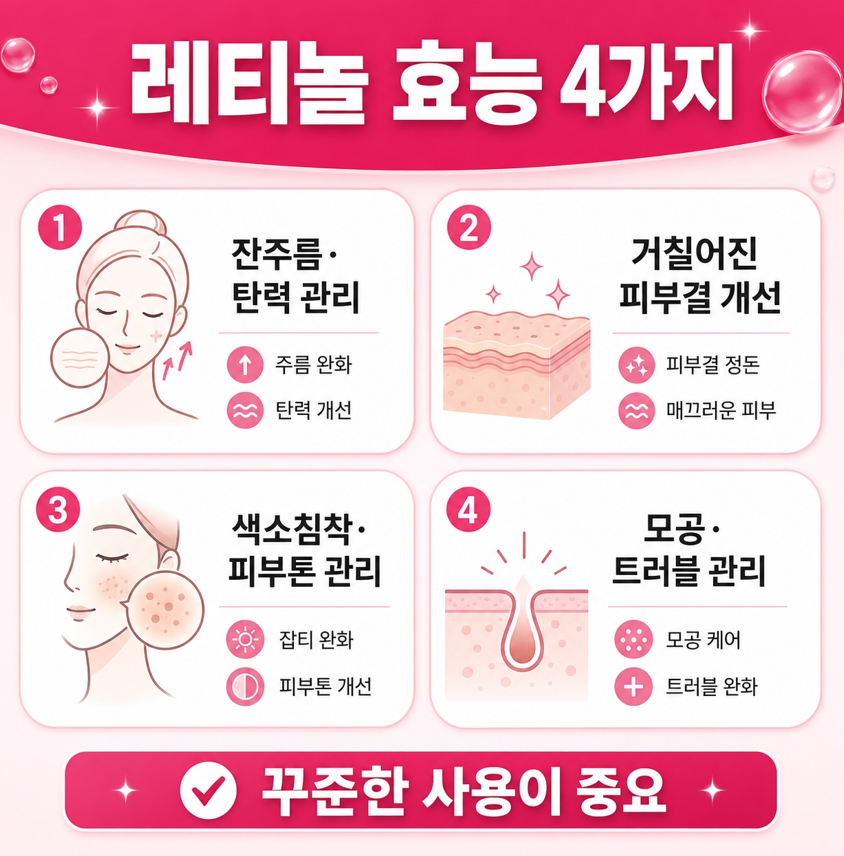
Retinol benefits are generally seen in four areas: fine lines and elasticity, skin texture, pigmentation, and pores and breakouts.
| Benefit Area | Key Details |
|---|---|
| Fine Lines & Elasticity | Involved in collagen production; used to help manage fine lines around the eyes and mouth, and support elasticity |
| Skin Texture | Supports turnover to help manage rough, dull texture caused by built-up dead skin cells |
| Pigmentation | May help surface pigmentation shed naturally as part of the turnover process |
| Pores & Breakouts | Used to help manage clogged pores caused by dead skin and sebum (separate from prescription retinoid medications) |
That said, it’s worth keeping in mind that cosmetic products alone typically cannot fully reverse deep, established wrinkles or noticeable volume loss.
Prescription retinoids used to treat acne differ from cosmetic retinol in both concentration and mechanism of action, so they shouldn’t be considered the same thing.
Why Do Retinol Side Effects Happen, and What Do They Look Like?
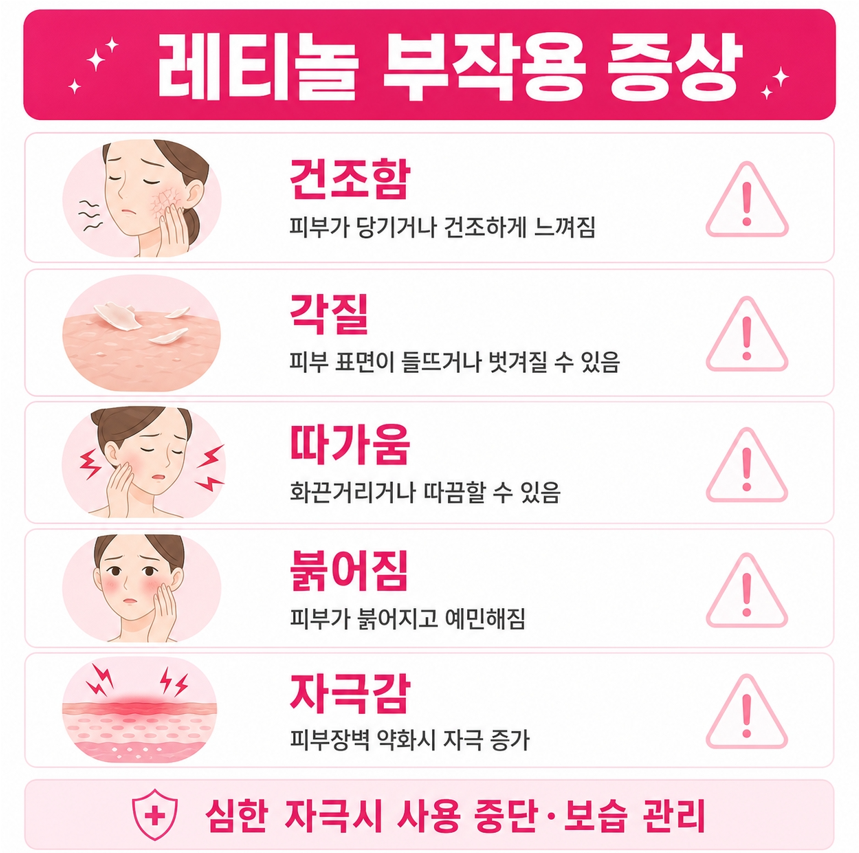
Retinol side effects occur when skin becomes irritated as the ingredient converts into retinoic acid, and can range from dryness to redness.
When starting with a low-concentration product, it’s common to feel slight tightness for the first one to two weeks, which tends to gradually ease afterward.
| Symptom | Description |
|---|---|
| Dryness | Skin feels tight or drier than usual |
| Flaking | Skin surface may lift or peel |
| Stinging | May burn or sting on application |
| Redness | Skin may become red and sensitive |
| Irritation | May feel more pronounced if the skin barrier is compromised |
⚠️ If redness, stinging, or flaking is severe, don’t dismiss it as a normal ‘adjustment period’ — reduce how often you use it or pause use for a while.
⚠️ If symptoms persist or worsen, it’s safer to have a dermatologist check your skin.
Retinol Usage: How Should You Adjust Concentration and Order?
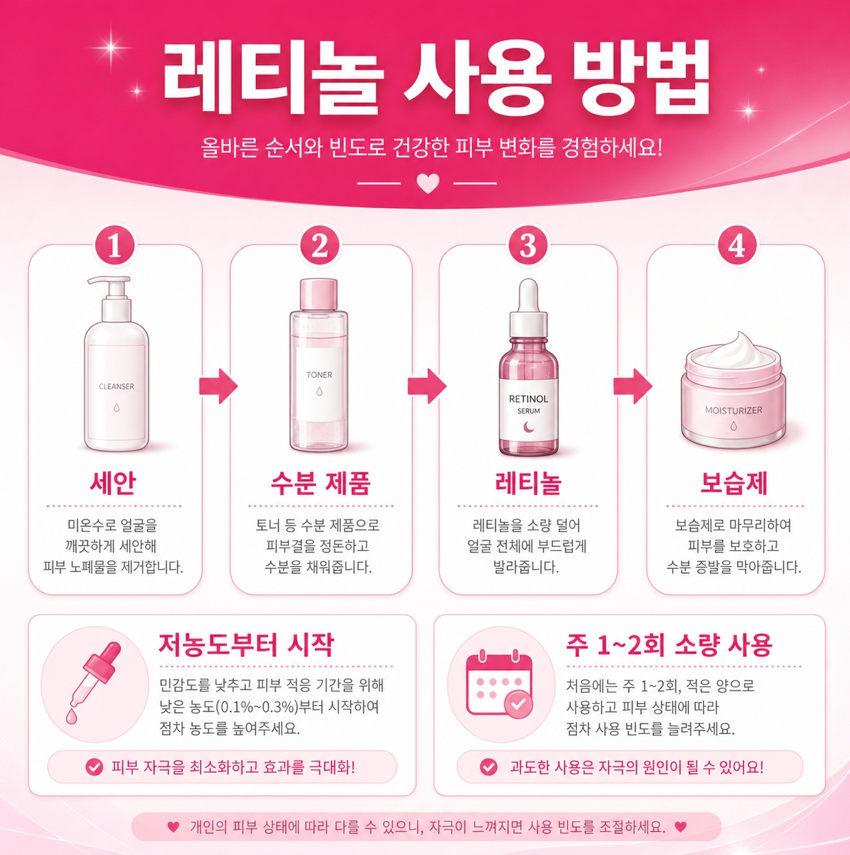
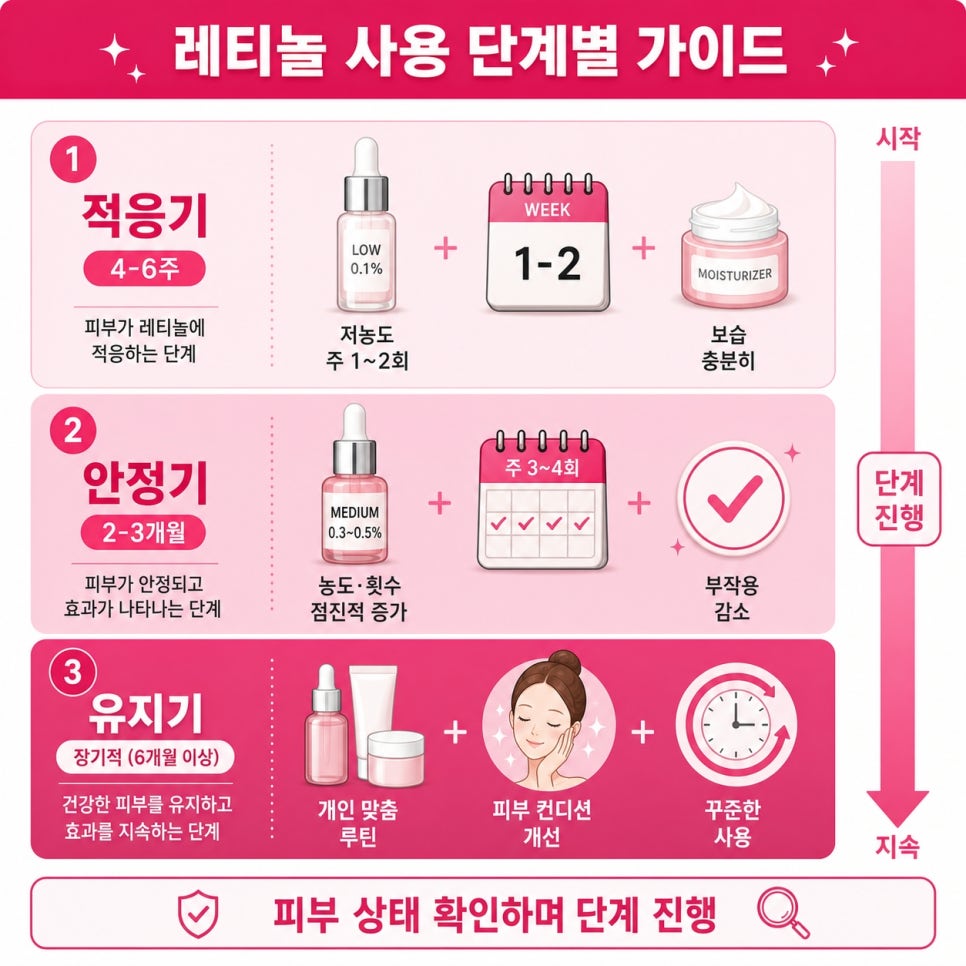
The key to using retinol is to start with a low concentration and low frequency, then gradually increase based on how your skin responds.
- Start with a low-concentration product, using a small amount just 1–2 times a week.
- If there’s no irritation, gradually increase frequency while monitoring your skin.
- Apply in this order: cleanser → hydrating product → retinol → moisturizer.
- If your skin is sensitive, apply a thin layer of moisturizer first, then layer retinol on top.
- Avoid adding several active ingredients at once — let your skin adjust to retinol on its own first.

✅ Did you start with a low-concentration product?
✅ Did you limit use to 1–2 times a week?
✅ Did you follow up with enough moisturizer?
✅ Did you check the application area for any irritation?
Which Ingredients Increase Irritation When Combined With Retinol?
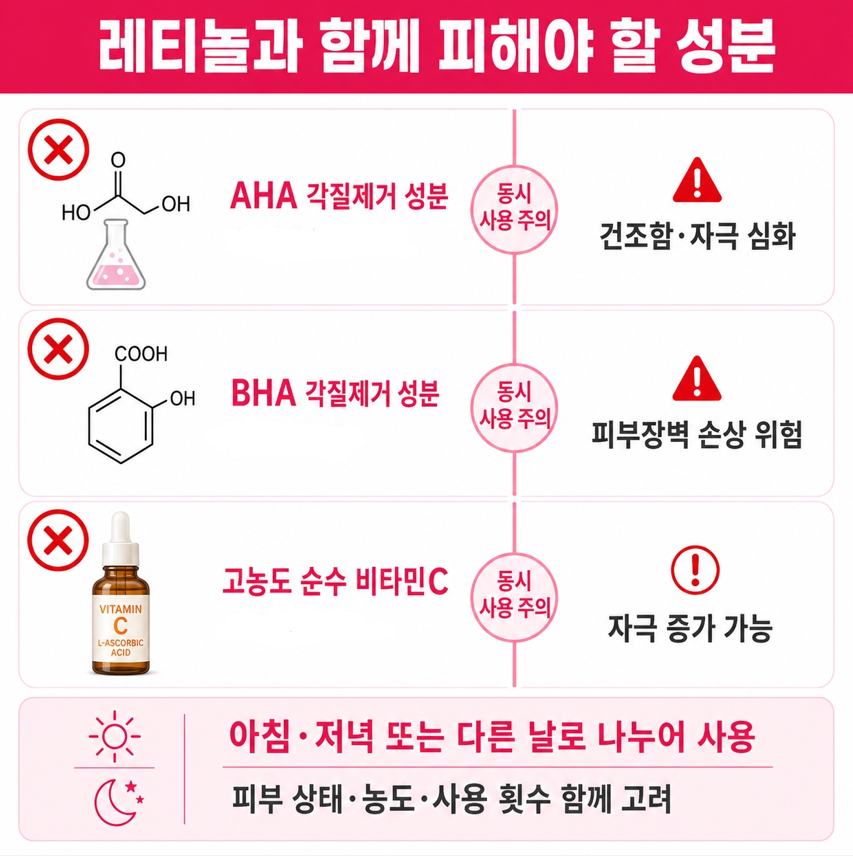
High-concentration AHA/BHA, physical scrubs, and high-strength vitamin C are common ingredients that can increase irritation when layered with retinol on the same day.
Using vitamin C in the morning and retinol at night can help reduce irritation by separating the two.
✔️ High-concentration AHA/BHA and scrubs can increase dryness and irritation when combined with retinol.
✔️ Consider using high-strength vitamin C in the morning and retinol at night.
✔️ Your current skin condition, along with concentration and frequency, matters more than the ingredient combination itself.
Why Is Sunscreen Essential While Using Retinol?
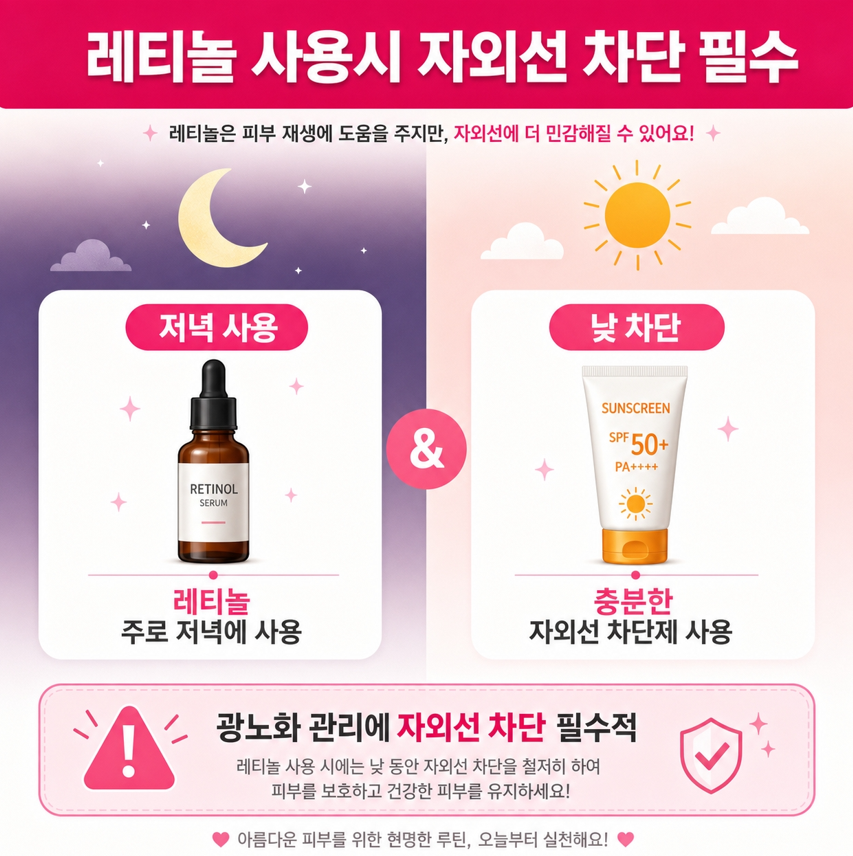
Neglecting sunscreen while using retinol can allow photoaging to progress, potentially offsetting the benefits retinol provides.
This is because retinol oxidizes easily with light and heat, and can make skin more sensitive to UV exposure.
No matter how effective an ingredient is, repeated daytime UV exposure makes it difficult to prevent collagen loss and pigmentation.
For this reason, it’s best to use retinol mainly at night and apply a sunscreen with adequate SPF thoroughly during the day.
🌤️ Consistently using retinol at night and sunscreen during the day may help manage both collagen loss and pigmentation.
What Matters Most for Getting the Full Benefits of Retinol?
To get the most from retinol’s benefits, finding the concentration and frequency your skin can tolerate matters more than rushing into a high concentration.
Even this ingredient doesn’t work at the same concentration and frequency for every skin type.
If you’re interested in collagen and skin elasticity care, you may also find it helpful to check out the Atelofill Collagen Skin Research Lab homepage for related information.
Frequently Asked Questions
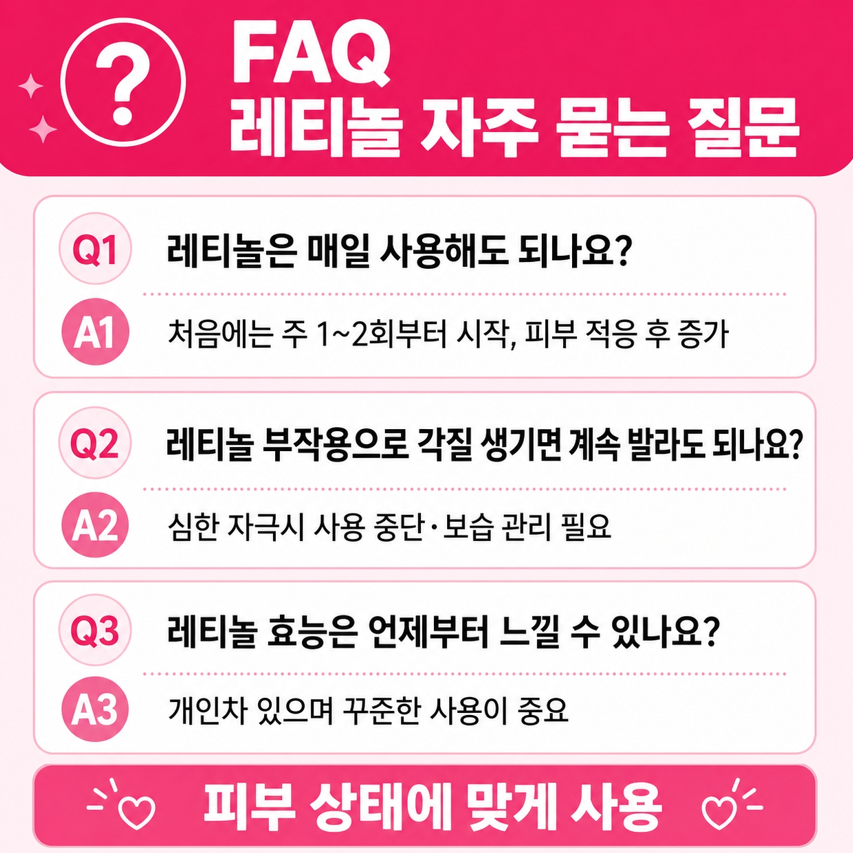
1. Can I use retinol every day?
Once your skin has fully adjusted, you may be able to increase frequency, but using it daily from the start can cause irritation. It’s best to begin with 1–2 times a week and monitor your skin’s response.
2. If flaking occurs as a retinol side effect, should I keep using it?
Mild dryness or flaking can occur, but if stinging or redness is severe, or your skin is visibly peeling, you should reduce use or stop altogether. If symptoms persist, please see a dermatologist.
3. When can I expect to notice retinol’s benefits?
This varies depending on skin condition, product concentration, and frequency of use. Retinol isn’t an ingredient that produces changes quickly — it’s important to use it consistently over time and observe how your skin responds.
4. Can sensitive skin use retinol?
It’s possible, but you should start with a low concentration and limited frequency. If your skin barrier is compromised or you have dermatitis or significant irritation, it’s best to stabilize your skin condition first.
5. What matters most when using retinol?
Avoiding overuse, moisturizing sufficiently, and applying sunscreen consistently during the day. Ignoring signs of irritation from your skin and increasing usage anyway is something to avoid.
References
· Kafi R, Kwak HS, Schumacher WE, et al., “Improvement of Naturally Aged Skin With Vitamin A (Retinol),” Archives of Dermatology, 2007. View source
· Park KD, “Use of Retinoids in Dermatology,” Journal of the Korean Medical Association (J Korean Med Assoc), 2022. View source
This article is intended for general health information purposes only and is not a substitute for individual diagnosis or treatment. If you have symptoms, please consult a medical professional.